

The Ways a Mother Says I LOVE YOU Without Saying It | Live Well
Look Good. Travel Far. Live Well ◆ Functional Health & Wellness by Samuel
I. INTRODUCTION — The Ways a Mother Says I LOVE YOU
The ways a mother says I LOVE YOU are not always found in the words she speaks.
Sometimes it is the question she asks when you say you’re fine, even though she already knows you’re not. It can be the meal she remembers you like, the phone call that comes at exactly the right time, or the little warning she gives you even though you’ve heard it a hundred times before.
A mother’s love often becomes part of the background of everyday life.
When we’re young, we may not think much about it. Mom is simply Mom. She knows where everything is, remembers what we forgot, notices when we’re getting sick, and somehow manages to worry about things we haven’t even thought about yet.
Then we grow up.
The calls become less frequent. We make our own meals, solve our own problems, and start building lives that don’t require Mom’s help every day. Somewhere along the way, those little things that once seemed completely ordinary begin to look different.
You realize she wasn’t just reminding you to take a jacket.
Her concern was really about you.
That question about whether you’d eaten wasn’t simply conversation; it was her way of making sure you were okay.
And that may be one of the quiet truths about a mother’s love: she can say I LOVE YOU without ever saying the words.
Quick Guide
A mother’s love often lives inside ordinary actions. The things that seem repetitive or insignificant can carry a surprising amount of meaning when we stop long enough to notice them.
- Remembering the little things — favorite foods, familiar routines, personal preferences, and details you may have forgotten mentioning.
- Noticing when something changes — the tone of your voice, a tired expression, or the feeling that something isn’t quite right.
- Preparing before you ask — a meal, a reminder, an extra jacket, or whatever she suspects you might need.
- Quiet worry that never really disappears — even when you’re grown and perfectly capable of handling your own life.
- Showing up when it matters — birthdays, graduations, difficult seasons, ordinary visits, and the moments when her presence says enough.
- Giving you room to become yourself — because loving a child also means accepting that they will eventually make their own choices.
- Still seeing the child underneath the adult — no matter how much life changes you, some part of you remains the person she remembers raising.
This Guide Is For…
This is for anyone who has ever looked back at something their mother used to do and finally understood what it meant.
Maybe you are still close to your mother and recognize these things every day. Perhaps you’re an adult with a family of your own, and you now understand some of what she was trying to give you.
For some people, these memories may be especially meaningful because their mother is no longer here.
Either way, the point isn’t to measure whether one mother loved more than another. Every family has its own language.
Sometimes love sounds like a phone call.
Sometimes it looks like a packed lunch, a favorite meal waiting in the kitchen, a reminder you’ve heard too many times, or someone quietly waiting until you get home.
The words may change. The message doesn’t.
II. How a Mother Says I LOVE YOU in the Little Things
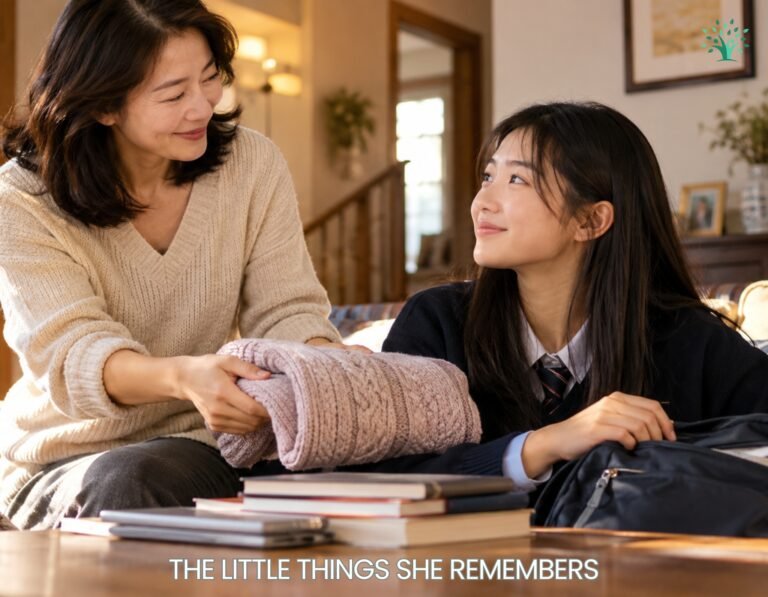
A mother can remember details about you that you have completely forgotten telling her.
She knows which meal you liked when you were ten, how you take your coffee now, which foods you avoid, and what kind of day you’re having from the sound of your voice. None of these things seem particularly important on their own. Together, they tell you that someone has been paying attention for a very long time.
Maybe she still buys the snack you liked as a child when you visit home. Perhaps your favorite dish appears on the table without you asking for it. Even a simple question—“Do you want me to make that for you?”—can carry years of familiarity behind it.
The ways a mother says I LOVE YOU often begin with remembering.
She may not think of herself as doing anything special. To her, these details are simply part of knowing her child. Yet there is something deeply comforting about being remembered that way.
Long after childhood has passed, those little details can become some of the clearest evidence of how closely she was paying attention.
⭐ Recommended Reading
III. She Notices When Something Is Wrong
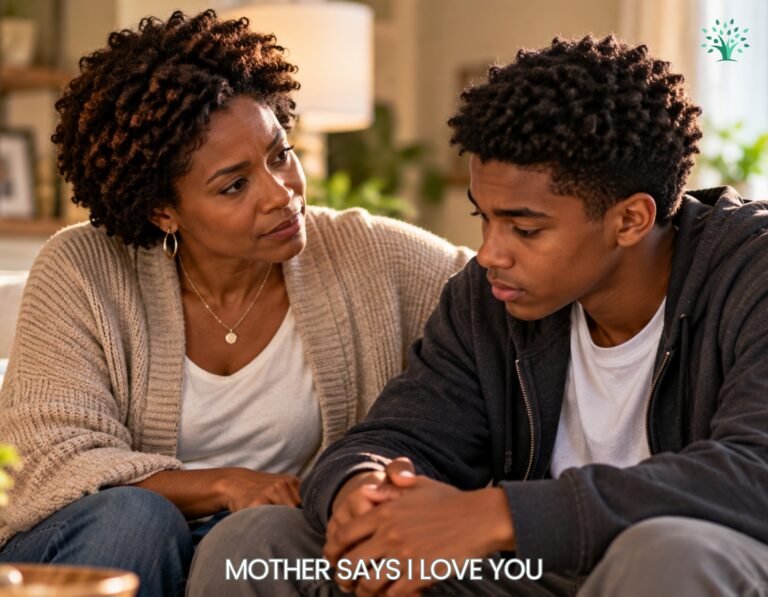
You can tell your mother everything is fine, and she may still pause for a moment.
Perhaps your voice sounds different. Maybe you’re quieter than usual, or you answer a question a little too quickly. She may not know exactly what is bothering you, but something tells her to ask again.
That instinct can follow you well into adulthood.
A grown child may live across the country, have a demanding career, and manage an entire household of their own. Still, one short phone conversation can be enough for Mom to sense that something isn’t quite right.
Sometimes the follow-up is simple: “Are you sure you’re okay?”
Other times, she doesn’t push. Instead, she leaves the door open, knowing that you’ll talk when you’re ready.
A mother says I LOVE YOU in those moments without needing to solve anything. Her attention itself becomes a form of care.
That kind of noticing can be easy to take for granted because it happens so naturally. Yet being known well enough for someone to hear what you’re not saying is a rare kind of connection.
⭐ Recommended Reading
IV. She Prepares Before You Ask
Mothers have a remarkable habit of thinking one step ahead.
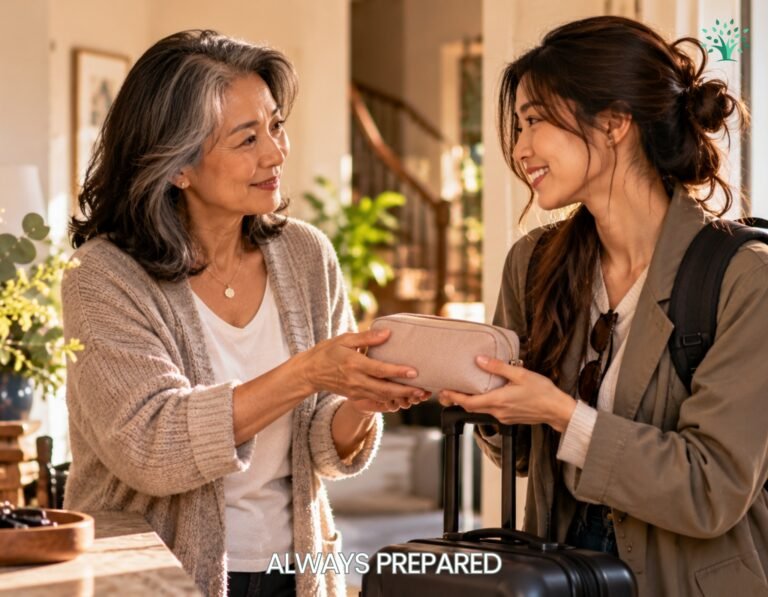
You arrive at her house and discover that she bought the food you like. A jacket appears because she remembers you always get cold. There is something waiting in the refrigerator because she knows you won’t have time to cook after a long day.
None of it required a formal request.
Preparation is often one of the quietest forms of love because the person receiving it may not even realize how much thought went into it. Someone had to remember, anticipate, and make the effort before you ever knew there was a need.
That habit often begins when children are small. Mom packs the extra clothes, checks the weather, keeps medicine nearby, and makes sure everyone has what they need before leaving the house.
Years later, the details may change, but the instinct remains.
The ways a mother says I LOVE YOU can be found in that simple habit of thinking about your needs before you do.
Perhaps that’s why coming home can feel different even when you’re an adult. There is something comforting about walking through the door and realizing that someone still thought about you before you arrived.
⭐ Recommended Reading

V. How a Mother Says I LOVE YOU Through Quiet Worry
A mother’s concern doesn’t necessarily disappear when her children grow up.
The questions may become more subtle, but they are still there. Did you get home safely? Are you eating properly? How is work going? Did you make it to your appointment? Those questions can sound familiar enough to become background noise.
Yet behind them is something simple.
She cares what happens to you.
Adult children sometimes smile at these questions because they’ve heard them for decades. We may even joke about how Mom worries too much. Still, there is something reassuring about knowing that someone continues to think about your well-being long after you’re capable of managing your own life.
The worry may look different as the years pass. A mother who once worried about scraped knees may eventually worry about a grown child’s health, marriage, career, finances, or simply whether they are taking enough time for themselves.
Mother says I LOVE YOU through that continued concern, even when she knows she cannot control what happens to you.
Eventually, part of loving your mother back may be recognizing what those questions really mean.
She isn’t asking because she thinks you are incapable.
She’s asking because, in her heart, you’ll always matter.
⭐ Recommended Reading

VI. How a Mother Says I LOVE YOU by Showing Up
Some moments in life don’t require a mother to know exactly what to say.
She simply shows up.
Graduations, birthdays, hospital rooms, school performances, difficult conversations, family celebrations, and ordinary Sunday dinners all have something in common. Years later, we may not remember every detail of what happened, but we remember who was there.
That kind of presence becomes especially meaningful as we get older.
A mother may sit quietly beside you when there is nothing she can fix. She might drive across town because you need help, rearrange her schedule for an important day, or make the effort to be present for something that matters to you even when it isn’t particularly convenient.
Mother says I LOVE YOU through that willingness to be there.
Sometimes showing up is the whole message.
There is no grand speech attached to it. Her presence simply tells you that whatever is happening matters to her because it matters to you.

VII. How a Mother Gives You Room to Become Yourself
One of the harder parts of loving a child is eventually accepting that the child has to build a life of their own.
A mother may have opinions about your career, your relationships, where you live, or the decisions you make. That’s part of being a mother. Yet beneath all those opinions can be a deeper understanding that your life ultimately belongs to you.
Growing up changes the relationship.
The little boy who once needed Mom to make every decision becomes a man with his own household. The daughter who once asked for help with everything becomes a woman making choices her mother might never have imagined.
Letting that happen requires trust.
A mother says I LOVE YOU in a different way when she gives you enough room to become yourself, even when your choices aren’t exactly the ones she would have made.
That doesn’t mean she stops caring.
Her concern may still be there. Advice may still come when you didn’t ask for it, along with questions you sometimes wish she wouldn’t ask. Beneath all of it, though, is the understanding that raising a child was never about keeping that child dependent forever.
Love sometimes means knowing when to step back.
VIII. How a Mother Says I LOVE YOU Even When She Lets Go
There is a moment when a mother begins to see her child differently.
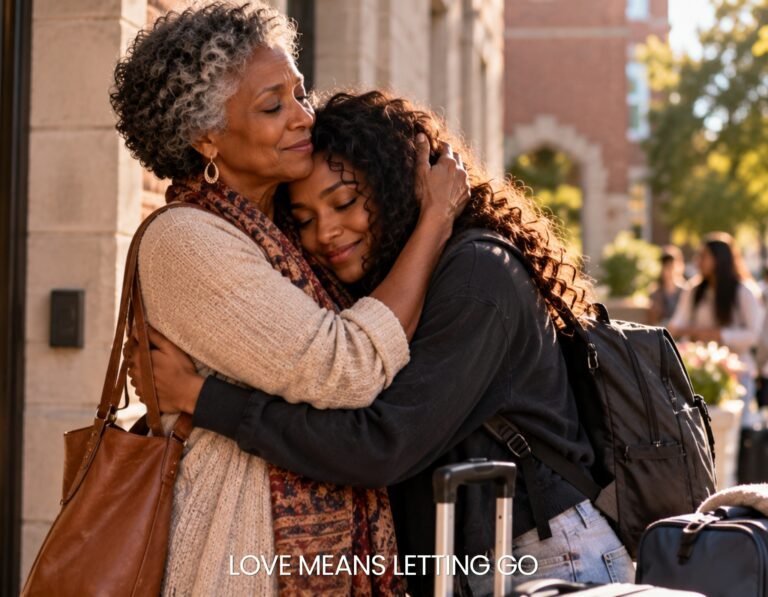
The little person she once carried, fed, protected, and guided has become an adult with a life of their own. The child who once needed help tying shoes may now have a career, a family, and responsibilities that Mom doesn’t fully see.
Yet some things never disappear from a mother’s memory.
She may look at her grown daughter and still remember the little girl who ran into her arms. A grown son can walk through the door, and for a moment she may see the boy who used to come home from school looking for something to eat.
That doesn’t mean she fails to see the adult.
It means the child is still part of the person she loves.
Mother says I LOVE YOU in the way she remembers those earlier versions of you while accepting the person you have become. She may still ask about the things she worried about when you were young, but she also understands that your life belongs to you now.
Perhaps that is one of the most beautiful things about being someone’s mother.
She doesn’t have to choose between remembering who you were and appreciating who you are.
Both can live in her heart at the same time.
.

IX. What We Understand Later
Children often understand their mothers differently once they become adults.
The reminders that once sounded repetitive can suddenly make sense. The questions about whether you ate, the concern about getting home safely, the insistence that you bring a jacket, and the phone calls that seemed unnecessary begin to look less like interruptions and more like evidence.
Someone was paying attention.
Someone was thinking about you when you weren’t in the room.
Mother says I LOVE YOU in dozens of ordinary ways that a child may not recognize until much later. Sometimes becoming a parent yourself is what finally makes the message clear. You begin to understand how much thought can hide inside something as simple as preparing a meal or checking whether someone made it home safely.
Other times, it happens without any major milestone.
You find yourself remembering something your mother used to do and suddenly see it differently. What seemed routine when you were young now feels deeply personal.
That’s the strange thing about growing older.
We don’t always appreciate the meaning of something while we’re receiving it.

X. The LTL Approach | Live Well
Living well isn’t only about the places we travel, the things we buy, or the routines we create.
Sometimes it means paying closer attention to the people who have been part of our lives all along.
A mother’s love can be easy to overlook precisely because it is so familiar. The daily check-in, the favorite meal, the advice, the concern, the visit, and the simple question about how you’re doing can become part of the background of life.
At LTL, that’s part of what Live Well means to us.
Enjoy the people around you. Notice the ordinary moments. Take care of yourself, but don’t forget to appreciate the relationships that make life meaningful.
If you’d like to explore more of the LTL world, our LTL Shop brings together lifestyle favorites, travel essentials, wellness picks, and LTL guides chosen around the same philosophy we bring to these stories: enjoy the life you’re living and the people you’re sharing it with.
LOOK GOOD. TRAVEL FAR. LIVE WELL.
LTL Shop →
As an Amazon Associate, I earn from qualifying purchases. These are products I personally use and recommend because they support healthy aging without making my daily routine more complicated.
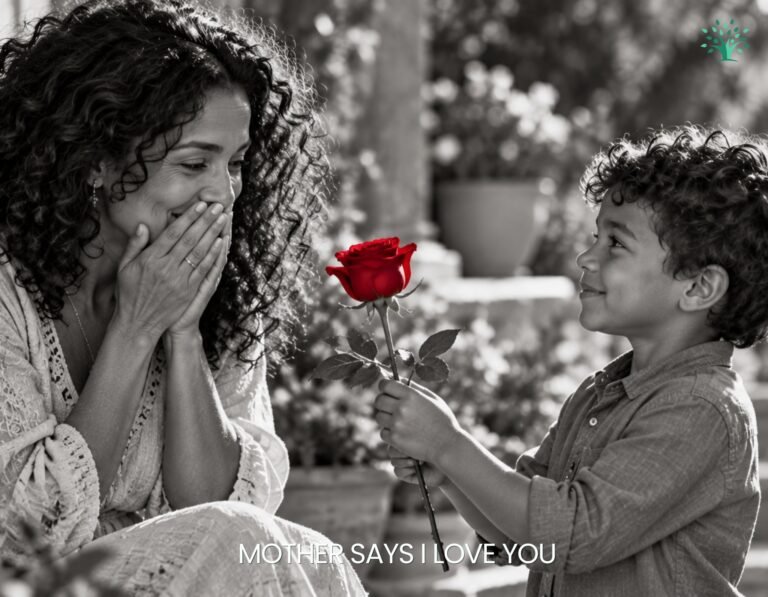
X. The Ways a Mother Says I LOVE YOU | Final Thoughts
A mother doesn’t need to say “I love you” every day for you to know that she does.
Sometimes the message was sitting on the kitchen counter in the form of your favorite breakfast. It was waiting in a text asking whether you got home safely. It was in the extra food she packed, the advice you didn’t ask for, the seat she saved for you, or the quiet way she showed up when life became difficult.
Those moments can seem ordinary while we’re living them.
Years later, they can become some of the memories we value most.
Perhaps that is the real lesson. The ways a mother says I LOVE YOU are often so woven into everyday life that we don’t recognize them as love until we look back.
So if your mother is still here, notice the little things.
And if you are a mother yourself, remember that the ordinary things you do may be far more meaningful to your children than you realize.
Love doesn’t always announce itself. Sometimes it simply keeps showing up.
With care,
Samuel