
One Day They Won't Reach for Your Hand | Live Well
Look Good. Travel Far. Live Well ◆ Functional Health & Wellness by Samuel
I. INTRODUCTION — One Day They Won't Reach for Your Hand
One day, they won’t reach for your hand.
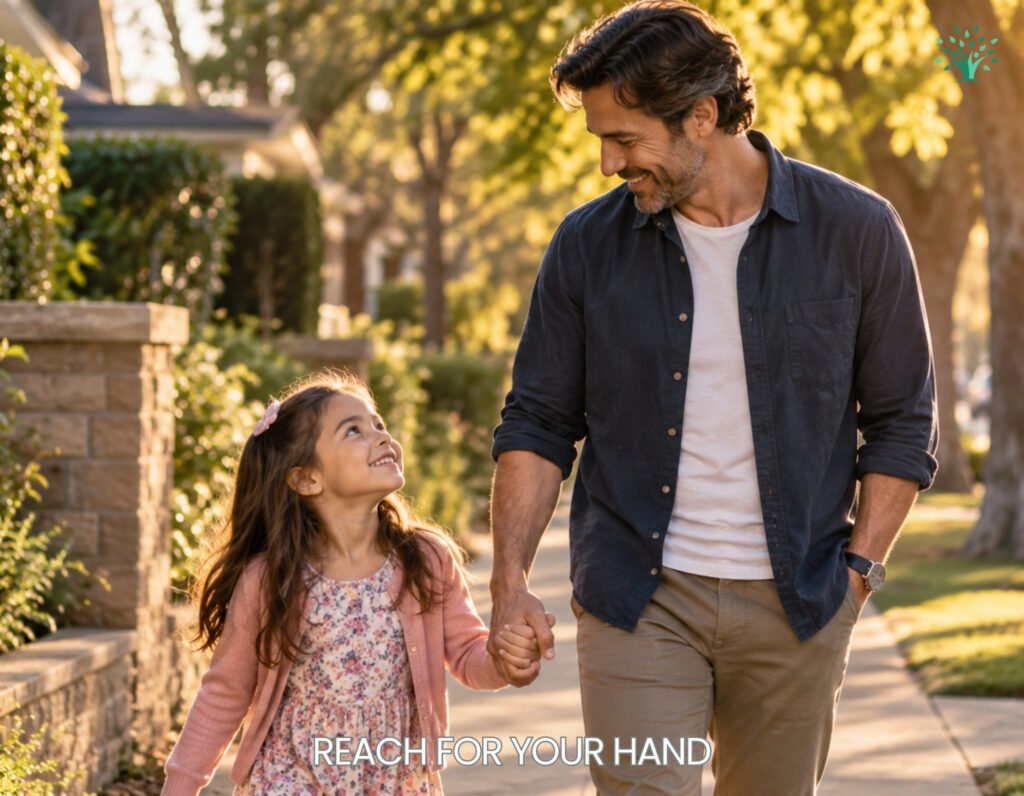
You notice it without realizing that you’re noticing it. A small hand slips naturally into yours while you’re crossing a street, walking through a parking lot, or simply heading somewhere together. There is no announcement that the moment matters. You just hold on and keep walking.
Then, little by little, things change.
Your child begins walking beside you instead of holding your hand. Before long, they are asking to go ahead, choosing their own direction, and becoming increasingly comfortable doing things without you. It is exactly what you hoped for, yet there can still be a quiet sadness in realizing that a familiar part of childhood is disappearing.
As parents, we spend so much time preparing children for what comes next that we can overlook what is happening today. The first steps lead to school. School leads to friendships, activities, driving, college, and eventually a life that belongs increasingly to them. Each stage feels important while we’re living it, but the ordinary moments between those milestones are often the ones that become most precious later.
Think about the things that seem almost too small to remember: a child reaching for your hand, leaning against your shoulder when they’re tired, asking you to carry them even though they can walk, or calling your name from another room just because they want you nearby.
Those moments don’t last forever.
One day they won’t reach for your hand, and you may suddenly realize how much you miss something you never thought you would lose. The good news is that growing up doesn’t mean losing the relationship. Their hand simply leaves yours because they are becoming capable of walking through the world on their own.
That is part of living well, too.
We cannot hold on to every stage of our children’s childhood. We can, however, slow ourselves down enough to notice the stage we are living right now.
Quick Guide
Childhood moves quickly, often while parents are busy managing everything that comes with raising a family. The goal isn’t to make every moment perfect. Instead, it is to recognize the ordinary experiences that can become meaningful memories long after they are gone.
Notice the little things — everyday gestures can become the memories you treasure most.
Enjoy who they are today — tomorrow will arrive soon enough without needing to rush toward it.
Recognize growing independence — walking ahead is often a sign that the confidence you helped build is taking hold.
Stay connected as they grow — physical closeness changes, but your relationship can continue developing.
Let ordinary moments matter — not every meaningful family memory comes from a major event.
Be present while you can — some stages quietly disappear before you realize they have changed.
This Guide Is For…
This is for the father watching his daughter become more independent, even though part of him still remembers carrying her when she was small.
It is for the mother who can still picture her son’s fingers wrapped around hers while they walked somewhere together, even though those hands are now nearly as large as her own.
Parents at every stage can recognize something in this transition. Perhaps your child still reaches for your hand every day. Maybe you’ve already watched that habit disappear. Either way, the message is the same: childhood isn’t asking us to hold on forever.
It is asking us to be there while it is here.
And sometimes, living well means looking down at that little hand in yours and realizing just how lucky you are to be holding it.

II. When They Still Reach for Your Hand
There is something almost automatic about the way a young child reaches for a parent’s hand.
You don’t have to ask. A busy parking lot, a crowded sidewalk, or an unfamiliar place is enough, and suddenly those little fingers are wrapped around yours. Sometimes they reach up because they’re nervous. Other times, they simply want to be close.
For a parent, those moments can become so familiar that we barely register them.
That’s part of what makes childhood funny. The things we experience every day can feel completely ordinary while they are happening, yet years later, a single memory can bring the whole feeling back. You remember the warmth of that little hand, the way they walked beside you, or how they would squeeze your fingers when something caught their attention.
Then one day, you notice the hand isn’t there.
The child who once needed you to guide every step is suddenly walking beside you without assistance. Perhaps they’re carrying their own backpack, talking with friends, or already thinking about where they want to go next.
Nothing has been lost.
In fact, you’ve helped create something wonderful. That little person is becoming confident enough to navigate the world independently.
Still, reach for your hand is one of those childhood phrases that can carry an unexpected amount of emotion. It reminds us that dependence is temporary, while the memory of being needed can stay with a parent forever.
⭐ Recommended Reading

III. They Grow Up While We Are Busy Raising Them
The strange thing about raising children is that you’re usually too busy to notice how quickly it is happening.
There are lunches to pack, homework to check, appointments to remember, laundry that somehow never ends, and countless small decisions that fill the days. You’re focused on getting everyone where they need to be, often thinking about the next thing before the current one is finished.
Then something catches you by surprise.
The shoes are suddenly too small. The voice sounds different. Your child who once needed help reaching the sink can now reach everything without you. A favorite shirt disappears into the back of the closet because they’ve outgrown it, and you realize you don’t remember exactly when that happened.
That is how childhood often moves.
Not in one dramatic moment, but through hundreds of small changes that happen while we’re busy taking care of everything else.
For parents, the challenge isn’t to remember every single day. That’s impossible. Instead, it may be worth paying a little more attention to the ordinary ones.
Sit beside them for another five minutes. Listen to the story you’ve heard before. Take the slower walk home. When that little hand reaches for yours, don’t be so distracted that you barely notice.
Reach for your hand may be a simple childhood gesture, but it represents something much larger: a stage of life when your child still naturally looked to you for closeness, comfort, and direction.
That stage won’t last forever.
And perhaps that’s exactly why it deserves our attention while it is here.

IV. The First Signs of Independence
Independence doesn’t arrive on graduation day.
It starts much earlier, usually in ways that seem almost insignificant at first. A child wants to choose their own clothes. They insist on carrying their own bag. They stop asking for help with something they have finally figured out.
Then comes the day they pull their hand away because they want to walk on their own.
A parent can feel two things at once.
Pride is certainly one of them. Watching your child become capable and confident is one of the great rewards of raising them. Yet there can also be a tiny moment of hesitation when you realize that something you once did together is becoming something they can now do without you.
That mixture of pride and nostalgia is completely natural.
The goal was never to keep them dependent on us. We wanted them to become capable adults who could make decisions, solve problems, and eventually build lives of their own.
So when they stop reaching for your hand, perhaps the right response isn’t to hold on tighter.
Maybe it is to smile and keep walking beside them.
Your role is changing, but your importance hasn’t disappeared.
The child who once needed your hand may eventually need your perspective, your encouragement, or simply the comfort of knowing you’re still there.
Growing up changes the way children need us.
It doesn’t necessarily change how much they love us.
⭐ Recommended Reading

V. What We Miss When We Are Always Looking Ahead
Parents naturally think ahead.
We wonder what our children will be like when they start school, who their friends will be, what they might become, and where life will eventually take them. Thinking about the future is part of caring for a child. We want to prepare them for what comes next.
The problem is that childhood is happening while we’re doing all that planning.
A five-year-old doesn’t know that this might be the last year they want to sit on your lap. A nine-year-old doesn’t realize that someday the bedtime story will disappear. Even the teenager who seems eager to move on may still have moments when they want Dad to listen or Mom to sit beside them.
We don’t need to turn every day into a precious memory.
That would be exhausting and probably impossible. What matters is leaving enough room to actually experience the day instead of constantly rushing toward the next milestone.
Put down the phone during dinner. Take the longer walk.
Listen when they want to tell you something that seems completely unimportant. Let them show you the drawing, the game, the new song, or whatever has captured their attention that afternoon.
Years later, those details may be far more valuable than the big events we carefully photographed.
A parent doesn’t need to preserve childhood.
We simply need to be present enough to notice it.
⭐ Recommended Reading
VI. Fathers Have Their Own Quiet Moments
A father’s memories of childhood can be surprisingly physical.
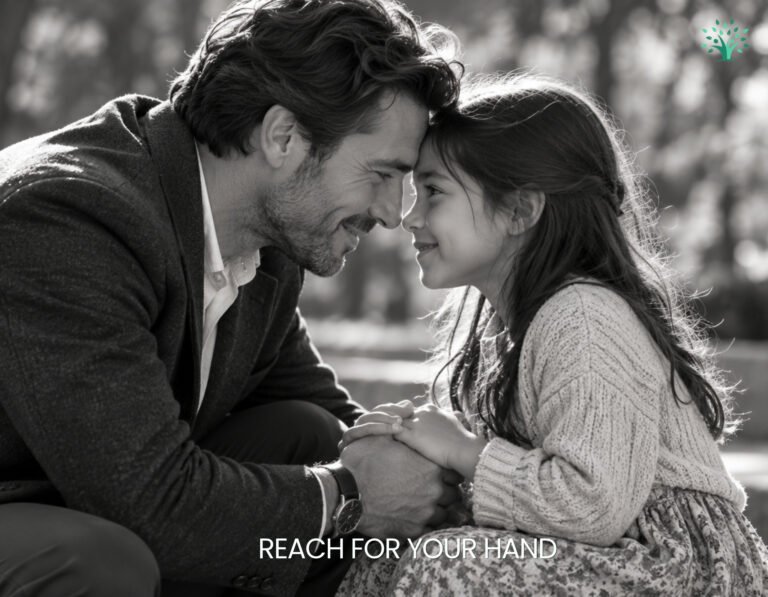
He remembers a small daughter sitting on his shoulders. A son falling asleep against his chest during a long car ride. Tiny fingers wrapped around his hand while they crossed a street. The weight of a child who once needed to be carried everywhere.
Those moments can seem ordinary because they are repeated so often.
Then one day, the child is too tall to carry comfortably. The hand that once disappeared inside Dad’s palm is suddenly nearly the same size. She wants to walk ahead with her friends. He reaches out instinctively, and she smiles before continuing on her own.
There is pride in that moment, even when it stings a little.
Fathers aren’t meant to hold their children in place. Their job is to help them become strong enough to leave the safety of that hand and eventually walk confidently on their own.
Still, Dad may remember those early years in surprising detail.
He might not remember every birthday present or every family outing, but he may remember the way his daughter looked when she ran toward him. He may remember the sound of her laugh in the kitchen or the way she fell asleep during a movie.
Those are the quiet pieces of fatherhood that stay.
And when she reaches for his hand again years later—not because she needs help crossing the street, but because she simply wants to walk beside her dad—the meaning has changed.
The connection hasn’t.
VII. Mothers Have Them Too
A mother’s memories often live in the smallest details.
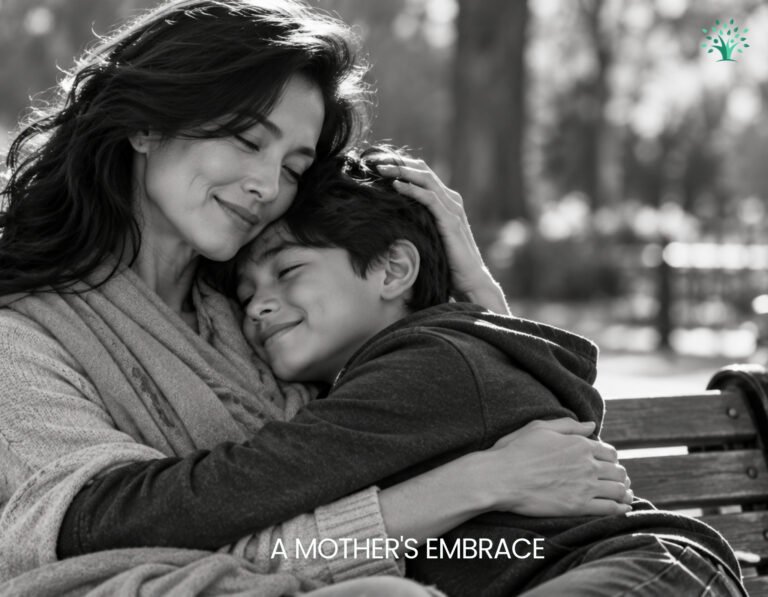
She remembers the little arms that wrapped around her neck, the child who crawled into bed after a bad dream, and the countless times she heard, “Mom,” from another room.
Some days, that word seemed to come every thirty seconds.
Then, gradually, the questions became fewer. The child learned to do more without help. Friends became increasingly important, and private conversations replaced the constant stream of childhood chatter.
That transition can be difficult because mothers often spend so much of their lives being needed.
Yet there is something beautiful about watching a child become capable.
The hand that once needed
Mom’s guidance eventually reaches for something else—a bicycle handle, a friend’s hand, a steering wheel, perhaps even the hand of someone they choose to spend their life with.
Mom’s role changes, but the memories remain.
She may not remember every lunch she packed or every load of laundry she folded. What stays with her could be much simpler: sitting together on the couch, fixing a child’s hair before school, holding a sleepy child on the way home, or hearing that familiar voice call her name from down the hallway.
Those moments were never interruptions to real life.
They were real life.

VIII. Letting Go Is Part of Loving Them
There is a temptation, especially when children are still young, to think that letting go means losing something.
It doesn’t.
Letting go is part of the work.
We hold their hands when they need help. We teach them to cross the street, make choices, handle disappointment, and eventually solve problems without us standing beside them. Little by little, our job becomes less about doing things for them and more about trusting them to do things for themselves.
That can be harder than it sounds.
A parent can know intellectually that independence is healthy while still feeling a lump in the throat when a child no longer needs the same kind of help. The empty passenger seat after they leave for college can say more than any conversation.
But love isn’t measured by how long we can keep someone dependent on us.
Sometimes love means stepping back.
The child who once needed you to reach for your hand may eventually be the person who calls to ask how you’re doing. She may bring her own children to visit. He may invite you to dinner and tell you about a decision he made on his own.
Those are not lesser versions of the relationship.
They are what the earlier years were preparing both of you for.

IX. They May Stop Reaching for Your Hand, But...
One day, your child will walk beside you without needing your hand.
That moment may arrive so quietly that you don’t even recognize it as a milestone. There won’t be a ceremony. Nobody will announce that childhood has moved into another chapter.
You’ll simply notice that they are walking on their own.
And perhaps that’s why we should pay attention now.
Reach for your hand is such a simple request when a child is small. It might happen because they’re crossing a busy street, because they’re tired, or because they simply want to feel close to you.
Later, they may no longer ask.
The relationship, however, can continue in ways you never expected. A grown daughter may call you after a difficult day. An adult son may ask your opinion before making an important decision. They may still come home simply because being around family feels good.
The physical closeness changes.
The love doesn’t have to.
Years from now, you may not remember exactly when your child stopped reaching for your hand. What you may remember instead is the feeling of those early years—the little fingers, the small steps, and the quiet certainty that you were their safe place.
That is worth appreciating while it is still happening.

X. One Day They Won't Reach for Your Hand | Final Thoughts
Children are going to grow up.
No amount of nostalgia can change that, and honestly, we wouldn’t want it to. Watching a child become confident, independent, and capable is one of the great privileges of being a parent.
Still, there is something worth remembering while we’re in the middle of it.
Someday, one of those completely ordinary moments may become a memory they carry for the rest of their life.
And chances are, we won’t even know which one.
It might be the walk home from school. A silly conversation in the kitchen. The way Dad carried them when their legs were tired. The afternoon Mom sat beside them without needing to say anything. Or that simple moment when a little hand reached up and found ours.
If you’d like to explore more of the LTL world, our LTL Shop brings together lifestyle favorites, travel essentials, wellness picks, and LTL guides chosen around the same philosophy we bring to these stories: enjoy the life you’re living and the people you’re sharing it with.
LOVE THE LITTLE MOMENTS. LOVE WELL.
With care,
Samuel