
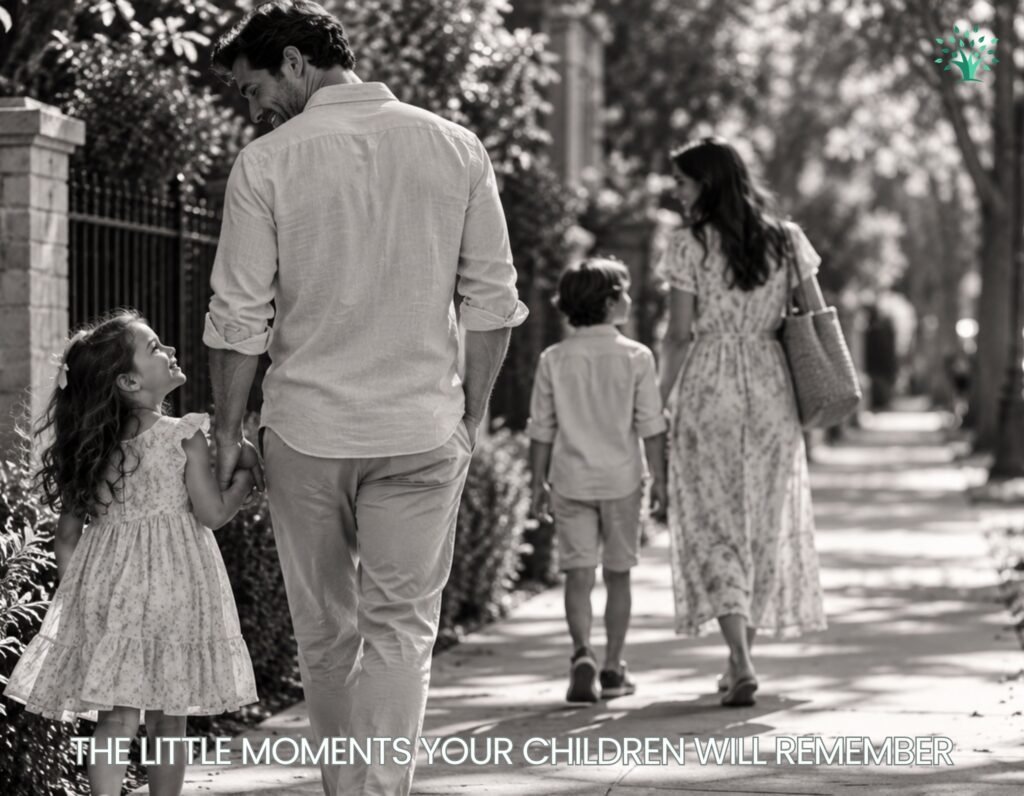
The Little Moments Your Children Will Remember | Live Well
Look Good. Travel Far. Live Well ◆ Functional Health & Wellness by Samuel
I. INTRODUCTION — Moments Your Children Will Remember
Moments your children will remember are often the ones we never thought were important enough to remember.
As parents, it’s easy to focus on the big things. The birthday parties we planned, the vacations we saved for, Christmas mornings, graduations, and all those photographs we carefully took because we wanted our children to remember them someday.
And they probably will.
But ask an adult what they remember most about being little, and sometimes the answer is surprisingly ordinary.
Dad running beside the bicycle until he finally let go. Mom sitting on the edge of the bed when something felt wrong. Riding on someone’s shoulders when your legs were tired. Dancing on Dad’s feet in the kitchen. Falling asleep in Mom’s arms. The same silly joke told a hundred times.
At the time, none of it felt important.
It was just life.
That’s what makes these memories so beautiful. Children don’t experience love as a list of everything we provided for them. They experience it in moments—when we stopped what we were doing, looked at them, played with them, taught them something, comforted them, or simply stayed close.
Of course, we can’t manufacture every childhood memory. We don’t even know which moments they’ll keep.
Maybe that’s the point.
While we’re busy trying to create a wonderful childhood, some of the most meaningful parts may already be happening in the middle of an ordinary Tuesday afternoon.
Quick Guide
The memories children carry into adulthood aren’t always attached to major milestones. Often, they’re connected to how everyday life felt.
- Ordinary routines — mornings, meals, car rides, bedtime, and simply being together.
- Feeling safe — the hand they reached for when the world felt too big.
- Playing together — laughter, silliness, piggybacks, dancing, and chasing each other around.
- Learning from you — bicycles, shoelaces, cooking, mistakes, encouragement, and trying again.
- Family traditions — small rituals repeated often enough to become part of childhood.
- Watching you — learning how to live by quietly observing how you lived.
- Growing up — discovering that the relationship changes, but the memories remain.
This Guide Is For…
This is for parents whose children are still small and for those who suddenly realize their children aren’t small anymore.
It’s also for grown sons and daughters who occasionally find themselves remembering something from childhood that seemed completely insignificant at the time.
A hand held across a street. A favorite breakfast. Dad teaching you something in the garage. Mom waiting for you after school. A hug you didn’t realize you needed.
Those memories remind us of something worth remembering while our families are still growing around us:
The little moments aren’t really little.

II. Moments Your Children Will Remember | The Ordinary Days
When we think about childhood memories, our minds naturally go to the big occasions. Vacations have photographs. Birthdays have cakes. Christmas has presents piled under the tree.
Ordinary days rarely leave behind that kind of evidence.
Yet those quiet routines can become some of the strongest memories of childhood.
A child may remember sitting at the kitchen counter while Mom made breakfast, even though she made the same breakfast hundreds of times. Years later, the sound of coffee brewing or the smell of toast can suddenly bring that kitchen back.
The same thing happens with Dad driving to school, waiting outside soccer practice, making pancakes on Saturday morning, or falling asleep on the sofa while everyone else watched television.
Nothing extraordinary happened.
What mattered was the repetition. These moments quietly told a child, this is home, these are my people, and this is where I belong.
Parents don’t always recognize those moments while they’re happening because we’re experiencing them from the other side. We’re thinking about getting everyone dressed, making lunch, finding the missing shoe, arriving somewhere on time, or cleaning everything up afterward.
Our children are experiencing something different.
They’re experiencing childhood.
That’s why some moments your children will remember may be the ones you barely noticed at all.
⭐ Recommended Reading
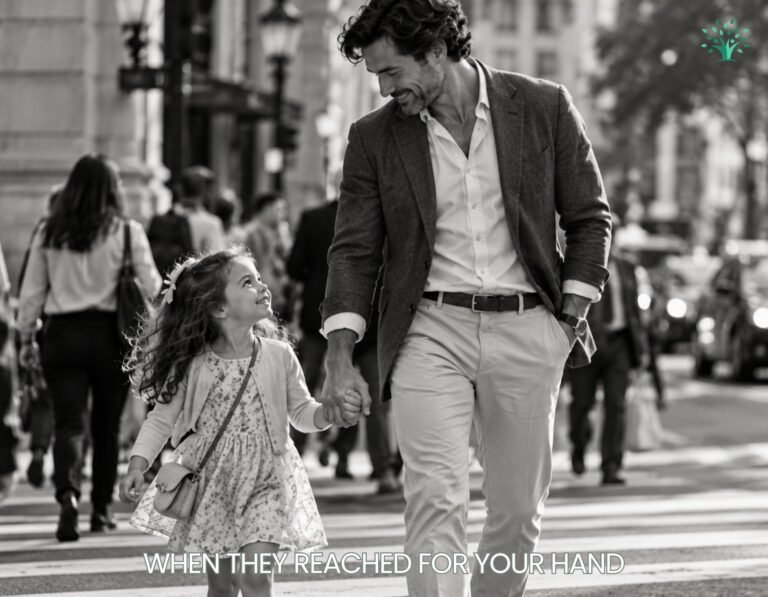
III. When They Reached for Your Hand
There is a period in a child’s life when reaching for Mom or Dad is almost automatic.
Crossing a busy street, walking through an unfamiliar place, hearing a frightening noise, meeting someone new—the little hand comes looking for ours.
Sometimes they don’t even look up.
They simply assume we’ll be there.
That small gesture says more than a child could probably explain. Holding our hand isn’t only about getting safely across the street. For a few seconds, we’re their security, their direction, and the person who makes a very large world feel manageable.
The same feeling appears in other ways. A toddler hides behind Mom’s leg when a stranger approaches. A tired child asks Dad to carry them. Someone wakes after a bad dream and walks down the hallway looking for the person who makes everything feel normal again.
As children grow, those gestures slowly disappear.
One day they’re walking several steps ahead instead of beside us. Soon they can cross the street themselves. The child who once wanted to be carried everywhere may eventually pull away when we try to hug them in front of their friends.
That’s part of growing up, and it’s exactly what we want for them.
Still, there is something worth appreciating about the years when one small hand could reach for ours with complete confidence that we’d take it.
We may remember holding their hand.
They may remember how safe it felt.

IV. The Times You Played With Them
Children rarely need us to be particularly sophisticated to have fun.
A living room can become a dance floor. The hallway turns into a racetrack. Dad’s back becomes transportation. Mom spinning a child around until both are dizzy can become the funniest thing that happened all week.
Adults sometimes underestimate these moments because play doesn’t look productive.
There’s nothing to check off a list afterward. Nobody learned a measurable skill. We didn’t improve the house, finish an assignment, or accomplish anything that could be photographed for a milestone album.
But something important happened anyway.
For those few minutes, our child had us completely.
Think about dancing with a little girl standing on Dad’s shoes. She probably doesn’t care whether he can dance. A boy being chased through the house by Mom isn’t judging whether she’s doing parenting correctly. Children aren’t evaluating the quality of the activity.
They’re enjoying the fact that we joined their world.
That distinction matters.
Buying a child a toy gives them something to play with. Sitting on the floor and playing beside them gives them something different: our attention.
Years later, the toy may be long gone while the memory of Dad making ridiculous voices, Mom chasing them around the kitchen, or being thrown laughing into the air remains surprisingly clear.
Perhaps that’s because joy becomes easier to remember when someone we love was laughing with us.
⭐ Recommended Reading
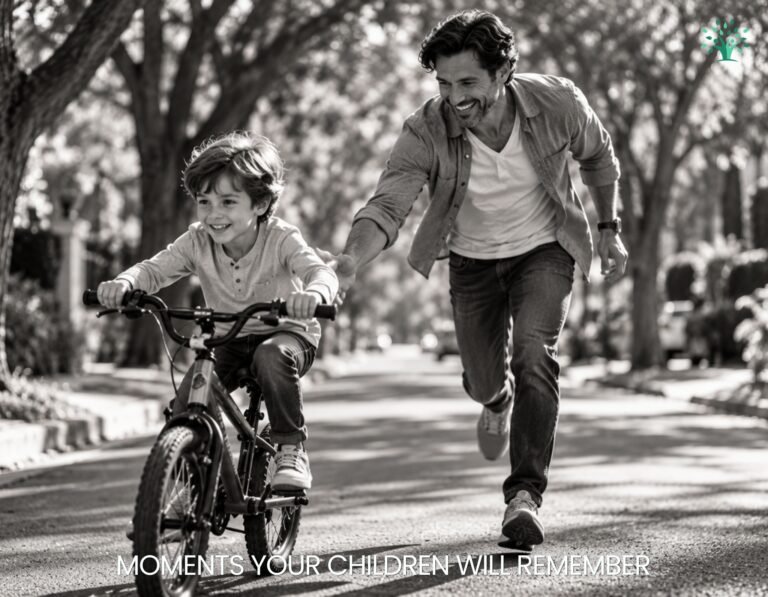
V. Moments Your Children Will Remember | What You Taught Them
Teaching a child rarely goes as smoothly as we imagine.
The bicycle wobbles. Shoelaces somehow become more tangled. Pancake batter ends up on the counter instead of in the bowl. A simple homework question turns into twenty minutes of confusion.
For parents, these can feel like ordinary responsibilities. We’re simply helping our children learn the things they’ll eventually need to do without us.
For a child, however, something else is happening.
They’re discovering what it feels like to struggle while someone stays beside them.
Think about learning to ride a bicycle. At first, Dad’s hand is firmly on the seat. The child pedals because they know he’s there. Eventually, without announcing it, he lets go.
For a few seconds, they’re riding alone.
That moment isn’t only about learning to balance on two wheels. Somewhere inside it is a much bigger lesson: You can do this. I believed you could.
The same message can be delivered while tying shoes, practicing an instrument, cooking together, learning to swim, fixing something in the garage, or trying again after getting something wrong.
Children may forget many of the instructions we gave them. What can remain is the patience, encouragement, and confidence they felt while learning.
Among the moments your children will remember, some may begin with something as simple as, “Let me show you.”
Eventually, the strange reward of teaching them well is that they stop needing our hand.
And that’s exactly what we were preparing them for.
⭐ Recommended Reading
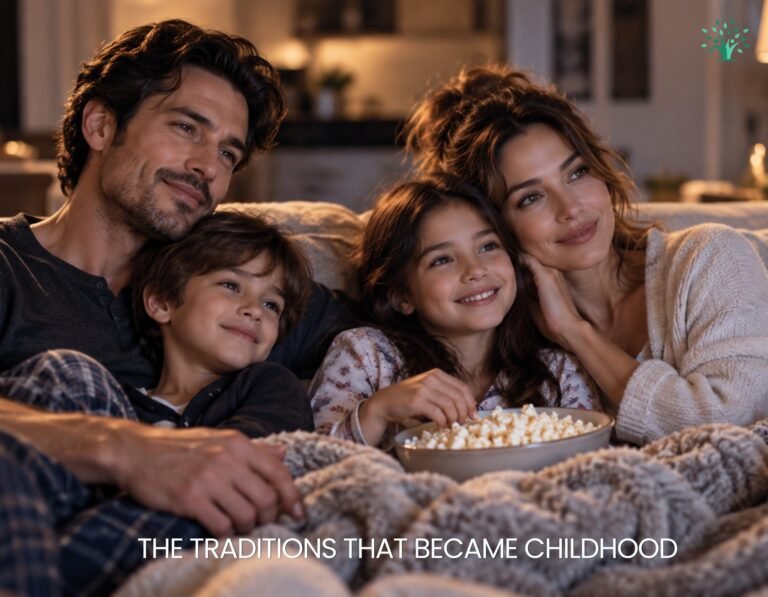
VI. The Little Traditions That Became Their Childhood
Every family develops its own little world.
Maybe Sunday morning means pancakes. Friday night might mean pizza and a movie. One parent always makes a certain meal on birthdays, while another tells the same terrible joke every Christmas.
Nobody sits down and declares these things important.
They simply happen again.
Then they happen enough times to become tradition.
Children find comfort in that repetition because traditions create landmarks in childhood. Long before they understand calendars or the speed at which years pass, they know certain things belong to their family.
Sometimes the smallest rituals become the most personal. A particular song in the car. Hot chocolate when it rains. Dad making breakfast badly but proudly. Mom leaving a note in a lunchbox. Everyone squeezing onto the same sofa even though there are perfectly good chairs nearby.
Years later, those details can carry remarkable emotional weight.
An adult may hear an old song and suddenly be eight years old again. Preparing a family recipe can bring back the person who once stood beside them in the kitchen. Even a familiar holiday smell can reopen a room that hasn’t existed for decades.
That’s the quiet power of family traditions.
Their value doesn’t necessarily come from how elaborate they were.
It comes from being ours.

VII. They Were Watching More Than We Realized
Parents spend a lot of time wondering what to teach their children.
Be kind. Work hard. Tell the truth. Treat people with respect. Don’t give up when something is difficult.
We say these things because they matter.
But children are also learning during all the moments when we aren’t teaching them anything at all.
They notice how Dad speaks to Mom when he’s frustrated. They see whether Mom says thank you to the person serving dinner. They watch what happens when we make a mistake, lose our patience, help a grandparent, keep a promise, apologize, or encounter someone who needs kindness.
Not every example will be perfect. No parent manages that, and childhood doesn’t require a flawless performance.
What matters is that much of what children understand about relationships, resilience, generosity, and love begins close to home.
Years later, a grown son might catch himself using one of Dad’s expressions. A daughter may realize she comforts her own child exactly the way her mother once comforted her. Something that seemed invisible was being absorbed all along.
Perhaps that’s one of the most humbling parts of raising children.
While we’re busy wondering whether they’re listening to us, they’re quietly watching how we live.

VIII. Then Suddenly, They're Growing Up
Growing up happens slowly enough that we don’t always notice it, and then somehow it feels as though it happened overnight.
The little hand that once automatically reached for ours begins swinging independently at their side. The child who wanted to tell us every detail of the day starts closing the bedroom door. Soon they’re choosing their own clothes, making plans with friends, learning to drive, thinking about college, work, and a life increasingly separate from ours.
This is what we raised them to do.
Still, knowing that doesn’t make the transition completely easy.
There may come a last piggyback ride without anyone realizing it was the last one. A final bedtime story. The last time they fall asleep in our arms. One morning we walk them into school, and eventually there’s another morning when they would much rather we drop them off around the corner.
We don’t need to hold onto every stage. Childhood is supposed to move forward, and our relationship has to move with it.
Something beautiful can happen along the way. The child who once needed us for almost everything gradually becomes someone we can talk with, laugh with, travel with, and eventually know as an adult.
The relationship changes.
The history between us doesn’t.
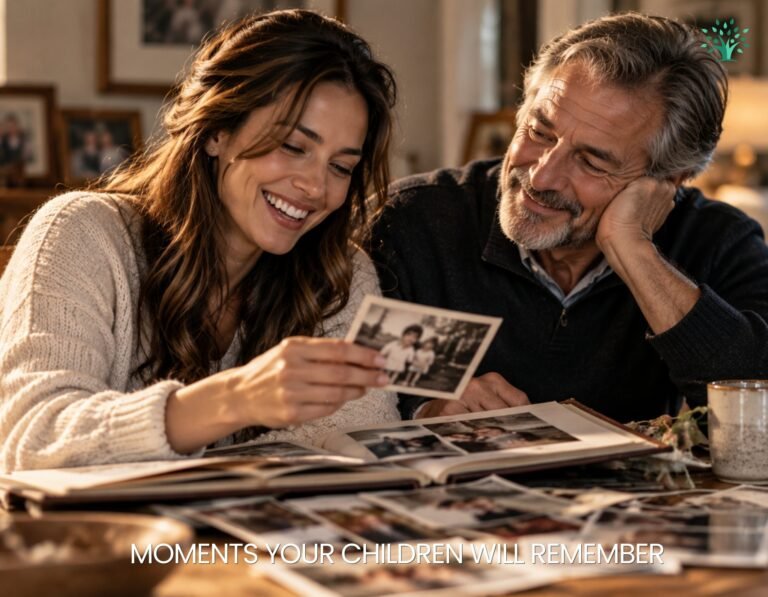
IX. Moments Your Children Will Remember | Long After They Leave Home
Years from now, our children may not remember how clean the house was.
They probably won’t remember whether dinner was perfectly prepared, whether every birthday party looked beautiful, or whether we managed to give them everything we wished we could.
Instead, memory has a strange way of keeping details nobody thought to preserve.
They might remember Dad kneeling beside a bicycle. Mom laughing so hard she couldn’t finish a sentence. The feeling of being carried to bed after falling asleep somewhere else. A familiar voice in the audience. Someone waiting at the door when they came home.
Those are the moments your children will remember because childhood isn’t experienced as a résumé of what parents accomplished. It’s experienced emotionally.
Were we safe here?
Did someone notice me?
Could I run to them?
Did we laugh together?
Was I loved?
None of this means parents need to turn every ordinary interaction into a meaningful memory. That would make family life exhausting. Children don’t need every moment to be magical, and parents don’t need another standard they feel pressured to meet.
We simply need to remember that sometimes the smallest things we’re already doing matter more than we know.
One day, our children may tell us about a childhood memory we’ve completely forgotten.
For them, it might have meant everything.
X. LOVE THE LITTLE MOMENTS | Final Thoughts
Perhaps one of the hardest things about raising children is that we understand how precious a stage was only after it has passed.
While we’re living it, we’re busy.
There are lunches to pack, appointments to make, bills to pay, laundry waiting, work that followed us home, and a hundred small responsibilities competing for attention. Some days, getting everyone through the day feels like enough.
Then the years move.
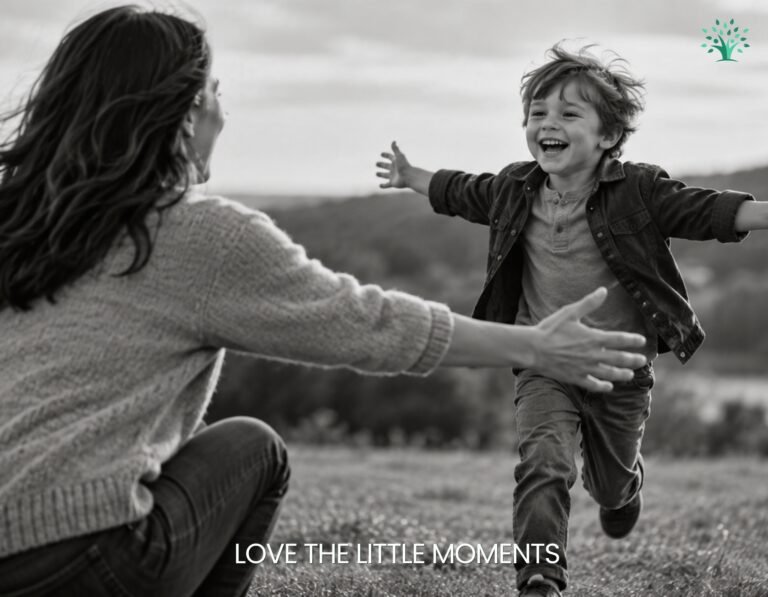
The little boy who once ran toward Dad with his arms wide open becomes a man. The girl who stood on his shoes while they danced grows up. A child who once fell asleep against Mom’s shoulder eventually has a home and perhaps children of their own.
And somewhere inside that grown person are pieces of all those ordinary days.
That’s why we don’t need to create a perfect childhood. We couldn’t even if we tried.
What we can do is occasionally notice the life happening while we’re busy living it.
Take the walk. Sit beside them for another few minutes. Listen to the long story. Dance in the kitchen. Let them help even when doing it yourself would be faster. Give the extra hug.
Someday, one of those completely ordinary moments may become a memory they carry for the rest of their life.
And chances are, we won’t even know which one.
If you’d like to explore more of the LTL world, our LTL Shop brings together lifestyle favorites, travel essentials, wellness picks, and LTL guides chosen around the same philosophy we bring to these stories: enjoy the life you’re living and the people you’re sharing it with.
LOVE THE LITTLE MOMENTS. LOVE WELL.
With care,
Samuel