
Do You Really Need Expensive Anti-Aging Skincare? | Glow Reset
Look Good. Travel Far. Live Well ◆ Skincare & Beauty by Mijung | K- Beauty & Flight Attendant Experience
I. introduction: Expensive Anti-Aging Skincare
Expensive anti-aging skincare can be wonderful, but after years of trying skincare at almost every price point, I’ve learned that expensive and effective are not always the same thing.
I understand the attraction of luxury skincare.
A beautiful jar feels special. The texture can be wonderful. The fragrance, packaging, and experience of using it can make a nighttime routine feel like a small luxury at the end of the day.
And sometimes the formulation really is exceptional.
But I’ve also used expensive products that made me wonder what, exactly, I had paid so much for.
My perspective changed even more when I had the opportunity to work around Korean cosmetic R&D. Once you start looking beyond the jar at ingredients, formulation, delivery systems, texture, and what a product is actually designed to accomplish, price becomes only one part of the conversation.
That’s especially important as our skin changes.
We may be thinking more about dryness, firmness, uneven tone, fine lines, sensitivity, or a skin barrier that doesn’t recover quite as quickly as it once did. That doesn’t necessarily mean we need a bathroom full of expensive anti-aging products.
Some products may be worth spending more on.
Others? I would happily save my money.
So rather than asking whether luxury skincare is better, I think there’s a more useful question:
What are we actually getting when we pay more—and does our skin need it?
Quick Guide
In this guide, we’ll look at:
- Why some skincare products cost so much
- What you’re really paying for in a luxury formula
- Where I think it’s perfectly reasonable to save
- Why formulation matters more with certain serums and active ingredients
- Premium and Korean skincare alternatives worth comparing
- Peptides, firming products, eye care, and moisturizers
- Why sunscreen matters more than its price tag
- How I decide when to spend and when to save
- Mijung’s K-Beauty Picks
- The LTL | Glow Reset Planner
This Guide Is For…
This guide is for women who enjoy good skincare but don’t want to assume that the most expensive product is automatically the best one.
Maybe your routine has become more expensive as your skin has changed. Perhaps you’re looking at a $150 serum and wondering whether the formulation really justifies the price. Or you’ve discovered Korean skincare and realized that some remarkably sophisticated products cost much less than the luxury brands you’ve used for years.
I’m not here to tell you to stop buying luxury skincare.
I still enjoy it too.
Instead, we’re going to look at where spending more can make sense, where excellent alternatives exist, and how to make those decisions based on your skin rather than the price on the jar.
Because the goal isn’t to build the most expensive skincare routine.
It’s to build one that works for you.
II. Why Expensive Skincare Costs More
When we see a $200 serum next to one that costs $30, it’s natural to assume the expensive product must contain dramatically better ingredients.
Sometimes we’re paying for more sophisticated formulation. But that’s not the only thing included in the price.
Luxury skincare companies may invest heavily in research, proprietary ingredient complexes, stability testing, delivery systems, texture, fragrance, and the overall experience of using the product. Then there is beautiful packaging, advertising, retail distribution, celebrity ambassadors, and the prestige attached to the brand itself.
All of those things cost money.
That doesn’t make them meaningless. I appreciate a beautifully formulated cream that absorbs perfectly and makes my evening routine feel special.
But when I’m evaluating expensive anti-aging skincare, I want to know how much of that higher price is going toward something meaningful for my skin—and how much is paying for the luxury surrounding the formula.
Our skin doesn’t know whether the jar came from a department-store beauty counter or cost $40 online.
What matters is the formulation inside it—the ingredients, concentrations, stability, delivery, and whether we can tolerate and consistently use the product.
That’s why price can be useful information, but it should never be the reason we assume something works better.
⭐ Recommended Reading
III. Expensive Anti-Aging Skincare | What Are You Paying For?
There are times when paying more can give us something meaningful.
A company may have invested years developing a proprietary ingredient or delivery technology. Certain active ingredients can also be difficult to stabilize or formulate elegantly. A well-designed product may deliver an active while reducing irritation, or combine several ingredients in a formula that’s pleasant enough to use consistently.
Those differences matter more to me than a heavy glass jar.
But there’s another side to luxury skincare: the experience.
The beautiful packaging, silky texture, subtle fragrance, and pleasure of opening the jar every evening have value if we enjoy them. Skincare doesn’t have to be purely clinical.
I simply think we should know which part we’re buying.
If I’m spending $200 because a particular formulation gives my skin something I haven’t found elsewhere, I’m comfortable paying for it.
If I’m spending $200 mainly because the product feels luxurious, that’s okay too—as long as I understand the difference.
Where I become skeptical is when price itself becomes the evidence that a product must be better.
Luxury can be worth paying for. The luxury price alone isn’t proof that it is.
IV. Moisturizer | Where You Can Save
Moisturizer is one of the first places I look when someone tells me their anti-aging routine has become very expensive.
As our skin becomes drier, a rich moisturizer can feel increasingly important. But the job we’re asking it to do is often fairly straightforward: help reduce moisture loss, support the skin barrier, and keep our skin comfortable.
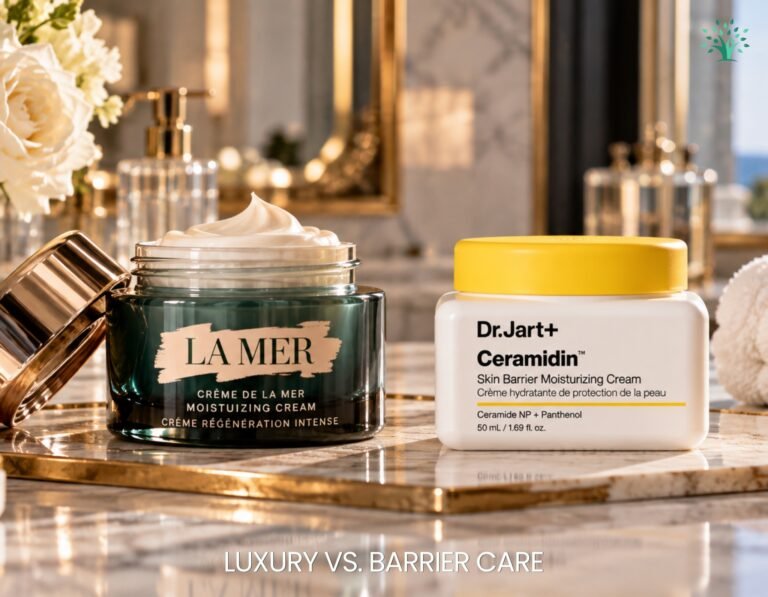
Consider La Mer Crème de la Mer and Dr. Jart+ Ceramidin Skin Barrier Moisturizing Cream.
La Mer offers its proprietary Miracle Broth™, a distinctive rich texture, and the luxurious experience that has made it one of the most recognizable prestige creams in skincare. Dr. Jart+ takes a more barrier-focused approach, built around ceramides and ingredients intended to support dry skin.
These aren’t identical formulas, and I’m not suggesting Ceramidin is simply La Mer in a less expensive jar.
The more useful question is why I’m buying the moisturizer.
When I compare expensive anti-aging skincare with a more accessible barrier cream, I look first at what my skin actually needs. If dryness and barrier support are the priorities, I don’t automatically need the luxury option to accomplish them.
I can still love La Mer’s texture, ritual, and overall experience. Those things have value. But when my main concern is keeping increasingly dry skin moisturized and comfortable, Ceramidin gives me a very practical reason to save.
My Save: Dr. Jart+ Ceramidin Skin Barrier Moisturizing Cream
⭐ Recommended Reading
V. Serums & Actives | Where Formulation Matters
Serums are where my spend-versus-save rule starts to change.
With active skincare, the ingredient printed on the front of the bottle doesn’t tell us everything. Concentration, stability, delivery, packaging, and the ingredients surrounding an active can all influence the finished formula.
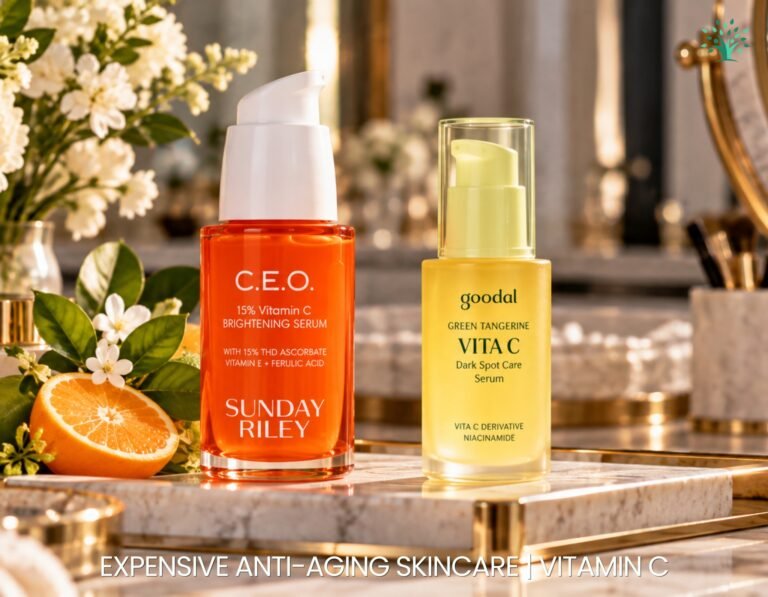
A useful example is Sunday Riley C.E.O. 15% Vitamin C Brightening Serum compared with Goodal Green Tangerine Vita C Dark Spot Care Serum.
Both may interest a woman concerned about dullness, dark spots, or uneven-looking tone, but they take different approaches. Sunday Riley uses 15% THD ascorbate, a stable oil-soluble form of vitamin C, in a premium treatment formula. Goodal takes a gentler Korean skincare approach, combining green tangerine extract with a vitamin C derivative in a formula designed around brightening and improving the appearance of dark spots.
That difference matters.
I wouldn’t buy Goodal expecting it to reproduce the Sunday Riley formula. At the same time, I wouldn’t spend considerably more on Sunday Riley simply because it contains a premium vitamin C formulation.
Instead, I’d ask what my skin needs.
If I specifically want the higher concentration of THD ascorbate and enjoy the richer treatment experience, the premium formula may be worth the additional cost. If my goal is everyday brightening in a gentler, more affordable routine, Goodal becomes a very compelling choice.
This is one category where formulation can give us a legitimate reason to spend more—but more expensive doesn’t automatically mean more appropriate for our skin.
My Rule: With treatment serums, compare the formulation—not just the hero ingredient or the price.
⭐ Recommended Reading
VI. Expensive Anti-Aging Skincare | Peptides & Firming
Peptide skincare is an interesting place to ask whether expensive anti-aging skincare is giving us something we truly need.
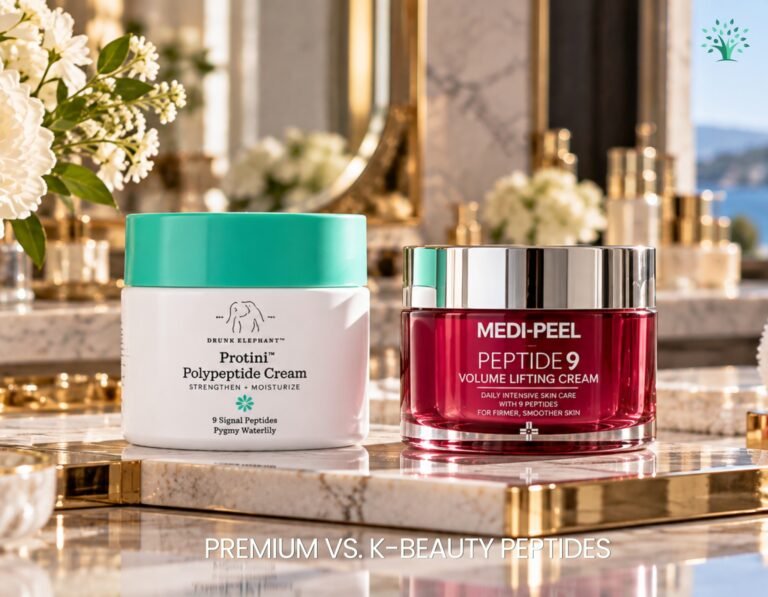
Compare Drunk Elephant Protini Polypeptide Cream with Medi-Peel Peptide 9 Volume Bio Tox Cream.
Protini combines multiple peptides with amino acids and moisturizing ingredients in a polished formula designed around improving the appearance of skin tone, texture, and firmness. Medi-Peel approaches the category through Korean skincare, combining multiple peptides with a richer formula aimed at hydration, elasticity, and firmer-looking skin.
Again, these aren’t identical formulas.
What interests me is that they address overlapping reasons women begin shopping for peptide products in the first place: skin that doesn’t feel quite as firm, smooth, or resilient as it once did.
This is where K-beauty has made me much more selective about premium prices.
I may happily pay more when a product contains a formulation or technology I specifically want. But I no longer assume that peptides become dramatically more useful simply because they’re packaged inside a more expensive cream.
For many women who simply want to introduce peptides and additional hydration into a mature-skin routine, there are compelling options well below traditional luxury pricing.
VII. Sunscreen | Price Isn't the Point
If we’re serious about how our skin looks as we age, sunscreen deserves a permanent place in the conversation.
Yet this is one category where I care surprisingly little about prestige.
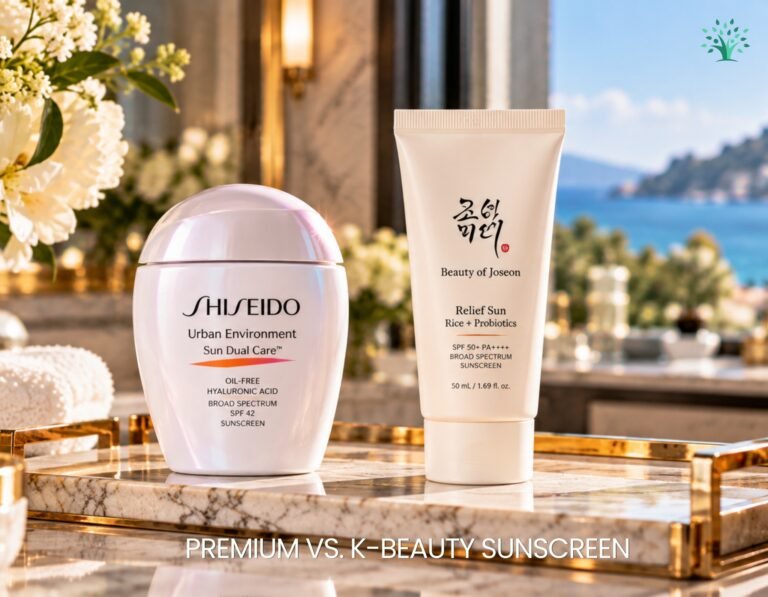
Consider Shiseido Urban Environment Oil-Free Sunscreen SPF 42 and Beauty of Joseon Relief Sun SPF 50+.
Shiseido brings decades of sunscreen expertise to an elegant facial formula designed to work comfortably as part of a daily skincare routine. Beauty of Joseon represents one of the reasons Korean sunscreens have attracted so much attention: high protection combined with a lightweight, skincare-like experience at a much more accessible price.
The formulas and sunscreen technologies are different, so this isn’t a dupe comparison.
Instead, I look at the behavior each product encourages.
A beautiful $50 sunscreen isn’t doing much for me if I ration it because it’s expensive or dislike wearing enough of it. A less costly sunscreen that feels comfortable enough to apply generously every morning may become the better product for my routine.
That’s especially important because sunscreen isn’t an occasional treatment. It’s something we need to be willing to use consistently.
I’ll pay more for an elegant sunscreen if that’s the one I genuinely enjoy wearing. I just don’t believe a prestige price makes the protection more valuable simply because it came in the more luxurious bottle.
My Save: Beauty of Joseon Relief Sun SPF 50+.
VIII. Premium vs. K-Beauty | Mijung's Take
One of the biggest changes in my own skincare thinking came from seeing how quickly Korean beauty companies develop products.
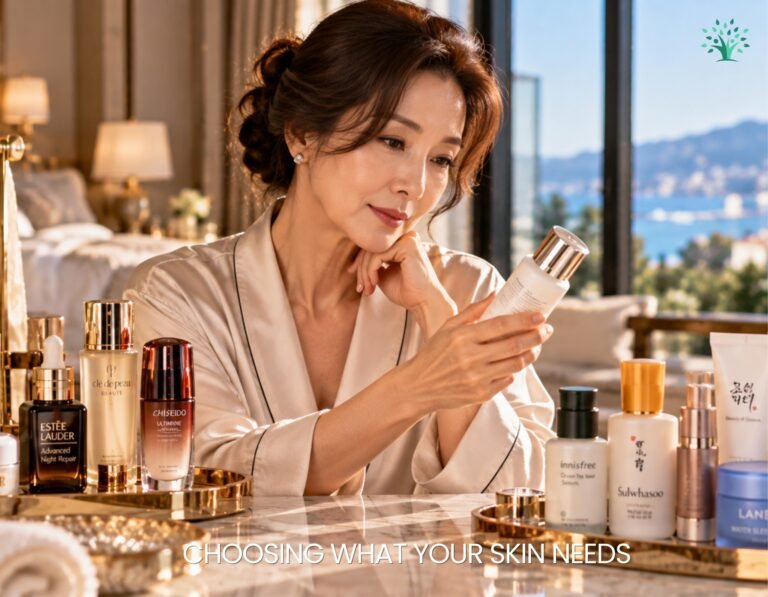
K-beauty has made sophisticated skincare available at prices that would have surprised many of us years ago. Peptides, ceramides, ferments, soothing ingredients, hydrating complexes, and elegant textures are no longer limited to prestige beauty counters.
That doesn’t mean Korean skincare is automatically better.
Luxury companies may have proprietary technologies, extensive research behind a particular formula, or decades of expertise in an ingredient category. When that technology addresses something I specifically want, I’m willing to pay for it.
What K-beauty changed for me was the assumption that higher price automatically means a more sophisticated product.
Now I start with my skin concern.
What am I trying to improve? What ingredients or type of formulation make sense? How sensitive is my skin? Is there something genuinely distinctive about the premium product?
Those questions are especially important with expensive anti-aging skincare, because the difference between a $40 product and a $200 product isn’t necessarily the difference between ineffective and effective.
Only after I’ve considered the formula and what I want it to accomplish do I look at price.
Sometimes I still choose luxury. Other times I find a Korean product that gives me everything I was actually looking for.
Neither decision needs to be emotional.
The expensive bottle doesn’t make me more sophisticated, and choosing the affordable one doesn’t mean I’m settling.
It simply means I know what I’m paying for.
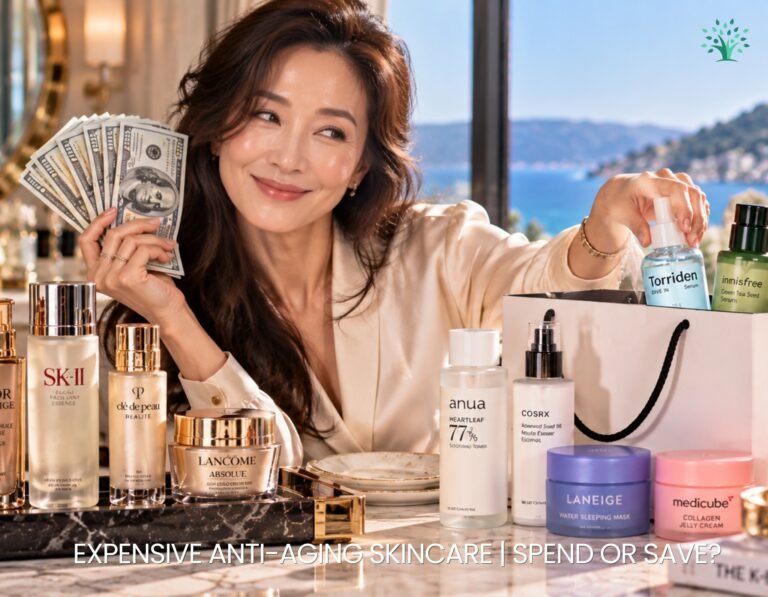
IX. Expensive Anti-Aging Skincare | My Spend vs. Save Rule
After trying skincare across very different price ranges, I’ve developed a simple way of deciding where my money goes.
I usually save on: cleansers, basic hydration, straightforward barrier moisturizers, and products where an affordable formula already does exactly what I need.
I consider spending more on: treatment serums, difficult-to-formulate actives, specialized delivery systems, and products where there is something meaningful about the formulation that I can’t easily find elsewhere.
I don’t judge by price on: sunscreen. I want effective protection in a formula I enjoy enough to apply generously and consistently.
Then there’s luxury itself.
Sometimes I buy a beautiful skincare product because I love using it. I enjoy the texture, packaging, ritual, and little moment it gives me at the end of the day.
There’s nothing wrong with that.
I simply don’t confuse the pleasure of luxury with evidence that my skin needs the product.
That’s ultimately my rule for expensive anti-aging skincare:
Spend more when you’re paying for something meaningful to you—not because the price convinced you it must work better.
IX. Products We Use & Recommend
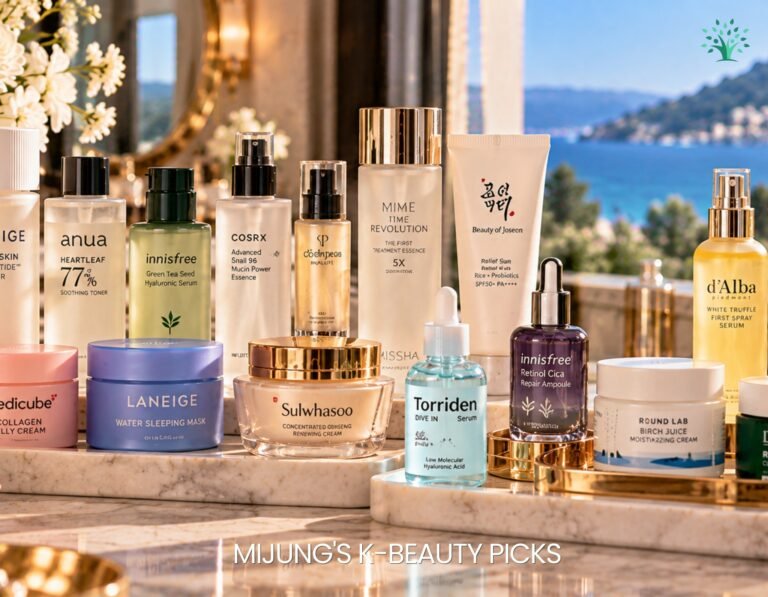
If you’ve been reading this and thinking, Then where would you start with Korean skincare?—I’ve put together my personal collection of products worth knowing about.
Mijung’s K-Beauty Picks includes Korean skincare I use, recommend, or believe deserves a closer look for hydration, barrier care, brightening, firmness, soothing, and everyday skin health.
Some are affordable alternatives to much more expensive categories. Others aren’t alternatives at all—they’re simply excellent Korean products that stand on their own.
After years of talking about skincare with other women as a Korean Air flight attendant and later working around Korean cosmetic R&D, I’ve learned that the most useful recommendation isn’t always the newest product or the most expensive one.
It’s the product that makes sense for what your skin actually needs.
That’s what I look for in this collection.
Explore Mijung’s K-Beauty Picks in the LTL Shop.
As an Amazon Associate, I earn from qualifying purchases. These are products we personally use and recommend because they support a simple, consistent approach to skincare without making the routine unnecessarily complicated.
X. Glow Reset Planner
One thing dark spots taught me is how easy it is to make skincare more complicated than it needs to be.
When progress feels slow, we start adding things. Another serum, another active ingredient, another step that promises to work faster. Before long, it becomes difficult to tell what’s helping, what’s causing irritation, or whether we’ve given anything enough time to work.
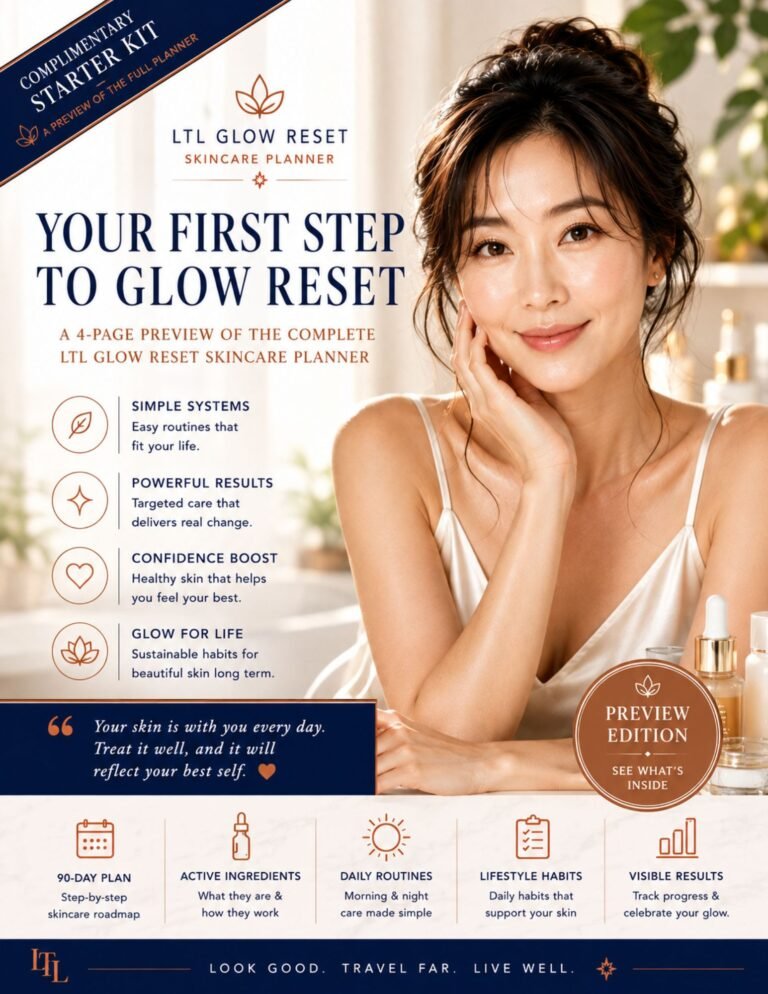
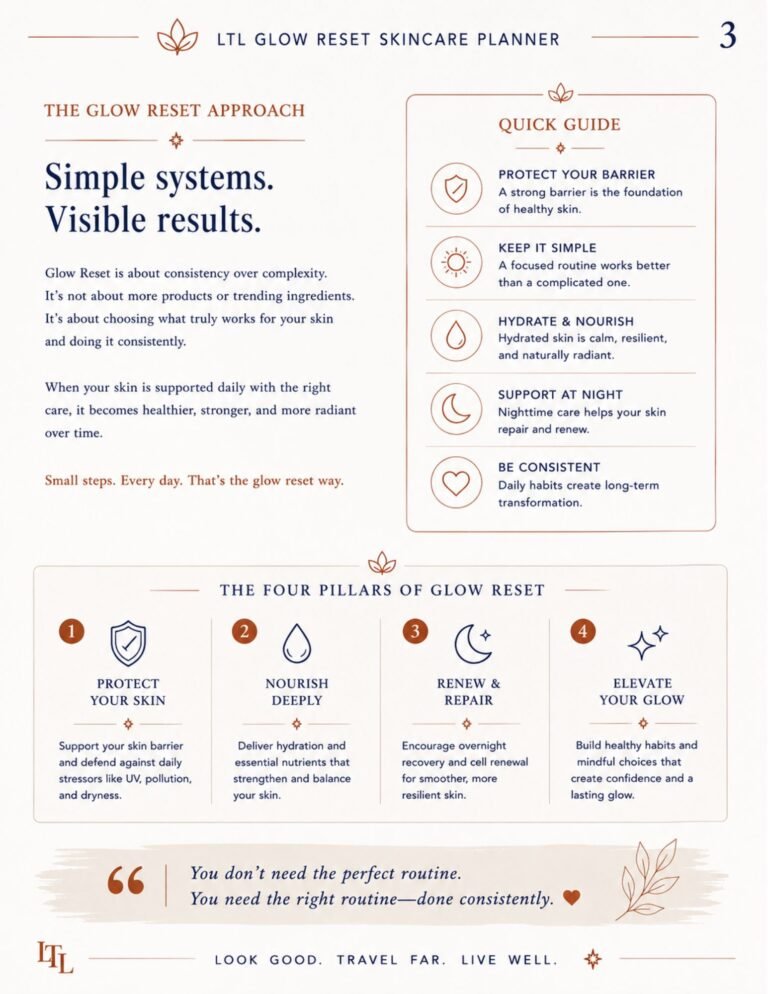
That’s one of the reasons we created the Glow Reset Planner.
The planner provides a practical framework for taking a closer look at your skincare routine, supporting hydration and the skin barrier, and building daily habits that are easier to maintain. For stubborn pigmentation especially, that consistency can matter more than continually changing products.
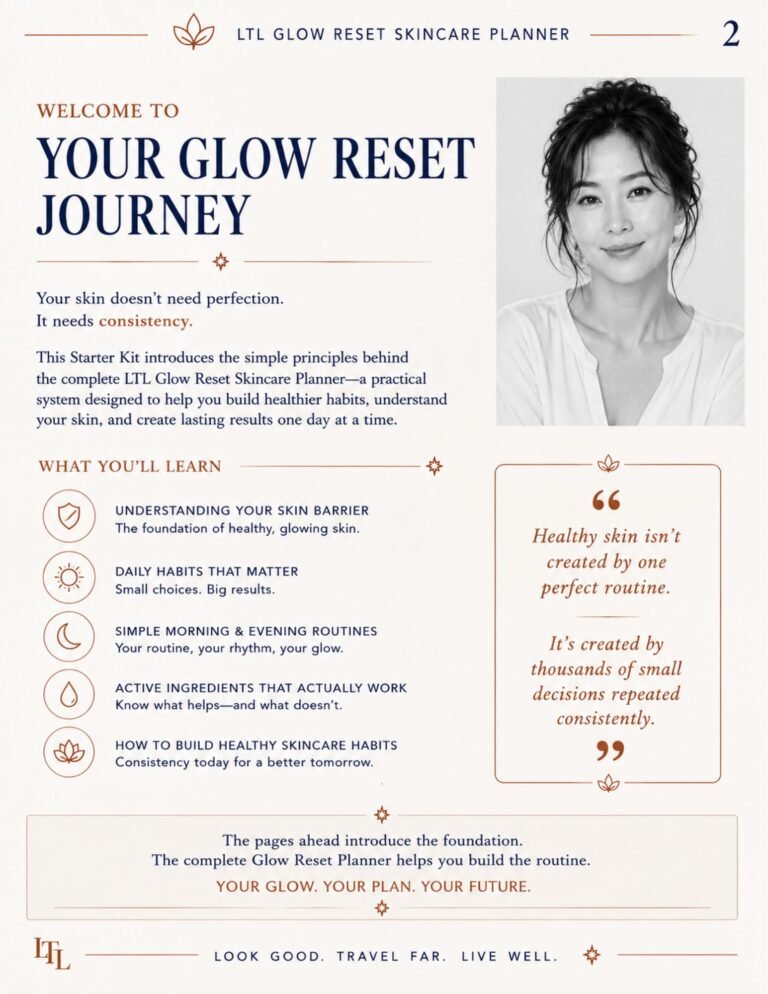
Inside, you’ll find guidance and planning pages focused on daily skincare, hydration, skin-barrier support, recovery, product routines, healthy lifestyle habits, and creating greater consistency without making skincare unnecessarily complicated.
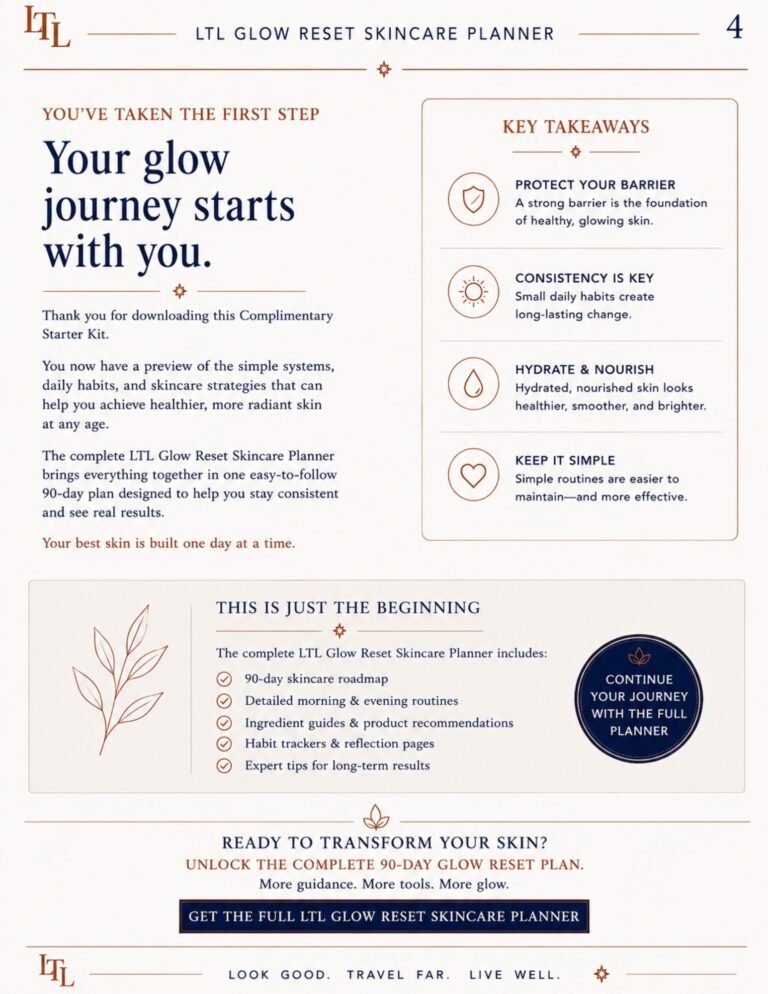
👉 Get your complimentary “Glow Reset Planner” 4-Page Sampler. Click here to download.
A selected preview from the complete planner to help you simplify your routine, track what you’re actually doing, and give your skin enough consistency to see what may be working.
🛍 If you’d like to continue, the complete Glow Reset Planner is a 24-page premium LTL Living Guide designed to help you build a more thoughtful skincare routine, support healthier daily habits, and stop feeling as though you need to start over every time your skin changes.
Sometimes a reset isn’t about doing more. It’s about figuring out what your skin actually needs.
XI. CHOOSE WELL. GLOW RESET. | Final Thoughts
I don’t think good skincare should be measured by how much we spent on it.
There are luxury products I genuinely enjoy and would happily buy again. Some offer sophisticated formulations, beautiful textures, or technologies that make the higher price worthwhile to me.
There are also affordable products sitting in my bathroom that I wouldn’t replace with something more expensive simply because I could.
That distinction becomes more important as we get older.
Our skin changes, but that doesn’t mean every concern needs another costly treatment. Sometimes what it needs is better hydration, a stronger barrier, consistent sun protection, or one thoughtfully chosen active rather than five beautiful bottles competing for space on the counter.
I’ve learned to ask a much simpler question:
What does my skin need from this product?
If a luxury formula gives me something meaningful, I’ll spend the money.
If a Korean or more affordable product does the job beautifully, I’ll save it.
And sometimes I’ll buy the beautiful jar simply because I love it.
That’s okay too.
The goal isn’t to spend less on everything—or more.
It’s knowing the difference between what our skin needs and what luxury makes us want.
CHOOSE WELL. GLOW RESET.
With care,
Mijung