
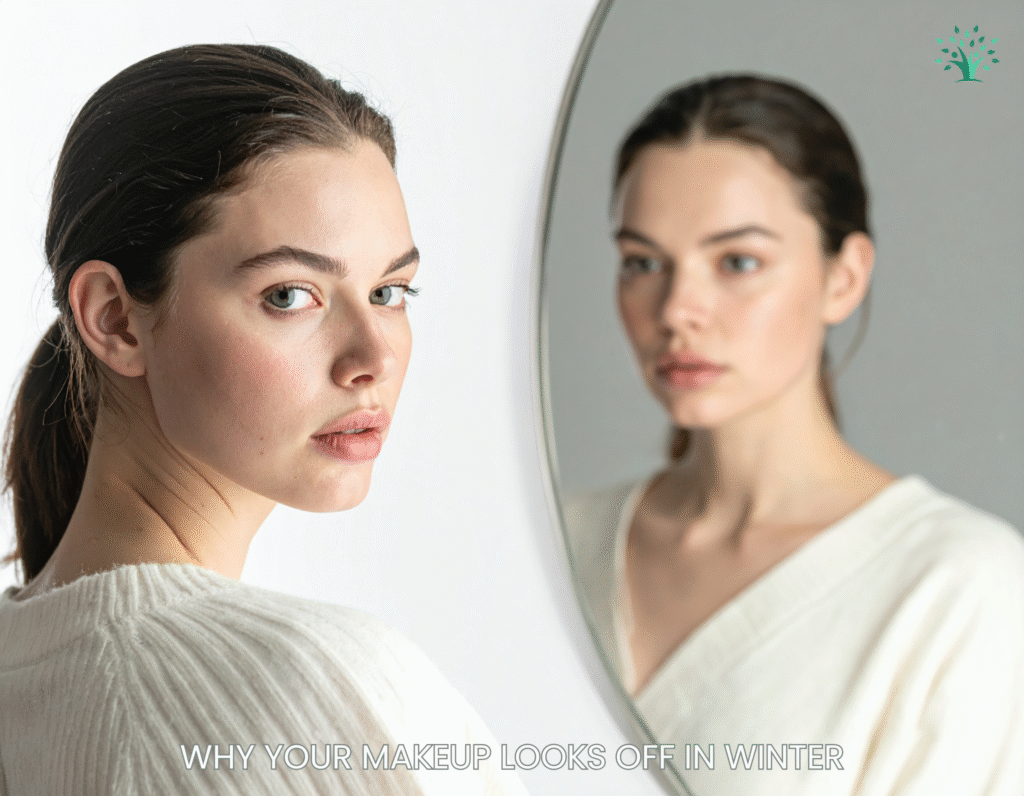
Why Your Makeup Looks Off in Winter (Even With the Same Routine)
Skincare & Beauty by Mijung | Korean Beauty & Flight Attendant Experience
i. iNTROduction on Why Your Makeup Looks Off in Winter
When makeup looks off in winter, it can feel oddly discouraging. You’re using the same products you trust. You’re applying them the same way you always have. And yet, something feels wrong. Foundation separates. Concealer clings. Skin looks dull, textured, or tired — even on days when you’re trying your best.
If you’ve caught yourself thinking, “Why doesn’t my makeup look like it did a few months ago?” — you’re not imagining it. And you’re definitely not alone.
This isn’t about technique. It’s not that you suddenly forgot how to do your makeup. Winter quietly changes how skin behaves, especially for women. Cold air, indoor heating, dehydration, and a stressed skin barrier all affect the surface your makeup sits on. When that surface changes, makeup responds — even if your routine hasn’t.
That’s why makeup looks off in winter for so many women who normally never struggle. The issue isn’t your makeup. It’s the skin underneath asking for a different kind of support.
What makes this frustrating is that our instinct is to add more — heavier creams, extra layers, new primers, or switching foundations. In winter, that usually makes things worse. Makeup doesn’t need more product. It needs calmer, more balanced skin.
In this article, we’ll talk honestly about why makeup looks off in winter, what’s really happening beneath the surface, and how small, smart skincare shifts can help your makeup look smooth and natural again — without starting over or buying everything new.
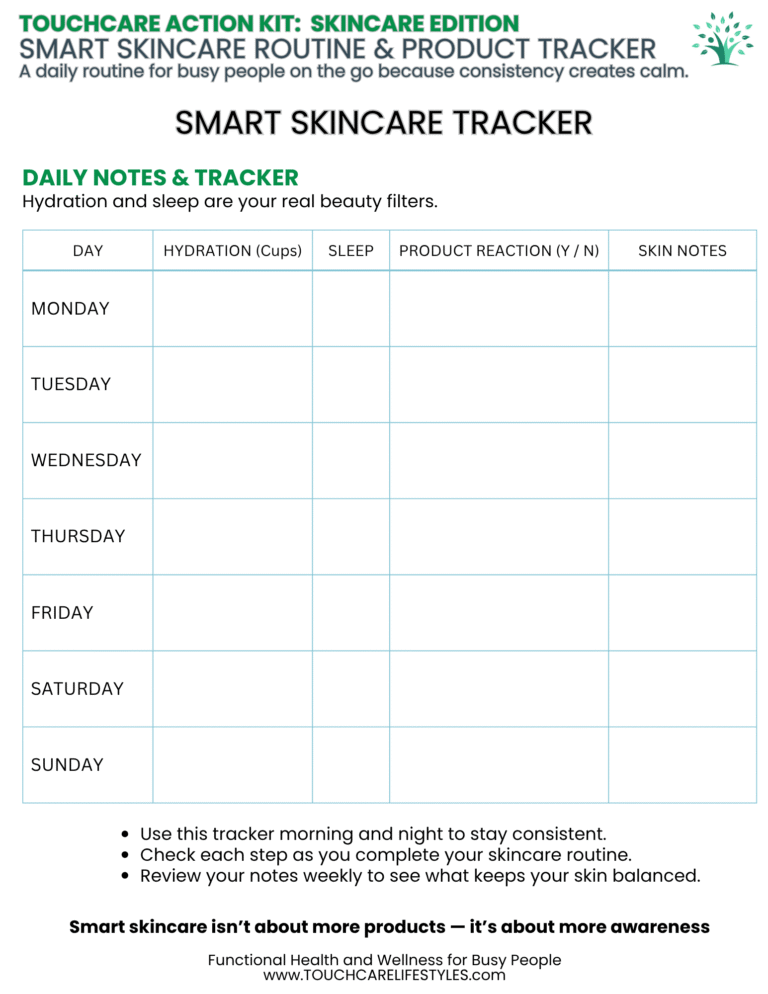
📥 BONUS: Smart Skincare Tracker — A Daily Routine for Busy People on the Go
Preview your tracker below and download the free 2-page printable at the end of this post!
Quick Jump Guide
Why makeup looks off in winter
How cold weather changes skin texture and hydration
Why makeup separates, clings, or looks dull
Common winter makeup mistakes (even with good products)
Simple skin-first fixes that help makeup sit smoothly again
This Guide Is for You If…
Your makeup suddenly looks patchy or uneven in winter
Foundation settles into dry areas or texture
Makeup looks dull by midday even with setting products
Your routine hasn’t changed, but results have
You want makeup to look natural again without buying all new products
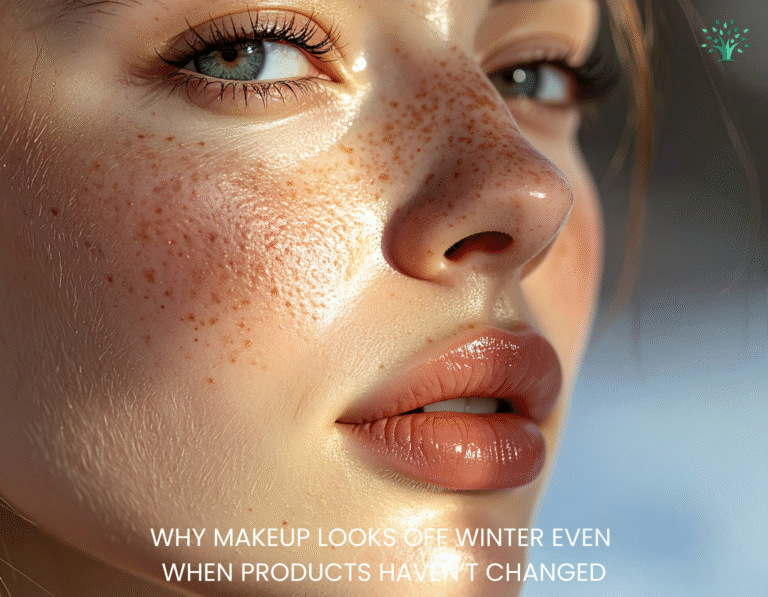
II. Why Makeup Looks Off Winter Even When Your Products Haven’t Changed
When makeup looks off winter, the first instinct is to blame the products. But most of the time, the products are doing exactly what they’re designed to do — they’re just reacting to a different skin surface.
Winter changes the way skin holds water. Cold outdoor air and dry indoor heating slowly pull moisture out of the skin, even if you’re moisturizing regularly. When hydration drops at the surface level, skin becomes less flexible. Makeup applied on top has nothing smooth to grip onto, so it starts to separate, cling, or look uneven.
Another quiet shift happens with the skin barrier. In winter, the barrier works harder just to protect itself. When it’s stressed, it prioritizes defense over smoothness. That’s why makeup can suddenly emphasize texture you never noticed before.
This is why makeup looks off winter even when your routine hasn’t changed. The base has changed. And makeup always reveals what’s happening underneath.
Recommended Reading:
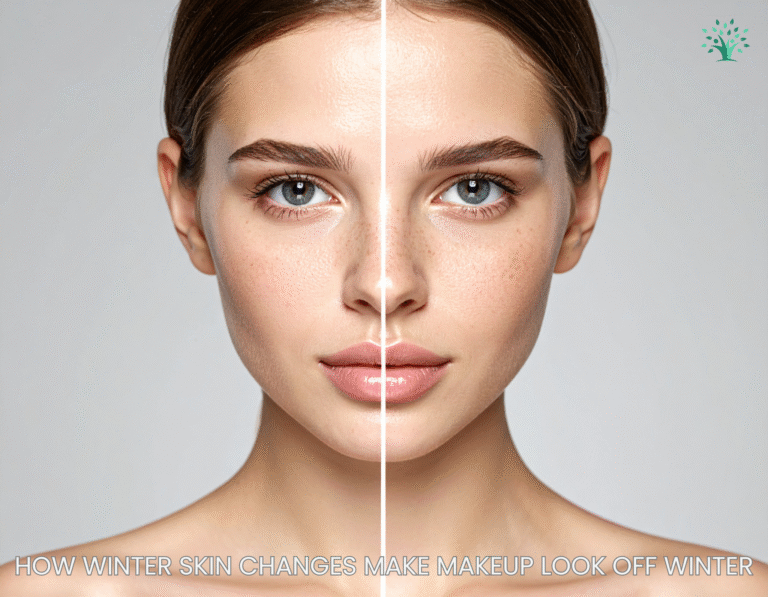
III. How Winter Skin Changes Make Makeup Look Off Winter
When makeup looks off winter, it’s often because skin is behaving inconsistently from day to day.
Some mornings skin feels tight and dry. Other days it feels coated but still dull. That inconsistency confuses makeup. Foundation may go on smoothly one day and break apart the next, even with the same prep.
Winter also slows natural skin turnover. Dead skin cells linger longer on the surface, creating uneven texture. Makeup catches on those areas, making skin look patchy or cakey, especially around the nose, mouth, and chin.
On top of that, circulation changes in cold weather. Reduced blood flow can make skin look flatter or more tired, which affects how makeup reflects light. The result isn’t dramatic failure — it’s subtle disappointment. Makeup looks “off,” not terrible, which makes it harder to diagnose.
This is why winter makeup issues feel frustrating rather than obvious. Everything is close, but not quite right.
⭐ Recommended Reading
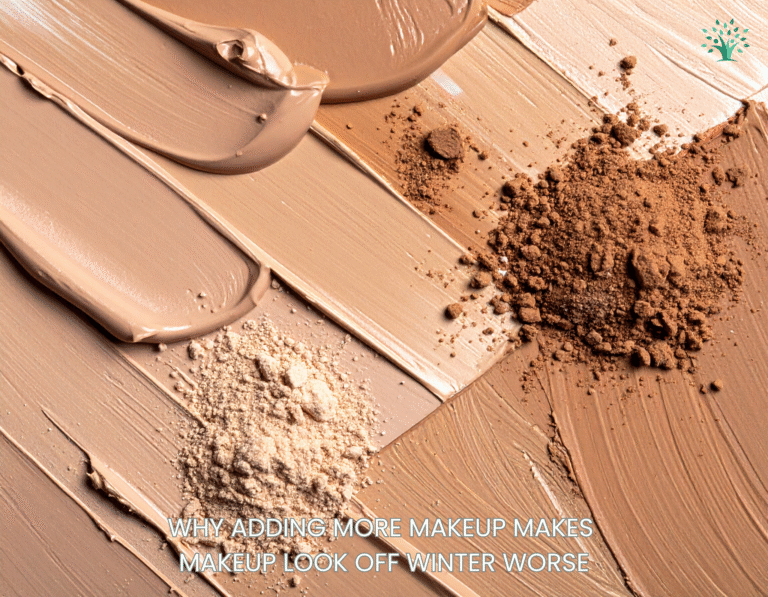
IV. Why Adding More Makeup Makes Makeup Look Off Winter Worse
When makeup looks off winter, many women try to fix it by adding more — thicker moisturizer, heavier primer, extra layers of foundation, or more setting powder. Unfortunately, this often makes the problem worse.
In winter, skin struggles more with absorption. Heavy layers tend to sit on the surface instead of sinking in. Makeup applied on top of that slips, separates, or looks heavy by midday.
Powder can be especially tricky. While it feels like it should help control texture, it often grabs onto dry areas and emphasizes them instead. The result is makeup that looks settled rather than smooth.
The real issue isn’t lack of product. It’s lack of balance. When the skin barrier is calm and hydrated in the right way, makeup needs less help — not more.
Understanding this is a turning point. Once you stop fighting winter skin and start supporting it, makeup begins to behave again.
⭐ Recommended Reading
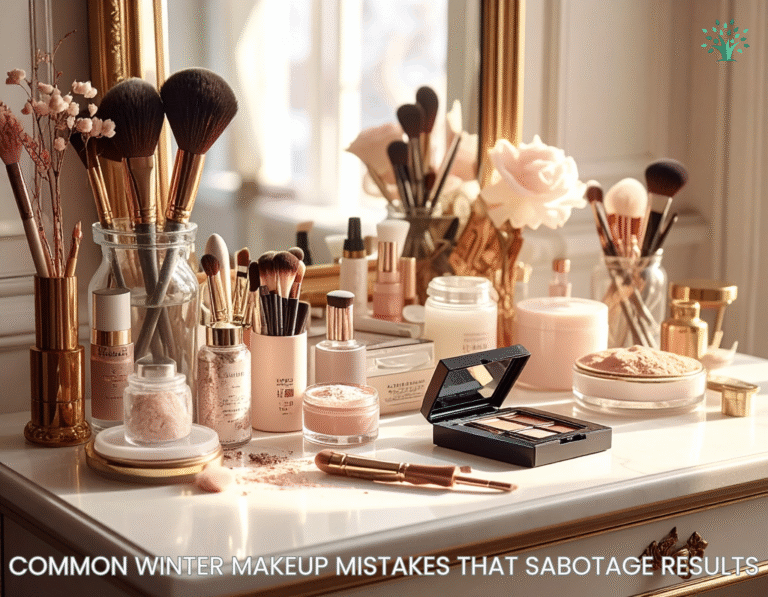
V. The Quiet Skin Changes That Affect Makeup in Winter
One of the hardest parts about winter makeup is that nothing feels dramatically wrong. Skin doesn’t look broken or irritated — it just doesn’t look like itself.
In winter, skin often becomes slightly dehydrated beneath the surface while feeling heavier on top. Moisturizer sits, but hydration doesn’t hold. This creates a mismatch between what skin feels like and how it performs. Makeup applied over that surface can slide in some areas and cling in others.
There’s also a timing issue. Skin recovers more slowly in cold weather. What used to settle in five minutes now takes much longer. When makeup is applied before skin has fully absorbed skincare, separation and texture show up later in the day.
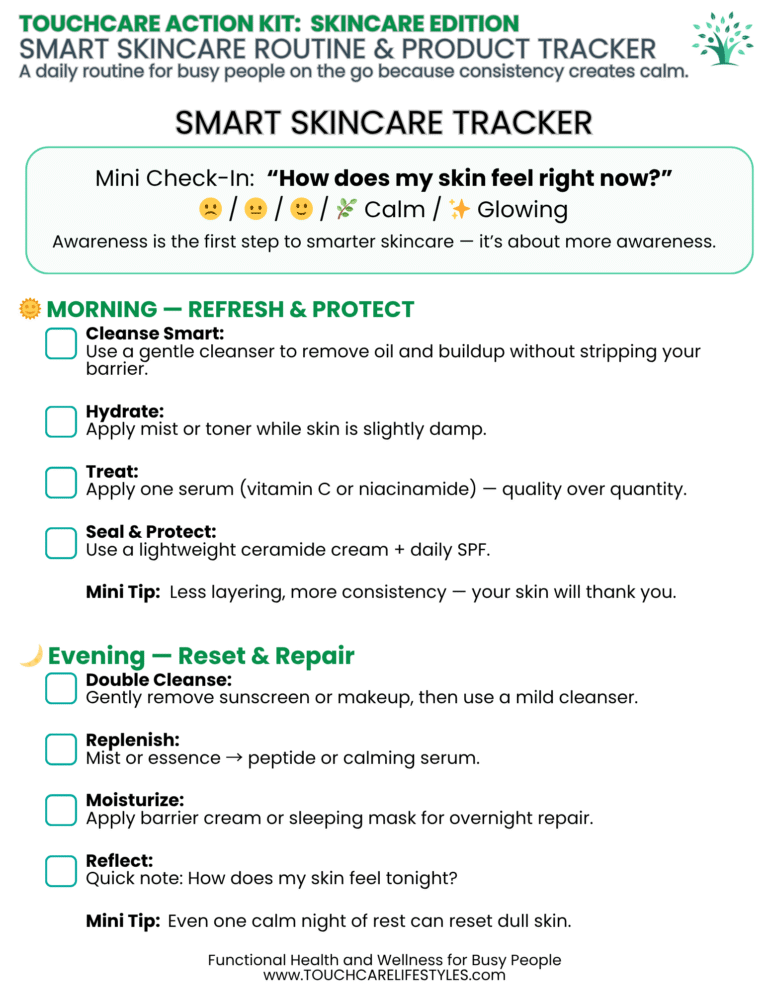
VI. Smart Skincare Reset (Free Tracker)
When makeup suddenly looks off in winter, the best reset usually isn’t doing more — it’s doing less, more consistently.
That’s why the 📥 Download Free Printable PDF “Smart Skincare Routine & Product Tracker” focuses on awareness instead of adding steps. It doesn’t ask you to change your products or overhaul your routine. It helps you notice a few key patterns — hydration, sleep, and skin reactions — and repeat what works without pressure.
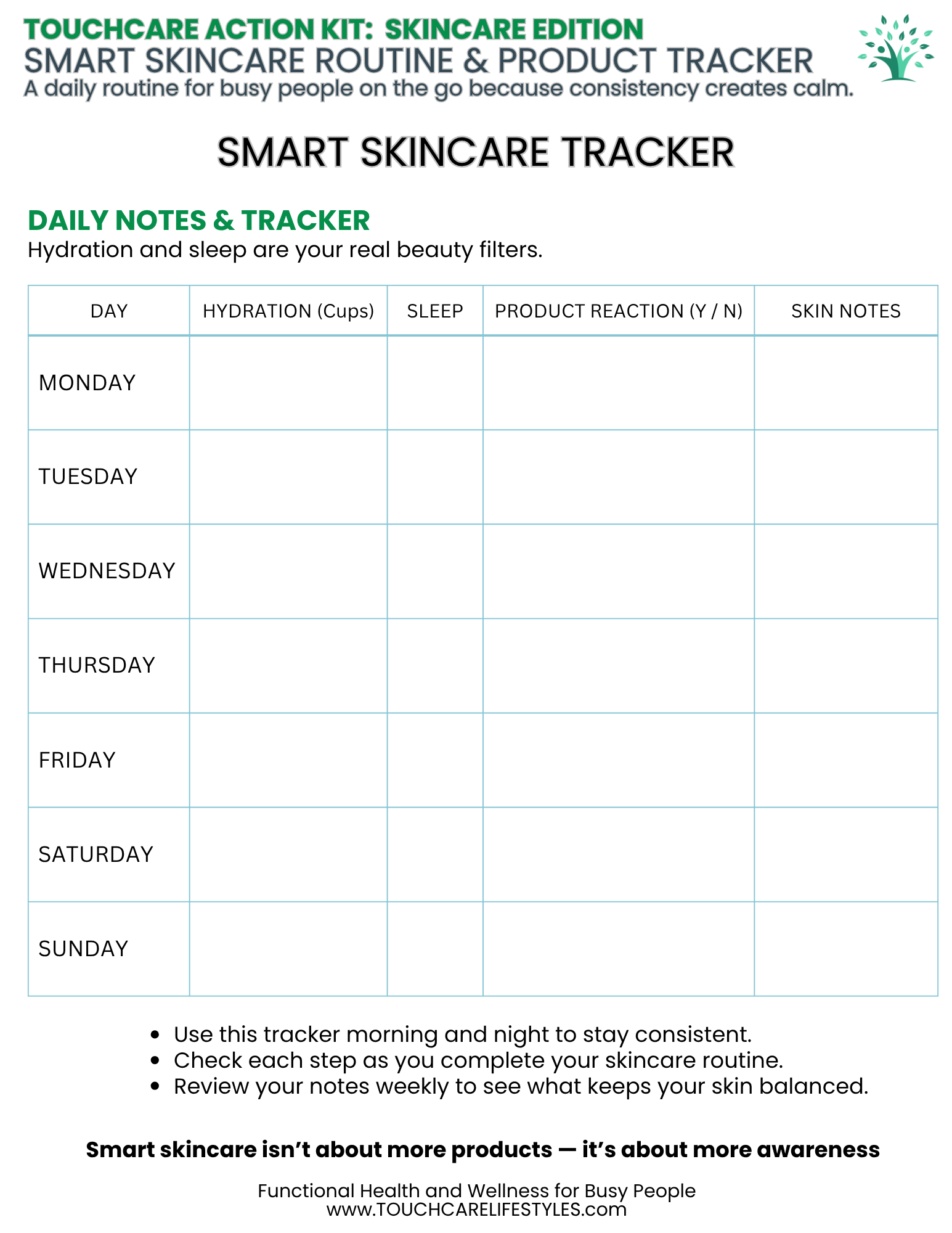
The tracker is designed to reduce guesswork. You’re not waking up wondering which product to fix or replace. You’re simply observing what your skin is telling you and keeping your routine steady while winter does its thing.
This kind of reset works because it aligns with how skin actually behaves in cold, dry months. When hydration stabilizes and the barrier calms down, makeup starts cooperating again. You don’t have to force better results — they return naturally when the base settles.

ViI. Why Skincare Matters More Than Makeup in Winter
When makeup looks off in winter, it’s tempting to believe the problem lives in your foundation or application. But winter exposes something makeup normally hides — skin that’s quietly dehydrated beneath the surface, even when it doesn’t feel dry to the touch.
In colder months, skin loses water faster than it can replenish it. Indoor heating pulls moisture from the air. Cold outdoor wind stresses the barrier. As a result, skin becomes less flexible. It may feel moisturized on top, yet underneath it lacks the water makeup needs to sit smoothly.
This is also where heavier creams often backfire. When skin is dehydrated rather than dry, thick products sit on the surface instead of correcting the problem. Makeup applied on top slides or breaks apart later because hydration never reached the layers that matter.
This is why winter makeup improves when hydration is layered thoughtfully. A formula like LANEIGE Cream Skin Toner & Moisturizer delivers fluid hydration that penetrates instead of coating the skin. Following with Torriden DIVE-IN Toner helps reinforce that water balance so skin stays supple rather than tight or patchy throughout the day.
When hydration is restored at the right level, makeup doesn’t need to be “fixed.” It simply behaves the way it used to.

ViII. The Barrier Issue Most Women Don’t Realize Is Affecting Makeup
A stressed skin barrier is one of the biggest reasons makeup suddenly looks uneven in winter.
The barrier is responsible for keeping moisture in and irritants out. In winter, it works overtime. Cold air, temperature changes, over-cleansing, and even well-intentioned exfoliation slowly wear it down. When that happens, skin becomes unpredictable. Some areas absorb makeup too quickly. Others repel it entirely.
This is why winter makeup can look fine in one area and broken in another. The skin barrier isn’t functioning evenly, so makeup can’t behave evenly either.
Supporting the barrier changes how makeup wears over the course of the day. Dr. Jart Ceramidin Skin Barriers Face Cream helps reinforce the lipid structure skin relies on to stay stable. When the barrier is supported, makeup stays flexible. It doesn’t crack as skin moves, and it doesn’t separate as hydration fluctuates.
Barrier care isn’t about heaviness. It’s about restoring balance so skin stops reacting — and makeup stops revealing that reaction.
ix. Small Skin Shifts That Make Makeup Look Like It Used To
Once hydration and barrier support are in place, the biggest improvements often come from slowing down — not adding more.
In winter, skin absorbs products more slowly. Applying makeup too quickly after skincare leaves products half-settled, which causes separation later. Giving skin time to fully absorb allows makeup to sit on a stable surface rather than mixing unpredictably throughout the day.
Dry indoor air also quietly undoes progress. Heating systems continue to pull moisture from the skin long after makeup is applied. This is why makeup can look fine in the morning and tired by afternoon.
A lightweight mist like d’Alba White Truffle First Spray Serum helps reintroduce hydration without disturbing makeup, especially in dry environments. It refreshes the skin beneath makeup rather than sitting on top of it.
Sealing hydration properly also matters. LANEIGE Water Bank Blue Hyaluronic Cream helps lock moisture in so skin stays flexible instead of tightening as the day goes on. When skin remains comfortable, makeup moves with it instead of breaking apart.
X. Winter Makeup Support Essentials
When my makeup felt unpredictable in winter, these were the products that consistently helped my skin stay balanced so makeup could sit properly.
- LANEIGE Cream Skin Toner & Moisturizer — Restores hydration so makeup stops gripping dry patches.
- Torriden DIVE-IN Toner — Lightweight hydration that helps foundation apply more evenly.
- Dr. Jart Ceramidin Skin Barriers Face Cream — Strengthens the barrier so makeup stays flexible instead of cracking.
- d’Alba White Truffle First Spray Serum — Refreshes hydration during the day without lifting makeup.
- LANEIGE Water Bank Blue Hyaluronic Cream — Seals moisture so base makeup wears smoothly in dry winter air.
Affiliate Disclaimer: As an Amazon Associate, I earn from qualifying purchases. These are products I personally use and trust — shared here to make your skincare recovery easier and more effective.

Xi. Final Thoughts: When Skin Settles, Makeup Follows
If your makeup looks off in winter, it’s not because you forgot how to apply it. And it’s not because your products suddenly stopped working.
Winter asks more from skin. When skin is stressed, makeup reflects it. The solution isn’t more makeup — it’s calmer, more consistent skin support.
Once hydration holds and the barrier recovers, makeup naturally starts to cooperate again. Texture softens. Finish looks smoother. Confidence comes back without forcing it.
When Skin Settles, Makeup Follows
With care,
Mijung
⭐ Recommended Reading
⭐ Upgrade Your Wellness Routine
If this guide helped you simplify your routine and understand what your skin actually responds to, you may appreciate the premium Smart Skincare Routine & Product Tracker I created to go with it.
It’s a clean, structured TouchCare Action Kit designed to help you organize your products, track what works (and what doesn’t), build a minimalist routine, reduce irritation triggers, and understand your skin through simple daily and weekly check-ins.
If you’d like a printable, guided version of this clarity-focused skincare routine, you can find the premium edition on Gumroad.