

Why Winter Skin Reacts to Everything
Skincare & Beauty by Mijung | Korean Beauty & Flight Attendant Experience
Introduction to Winter Skin Reacts
Winter has a way of making skin feel unfamiliar, even when nothing in your routine has changed. Products you’ve trusted for years suddenly tingle. Gentle formulas feel heavy. Redness shows up faster and lingers longer. That’s because winter skin reacts differently than it does the rest of the year.
I experienced this repeatedly during my years as a flight attendant, especially on winter routes to places like Moscow and Toronto. Long flights into cold destinations amplified everything. Cabin air stripped moisture. Hotel heating dried my skin further. Stepping outside into freezing temperatures and back into overheated terminals pushed my skin barrier to its limit. Even products I relied on suddenly felt like too much.
What made it frustrating was that I wasn’t doing anything wrong. I simplified my routine. I chose gentle products. Yet my skin still reacted. Tightness showed up quickly. Redness became constant. Sensitivity felt like the new normal.
Cold air, low humidity, indoor heating, and travel stress quietly weaken the skin barrier. Once that barrier is compromised, skin becomes reactive to nearly everything that touches it, including products meant to calm. When the barrier is overwhelmed, even gentle care can feel like pressure.
This is why winter skin reacts even when you’re careful. It’s not about needing stronger products. It’s about reducing stimulation and giving your skin fewer reasons to defend itself.
In this article, I’ll explain why winter skin reacts so easily, how cold destinations and travel amplify sensitivity, and why a minimalist approach helps skin settle when winter feels relentless.
📥 BONUS: PDF – TouchCare Action Kit – Minimalist Skincare for Travel. Download your “FREE” 1-page printable at the end of this post!
Quick Jump Guide
• Why winter skin reacts more strongly in cold climates
• How flights and heated indoor spaces weaken the skin barrier
• Why gentle products can still feel irritating in winter
• How cold destinations amplify skin sensitivity
• What helps calm reactive skin without overcorrecting
This Guide Is for You If…
• Your skin reacts more in winter than any other season
• Cold destinations make sensitivity worse
• Travel leaves your skin tight, red, or uncomfortable
• Gentle products still feel heavy or irritating
• You want calmer skin without adding more steps

II. Why Winter Skin Reacts More Easily Than Other Seasons
Winter doesn’t just dry your skin. It changes how your skin functions day to day. Cold air holds very little moisture, which means your skin loses hydration faster the moment you step outside. Indoors, heating systems pull even more moisture from the air, creating a constant drying effect that skin never fully escapes.
When the skin barrier loses moisture, it becomes less flexible and more fragile. Think of it like fabric that’s been washed too many times. It still looks fine, but it stretches less and tears more easily. That’s when sensitivity shows up.
This is why winter skin reacts even if your routine hasn’t changed. The skin simply has fewer reserves. What felt balanced in warmer months can suddenly feel irritating, tight, or overwhelming. Skin isn’t being dramatic. It’s responding to a harsher environment with less protection.
For many women, winter sensitivity isn’t about doing something wrong. It’s about skin working harder with less support.
Recommended Reading:
III. How Barrier Stress Makes Winter Skin React to Everything
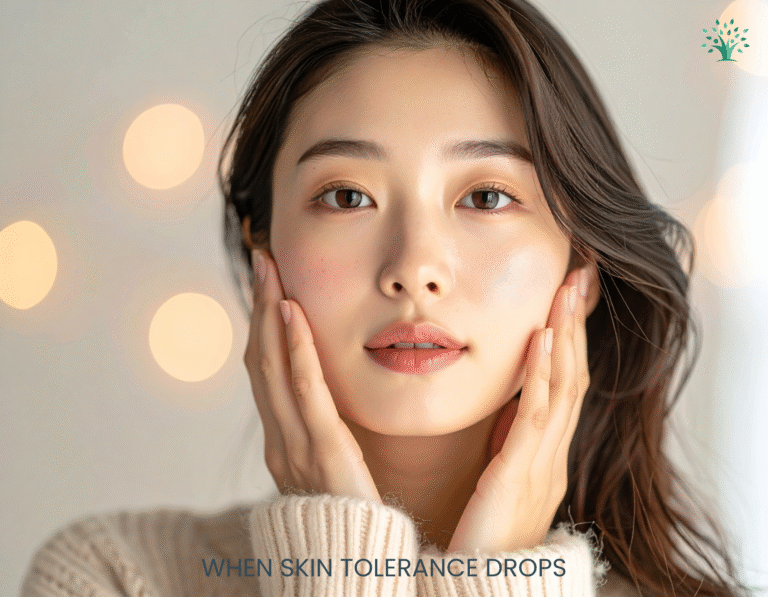
Your skin barrier is meant to filter. It decides what stays out, what stays in, and how much stimulation your skin can tolerate. In winter, that filter weakens quietly.
Repeated exposure to cold wind, dry indoor air, and frequent temperature changes slowly wears the barrier down. The damage doesn’t happen all at once. It builds day after day. Skin may look fine at first, but its tolerance drops.
I felt this most clearly during winter travel. After long flights, my skin felt tight before I even landed. Redness lingered longer than usual. Even applying skincare didn’t feel comforting anymore. Everything felt noticeable.
When the barrier is stressed, skin starts reacting to things it normally ignores. Texture feels heavier. Layering feels suffocating. Even gentle formulas can trigger stinging or warmth. This is why winter skin reacts to products labeled “calming” or “for sensitive skin.”
The issue isn’t that those products are suddenly harsh. The issue is that the skin barrier no longer has the capacity to process stimulation the same way.
⭐ Recommended Reading

IV. Why Travel and Cold Cities Make Winter Skin React Even More
Travel intensifies everything winter already does to the skin. Airplane cabins are extremely dry. Sleep is disrupted. Skincare routines become inconsistent. Then add cold destinations, and the stress multiplies.
Cities like Moscow, Toronto, and even windy Chicago were especially challenging for my skin. Stepping off a flight into freezing air, facing sharp winds, then moving through overheated airports and hotels pushed my skin into constant adjustment mode. There was no time for recovery. In those moments between flights, terminals, and hotels, hands-free hydration mattered. d’Alba White Truffle First Spray Serum allowed me to refresh my skin quickly without rubbing or layering products in already harsh winter conditions.
Cold wind strips moisture instantly. Wind chill increases evaporation from the skin’s surface. Heated indoor spaces then dry the skin again. This rapid back-and-forth confuses the skin barrier and increases inflammation.
In those conditions, winter skin reacts faster and stays reactive longer. Tightness becomes constant. Redness feels harder to calm. Sensitivity doesn’t reset overnight.
This is why winter travel often leaves women feeling like their skin has “changed” when, in reality, it’s overwhelmed. The environment is simply asking too much, too quickly.

V. Why Simplifying Helps When Winter Skin Reacts Constantly
When skin becomes reactive in winter, most of us do the same thing: we add more. Another “soothing” serum. Another cream. Another layer because tightness feels scary. The problem is, reactive skin doesn’t just need hydration—it needs fewer signals to react to.
In winter, your barrier is already stressed. So when you stack multiple formulas, even gentle ones, you create friction: more textures, more preservatives, more layering, more rubbing. Overstimulated skin often interprets that as pressure, not care.
On winter trips, I learned the fastest way to calm skin was to simplify and protect. When my face felt tight after landing, instead of testing new products, I went back to one dependable barrier step and stayed consistent. That’s exactly why a barrier-focused cream matters. Dr. Jart Ceramidin Skin Barrier Face Cream is the type of product I lean on when my skin feels thin and reactive, because it supports the barrier instead of adding stimulation.
Simplifying isn’t “doing less.” It’s giving your skin space to stop defending itself.
When my skin tolerance dropped during winter travel, simplifying also meant reducing product variety. AHC Eye Cream for Face helped by acting as a single all-over moisturizer, so my skin received consistent hydration without processing multiple formulas.
VI. The Hidden Cycle That Keeps Winter Skin Reacts Ongoing
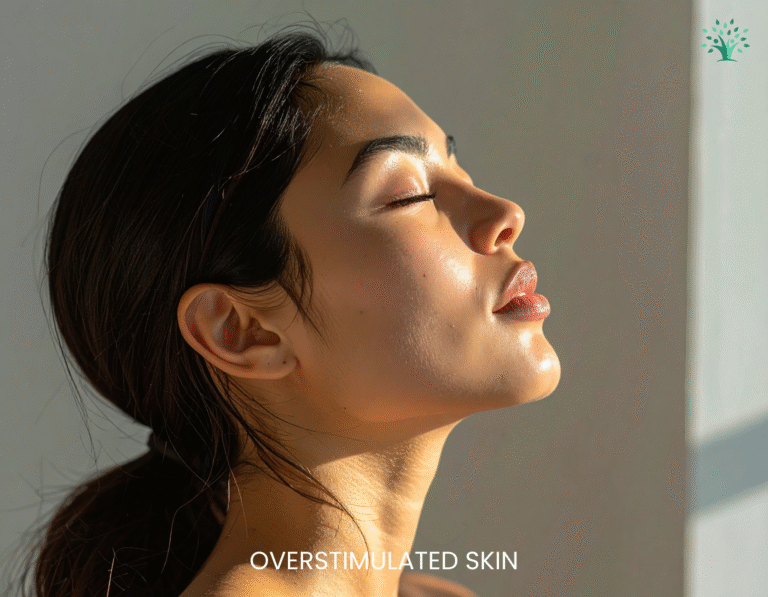
Reactive winter skin often gets stuck in a loop. You feel tight → you add layers → your skin feels irritated → you switch products → your skin gets even more reactive because the routine keeps changing.
Travel makes that loop worse. Airplane cabins dry you out quickly. Then you walk into freezing wind. Then into overheated terminals. Then you wash your face with unfamiliar water. Your skin never gets a stable environment long enough to recover.
What helped me break the cycle was focusing on calm, consistent hydration without heaviness. When my skin felt reactive but still thirsty, I used a light hydration step that didn’t feel like another “thing” on my face. Torriden DIVE-IN Toner fits that role because it hydrates without making skin feel coated or overwhelmed.
The key is to stop chasing perfect skin mid-winter or mid-trip. The goal is to rebuild tolerance. Consistency is what gives your barrier the chance to recover.

VII. Supporting Skin Calm When Winter Skin Reacts
When skin is reactive in winter, the goal isn’t to “fix” it quickly. It’s to reduce the reasons your skin feels the need to stay on guard. Reactive skin is defensive skin.
Cold air, dryness, and constant climate changes keep the skin barrier in a state of alert. When that happens, the skin becomes less selective. It reacts to texture, pressure, layering, and even products meant to soothe. This is why winter sensitivity often feels nonstop instead of occasional.
What helps most is lowering stimulation. Fewer steps. Gentler application. Predictable routines. When skin experiences consistency, it starts to relax its response. When winter travel left my skin overstimulated rather than just dry, recovery mattered as much as daily care. On nights when tightness and sensitivity built up after long exposure to cold air and dry cabins, Mediheal Hyaluronate Watermide Mask helped restore hydration without irritating skin that was already overwhelmed.
During winter travel, I noticed that when my skin felt inflamed or overly sensitive, calming support mattered more than active treatment. This is where Skin1004 Madagascar Centella Ampoule fits naturally into a winter routine, because centella helps calm visible redness and sensitivity without adding heaviness.
Longer-term reactivity often signals that the skin environment itself is stressed. Supporting that environment helps rebuild tolerance over time. Ma:nyo Bifida Biome Ampoule supports skin resilience when winter conditions and travel keep pushing the barrier backward.
And when the skin feels dry but easily overwhelmed, hydration needs to be light and uncomplicated. Torriden DIVE-IN Toner provides hydration without adding texture overload, which helps reactive skin accept moisture more comfortably.
Supporting calm isn’t about doing more. It’s about removing friction so the skin can stop defending itself.
VIII. Products That Support Skin When Winter Skin Reacts
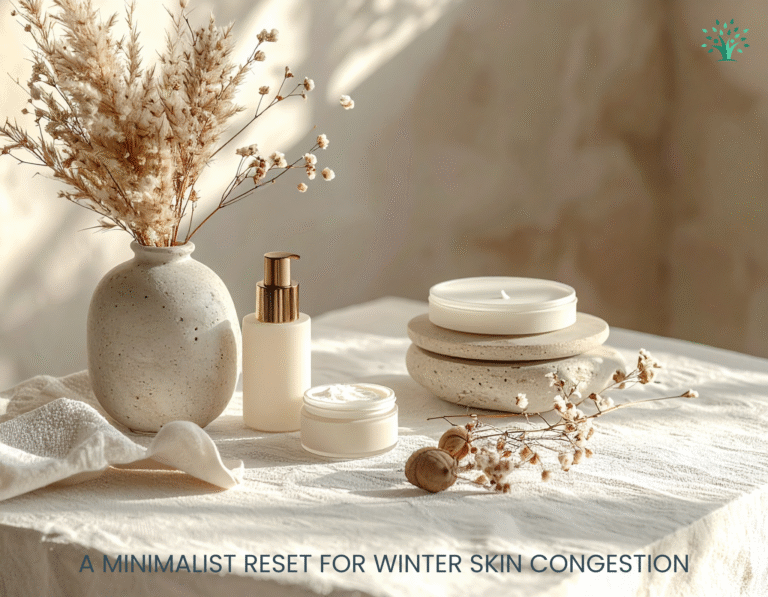
These products support reactive winter skin by focusing on barrier repair, hydration, calming inflammation, and minimizing stimulation. They work best when used consistently, not layered aggressively.
Dr. Jart Ceramidin Skin Barrier Face Cream supports barrier repair when skin feels thin, tight, or overstressed by cold air and travel.
Ma:nyo Bifida Biome Ampoule supports the skin microbiome, helping improve tolerance and reduce overreaction when the barrier is compromised.
Skin1004 Madagascar Centella Ampoule helps calm redness and sensitivity when skin feels inflamed after flights or exposure to cold wind.
Torriden DIVE-IN Toner provides lightweight hydration without heaviness, making it easier for reactive skin to accept moisture.
AHC Eye Cream for Face simplifies moisturizing by serving as an all-over cream when skin tolerance is low.
d’Alba White Truffle First Spray Serum offers hands-free hydration throughout the day, especially useful during flights and in dry hotel rooms.
Mediheal Hyaluronate Watermide Mask supports recovery when skin feels overstimulated after travel or long exposure to harsh winter conditions.
Affiliate Disclaimer:
As an Amazon Associate, I earn from qualifying purchases at no extra cost to you. These are products I personally use and trust.
IX. Minimalist Travel Skincare Routine (Free PDF)
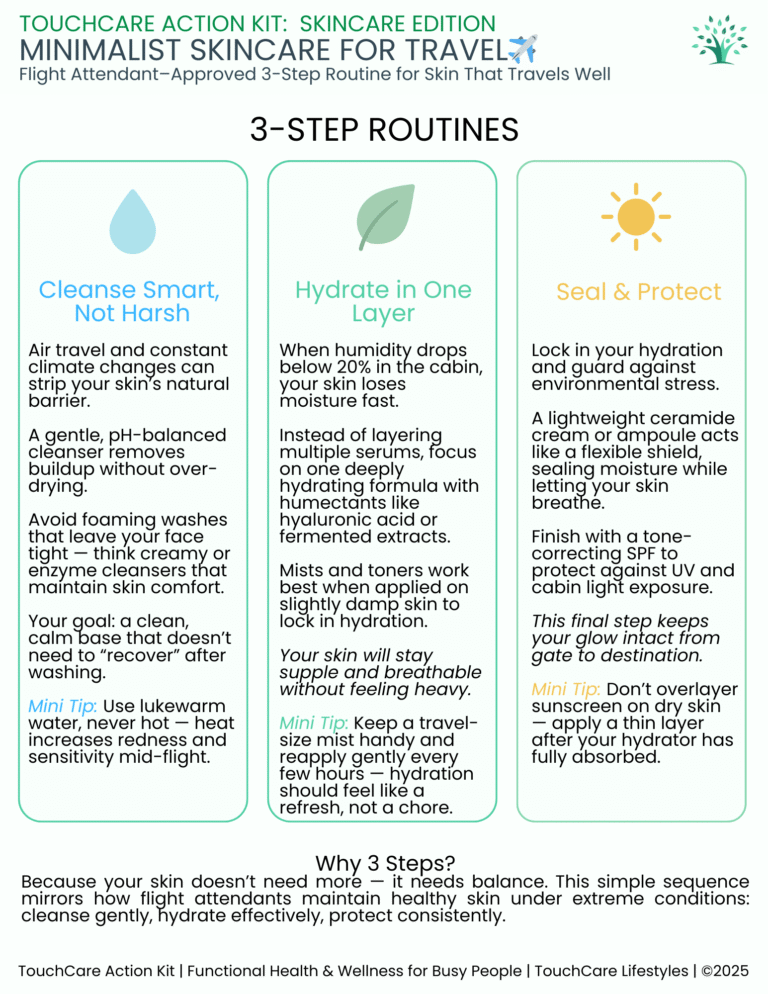
When winter skin reacts, structure matters more than variety. The Minimalist Travel Skincare Routine was created to reduce stimulation, protect the barrier, and help skin recover during travel.
This routine focuses on timing, simplicity, and consistency rather than chasing results. It’s designed for cold destinations, dry flights, and unpredictable environments where skin tolerance is low.
The goal is not glowing skin overnight. It’s calm skin that can tolerate care again.

✈️ Flight Attendant Winter Skin Tips
Flying through dry cabins and cold climates taught me this early:
• Cleanse gently and keep water lukewarm — hot water strips the barrier fast
• Apply skincare immediately after cleansing to lock in moisture
• Reduce layers when flying; fewer products mean less stimulation
• Protect your face from wind and cold air whenever possible
• Focus on consistency over variety, especially on short trips

X. Final Thoughts — Calm Skin Travels Better
Winter skin doesn’t become reactive because you’re doing something wrong. It reacts because cold air, dry cabins, indoor heating, and constant climate shifts overwhelm the skin barrier faster than it can recover.
After years of winter flights into cities like Moscow, Toronto, and windy Chicago, one pattern stayed consistent for me: the more I tried to correct my skin, the worse it felt. The moments my skin finally settled were always the moments I simplified, protected, and stopped chasing fixes.
When winter skin reacts, the goal isn’t glow. It’s tolerance. Calm skin handles travel better. Calm skin recovers faster. Calm skin gives you room to enjoy the trip instead of managing irritation.
Calm skin travels better.
With care,
Mijung
If you enjoyed this guide, explore more routines and flight-tested tips in my other posts:
Skincare Dupes 2025: Budget vs. Luxury Swaps That Actually Work
- How to Layer Skincare Products Without Damaging Your Skin
⭐ Upgrade Your Wellness Routine
If this guide helped you simplify your skincare routine for travel, you may appreciate the premium TouchCare skincare planners I created to make your routine even easier.
Whether you want to build a clean, travel-ready routine, support your skin from within, or track what truly works for your skin, I designed a set of premium TouchCare Action Kits that organize everything into simple, printable pages.
If you’d like a guided, minimalist-friendly version of your skincare routine — with daily pages, checklists, and glow-focused habits — you can explore the full collection on ETSY.