
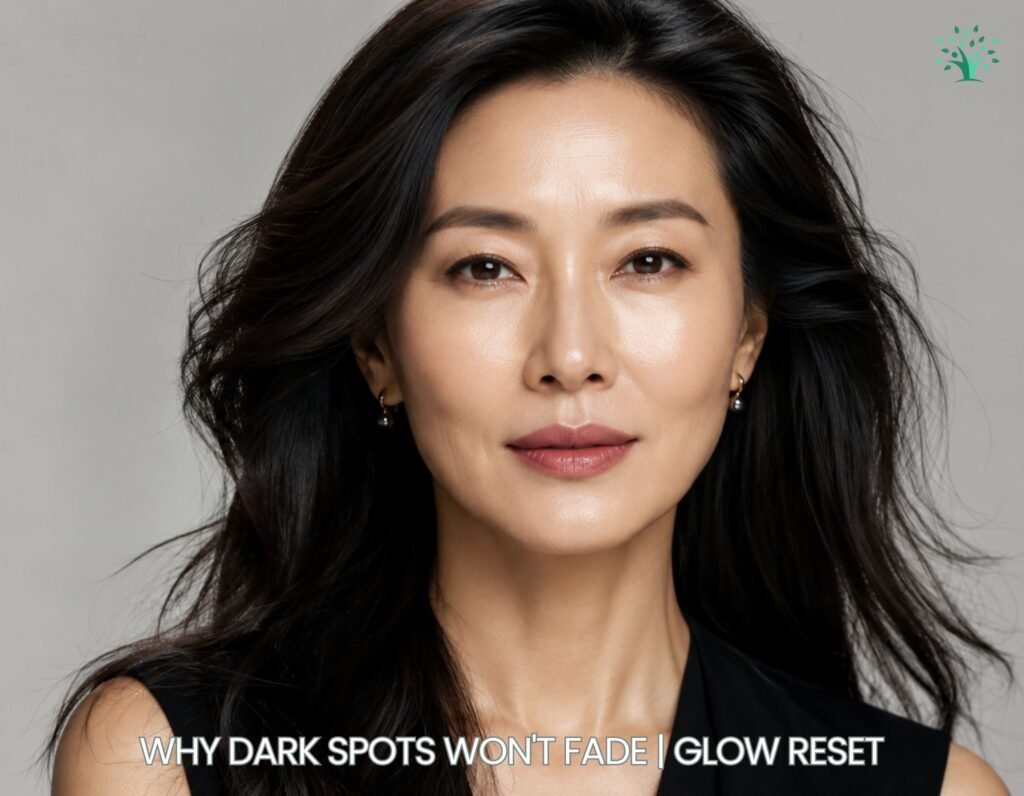
Why Dark Spots Won't Fade | Glow Reset
Look Good. Travel Far. Live Well ◆ Skincare & Beauty by Mijung | K- Beauty & Flight Attendant Experience
I. introduction: Why Dark Spots Won't Fade
Why dark spots won’t fade was something I used to think had a fairly simple answer: I just hadn’t found the right product yet.
So, like many women, I tried brighter serums, stronger ingredients, and products promising a more even complexion. Some helped. A few spots became lighter. But others seemed incredibly stubborn, and sometimes a mark I thought was finally disappearing would become noticeable again.
What I eventually learned is that dark spots aren’t always a product problem.
Our skin produces pigment for a reason, and if the trigger behind that pigment is still present, we may be trying to fade a spot while our skin is receiving signals to keep producing more. Sun exposure is an obvious one, but inflammation, acne, irritation, hormonal changes, and even an overly aggressive skincare routine can contribute.
That changed the way I approached my own skin.
Instead of asking what stronger product I could add, I started paying more attention to what might be causing the discoloration in the first place. I became more consistent with sun protection, more careful about unnecessary irritation, and much less interested in attacking my skin with several active ingredients at once.
Dark spots also taught me patience. Pigment that developed gradually isn’t necessarily going to disappear after a few nights with a new serum. Skin needs time, and some types of discoloration are far more stubborn than others.
So this isn’t going to be another list of miracle ingredients promising spotless skin.
We’re going to look at why the pigment may still be there, what can quietly keep it coming back, and how to build a routine that gives your skin a better chance to look clearer and more even over time.
Quick Guide
In this guide, we’ll explore:
- The different reasons dark spots can appear.
- What may keep stubborn pigmentation from fading.
- How sun exposure, inflammation, and irritation can affect discoloration.
- The skincare habits that may unintentionally make dark spots worse.
- Ingredients and routines that can support a more even-looking complexion.
- When patience and consistency matter more than adding something stronger.
- How to recognize a spot that shouldn’t simply be treated as pigmentation at home.
This Guide Is For…
- Anyone frustrated by dark spots that seem to linger or return.
- Women noticing more uneven pigmentation as their skin changes.
- People dealing with marks left behind after acne or inflammation.
- Anyone using brightening products without seeing the results they expected.
- Sensitive-skin readers who need a gentler approach to discoloration.
- Anyone ready to understand why dark spots won’t fade before adding another product to the routine.
II. Not All Dark Spots Are the Same
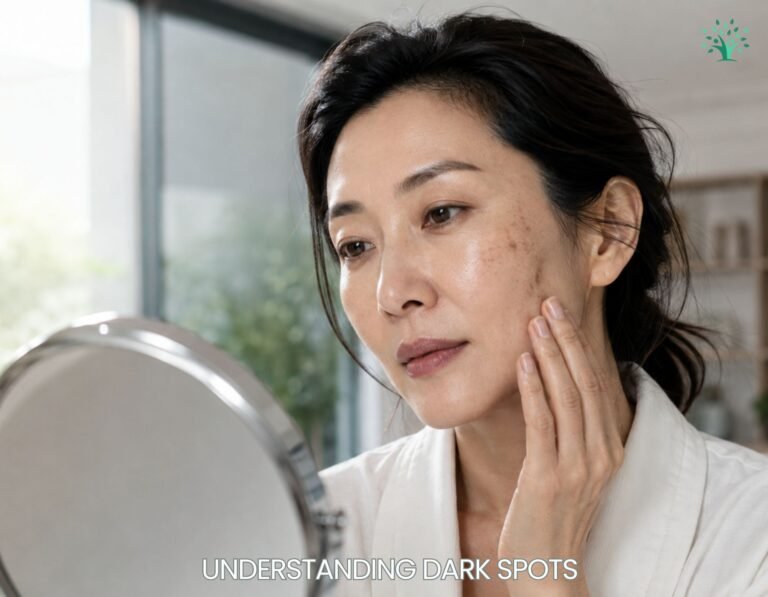
One of the first things I had to understand was that “dark spots” is a very broad description.
A mark left behind after a breakout isn’t necessarily behaving the same way as a sun spot that’s developed after years of exposure. Hormonal pigmentation can be different again, often appearing in larger patches rather than one isolated mark. Even irritation from skincare can leave discoloration behind, especially when skin becomes repeatedly inflamed.
Yet it’s easy to look in the mirror and treat all of them exactly the same.
I did that for years. If something promised brightening, evening, or fading, I assumed it belonged in the routine. What I wasn’t considering was why the pigment appeared in the first place.
That matters because the cause can influence what happens next.
A post-acne mark may gradually improve once the inflammation settles and new breakouts are under control. Sun-related discoloration can keep getting darker when UV exposure continues. Melasma can be particularly persistent because hormones, sun, heat, and other triggers may all play a role.
This is also where skincare has its limits. Not every brown or dark mark should automatically be treated at home as hyperpigmentation. If a spot is new, changing in size, shape, or color, bleeding, itching, or simply looks different from the others, I wouldn’t try to fade it with another serum. That’s something I’d want a dermatologist to see.
Understanding what we’re looking at may not give us an instant solution.
But it gives us a much better place to start.

III. The Trigger May Still Be There
This was probably the biggest change in how I began thinking about pigmentation.
We can spend months trying to lighten a dark spot while continuing to expose our skin to the very things encouraging it to produce more pigment.
Sunlight is one of the clearest examples. Applying a brightening serum every evening won’t accomplish nearly as much if the skin is repeatedly exposed during the day without adequate protection. And it isn’t only the afternoon spent at the beach that matters. Driving, walking, sitting beside a sunny window, and the small amounts of exposure accumulated throughout everyday life can add up over time.
Inflammation can create the same frustrating cycle.
A breakout appears, we pick at it or attack it with several strong products, the skin becomes irritated, and eventually the blemish disappears—but leaves a dark mark behind. Then we reach for more aggressive ingredients to fade the mark and sometimes irritate the skin all over again.
That’s why I no longer think about dark spots as something we simply need to remove.
Sometimes the first step is quieter: protect the skin, calm the inflammation, stop creating unnecessary irritation, and deal with whatever keeps sending the signal for more pigment.
Only then does fading what remains begin to make more sense.
⭐ Recommended Reading
IV. Why Dark Spots Won't Fade Even With Good Skincare
This is where things can become especially frustrating.
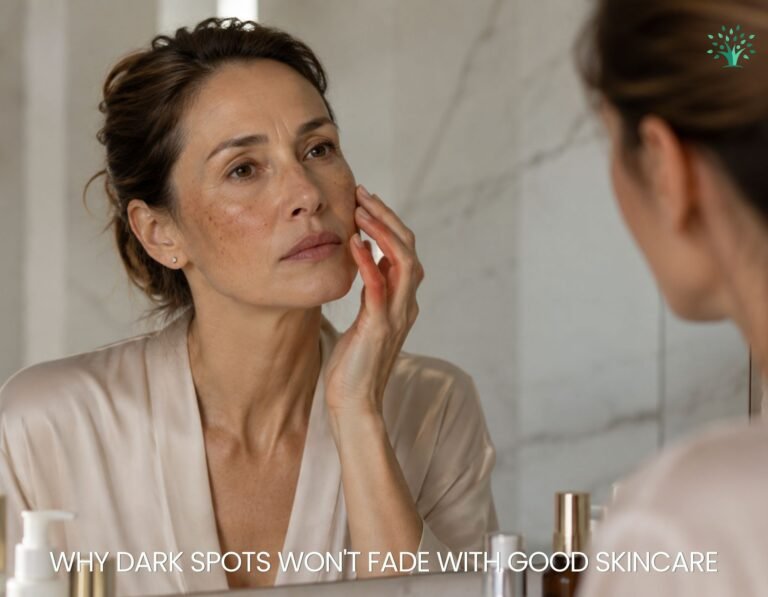
You may already be cleansing gently, moisturizing consistently, wearing sunscreen, and using a well-formulated brightening product. The routine looks good on paper, yet the discoloration seems to be moving at its own painfully slow pace.
Part of the problem is that pigmentation takes time.
The color we see at the surface can reflect pigment sitting at different depths in the skin, and some types are simply more persistent than others. A fresh mark after a breakout may behave very differently from discoloration that has developed gradually after years of sun exposure.
Consistency also matters more than I once realized.
It’s tempting to use a brightening product for several weeks, decide it isn’t working, and move on to something stronger. Then another ingredient gets added, followed by another. Before long, the routine meant to improve pigmentation is creating irritation of its own.
That can work against us.
Understanding why dark spots won’t fade sometimes means accepting that good skincare isn’t necessarily fast skincare. Protecting the skin from continued sun exposure, controlling inflammation, and using appropriate ingredients consistently may look less exciting than constantly trying something new, but it gives the routine time to do its job.
I’ve become much more patient with that process.
If my skin is comfortable, the routine is sustainable, and I’m not continually creating new irritation, I’d rather give a thoughtful approach enough time than start over every few weeks.
⭐ Recommended Reading
V. Sometimes We're Making Pigmentation Worse
I learned this lesson the hard way: trying too hard to fix the skin can become part of the problem.
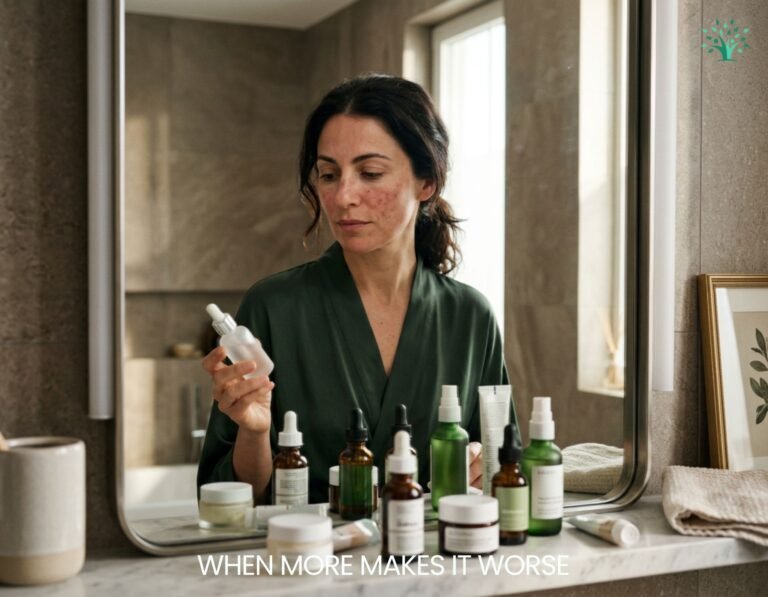
When a dark spot refuses to move, the natural reaction is to do more. Use the exfoliating acid more often. Add another brightening serum. Increase the retinoid. Scrub a little harder. Maybe combine several actives because each one sounds promising on its own.
More isn’t always better.
Overdoing active ingredients can leave skin dry, sensitive, and irritated. For someone already prone to post-inflammatory pigmentation, repeatedly upsetting the skin may create exactly the kind of inflammation we’re trying to avoid.
Picking at blemishes is another obvious example, although knowing that never made it easier for me to leave one alone. What begins as a small breakout can become a much longer-lasting mark after squeezing, scratching, or repeatedly touching it.
Even inconsistency can make the process harder. An aggressive routine for two weeks followed by several days of stopping everything because the skin feels irritated isn’t much of a routine at all.
I’ve found that my skin usually responds better when I stop treating every imperfection like an emergency.
Gentle cleansing, hydration, sun protection, carefully chosen active ingredients, and enough patience to let them work may not sound revolutionary. But when we’re trying to understand why dark spots won’t fade, protecting the skin from the irritation we’re creating ourselves can be an important part of the answer.
⭐ Recommended Reading
VI. What Actually Helps Dark Spots Fade
Once I stopped looking for one miracle product, the routine became much easier to understand.
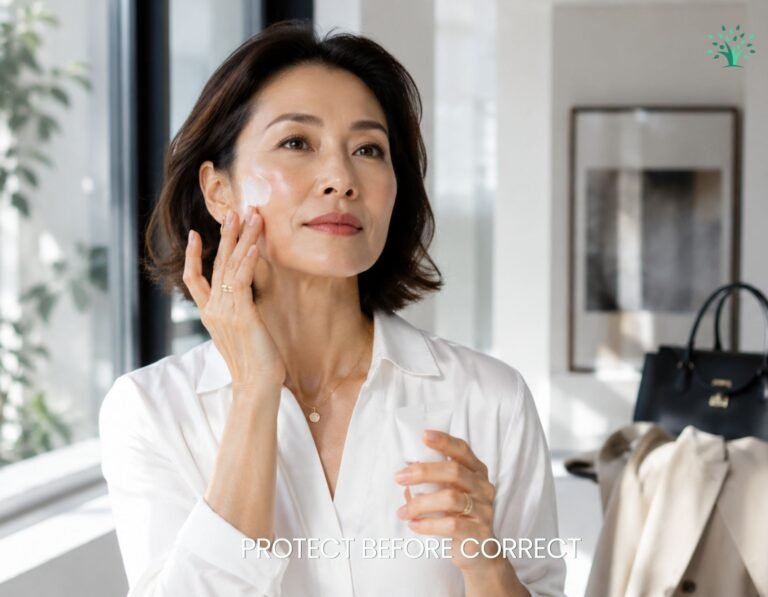
Sun protection comes first. There isn’t much point trying to fade existing discoloration while allowing UV exposure to keep encouraging more pigment. For me, sunscreen stopped being something I thought about only at the beach and became part of what I do every morning.
After that, I prefer a few ingredients with a clear purpose rather than layering everything associated with brightening into one routine.
Vitamin C can fit well into a morning routine for antioxidant support and a brighter-looking complexion. Niacinamide is another ingredient I like because it can support the skin barrier while helping improve the appearance of uneven tone. Retinoids can also play a role by supporting skin renewal, although I’ve learned to introduce them carefully rather than assuming stronger or more frequent use will produce faster results.
Other ingredients, including azelaic acid, can be useful for certain types of discoloration, particularly when blemishes and inflammation are part of the picture.
The important part is not trying to use all of them at once.
When people ask why dark spots won’t fade, I think the better question is often whether the entire routine is working together. A brightening ingredient can’t compensate for inconsistent sunscreen, continued picking, recurring breakouts, or a skin barrier that’s constantly irritated.
I would rather choose a simple routine my skin tolerates and follow it consistently than own a shelf full of products I’m afraid to use.
⭐ Recommended Reading
VII. Consistency Matters More Than Aggressive Treatment
Dark spots have a way of testing our patience because the progress can be difficult to notice from one day to the next.
That’s when it’s tempting to change something.
A stronger serum sounds promising. Another exfoliant gets added. Someone recommends a completely different routine, and suddenly we’re starting over before the previous one had much opportunity to work.
I’ve done that too.
These days, I pay more attention to what happens over weeks and months rather than judging my skin every morning. Taking an occasional photo in similar lighting can be surprisingly helpful because gradual changes are much easier to see when there’s something to compare.
More importantly, I watch how my skin feels.
If a routine leaves it constantly tight, flaky, burning, or irritated, I don’t consider that progress simply because the ingredients are supposed to target pigmentation. Healthy-looking skin still needs a healthy skin barrier.
That’s another part of understanding why dark spots won’t fade. Sometimes we’re so focused on getting rid of the discoloration that we stop paying attention to the condition of the skin surrounding it.
There are also times when patience at home isn’t the answer. Persistent pigmentation, suspected melasma, or discoloration that isn’t responding as expected may be worth discussing with a dermatologist, who can determine what you’re actually dealing with and whether prescription treatments or professional procedures make sense.
For everyday skincare, though, I’ve learned to respect the slower approach.
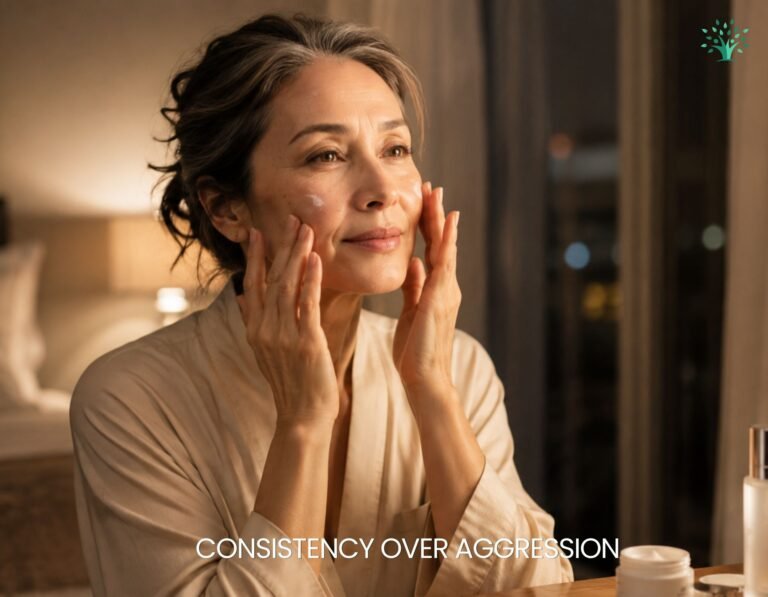
Protect the skin. Choose ingredients carefully. Keep irritation under control. Stay consistent long enough to see what the routine can actually do.
Dark spots may be stubborn.
Our skincare doesn’t have to become aggressive because of it.

VIII. Products I Use for Dark Spots and Uneven Skin Tone
When it comes to dark spots, I don’t believe every product in the routine needs to be a brightening treatment.
I’ve had better results keeping the foundation of my routine gentle and hydrating, then protecting my skin consistently from the sun. That approach also helps me avoid the irritation that can make pigmentation even more frustrating.
These are the products from my routine that fit that philosophy.
Torriden DIVE-IN Toner
My first step after cleansing. The lightweight hydration helps replenish moisture without adding another aggressive active ingredient to a routine that’s already working on discoloration.
Mixsoon Bean Essence
A gentle essence I use for hydration and skin texture. I like that it gives me another supportive step without making the routine feel overloaded.
Skin1004 Madagascar Centella Ampoule
One I reach for when my skin feels irritated or sensitive. Keeping inflammation and unnecessary irritation under control is especially important when I’m trying to prevent new marks from lingering.
Dr. Jart Ceramidin Skin Barriers Cream
One of my favorite moisturizers for supporting the skin barrier and locking in hydration. When I’m using active ingredients elsewhere in my routine, maintaining that balance becomes even more important.
Medi-Peel Peptide 9 Volume Bio Tox Cream
My richer evening moisturizer when my skin needs extra nourishment. I use it as part of my nighttime routine rather than expecting it to act as a dark-spot treatment.
Beauty of Joseon Relief Sun SPF 50+
The most important product in this particular routine. Trying to improve existing discoloration makes little sense if I’m not also protecting my skin from the UV exposure that can make pigmentation more noticeable.
None of these products promises to make a stubborn spot disappear overnight. That’s precisely the point.
Learning why dark spots won’t fade changed my focus from finding the strongest brightening product to building a routine my skin can tolerate, protecting it every day, and giving consistency enough time to matter.
As an Amazon Associate, I earn from qualifying purchases. These are products I personally use and recommend because they support healthy, balanced skin without making my routine more complicated.



ix. Glow Reset Planner
One thing dark spots taught me is how easy it is to make skincare more complicated than it needs to be.
When progress feels slow, we start adding things. Another serum, another active ingredient, another step that promises to work faster. Before long, it becomes difficult to tell what’s helping, what’s causing irritation, or whether we’ve given anything enough time to work.
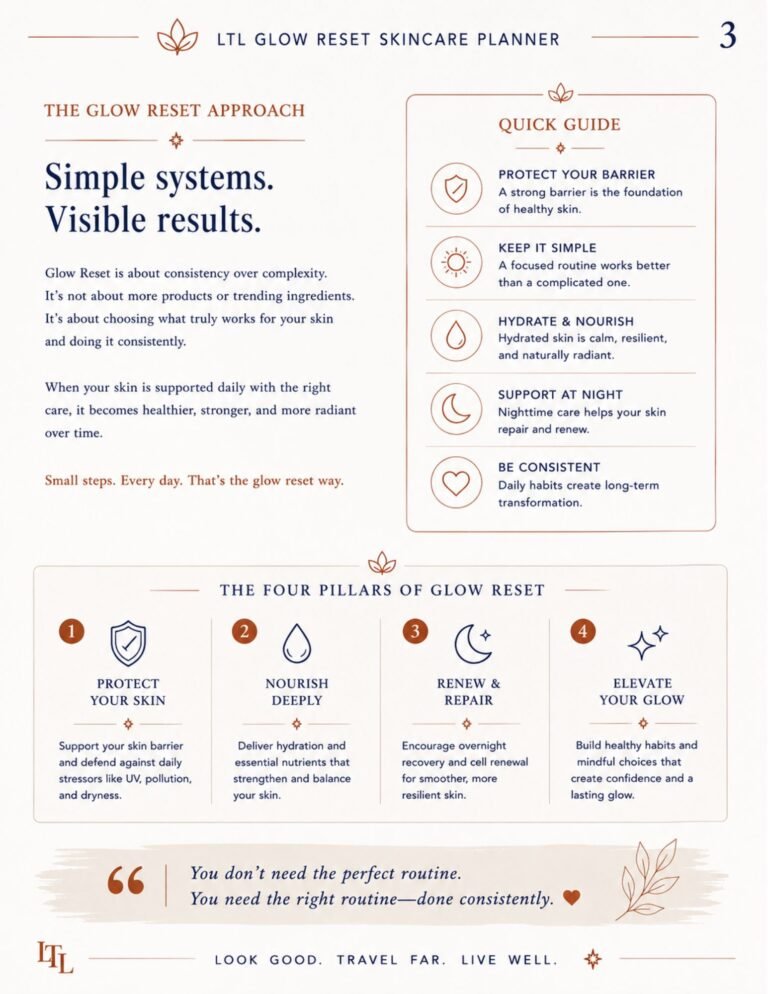
That’s one of the reasons we created the Glow Reset Planner.
The planner provides a practical framework for taking a closer look at your skincare routine, supporting hydration and the skin barrier, and building daily habits that are easier to maintain. For stubborn pigmentation especially, that consistency can matter more than continually changing products.
Inside, you’ll find guidance and planning pages focused on daily skincare, hydration, skin-barrier support, recovery, product routines, healthy lifestyle habits, and creating greater consistency without making skincare unnecessarily complicated.
👉 Get your complimentary “Glow Reset Planner” 4-Page Sampler. Click here to download.
A selected preview from the complete planner to help you simplify your routine, track what you’re actually doing, and give your skin enough consistency to see what may be working.
🛍 If you’d like to continue, the complete Glow Reset Planner is a 24-page premium LTL Living Guide designed to help you build a more thoughtful skincare routine, support healthier daily habits, and stop feeling as though you need to start over every time your skin changes.
Sometimes a reset isn’t about doing more. It’s about figuring out what your skin actually needs.

X. Why Dark Spots Won't Fade | Final Thoughts
Dark spots taught me something I wish I’d understood much earlier: stronger skincare isn’t always better skincare.
For a long time, it was easy to look at discoloration and immediately think about what I could add. Another serum. A stronger active. Something promising faster results. Yet the more I learned about pigmentation, the more I realized that fading what we see is only part of the story.
We also have to pay attention to what keeps triggering it.
Sun exposure matters. So does inflammation. Picking at blemishes, irritating the skin with too many active ingredients, and constantly changing routines can make an already frustrating problem even harder to manage.
Understanding why dark spots won’t fade changed my approach from attacking individual spots to taking better care of my skin as a whole.
Today, I’d rather protect my skin every morning, keep the barrier healthy, choose a few ingredients carefully, and give them enough time to work. It isn’t the fastest or most exciting approach, but my skin has taught me that consistency usually wins.
And if a spot looks unusual, begins changing, or simply doesn’t seem like the others, I don’t treat it as another cosmetic problem. That’s when I’d rather have a dermatologist take a look.
Clearer-looking skin doesn’t come from fighting it every day.
Sometimes the biggest improvement begins when we stop doing so much and start paying attention to what our skin has been trying to tell us.
STUBBORN SPOTS. GLOW RESET.
With care,
Mijung