
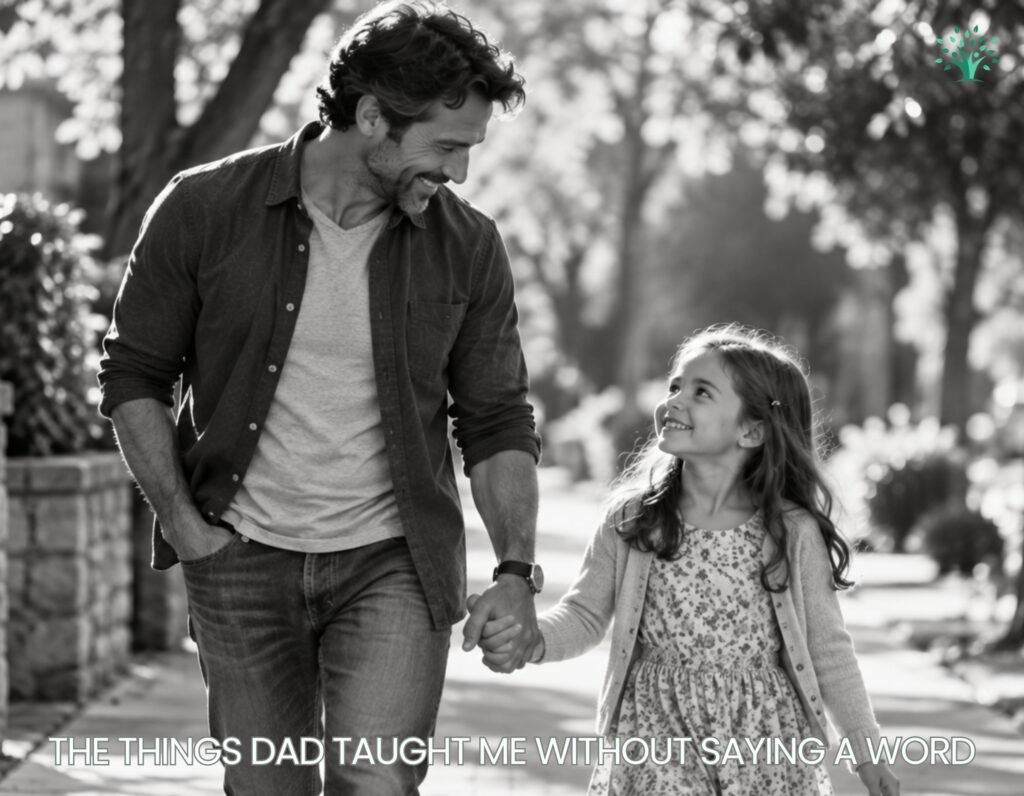
The Things Dad Taught Me Without Saying a Word | Father's Love
Look Good. Travel Far. Live Well ◆ Functional Health & Wellness by Samuel
I. INTRODUCTION — things Dad taught me
The things Dad taught me were rarely delivered as lessons.
He didn’t always sit me down and explain what it meant to be strong, kind, dependable, or brave. More often, I learned by watching him.
Dad was the one who ran beside my bicycle until he knew I could balance on my own. He showed me how to tie my shoes, fix something that wasn’t working, and try again when the first attempt didn’t go well.
Some memories are even simpler.
Dancing on his feet in the kitchen. Sitting beside him when I needed comfort. Watching him work. Hearing him laugh. Knowing that if something went wrong, he would be there.
As a little girl, I probably didn’t think of any of these moments as lessons.
I was simply growing up with Dad.
Years later, those ordinary moments can look completely different. We begin to recognize the patience behind the teaching, the sacrifice behind the showing up, and the quiet strength behind the man who didn’t always need to explain himself.
That’s the beautiful thing about a father’s example. A daughter may not understand the lesson while she’s young, and Dad may never realize how closely she is watching him. Yet those everyday moments can quietly shape what she comes to believe about love, strength, kindness, responsibility, and how the people who love her should treat her.
Years later, she may recognize that many of the qualities she carries into adulthood were being shaped long before she had the words to describe them.
Quick Guide
A daughter’s relationship with her father can influence how she understands love, strength, confidence, relationships, and the world around her. This guide looks at the lessons that often come through everyday actions rather than formal advice.
- Feeling safe — knowing Dad will be there when the world feels too big.
- Trying again — learning that mistakes and setbacks don’t mean giving up.
- Having fun — discovering that love can be playful, silly, and joyful.
- Treating people well — watching how Dad treats family, friends, and strangers.
- Becoming strong — gaining confidence through encouragement rather than being protected from every challenge.
- Showing up — learning that love is often demonstrated through consistency.
- Letting go — understanding that growing up eventually means giving a daughter room to find her own way.
This Guide Is For…
This is for daughters who look back at their childhood and recognize Dad’s influence in unexpected places.
It is also for fathers who may wonder whether their children noticed the small things they did. They probably noticed more than you think.
A bike ride. A school morning. A scraped knee. A ridiculous dance in the kitchen. A hand held at exactly the right moment.
Those memories may have seemed ordinary when they happened.
For a daughter, they can become part of the foundation she carries into adulthood.
II. He Taught Me What Safe Feels Like
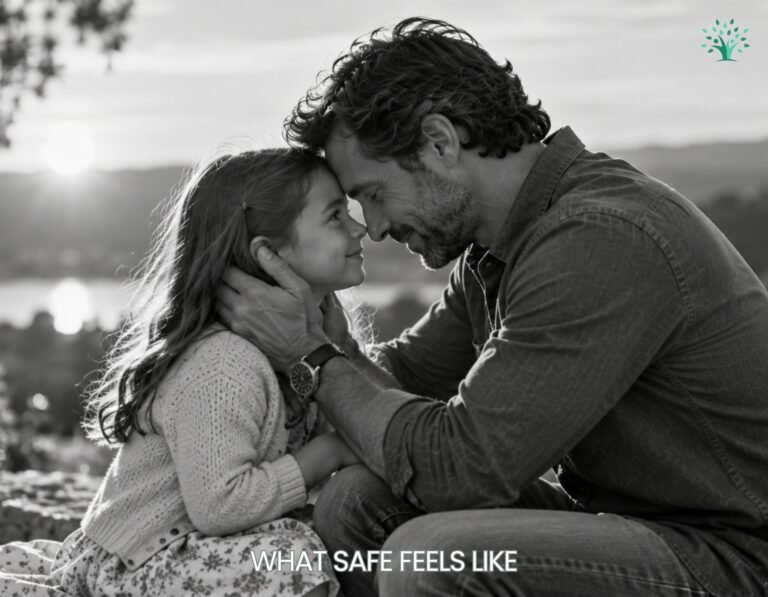
When I think about feeling safe as a little girl, I don’t remember Dad explaining what safety meant. I remember walking beside him and reaching up for his hand without even thinking about it. In a crowded place, I knew exactly where to find him, and when something frightened me, having him close somehow made the problem feel smaller.
There were plenty of other versions of that same feeling. If I was tired, Dad would carry me even when I was probably old enough to walk. When I was upset, he didn’t always have a perfect answer, but he stayed close. Sometimes that was all I needed.
Children don’t usually analyze those moments. We simply absorb them. At the time, I wasn’t thinking about trust or security or what kind of relationship I might have with my own children someday. Dad was just Dad, and somehow that was enough to make a difficult day feel manageable.
Looking back now, I realize he wasn’t promising that nothing bad would happen. No father can make that promise. What he gave me was something more realistic: the confidence that when life became difficult, I would have someone beside me.
That feeling can stay with a daughter for a very long time.

III. The Things Dad Taught Me | How to Try Again
Looking back, the things Dad taught me about trying again had very little to do with success the first time.
He was running beside me while I tried to keep my balance, probably holding onto the seat more firmly than I wanted him to. I was concentrating on everything at once—pedaling, steering, staying upright—and every time the bicycle started leaning, Dad was right there to steady it.
Then one day, he let go.
I didn’t realize it immediately. I was too busy trying to keep the bicycle moving. When I finally looked around and saw Dad a few feet behind me, I was already riding on my own.
That little moment stayed with me, even though I had no idea at the time that it would.
Dad had helped me enough to get started, but he didn’t keep holding on just because letting go made me nervous. He knew there was a point when I needed to discover that I could do it myself.
I saw the same approach in other parts of growing up. If something didn’t work, we tried again. When I made a mistake, fixing it was usually more useful than spending too much time feeling bad about it. He wasn’t trying to make life easy for me; he was showing me that a difficult moment didn’t have to become a stopping point.
Years later, I understand how valuable that was. Confidence isn’t always something another person can give you. Sometimes the best thing they can do is stay close enough for you to find it yourself.
IV. He Taught Me That Love Can Be Playful
Some of my favorite memories of Dad have nothing to do with the serious parts of growing up.
They are the memories where he was simply having fun with me.
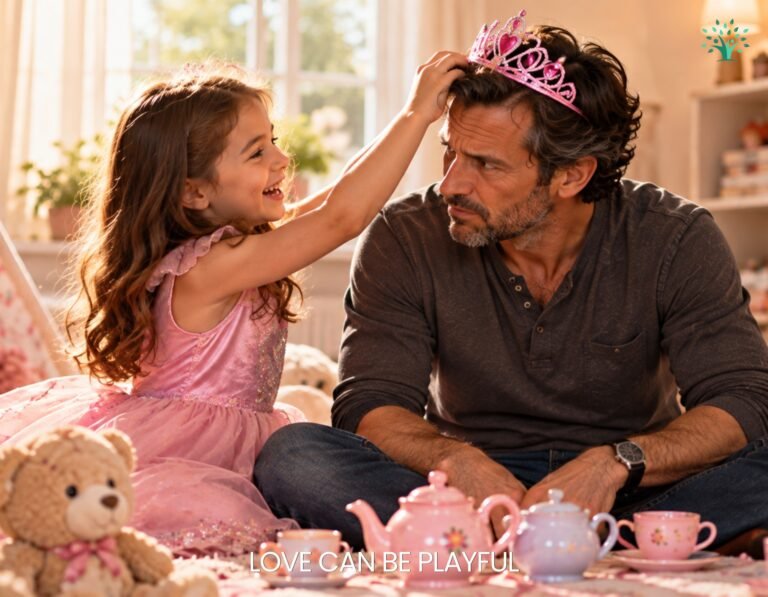
I remember dancing on his feet in the kitchen, being picked up and spun around, and turning ordinary afternoons into elaborate games that probably made very little sense to him.
As a little girl, I didn’t care whether Dad understood the rules of whatever game I had invented that day. I was happy that he was willing to play along.
That may sound like a small thing, but children notice when adults genuinely enjoy spending time with them. There is a difference between being physically present and actually entering a child’s world for a while.
Dad could be the grown-up who handled serious things, but he could also wear the ridiculous crown, let me boss him around during a pretend game, or dance around the kitchen without worrying about looking silly.
Those memories are important to me because they weren’t about what he was teaching me. He wasn’t trying to build a lesson into every afternoon. He was simply enjoying his daughter.
As I got older, I began to understand that this was another form of love. Being loved isn’t only about protection and sacrifice. Sometimes it is knowing that someone is genuinely happy to be around you.
⭐ Recommended Reading
V. The Things Dad Taught Me | How a Man Treats People
Looking back, I realize this was one of the things Dad taught me long before I was old enough to understand it.
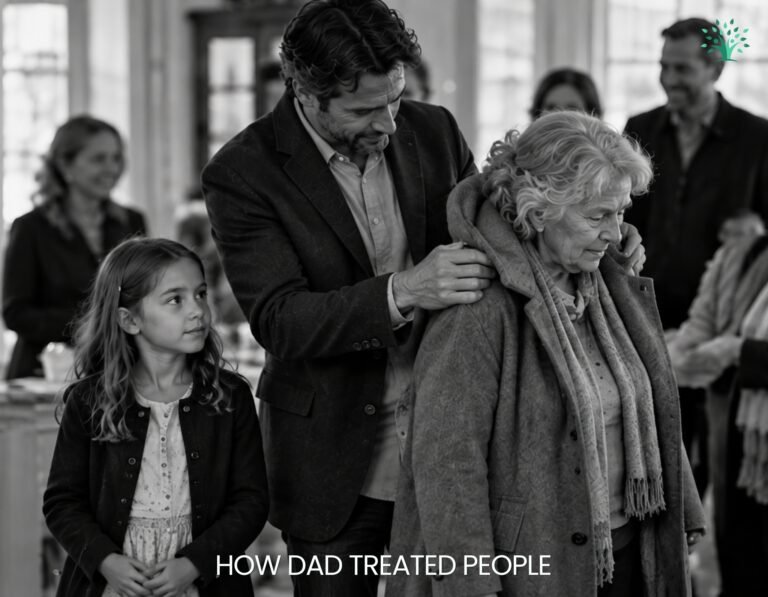
As a little girl, I wasn’t studying Dad’s behavior and making notes about what kind of man he was. I was simply watching the person who was closest to me. How he spoke to Mom, how he treated family, how he handled frustration, and whether he kept his word all became part of the background of my childhood.
Children notice those things even when nobody explains them.
A daughter sees whether her father listens when someone is talking or dismisses them. She notices whether kindness disappears when he is angry. She watches how he treats people who can do something for him, but also the people who cannot.
Dad wasn’t perfect, and I don’t think any child needs a perfect father to learn something valuable from him. What matters is the overall example—the patterns repeated often enough that they become familiar.
As I became an adult, some of those memories took on a different meaning. I started to understand that respect isn’t something you switch on when people are watching. It is part of how you conduct yourself when there is nothing to gain from being kind.
Dad never sat me down and gave me a list of qualities I should look for in the people I trusted or loved.
In many ways, he showed me instead.
⭐ Recommended Reading

VI. He Taught Me I Could Be Strong
There is a difference between a father protecting his daughter and a father preparing her for the world. When I was little,
Dad naturally wanted to make things easier for me. If something was difficult, he was usually close enough to help.
As I got older, however, he began giving me more room to figure things out for myself.
That wasn’t always what I wanted.
Sometimes I wanted him to solve the problem because that was faster and easier. Instead, he might ask what I thought we should do or let me try something that he already suspected I could handle.
Looking back, I realize that his confidence in me was sometimes more valuable than the answer itself.
There is a particular kind of strength that comes from knowing someone believes you are capable. It doesn’t mean you never need help. It means you don’t automatically assume someone else has to rescue you.
Dad gave me that kind of confidence in small doses, long before I understood what he was doing.
He also let me make mistakes. That may have been one of the harder forms of love, because watching your child struggle isn’t easy. Yet there is a point when protecting a daughter from every disappointment would only make the world seem more frightening when she eventually has to face it on her own.
Dad wanted me to know that I could handle more than I thought.
Eventually, I believed him.
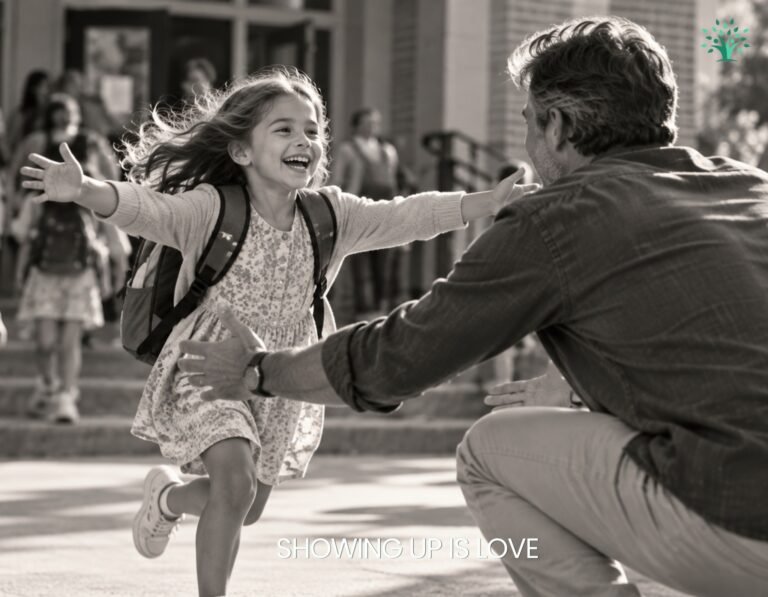
VII. He Taught Me That Showing Up Is Love
Some of the things Dad taught me aren’t attached to anything particularly dramatic.
He was there.
School mornings. Important events. Long drives. Difficult days. The ordinary afternoons when nothing special was happening. At the time, I probably didn’t think about what it took for him to be there. Children tend to assume that the people they love will simply appear when needed.
Adulthood changes that perspective.
You begin to understand that showing up takes effort. Work has to be rearranged. Plans have to change. Someone may be exhausted, busy, worried about something else, or dealing with problems nobody else can see.
Dad still showed up.
Sometimes his presence meant doing something important. Other times, it meant sitting quietly nearby while I talked about something that probably seemed much more important to me than it did to him. He didn’t always need to fix the situation. His being there was part of the answer.
That consistency becomes meaningful when you look back at it.
A daughter may not remember every conversation her father had with her, but she can remember looking into a crowd and seeing him there. She can remember the car waiting outside, the familiar face at the door, or the person who answered the phone when she needed someone.
Showing up can seem ordinary while you’re receiving it.
Years later, you understand that it never was.

VIII. Then He Had to Let Me Go
There comes a point in every father’s life when the little girl he spent years protecting starts making decisions without asking him first.
The change doesn’t happen all at once. It arrives in pieces.
First, she wants to walk a little farther ahead. Then she has friends Dad doesn’t know.
Eventually, she chooses her own school, career, relationships, home, and direction. The child who once needed him to carry her can suddenly manage an entire life of her own.
For a father, that has to be one of the strangest parts of watching a daughter grow up.
He spends years teaching her how to do things, helping her solve problems, and encouraging her to become independent. Then independence actually arrives, and he has to trust what he helped build.
That doesn’t mean he stops caring.
It means his role changes.
Dad may no longer be the person holding the bicycle seat, but he is still the person I can call when I need perspective.
He may not be able to clear every obstacle from my path, but I know the lessons he gave me are still there when I need them.
Perhaps that’s what letting go really means.
Not disappearing.
Just learning to stand a little farther back while your daughter finds her own way.
⭐ Recommended Reading

IX. The Things Dad Taught Me | Years Later, I Finally Understood
When I look back now, I realize that many of the things Dad taught me were never spoken aloud.
There are even more things he never said that somehow stayed with me.
The way he handled a difficult situation. The patience he showed when teaching me something. The way he could make me laugh when I was taking myself too seriously.
The bicycle. The school mornings. The times he showed up without making a big announcement about it.
None of those moments seemed especially important while they were happening.
They were simply part of growing up.
Then adulthood gives you a little distance. You start making your own decisions, dealing with your own disappointments, caring for people you love, and discovering that life isn’t always as straightforward as it looked when you were a child.
That’s when some of Dad’s lessons become easier to recognize.
You understand why he didn’t solve every problem for you.
You appreciate why he insisted you try again. You recognize the value of keeping your word and showing up for people.
Sometimes you even catch yourself doing something exactly the way he used to do it.
That can be a funny realization.
You spend years becoming your own person, only to discover that pieces of your father have been traveling with you the entire time.
Maybe that’s the real legacy of a good father. His influence doesn’t necessarily announce itself. It becomes part of who you are.

X. LOVE THE LITTLE MOMENTS | Final Thoughts
A father doesn’t need to have the perfect words.
He won’t handle every situation perfectly, and there will probably be things both father and daughter wish they had done differently. Real families are rarely that neat.
What tends to remain is the pattern.
The way Dad showed up. The way he treated people. The way he encouraged me to try again. The way he made ordinary afternoons fun. The way he protected me when I was little and gradually trusted me to stand on my own.
Those memories become more meaningful with time because they weren’t isolated lessons. They were part of a relationship.
Maybe that’s why a daughter can remember something as simple as her father’s hand on the back of a bicycle or the sound of his laugh in the kitchen decades later.
He may not have known he was teaching her anything.
He was simply being her dad.
And somewhere along the way, she was watching.
Explore LTL
The stories we tell at LTL are ultimately about the relationships that make life worth remembering. Explore the LTL Shop for our lifestyle guides, travel essentials, wellness favorites, and other ideas built around living well and making the most of the people and experiences that matter.
Some lessons are spoken. The ones we live often stay with us the longest.
LOVE WELL. LIVE WELL.
With care,
Samuel