
The Difference Between Looking Good and Having Presence | Be Well. Be Confident.
Look Good. Travel Far. Live Well ◆ Functional Health & Wellness by Samuel
I. INTRODUCTION — looking good and having presence
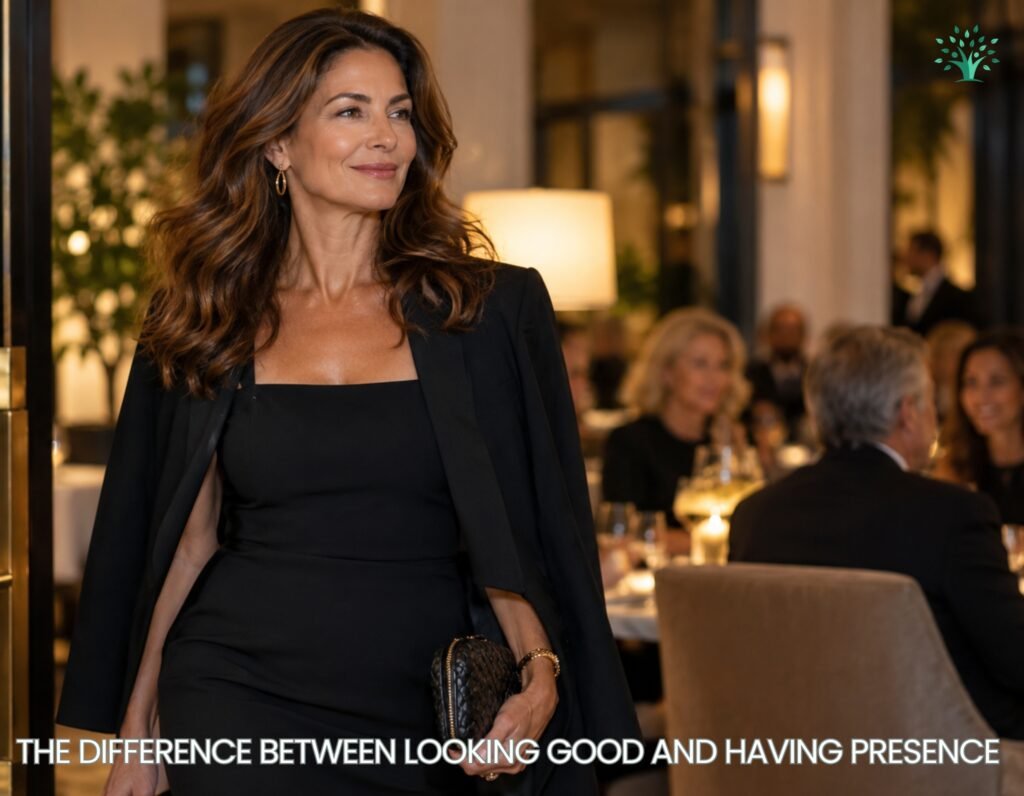
Looking good and having presence are not quite the same thing.
You can walk into a room wearing a beautiful outfit, with perfect hair and everything carefully put together, and still somehow disappear into the background. Then someone else walks in wearing something simple, says very little, and immediately seems to have everyone’s attention.
What creates that difference?
It isn’t always beauty, money, age, or even fashion. Sometimes it is the way a person carries themselves—their posture, their eye contact, the ease in their movements, and the feeling that they are completely comfortable being where they are.
Think about the people you’ve met who stayed in your memory long after you forgot what they were wearing. Perhaps they listened closely when you spoke. Maybe they had an easy confidence that never felt like they were trying to prove anything. You simply felt good around them.
That’s presence.
Looking good can certainly help us make a strong first impression. There is nothing wrong with caring about how we present ourselves. Grooming, clothing, fitness, and personal style can all contribute to confidence.
They are simply not the whole story.
The most memorable people often have something that cannot be bought or applied in front of a mirror. They seem comfortable in their own skin, aware of the people around them, and genuinely present in the moment.
That quality can make someone attractive in a way that goes well beyond appearance.
Quick Guide
Looking good and having presence overlap, but they create different kinds of impressions. This guide looks at what happens when appearance is supported by confidence, authenticity, and the way we connect with other people.
- Appearance — grooming, clothing, and personal style create the first visual impression.
- How you carry yourself — posture, movement, eye contact, and composure communicate confidence before you speak.
- Confidence — feeling comfortable with yourself changes how other people experience you.
- Connection — listening and making people feel seen can be more memorable than looking perfect.
- Authenticity — presence becomes stronger when you aren’t constantly trying to impress.
- Age and experience — self-knowledge can bring an ease that becomes increasingly attractive over time.
This Guide Is For…
This is for anyone who has noticed that looking attractive and being memorable aren’t necessarily the same thing.
Perhaps you’ve met someone who wasn’t the most conventionally attractive person in the room, yet you found yourself drawn to them. Or you’ve noticed that someone who looked incredible in a photograph seemed completely different when you met them in person.
There is nothing mysterious about that difference.
Appearance gets our attention, but the way we carry ourselves, interact with people, and feel about ourselves can determine whether that attention lasts.

II. Looking Good and Having Presence | They Are Not the Same
There is nothing wrong with wanting to look good. We all know the small confidence boost that comes from putting on an outfit that fits beautifully, getting our hair right, or looking in the mirror and thinking, “Okay, I’m ready.”
Appearance matters because it is often the first thing people notice. Before we say a word, our clothes, grooming, posture, and overall presentation have already made some kind of impression.
But that first impression doesn’t tell the whole story.
Think about a dinner party where someone walks through the door looking exceptionally polished. Everyone notices. Then, twenty minutes later, another person has become the center of the conversation without making any obvious effort to take over the room.
Maybe she listens with genuine interest. Perhaps he has an easy way of speaking that makes people feel comfortable. They aren’t performing confidence or looking around to see who is impressed. They simply seem comfortable being themselves.
That’s where the difference begins.
Looking good and having presence can certainly happen at the same time, but one doesn’t automatically create the other. Beautiful clothes cannot compensate for constantly checking whether people are paying attention. Perfect grooming doesn’t create confidence by itself.
Appearance can open the door.
Presence determines what happens after you walk through it.
⭐ Recommended Reading
III. Presence Starts With How You Carry Yourself
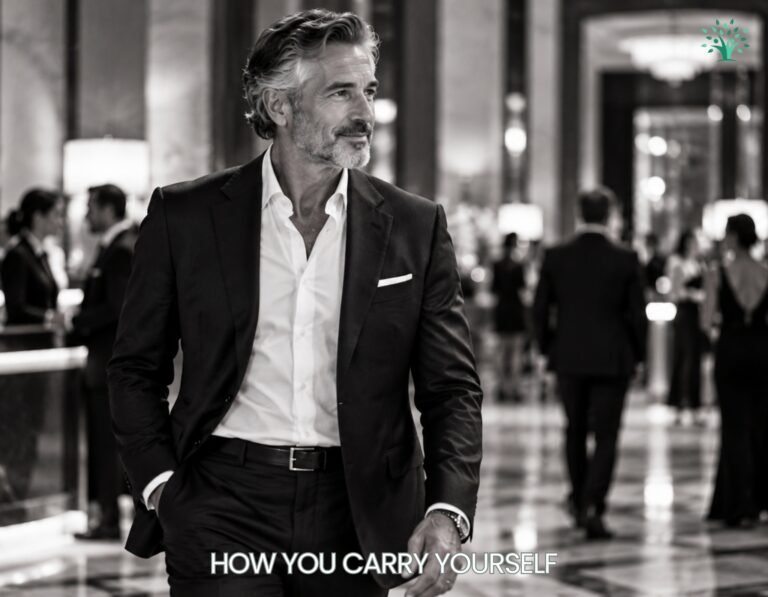
Long before someone notices what you’re wearing, they notice how you arrive.
A person who walks into a room with relaxed shoulders, steady movement, and comfortable eye contact can make a completely different impression from someone wearing an equally beautiful outfit but appearing nervous and distracted.
None of this requires becoming louder or more dominant.
In fact, some of the people with the strongest presence are remarkably calm. They don’t rush their words, constantly adjust their clothes, or look around the room searching for approval. There is an ease to them that suggests they aren’t worried about performing for everyone else.
Posture plays a part, but so does movement. So does the way we greet someone. Even a simple handshake or a few seconds of eye contact can communicate confidence when it feels natural rather than rehearsed.
The interesting part is that presence isn’t really about making yourself bigger.
It’s about being comfortable enough that you don’t need to shrink yourself, either.
That can take practice. Many of us become more aware of our appearance as we get older, yet the more valuable skill may be learning how to stop monitoring ourselves every second and simply participate in the moment.
When that happens, confidence begins to look much less like performance and much more like ease.

IV. Confidence Changes How People See You
Confidence has an interesting quality: you can usually tell when someone is trying too hard to demonstrate it.
We’ve all seen the person who dominates every conversation, name-drops constantly, or seems determined to make sure everyone knows how successful they are. On paper, that person may have plenty to feel confident about.
Yet the room doesn’t necessarily feel more comfortable around them.
Quiet confidence works differently.
Someone who knows who they are doesn’t need to win every conversation. They can admit they don’t know something, laugh at themselves, compliment another person without feeling diminished, and walk away from an interaction without wondering whether they made the right impression.
That kind of confidence can be especially attractive because there is no pressure attached to it.
You don’t feel like you’re being evaluated.
You feel like you’re talking to a person who is comfortable enough with themselves to be interested in you.
For many of us, that ease develops with experience. We make mistakes, survive embarrassing moments, change careers, raise families, lose people, start over, and eventually realize that most of the things we once worried about weren’t nearly as important as we thought.
Confidence doesn’t mean believing you’re the best-looking, smartest, or most accomplished person in the room.
Sometimes it simply means knowing you don’t have to prove that you belong there.
⭐ Recommended Reading
V. Looking Good and Having Presence | Style Is Part of the Story
Personal style can say quite a bit before we introduce ourselves.
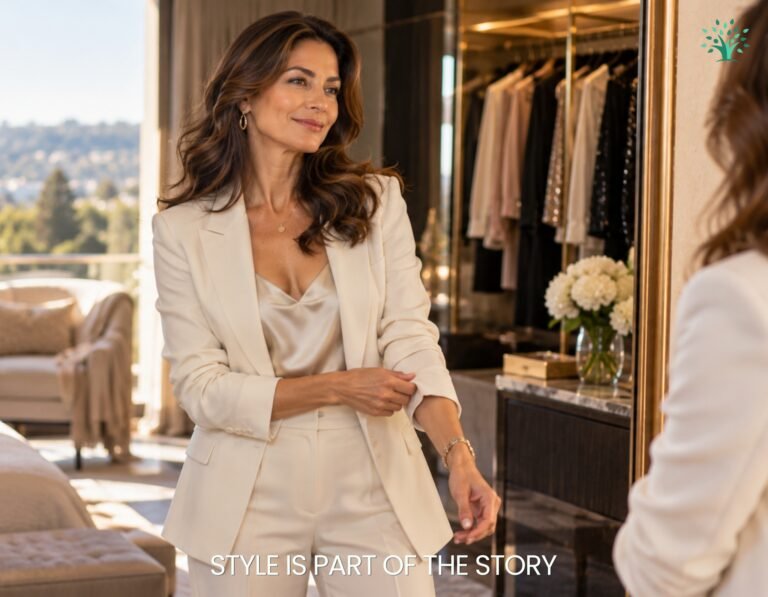
A well-fitting jacket, a beautiful dress, a favorite pair of shoes, or a simple combination that feels unmistakably “you” can change the way you feel the moment you leave the house. When our appearance reflects who we are, getting dressed becomes less about impressing everyone else and more about presenting ourselves with intention.
That’s where style becomes interesting.
Two people can wear almost identical clothes and create completely different impressions. One may look as though the outfit is wearing them; the other seems completely at home in it.
The difference isn’t necessarily the clothing.
It is the person inside it.
Looking good and having presence work particularly well together when style supports confidence rather than trying to manufacture it. You don’t need the newest trend, the most expensive handbag, or a wardrobe filled with statement pieces. Sometimes the most memorable style is remarkably simple because the person wearing it isn’t hiding behind it.
Age can make this even more apparent.
After enough years of trying different looks, making fashion mistakes, discovering what suits us, and eventually learning what doesn’t, personal style can become much more relaxed. We stop dressing for every opinion in the room and start choosing what genuinely feels right.
That’s when appearance starts working with presence instead of competing with it.
⭐ Recommended Reading
VI. The Power of Being Fully Present
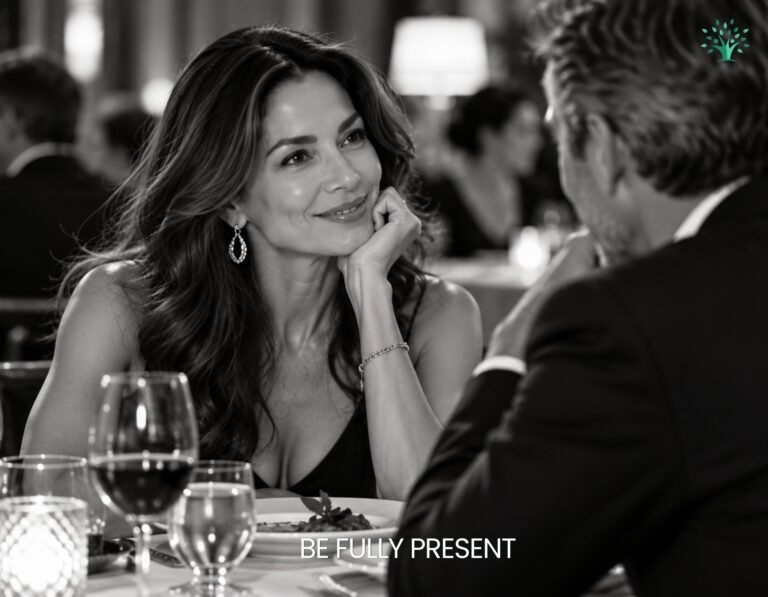
There is a difference between being in the room and actually being present.
We’ve all experienced the conversation where someone keeps checking their phone, looking over our shoulder, or waiting for their turn to speak. They may be perfectly polite, but something is missing. Compare that with someone who puts everything else aside, looks at you, and seems genuinely interested in what you’re saying. You remember that person.
Listening is one of the simplest forms of presence, yet it has become surprisingly rare. When someone remembers a detail from a conversation we had months ago or asks a thoughtful follow-up question, we feel noticed. Nothing about the interaction required extraordinary charm.
It required attention.
This is where looking good and having presence begin to separate. Appearance can make someone interesting at first glance, but presence develops through interaction. The person who makes others feel comfortable, heard, and respected often becomes far more memorable than the person who simply looks impressive.
There is also something confident about giving another person your full attention. You aren’t worrying about how you appear every second. You’re participating in the conversation.
And that kind of attention has a quiet power.
They’re helping the person wearing them feel more like themselves.

VII. Why Some People Command a Room Without Trying
We’ve all walked into a room and noticed someone before they said much of anything.
It may be the way they stand, the calmness in their expression, or simply the sense that they aren’t particularly concerned with proving themselves. They aren’t necessarily the loudest person there. In many cases, they’re not trying to command the room at all.
That’s what makes it interesting.
Real presence often feels effortless because it isn’t built around getting attention. A person who is comfortable with themselves doesn’t need to constantly perform for the people around them. They can speak when they have something worth saying, listen when someone else has the floor, and move through a social situation without appearing unsettled by it.
Charisma can certainly be part of the equation, but presence doesn’t require a naturally outgoing personality. A quiet person can have enormous presence. So can someone who prefers to stay slightly outside the center of attention.
What they often share is composure.
They know who they are, feel comfortable in their own skin, and don’t need anyone’s approval.
That quality becomes particularly noticeable when everyone else is trying to be noticed.
Sometimes the person with the strongest presence is the one who seems least interested in competing for it.
VIII. Presence Gets Stronger With Age
Something interesting happens as we get older: we usually become much better at knowing what doesn’t matter.
The clothes that once seemed essential may no longer be. We become less interested in impressing people we’ll never see again. Trends come and go, and eventually we develop a better understanding of what actually suits us.
The same thing can happen with confidence.
Experience has a way of removing some of the pressure to perform. After enough mistakes, awkward moments, career changes, disappointments, and unexpected turns, we learn that most people are far less focused on us than we imagined.
That can be freeing.
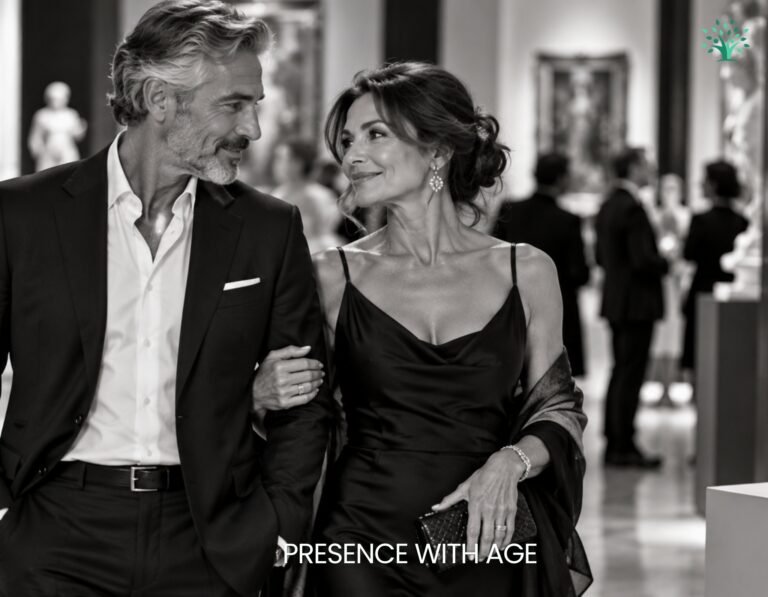
A woman in her 60s who knows exactly who she is can walk into a room with a presence that has nothing to do with looking twenty years younger. A man in his 70s can have an unmistakable confidence without wearing anything particularly remarkable.
They’ve lived enough life to stop asking permission to be themselves.
That doesn’t mean giving up on appearance. Looking good can still be enjoyable, and taking care of ourselves is part of feeling good about how we show up in the world.
The difference is motivation.
We’re no longer dressing, grooming, or carrying ourselves entirely for someone else’s approval. We are doing it because it feels like us.
There is something deeply attractive about that kind of ease.

IX. Looking Good and Having Presence | What People Remember
Think about someone you remember from years ago.
Can you recall exactly what they were wearing?
Sometimes you can. More often, you remember something else. You remember how they made you feel when you were around them. Maybe they made everyone laugh. Perhaps they had an unusual calmness, listened carefully, or made a new person feel welcome within minutes.
That is the part of presence that lasts.
Looking good and having presence can certainly work together. A polished appearance may be what gets someone noticed in the first place, but it rarely explains why we continue thinking about them afterward.
The memorable person may not have been the most conventionally attractive person in the room. They may not have had the most expensive clothes or the most dramatic personality. What they had was a quality that made being around them feel different.
Perhaps they were genuinely interested in other people.
They seemed comfortable enough to laugh at themselves.
There was also a confidence in the way they carried themselves that never made anyone else feel smaller.
Those qualities aren’t easily captured in a photograph.
You have to experience them.
And once you do, they can become much harder to forget than a beautiful face.

X. The LTL Approach | Looking Good With Presence
Confidence isn’t something we save for important meetings, special occasions, or nights out.
Sometimes it starts with much smaller things—wearing something that feels like us, taking care of our appearance, getting outside, moving our bodies, traveling somewhere new, or simply creating routines that help us feel more comfortable in our own skin.
That’s part of what we believe at LTL.
Looking good isn’t about chasing perfection. Having presence isn’t about becoming the most noticeable person in the room. Both can come from something much simpler: feeling comfortable with who we are and bringing that confidence into the way we live, connect, and show up.
If you’d like to explore some of the things we use and recommend across beauty, wellness, travel, and everyday living, visit the LTL Shop.
LOOK GOOD. TRAVEL FAR. LIVE WELL.
As an Amazon Associate, I earn from qualifying purchases. These are products I personally use and recommend because they support healthy aging without making my daily routine more complicated.
Xi. Presence makes the impression last. | Final Thoughts
Looking good has its place.
We should take care of ourselves, wear things that make us feel confident, and enjoy the pleasure of looking our best. There is nothing superficial about wanting to present ourselves well.
But appearance is only one part of the picture.
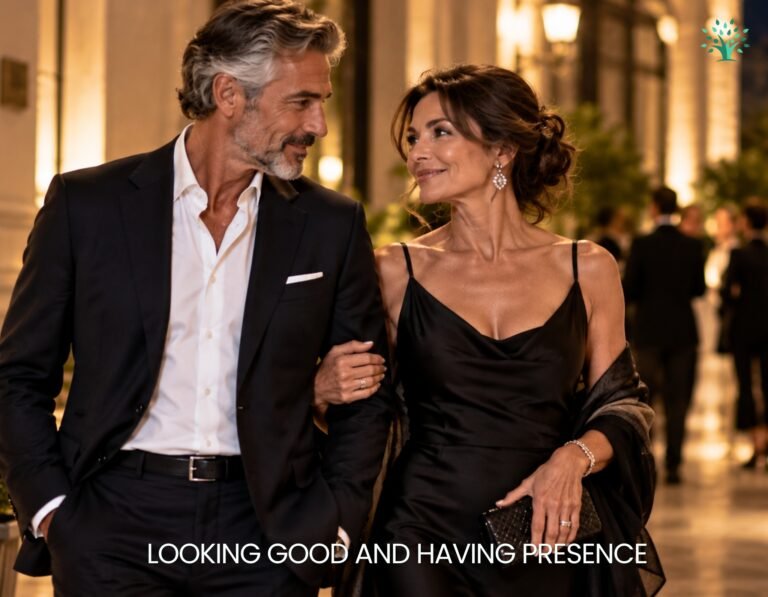
The people who stay with us are often the ones who brought something beyond appearance into the room. They were comfortable with themselves. They listened. They made eye contact. They had enough confidence to let other people shine. Most importantly, they seemed genuinely present rather than constantly concerned about how they were being perceived.
That is what gives someone staying power.
A great outfit can make an entrance.
A beautiful face can catch someone’s attention.
Presence makes the impression last.
With care,
Samuel