
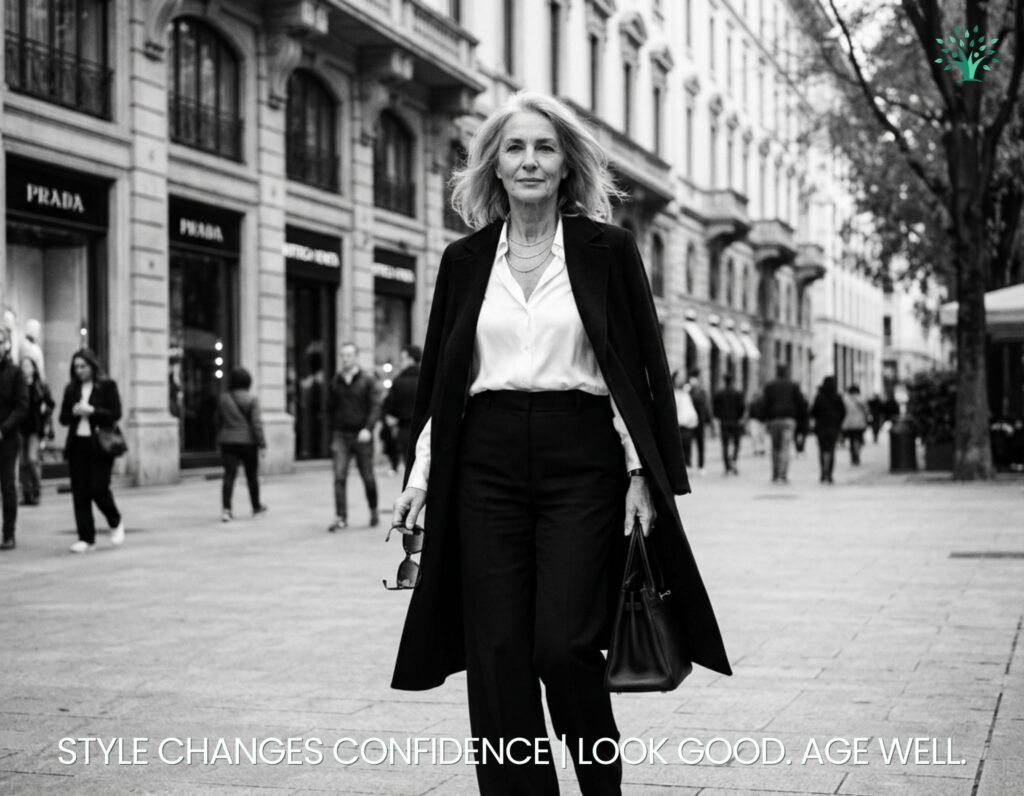
Style Changes Confidence | Look Good. Age Well.
Look Good. Travel Far. Live Well ◆ Functional Health & Wellness by Samuel
I. INTRODUCTION — Style Changes Confidence
Style changes confidence because what we put on in the morning can affect how we feel long before anyone else notices what we’re wearing.
I’ve experienced that more as I’ve gotten older.
There were years when getting dressed was fairly automatic. Work had its own uniform. Business travel had another. A good suit, the right shoes, a watch I liked, and I was ready to walk into a meeting almost anywhere in the world without thinking much about it.
Then life changes.
Our bodies aren’t exactly the same. Neither are our careers, routines, priorities, or the places we spend our time. Eventually, some of the clothes hanging in the closet can belong to a version of ourselves that doesn’t quite exist anymore.
That realization can be uncomfortable.
The answer, at least for me, hasn’t been trying to dress like I’m younger. At some point, chasing youth starts working against the confidence we’re trying to find. I’ve become much more interested in wearing things that fit well, feel good, and reflect who I am now.
Something else happens when that combination is right. Posture changes a little. We walk differently. There’s less adjusting, second-guessing, or wondering whether something still works.
Maybe that’s why personal style becomes more interesting with age. There are fewer reasons to impress everyone else and more freedom to decide what actually feels like us.
Looking good was never supposed to mean looking young.
It should mean looking in the mirror and recognizing yourself—and liking the person looking back.
Quick Guide
In this guide, we’ll explore:
- How personal style naturally evolves as we get older.
- What happens when the clothes we once loved stop feeling like us.
- The difference between dressing younger and simply dressing well.
- How fit, comfort, and personal taste can influence confidence.
- The freedom that comes when style after 50 becomes more individual.
- Where looking good and aging well begin to meet.
- Why confidence may ultimately be the most memorable thing we wear.
This Guide Is For…
- Anyone whose wardrobe no longer feels quite like them.
- Men and women adjusting to changes in their body, career, or lifestyle.
- People who want to look current without chasing youth.
- Anyone rebuilding personal style after 50.
- Those who value quality, fit, comfort, and individuality more than trends.
II. When Our Old Style Stops Feeling Like Us
Most of us don’t wake up one morning and decide our style needs to change. It usually happens gradually.
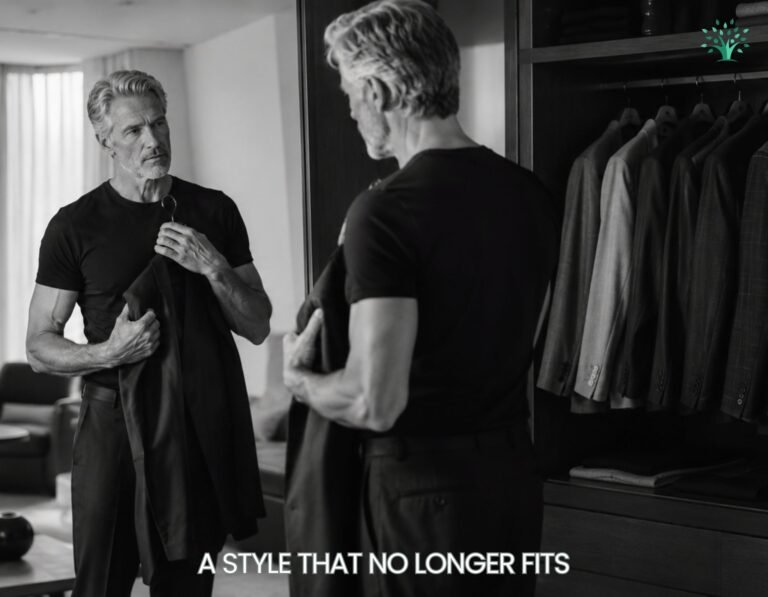
A jacket that once looked great suddenly feels a little too structured. The jeans we’ve worn for years don’t fit quite the same way. Certain colors stop doing us any favors, while something we never would have considered ten years ago unexpectedly looks right.
I’ve had clothes in my closet that were perfectly good and still fit, yet I stopped reaching for them. There was nothing wrong with the clothes. They simply belonged to another period of my life.
That’s an important distinction.
Our appearance changes as we get older, but so does the life we’re dressing for. Someone who spent decades in an office may suddenly have very little reason to own a closet full of business clothes. Children leave home. Travel becomes more leisurely. Social lives change, and comfort starts carrying more weight than it once did.
Holding on to an old wardrobe because it represents who we used to be can sometimes make getting dressed harder, not easier.
That doesn’t mean replacing everything or following whatever happens to be fashionable this year. Often, a few changes are enough—a better fit, different proportions, updated shoes, or simply removing the things we haven’t worn in years.
Personal style should be allowed to move forward with us.
The goal isn’t to become someone different.
It’s to make sure the person in the mirror still feels like you.
III. Dressing for Who You Are Today
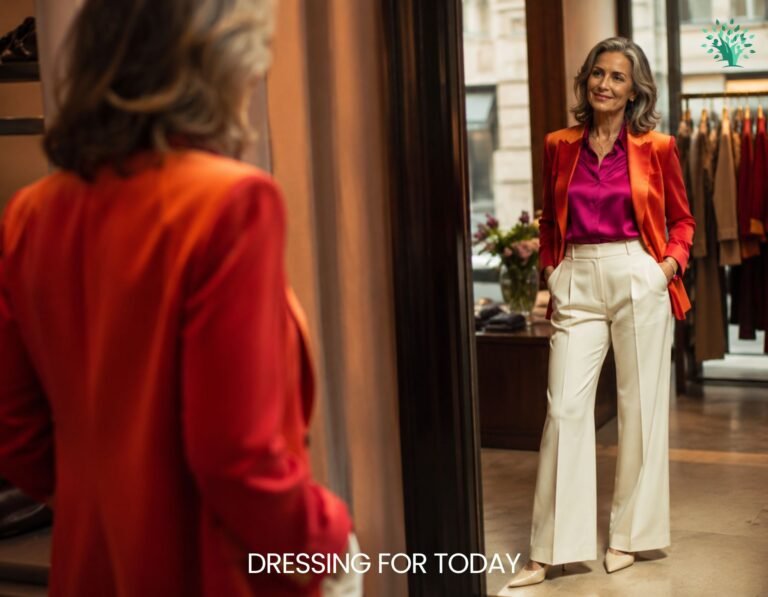
There can be a strange temptation as we get older to dress for one of two people: the person we used to be or the person we think someone our age is supposed to become.
Neither sounds particularly appealing to me.
Age doesn’t suddenly determine which jacket looks good, whether a woman should wear a certain dress, or when someone has become too old for a pair of sneakers. At the same time, pretending our bodies haven’t changed doesn’t create confidence either.
What matters more is understanding what works now.
Fit becomes especially important. A relatively inexpensive shirt that fits beautifully can look far better than a designer piece that’s pulling in the wrong places. The same applies to trousers, jackets, dresses, and almost everything else we wear. Small adjustments in proportion can completely change how an outfit looks and, more importantly, how we feel wearing it.
Comfort matters more to me today as well, although I’ve learned that comfortable doesn’t have to mean careless. Good fabrics, proper fit, clean lines, and a few things we genuinely enjoy wearing can make getting dressed simpler without making it boring.
That’s where style changes confidence in a very practical way. When clothes work with the body we have today instead of fighting it, there’s less reason to think about them once we leave the house.
We can get on with living.
IV. Style Changes Confidence After 50
By the time we reach our 50s, most of us know what we like. We’ve worn enough bad purchases, uncomfortable shoes, questionable trends, and clothes that looked much better on the hanger to have earned that knowledge.
Yet this can also be the age when confidence gets tested.
Bodies change. Hair may turn gray or become thinner. The face looking back from the mirror is familiar, but different. Clothes that once seemed effortless may suddenly require more thought, and it’s easy to interpret those changes as something being lost.
I see it differently now.
Getting older gives us permission to become more selective. Instead of buying something because it’s fashionable, we can pay attention to whether the cut works, the fabric feels good, and the color actually does something for us. A smaller wardrobe filled with pieces we genuinely enjoy can be far more useful than having dozens of choices that never feel quite right.
There is confidence in knowing what works and being willing to leave the rest behind.
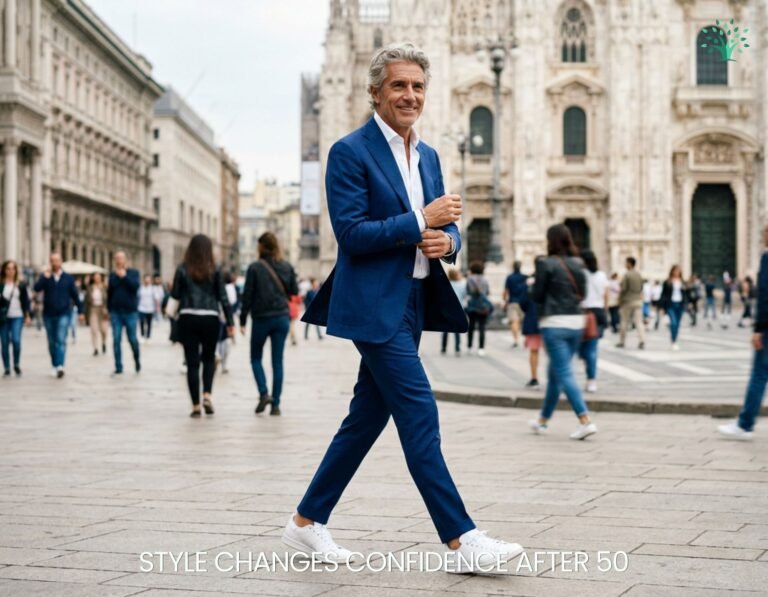
That’s one reason style changes confidence after 50. The right clothes don’t erase age, nor should they. They can help us feel comfortable with the person we’ve become while still caring about how we present ourselves to the world.
Looking good at 55, 65, or 75 doesn’t require looking younger.
It requires looking like yourself—and wearing it well.
⭐ Recommended Reading
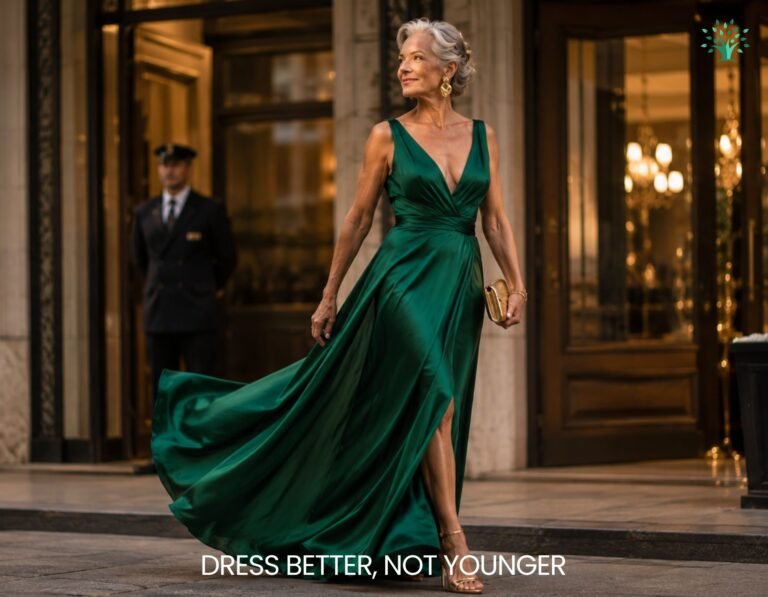
V. Stop Dressing Younger. Start Dressing Better.
Trying to look younger and wanting to look good aren’t the same thing.
There’s nothing wrong with borrowing from current fashion. A modern sneaker, a great pair of jeans, an unexpected jacket, or a new silhouette can keep a wardrobe from feeling dated. Style becomes a problem only when the goal shifts from enjoying what we wear to convincing everyone that we’re younger than we are.
People can usually tell the difference.
Dressing better starts with paying attention to quality, proportion, fit, and the details that make an outfit feel intentional. For some people, that means beautiful tailoring. Someone else may feel best in denim, a simple shirt, and great shoes. A woman might love an elegant dress one evening and walk out the next morning in trousers and sneakers looking every bit as confident.
There isn’t one correct way to dress after 50.
That’s actually the opportunity.
We’ve had enough years to discover what we like, enough mistakes to know what we don’t, and hopefully enough confidence to stop asking permission.
The goal isn’t to walk into a room looking twenty years younger.
It’s to walk in looking good enough that nobody cares how old you are.
⭐ Recommended Reading
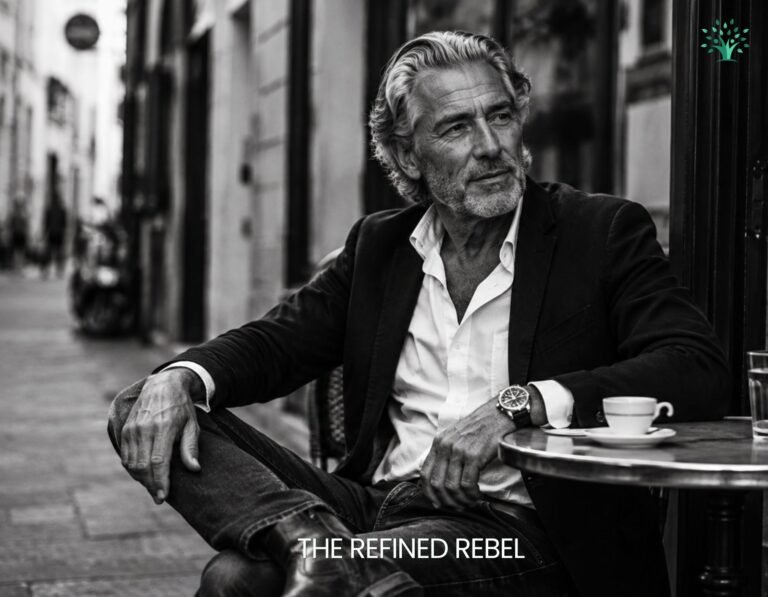
VI. Personal Style Becomes More Personal With Age
One of the better parts of getting older is caring less about whether everyone approves of what you’re wearing.
Earlier in life, clothes often come with expectations. Work has a dress code. Certain occasions have rules. Trends influence what appears in stores, while friends, colleagues, and sometimes complete strangers have opinions about what looks right.
Eventually, some of that noise becomes easier to ignore.
Personal style starts becoming exactly that—personal. Maybe you’ve always loved a beautifully tailored jacket. Perhaps it’s a great watch, an unusual pair of glasses, bright sneakers, a favorite scarf, or a color you’ve decided looks too good to save for special occasions.
Those choices can say more about someone than an entire outfit copied from a magazine.
I’ve also come to appreciate people who don’t look as though they’re trying too hard. Their clothes fit. Something about the outfit feels considered, but nothing is screaming for attention. More importantly, they seem comfortable being themselves.
That kind of style is difficult to manufacture because much of it comes from experience.
By this point in life, we’ve had decades to figure out what feels right. We don’t have to abandon trends, but we also don’t have to follow them simply because someone decided they’re fashionable.
Maybe the real luxury of getting older is finally having the confidence to choose for ourselves.
⭐ Recommended Reading
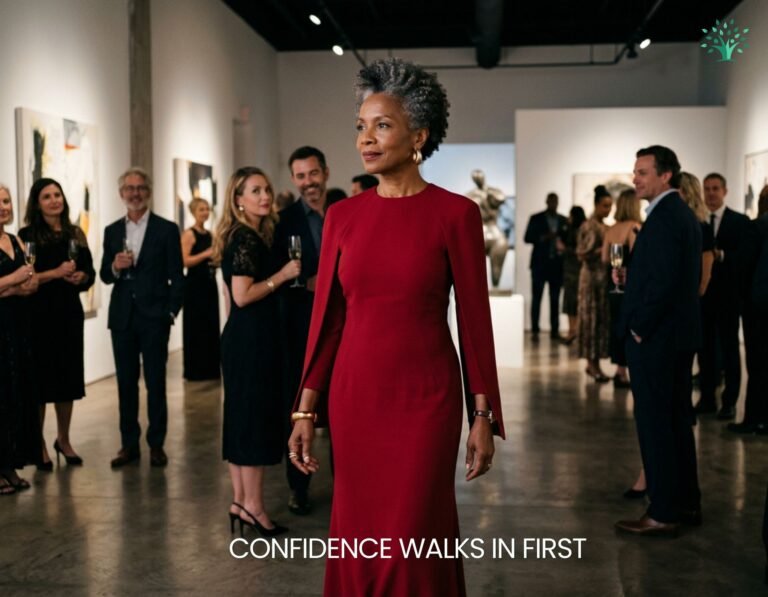
VII. Confidence Is What People Notice First
We’ve all seen someone walk into a room who immediately gets noticed.
It isn’t always the most expensive outfit or the person wearing the latest fashion. Sometimes there’s simply something about the way they carry themselves. Clothes help, but posture, expression, energy, and being comfortable in your own skin can change how everything else is perceived.
That’s where style and confidence become difficult to separate.
When something fits well and feels right, we tend to stop thinking about what we’re wearing. Shoulders relax. We stand a little taller, engage with people more naturally, and spend less time adjusting a sleeve or wondering whether everyone else is looking at the thing we’re already worried about.
For me, that’s when style changes confidence most.
Not because a jacket, dress, or pair of shoes magically creates self-confidence, but because the right clothes can remove one more reason to doubt ourselves.
Age brings enough changes without spending our time trying to hide every one of them. Gray hair can look fantastic. Lines on a face don’t erase character. A body doesn’t have to look the way it did twenty years ago to deserve clothes that fit beautifully today.
Maybe that’s what looking good eventually becomes.
Not convincing people we’re younger.
Being comfortable enough with our age that we no longer need to.
⭐ Recommended Reading
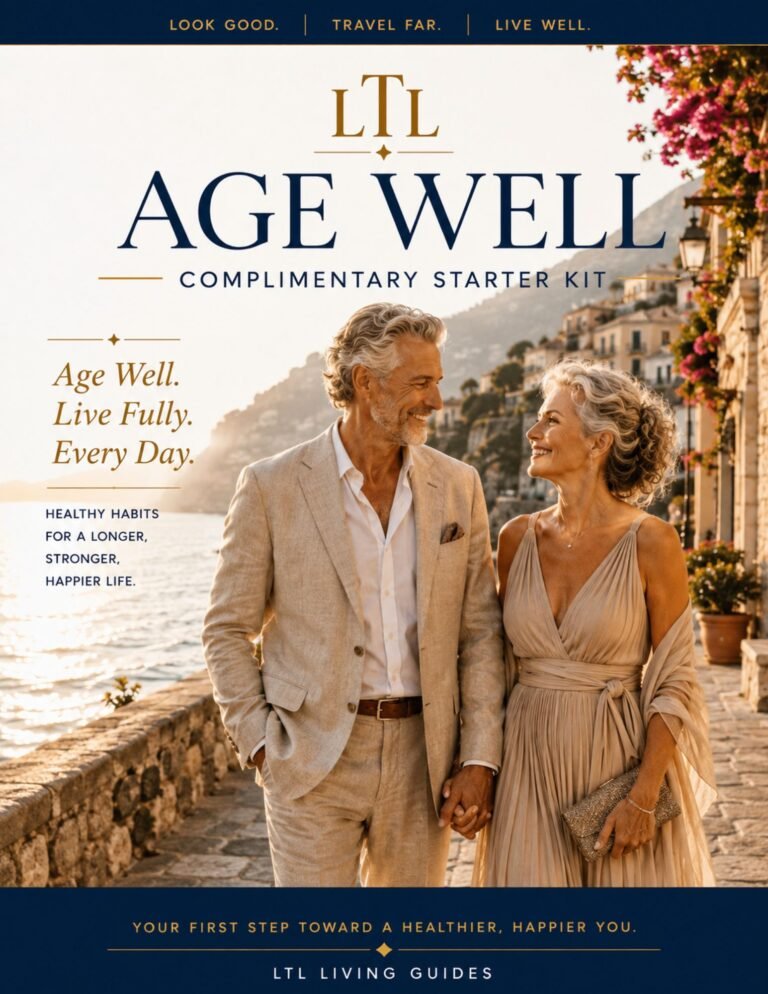
VIII. Age Well Planner
Style is only one part of feeling good about getting older.
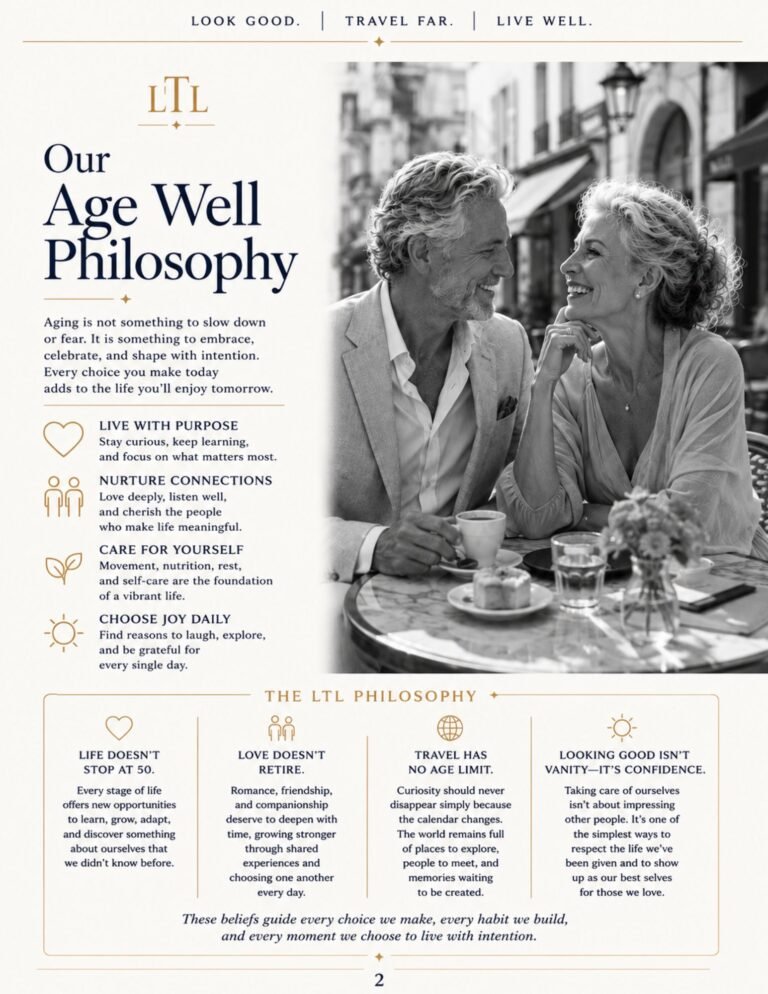
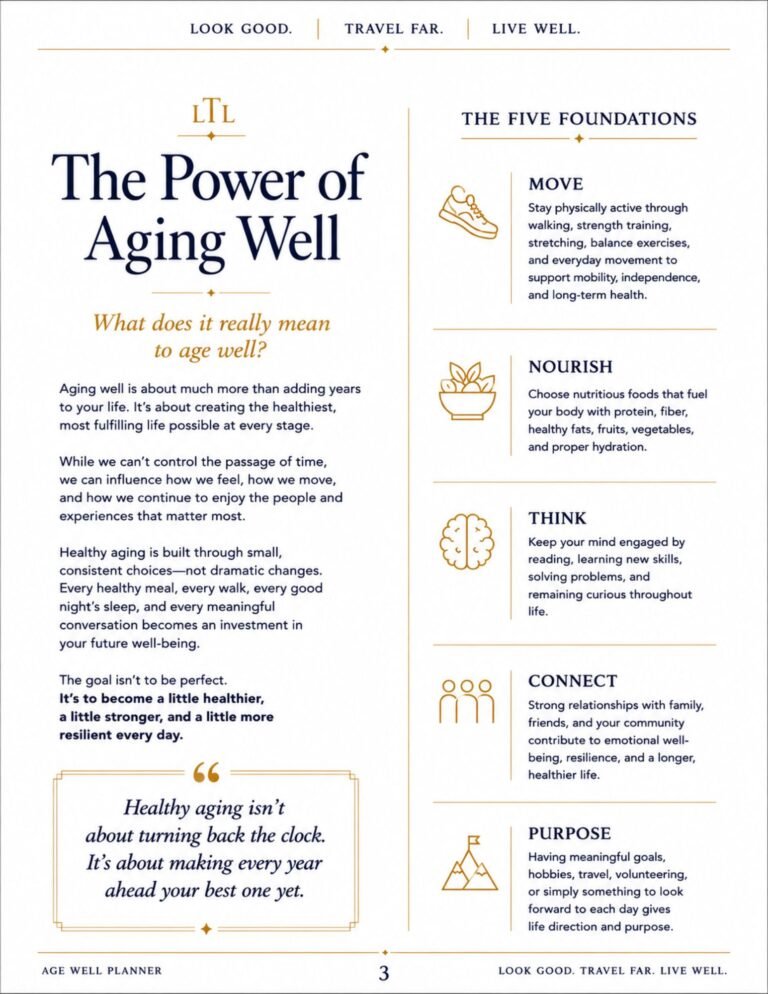
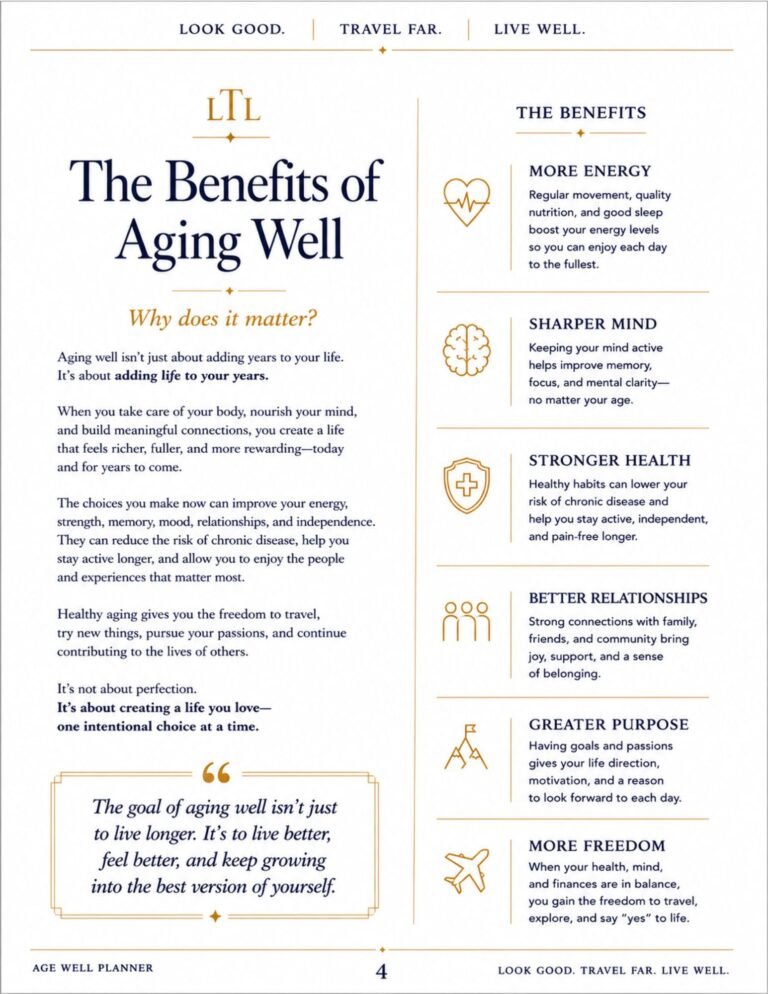
The bigger picture includes how we move, sleep, eat, think, take care of ourselves, and continue making plans for the years ahead. None of us can control every change that comes with age, but we can have a say in how we live through those changes.
That’s the idea behind our new Age Well Planner.
We created it as a practical companion for people who want to approach aging with more intention without turning life into another complicated self-improvement project. It brings together simple reflections, everyday habits, wellness goals, and space to think about what you want the next chapter to look like.
👉 Get your complimentary “Age Well Planner” 4-Page Sampler. Click here to download.
A complimentary preview with selected pages from the planner to help you begin thinking about how you want to feel, live, and age well.
🛍 If you’d like to continue, the complete Age Well Planner is a 24-page premium LTL Living Guide designed to help you build healthier habits, reflect on what matters, and approach the years ahead with confidence and purpose.
Getting older happens naturally.
Aging well deserves a little intention.
IX. Products We Use & Recommend
Looking good and feeling confident aren’t separate from taking care of ourselves.
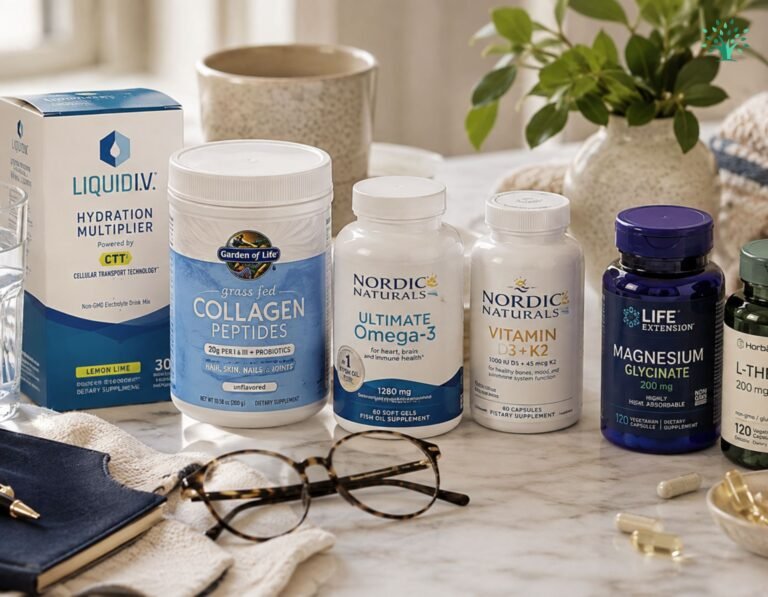
As I’ve gotten older, I’ve become much less interested in complicated routines. The products I continue using are the ones that fit easily into everyday life and support the basics—hydration, healthy skin and joints, staying active, sleeping well, and feeling balanced.
Liquid I.V. Hydration Multiplier
A simple way to stay hydrated during travel, long walks, busy days, or anytime I know I’ll be more active than usual.
Garden of Life Collagen Peptides
An easy addition to my routine that supports healthy skin, hair, nails, and joints while complementing an active lifestyle.
Nordic Naturals Ultimate Omega-3
Supports heart, brain, and joint health as part of the long-term wellness routine I follow as I get older.
Vitamin D3 + K2 – Nordic Naturals
Supports healthy bones and muscle function, both important for staying active and continuing to do the things I enjoy.
Magnesium Glycinate
Part of my evening routine to support relaxation, muscle recovery, and restful sleep.
L-Theanine – Horbäach
A simple addition I use to support a calm, balanced mindset during busy or demanding days.
None of these products is about trying to turn back the clock. They support something much more important to me: feeling good enough to keep living well as the years move forward.
As an Amazon Associate, I earn from qualifying purchases. These are products I personally use and recommend because they support healthy aging without making my daily routine unnecessarily complicated.
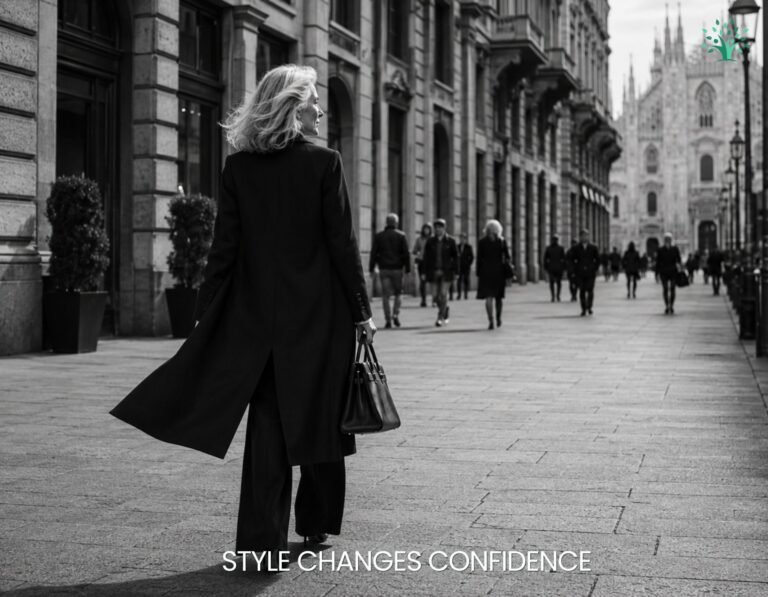
X. Style Changes Confidence | Final Thoughts
For years, I thought style was mostly about knowing what looked good.
Getting older has changed that perspective.
What we wear still matters, but not because clothes can make us younger or turn us into someone else. The right clothes can do something much simpler: help us feel comfortable with the person we already are.
That may mean letting go of a jacket that belonged to another chapter, finally accepting that a different cut works better now, wearing gray hair proudly, or buying something unexpected simply because it makes us smile when we put it on.
Style changes confidence when it stops being about correcting age and starts becoming an expression of it.
There is freedom in reaching a point where looking good no longer means chasing someone else’s idea of how we’re supposed to look. Experience gives us preferences. Time gives us perspective. Eventually, we get to decide for ourselves what stays, what changes, and what feels right.
Aging will continue changing the person in the mirror.
That’s part of life.
But style can continue changing with us.
And maybe looking good as we age isn’t about holding on to the person we once were.
It’s about having the confidence to enjoy the person we’ve become.
Look Good. Age Well.
With care,
Samuel