
The Best Skincare Routine After 50 | Glow Reset
Look Good. Travel Far. Live Well ◆ Skincare & Beauty by Mijung | K- Beauty & Flight Attendant Experience
I. introduction: Skincare Routine After 50
A skincare routine after 50 doesn’t need to become more complicated just because our skin is changing. If anything, I’ve found the opposite to be true. This is the time when understanding what our skin actually needs becomes far more useful than adding another serum, another active, or another step because someone told us we should.
I’ve spent years around skincare and Korean beauty, and I’ve seen how easy it is to believe that more products must mean better skin. There is always something new promising brighter skin, fewer wrinkles, smaller pores, more firmness, or a glow we supposedly lost somewhere along the way.
But skin changes as we get older, and those changes deserve a little more respect.
After 50, many women notice that their skin feels drier than it used to. Products that once worked beautifully can suddenly feel irritating. Pigmentation may become more noticeable, fine lines stay visible longer when the skin is dehydrated, and the skin barrier may not recover as quickly when we push it too hard.
That doesn’t mean mature skin is difficult skin.
It means we need to stop treating it as though it’s still 25.
For me, a good routine now is built around a few priorities: cleanse without stripping the skin, give it enough hydration, treat the concerns that genuinely matter, support the skin barrier, and protect it from the sun every single day. Everything else has to earn its place.
I also think this is where skincare becomes much more personal. One woman may be concerned about dark spots. Another may care more about dryness or texture. Someone else may simply want her skin to look healthy and comfortable without spending twenty minutes at the bathroom counter every morning and night.
There is no prize for having the longest routine.
The best routine is the one that makes sense for the skin we have today, uses products with a clear purpose, and is simple enough that we’ll actually continue doing it.
That’s the approach I want to share here.
Not younger skin. Not perfect skin.
Healthy, cared-for skin that still looks like us.
Quick Guide
In this guide, we’ll look at:
- What commonly changes in our skin after 50
- Why cleansing should become gentler, not stronger
- Why hydration becomes increasingly important
- How to choose treatments based on what actually bothers you
- Why using too many active ingredients can work against the skin
- How moisturizers and barrier-supporting ingredients fit into the routine
- Why sunscreen remains the one step I don’t negotiate with
- How to build a simple morning and evening routine
- The Glow Reset products we use and recommend
- The Glow Reset Planner for creating a routine that works for your own skin
This Guide Is For…
This guide is for women who have reached a point where their old skincare routine doesn’t seem to work quite the way it used to.
Maybe your skin suddenly feels dry even after applying moisturizer. Perhaps products you’ve used for years have started causing redness or irritation. Dark spots may be becoming more noticeable, or you may be looking at a crowded bathroom counter and wondering whether all those bottles are actually helping.
It’s also for anyone who feels overwhelmed by skincare advice. Retinol. Peptides. Vitamin C. Ceramides. Exfoliating acids. Essences. Ampoules. Masks. Every ingredient seems to arrive with another rule about when and how we’re supposed to use it.
I don’t think skincare after 50 needs to feel like homework.
We’ll focus instead on understanding what the skin needs, choosing products for a reason, and building a skincare routine after 50 that is gentle enough to support the skin and effective enough to be worth doing consistently.
Good skincare isn’t about doing everything. It’s about knowing what your skin needs—and doing that well.

II. What Changes After 50
Skin doesn’t suddenly become old at 50, but this is often when changes that have been developing gradually become much easier to see and feel.
Dryness is one of the first things many women notice. As skin gets older, it tends to produce less oil and can have a harder time holding onto moisture. A cleanser or lightweight moisturizer that once felt perfectly adequate may suddenly leave the face feeling tight before lunchtime.
Cell turnover also slows with age. This can contribute to a duller appearance or rougher texture, while years of accumulated sun exposure may begin showing more clearly as uneven tone and dark spots. Gradual declines in collagen and elastin also contribute to changes in firmness, elasticity, and the appearance of fine lines.
Sensitivity can become more noticeable too. The instinct when new changes appear is often to become more aggressive—exfoliating more frequently, introducing stronger treatments, or layering several active ingredients at once.
Sometimes that only makes the skin look worse.
An irritated skin barrier can lead to dryness, redness, stinging, and greater sensitivity to products that previously caused no problems. Before trying to correct every visible sign of aging, I think it’s important to make sure the skin itself feels comfortable and well supported.
Understanding these changes isn’t about finding more things wrong with our faces. It’s about choosing products for the skin we have today instead of continuing a routine designed for the skin we had twenty years ago.
⭐ Recommended Reading

III. Cleanse Without Stripping
Cleansing is probably the least glamorous part of skincare, but it’s also one of the easiest places to unnecessarily irritate mature skin.
I don’t want my face to feel squeaky clean after washing it. That tight, almost polished feeling may seem satisfying, but for me it’s usually a sign that I’ve removed more than makeup, sunscreen, and the day’s buildup.
A gentle cleanser should leave the skin feeling clean but comfortable.
In the morning, some women may find that a very gentle cleanse—or even simply rinsing with lukewarm water, depending on their skin—feels better than starting the day with a strong cleanser. At night, removing sunscreen, makeup, oil, and environmental buildup becomes more important, but that still doesn’t require aggressive scrubbing or very hot water.
If I wear heavier makeup or sunscreen, I prefer removing it thoroughly and then cleansing gently rather than expecting one harsh cleanser to do everything.
Pay attention to how the skin feels immediately afterward. If your face regularly feels tight, dry, itchy, or uncomfortable before you’ve even applied the next product, the cleanser may be working against the rest of your routine.
Skincare shouldn’t begin by creating a problem that the next five products have to fix.
IV. A Skincare Routine After 50 Needs Hydration
Hydration is one of the biggest priorities I have for mature skin because dehydrated skin has a way of making almost everything we worry about look more noticeable.
Fine lines can appear deeper. Texture looks rougher. Makeup doesn’t sit as beautifully. Even healthy skin can look tired when it doesn’t have enough water.
That’s why a skincare routine after 50 often benefits from hydration in layers rather than relying entirely on one heavy cream at the end. A hydrating toner, essence, or serum can add water and humectants to the skin, followed by a moisturizer that helps keep that hydration from disappearing.
This is one of the things I appreciate about Korean skincare. Hydration doesn’t necessarily mean covering the face with something thick and greasy. Several light, comfortable layers can sometimes give mature skin exactly what it needs without making it feel overloaded.
The important distinction is that hydration and moisture aren’t quite the same job. Hydrating products help increase water in the skin, while moisturizers help soften the skin and reduce water loss. Mature skin often appreciates both.
I also don’t believe we need six hydrating products layered on top of one another simply because we can. If a toner or essence, serum, and moisturizer leave the skin comfortable throughout the day, that’s enough.
The goal isn’t to make the bathroom counter impressive.
It’s to make the skin feel good.
⭐ Recommended Reading
V. Treat What Actually Bothers You
This is where skincare can become complicated very quickly.
Once we start noticing changes, it’s tempting to treat everything at the same time. A product for dark spots, another for fine lines, an exfoliating acid for texture, retinol for aging, vitamin C for brightness, peptides for firmness—and suddenly a simple routine has turned into a chemistry experiment.
I prefer choosing treatments based on the one or two concerns that genuinely bother me most.
If uneven tone and dark spots are the priority, focus on ingredients that support brighter, more even-looking skin. If dryness and fine lines are more noticeable, hydration and barrier support may make a bigger visible difference than adding another strong active. If firmness and elasticity are the concern, peptides or a well-tolerated retinoid may have a place.
Retinoids can be useful for signs of aging, but stronger isn’t automatically better. Mature skin that becomes irritated every few days isn’t benefiting simply because the ingredient itself has good research behind it. Starting slowly, using an appropriate strength, and giving the skin time to adjust makes far more sense to me than pushing through constant redness and peeling.
The same principle applies to exfoliation. We want to encourage smoother, brighter-looking skin—not repeatedly strip away the barrier trying to get there faster.
Choose the problem first. Then choose the treatment.
That’s much easier on both the skin and the bathroom counter.
⭐ Recommended Reading

VI. Protect the Skin Barrier
The skin barrier doesn’t get much attention when everything is going well. We usually notice it after we’ve pushed too far.
Skin starts feeling tight or unusually dry. Products that normally feel comfortable suddenly sting. Redness becomes easier to trigger, and adding more skincare somehow seems to make everything worse.
When that happens, my instinct isn’t to find another treatment. It’s to simplify.
A basic routine of gentle cleansing, hydration, moisturizer, and sunscreen can give irritated skin some breathing room while we reduce or temporarily pause whatever may be causing the problem. Ingredients such as ceramides and other barrier-supporting lipids can also help reinforce the skin’s protective surface.
This is one reason moisturizer becomes especially important as skin gets drier with age. A good moisturizer isn’t simply the boring step that comes after the interesting serums. It helps reduce moisture loss and creates the comfortable environment that allows the rest of the routine to work without constantly fighting dryness.
Peptides can fit nicely into this kind of supportive routine as well. I like them because they can complement mature skincare without necessarily requiring the aggressive approach associated with some stronger actives.
There are times when the smartest skincare decision is not adding something.
Sometimes the skin is asking us to do less.

VII. Sunscreen Is the Daily Constant
If there is one step I wouldn’t build a mature skincare routine without, it’s sunscreen.
We can spend a great deal of money trying to improve dark spots, uneven tone, texture, and visible signs of aging while continuing to expose the skin to the very thing that contributes to many of those concerns.
That doesn’t make much sense.
Daily sun protection is particularly important when using ingredients intended to improve pigmentation or encourage skin renewal. I don’t want to spend months carefully treating a dark spot while allowing everyday UV exposure to keep working against me.
And sunscreen isn’t only for beach days. Driving, walking the dog, eating outside, gardening, traveling, or simply spending time near daylight all add to the exposure our skin receives over years.
The best sunscreen, in my experience, is one you’ll actually wear. I want something comfortable enough to use generously, that works underneath makeup when I wear it, and doesn’t make me dread the final step of my morning routine.
This is another area where Korean sunscreens have changed expectations for me. Many newer formulas feel much more like everyday skincare than the heavy sunscreens I remember from years ago.
We can’t undo every hour we’ve already spent in the sun.
But we can decide how we’re going to protect our skin tomorrow.
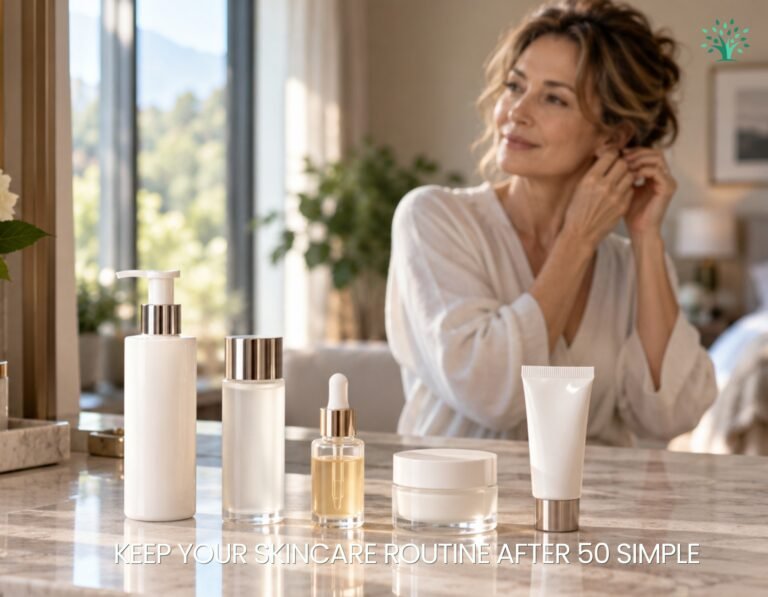
VIII. Keep Your Skincare Routine After 50 Simple
By this point, the routine should actually look fairly simple.
In the morning, I want to hydrate, support the skin where it needs help, moisturize if necessary, and finish with sunscreen. At night, the priority shifts toward removing sunscreen and makeup thoroughly, cleansing gently, using whichever targeted treatment belongs in the routine, and giving the skin enough hydration and moisture to recover comfortably overnight.
That is really the foundation of a skincare routine after 50.
There may be nights when I use a retinoid or another active treatment. There may also be nights when my skin tells me it wants nothing more complicated than hydration and moisturizer. I don’t see those simpler evenings as wasted skincare nights. Sometimes they’re exactly what the skin needs.
I also don’t introduce several new products at once. If the skin suddenly becomes irritated, it’s almost impossible to know which product caused the problem. Adding things gradually makes it much easier to understand what is actually helping.
Most importantly, I give products time.
Skincare rarely rewards impatience. Constantly changing routines because something hasn’t transformed the skin in two weeks makes it difficult to know whether anything was working in the first place.
After 50, I would rather have five products I understand and use consistently than fifteen products competing for space on my face.
Simple doesn’t mean ineffective.
It means everything has a reason for being there.
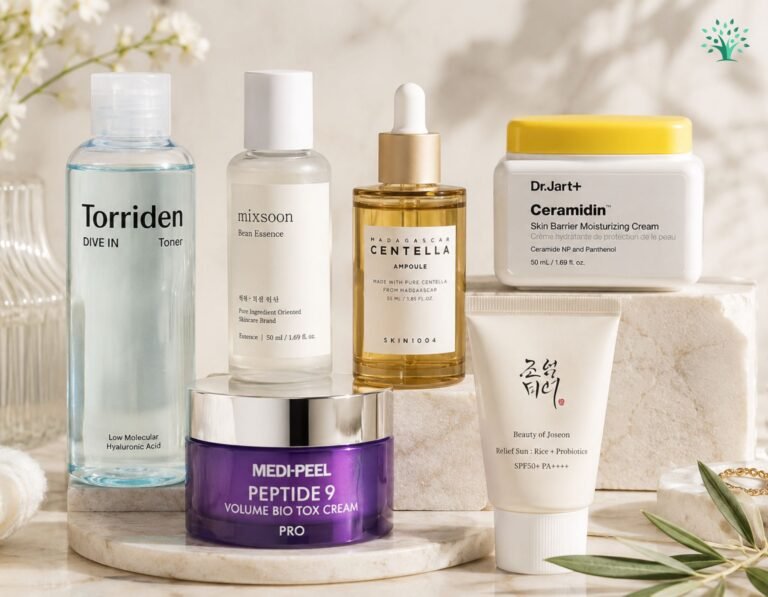
IX. Products We Use & Recommend
When building a routine for mature skin, adding more products isn’t necessarily the answer. I prefer a routine where each product has a clear purpose—hydration, calming support, barrier care, targeted treatment, or daily sun protection.
These are some of the products we use and recommend as part of a thoughtful Glow Reset routine.
Torriden DIVE-IN Toner
A lightweight hydrating toner that adds moisture without making the routine feel heavy. It’s an easy first hydration step when mature skin is feeling dry or dehydrated.
Mixsoon Bean Essence
A simple essence that adds hydration and helps support smoother-looking skin while fitting easily into a streamlined routine.
Skin1004 Madagascar Centella Ampoule
A lightweight centella-focused ampoule that works well when the skin needs a calming, uncomplicated hydration step, particularly when we’re trying not to overload irritated skin.
Dr. Jart Ceramidin Skin Barrier Cream
A richer moisturizer focused on moisture retention and barrier support, particularly when active skincare or dryness has left the skin feeling stressed.
Medi-Peel Peptide 9 Volume Bio Tox Cream
A nourishing cream we use when mature skin needs additional moisture and a richer finishing step, with peptides fitting naturally into a supportive aging-skin routine.
Beauty of Joseon Relief Sun SPF 50+
Daily broad-spectrum sun protection is one of the most important parts of the routine, particularly when uneven tone and visible signs of sun exposure are concerns.
The products should serve the skin—not overwhelm it.
As an Amazon Associate, I earn from qualifying purchases. These are products we personally use and recommend because they support a simple, consistent approach to skincare without making the routine unnecessarily complicated.
Explore More in the LTL Shop
Looking for more of the skincare and beauty products we use and recommend? Visit the LTL Shop for our curated collection of skincare, Korean beauty, Age Well, and everyday beauty essentials.

X. Glow Reset Planner
One thing dark spots taught me is how easy it is to make skincare more complicated than it needs to be.
When progress feels slow, we start adding things. Another serum, another active ingredient, another step that promises to work faster. Before long, it becomes difficult to tell what’s helping, what’s causing irritation, or whether we’ve given anything enough time to work.
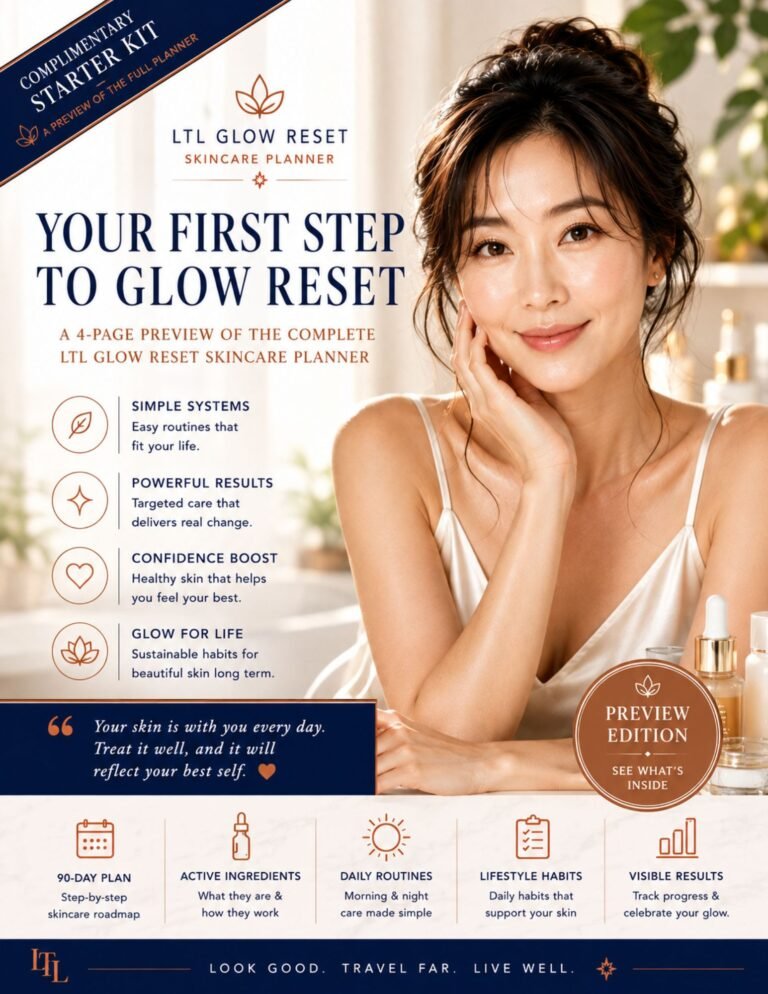
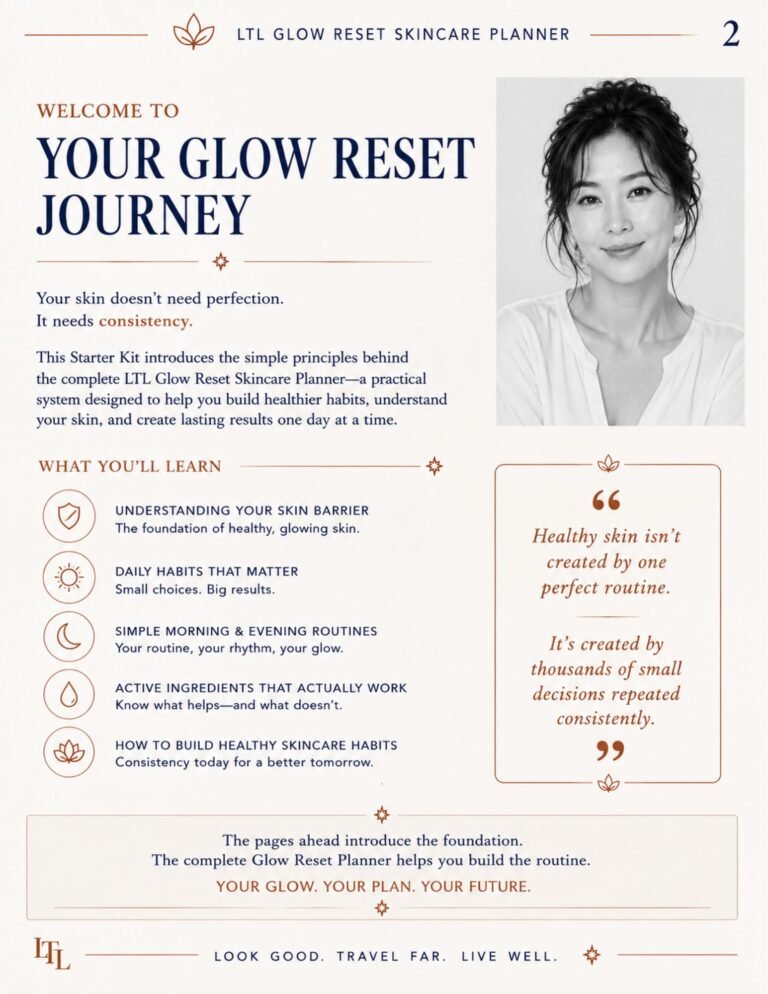
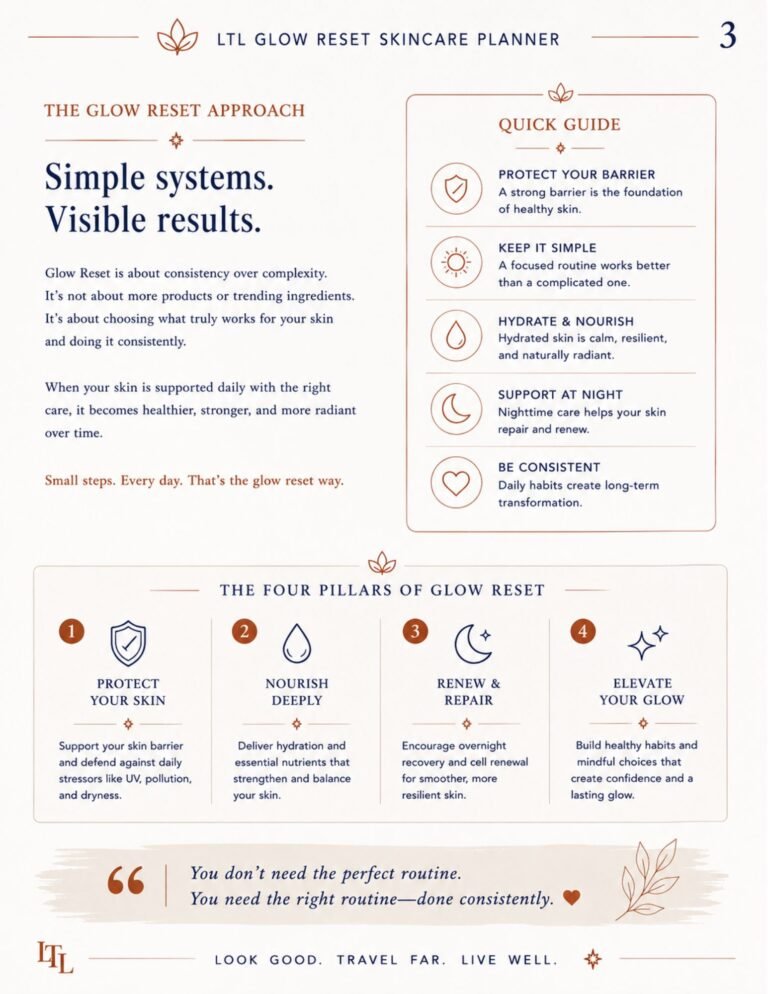
That’s one of the reasons we created the Glow Reset Planner.
The planner provides a practical framework for taking a closer look at your skincare routine, supporting hydration and the skin barrier, and building daily habits that are easier to maintain. For stubborn pigmentation especially, that consistency can matter more than continually changing products.
Inside, you’ll find guidance and planning pages focused on daily skincare, hydration, skin-barrier support, recovery, product routines, healthy lifestyle habits, and creating greater consistency without making skincare unnecessarily complicated.
👉 Get your complimentary “Glow Reset Planner” 4-Page Sampler. Click here to download.
A selected preview from the complete planner to help you simplify your routine, track what you’re actually doing, and give your skin enough consistency to see what may be working.
🛍 If you’d like to continue, the complete Glow Reset Planner is a 24-page premium LTL Living Guide designed to help you build a more thoughtful skincare routine, support healthier daily habits, and stop feeling as though you need to start over every time your skin changes.
Sometimes a reset isn’t about doing more. It’s about figuring out what your skin actually needs.
XI. skincare routine after 50 | Final Thoughts
The older I get, the less interested I am in skincare that asks women to fight their faces.
Healthy-looking skin still matters. Hydration, more even tone, improved dark spots, and maintaining firmness are all worthwhile goals. There is nothing wrong with wanting those things.
But I don’t believe every line needs to disappear or every change needs to become another problem to solve.
A good skincare routine after 50 should work with the skin we have now. Cleanse it without stripping it. Give it enough hydration. Choose treatments thoughtfully. Protect the barrier when it needs recovery. Wear sunscreen consistently. Then give the routine enough time to do its job.
There will always be another ingredient, another trend, and another product promising something extraordinary.
I’ve learned to be much more selective.
Because beautiful mature skin isn’t skin that somehow escaped getting older. It’s skin that looks comfortable, healthy, cared for, and alive.
That’s what I’m interested in preserving.
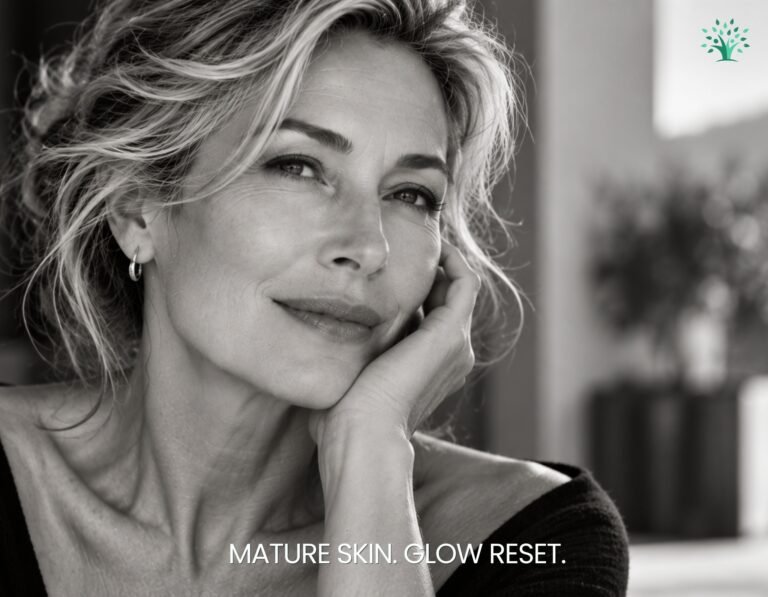
MATURE SKIN. GLOW RESET.
With care,
Mijung