
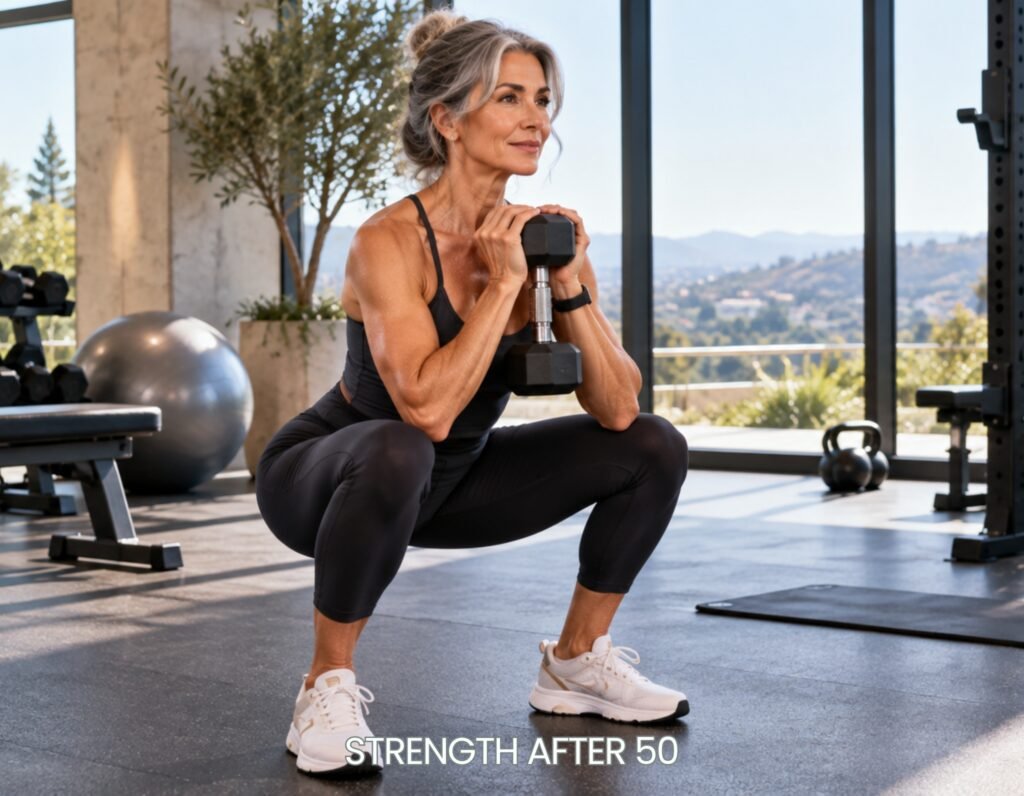
Strength After 50: Why Muscle Matters More as We Age
Look Good. Travel Far. Live Well ◆ Functional Health & Wellness by Samuel
I. INTRODUCTION — Strength After 50
Strength after 50 isn’t about trying to look like we did at 25. For most of us, there are much better reasons to stay strong.
We want to climb stairs without thinking about it. Carry our own luggage through an airport. Get up from the floor easily. Walk through a city all day, lift groceries out of the car, work around the house, and keep traveling without wondering whether our bodies can handle it.
Muscle makes much of that possible.
The problem is that maintaining it becomes more important as we get older—and easier to overlook. We can lose strength gradually without noticing until something that once felt effortless suddenly feels heavier, slower, or less comfortable.
That doesn’t mean we need to become serious weightlifters.
It means giving muscle the same attention we give our heart, sleep, nutrition, and other parts of healthy aging. Some resistance, enough protein, good recovery, and consistency can go a long way toward protecting the strength we already have and building from where we are today.
For us, that’s what staying strong is really about.
Not chasing younger bodies.
Building bodies capable of carrying us into the life we still want to live.
Quick Guide
- Why muscle becomes increasingly important as we age
- How gradually losing strength can affect everyday life
- Why muscle supports mobility, balance, and independence
- What strength after 50 should actually look like
- Why we don’t need to train like we’re 25
- How resistance exercise can fit different fitness levels
- Why protein and recovery matter alongside exercise
- How to start safely and build gradually
- Helpful fitness and recovery products in our LTL Shop
- The Live Well Planner for building healthier routines that last
This Guide Is For…
This guide is for anyone who wants to keep doing things for themselves for as long as possible.
Maybe the goal isn’t bigger muscles. It’s carrying the suitcase without asking for help. Keeping up on vacation. Playing with grandchildren. Getting out of a chair easily. Maintaining balance, confidence, and the freedom to say yes when something interesting comes along.
It also isn’t only for people who already exercise.
If strength training has never been part of your routine—or it’s been years since you did it—there is still value in starting where you are. What matters is finding an appropriate level, progressing gradually, and making strength something you continue rather than something you attack for three weeks and abandon.
Because the real goal isn’t to become the strongest person in the room.
It’s to stay strong enough for your own life.
II. We Start Losing Muscle Earlier Than We Think
Muscle loss doesn’t suddenly begin when we reach our 60s or 70s. The process can start much earlier and gradually become more noticeable as the years pass.
Because it happens slowly, it’s easy to miss. The number on the scale may not change much, yet body composition can. Tasks that once required little thought may begin taking more effort, and periods of inactivity can make the difference especially noticeable.
Age isn’t the only factor. Less physical activity, inadequate nutrition, illness, injuries, and extended periods of sitting can all contribute to losing muscle and strength. The good news is that getting older doesn’t mean we simply have to accept becoming weaker.
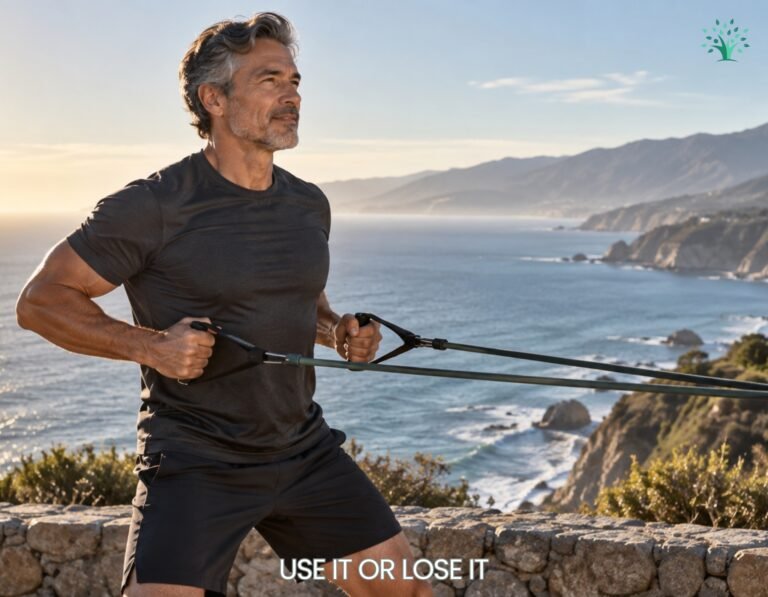
Resistance exercise gives the muscles a reason to keep working. Whether that comes from weights, resistance bands, machines, or body-weight movements matters less than regularly challenging the muscles at an appropriate level.
The earlier we pay attention to strength, the more we’re protecting something we already have rather than waiting until we’ve lost enough to notice.
⭐ Recommended Reading
III. Strength After 50 Is About Everyday Life
For most of us, strength after 50 has very little to do with how much weight we can lift in a gym.
The better test is what strength allows us to do outside of it.
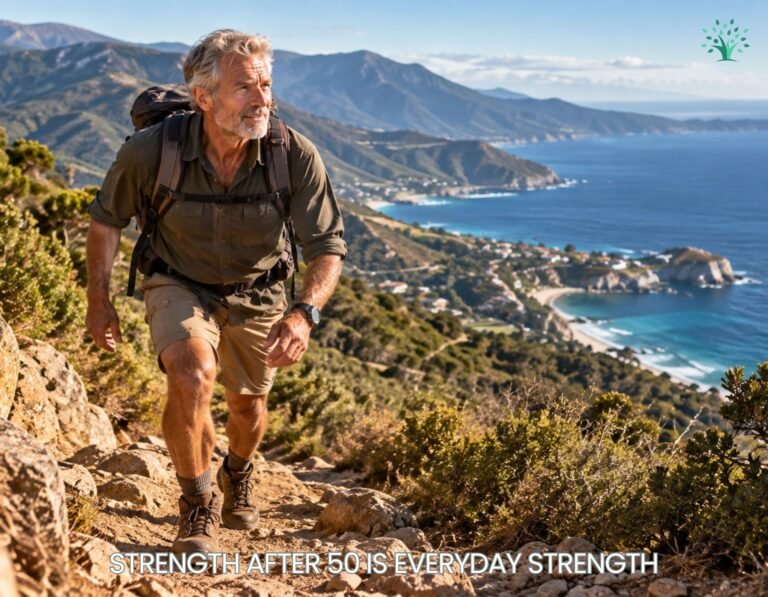
Strong legs help us climb stairs, rise from a chair, walk hills, and get down on the floor and back up again. Upper-body strength makes groceries, luggage, household projects, and everyday lifting easier. A stronger core helps support movement and stability through all of it.
Travel makes this especially obvious. Airports involve bags, long walks, stairs, and getting belongings into overhead bins. Exploring a destination might mean several hours on our feet, uneven streets, hills, or getting on and off trains and boats.
These aren’t athletic achievements. They’re ordinary parts of an active life.
That’s why maintaining muscle matters so much. Strength gives us more than physical capability; it helps preserve the confidence to keep doing things without constantly wondering whether our bodies can manage them.
IV. Muscle Helps Protect Mobility and Balance
Strength and mobility are closely connected.
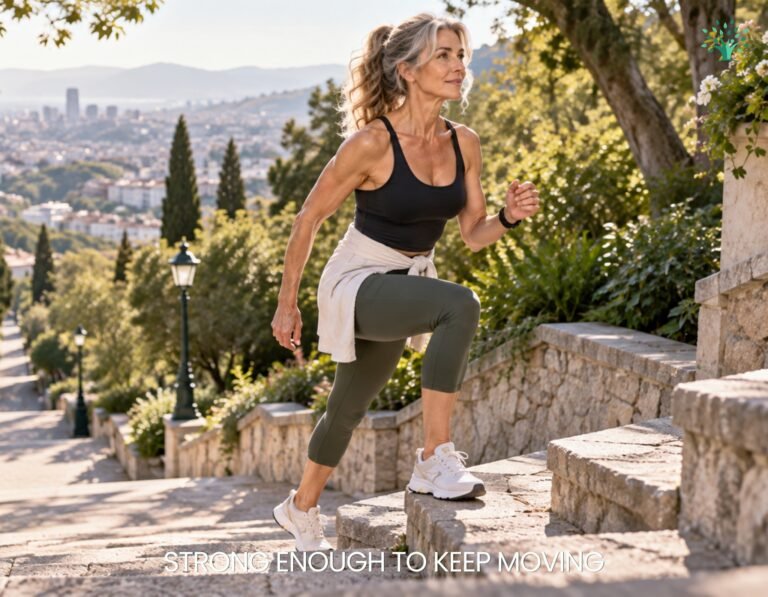
Walking comfortably requires muscle. So does stepping over a curb, recovering when we stumble, getting out of a low chair, or carrying something while moving through the house. When strength declines, those ordinary movements can gradually become more difficult.
Balance isn’t only about standing on one leg, either. Our muscles help us control the body when weight shifts, surfaces change, or something unexpectedly knocks us off position.
Lower-body strength becomes particularly valuable here. The hips, legs, and core work together every time we stand, climb, turn, or catch ourselves.
Maintaining that ability can help us remain active, and staying active gives us more opportunities to keep using our strength. It’s a relationship worth protecting as we get older.
The goal isn’t simply to avoid weakness.
It’s to preserve the freedom to move through life with confidence.
⭐ Recommended Reading
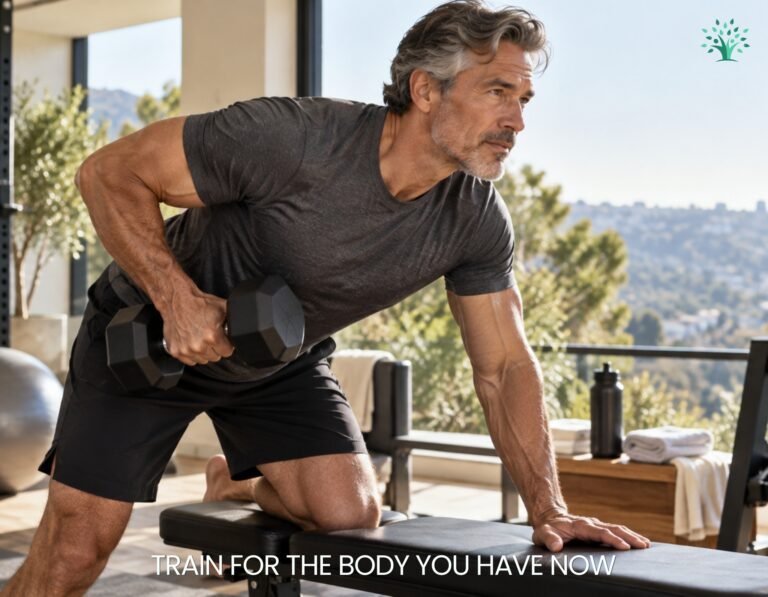
V. You Don't Need to Train Like You're 25
One reason people avoid strength training is the assumption that it requires heavy weights, complicated equipment, or workouts designed for much younger bodies.
It doesn’t.
Resistance simply means asking the muscles to work against something. Dumbbells can do that, but so can resistance bands, weight machines, body-weight exercises, or movements such as squats to a chair, step-ups, and wall push-ups.
What matters is choosing enough resistance to challenge the muscles while maintaining good form. As strength improves, the challenge can gradually increase rather than jumping immediately into heavier weights or longer workouts.
Recovery deserves more respect after 50 as well. Training hard every day isn’t necessary to make progress, and constantly exercising through joint pain or persistent soreness can work against the consistency we’re trying to build.
The best routine isn’t the most impressive one.
It’s the one our bodies can recover from, repeat, and gradually get stronger doing.
⭐ Recommended Reading
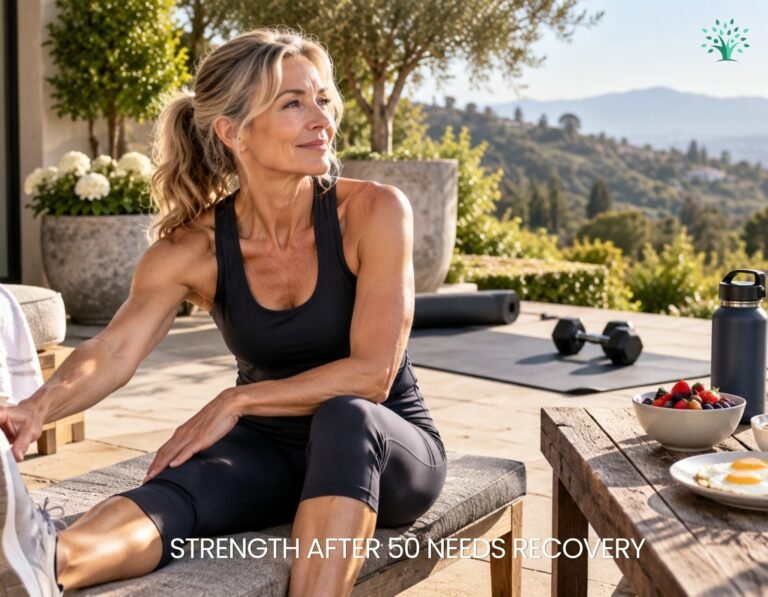
VI. Strength After 50 Needs Protein and Recovery Too
Exercise provides the challenge, but the body still needs the materials and time to respond to it.
Protein plays an important role because it supplies amino acids used to maintain and repair muscle. Rather than thinking only about protein at dinner, it can be helpful to include a meaningful source throughout the day through foods such as eggs, fish, poultry, dairy, beans, lentils, tofu, or other foods that fit our diet.
Recovery matters just as much. Muscles adapt between workouts, which makes adequate sleep and appropriate rest part of strength after 50, not time wasted between training sessions.
Nutrition needs vary from person to person, particularly when health conditions or kidney concerns are involved, so a higher-protein diet isn’t something everyone should approach the same way. A physician or registered dietitian can help determine an appropriate amount when there are medical considerations.
Strength isn’t built during one workout.
It’s built through the repeated cycle of challenging the body, nourishing it, allowing it to recover, and then doing it again.
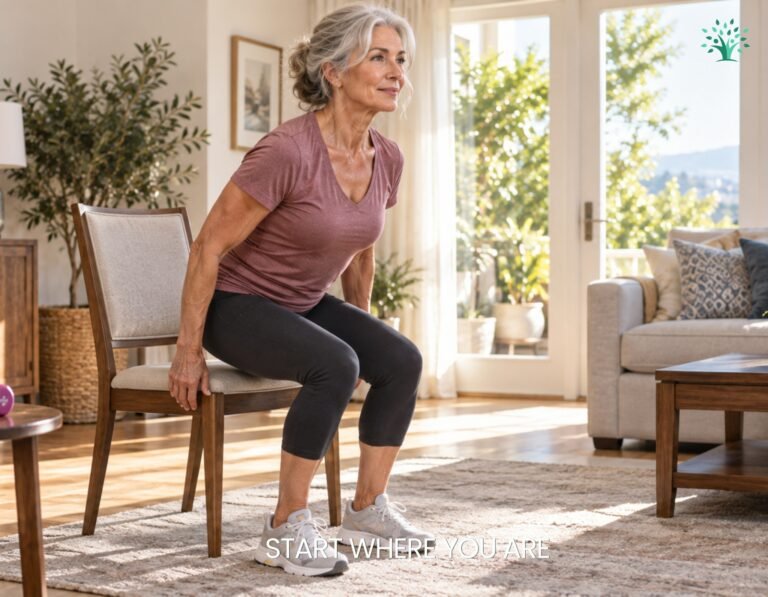
VII. Start Where You Are and Keep Building
Starting can be surprisingly simple.
Someone who hasn’t exercised in years doesn’t need to begin with an hour at the gym. A few basic movements performed consistently can create a foundation: sitting down and standing from a chair, pushing against a wall, carrying manageable weights, using resistance bands, or practicing controlled step-ups.
Good technique matters more than rushing to heavier resistance. Once a movement becomes comfortably manageable, adding a little weight, another repetition, or a slightly more challenging variation gives the muscles a new reason to adapt.
Previous injuries, significant balance problems, chronic conditions, or a long period of inactivity may make professional guidance worthwhile before beginning. A physical therapist, qualified trainer, or healthcare professional can help establish a safer starting point.
Progress after 50 doesn’t need to happen quickly to be meaningful.
The important thing is that six months from now, we’re not still standing exactly where we started.
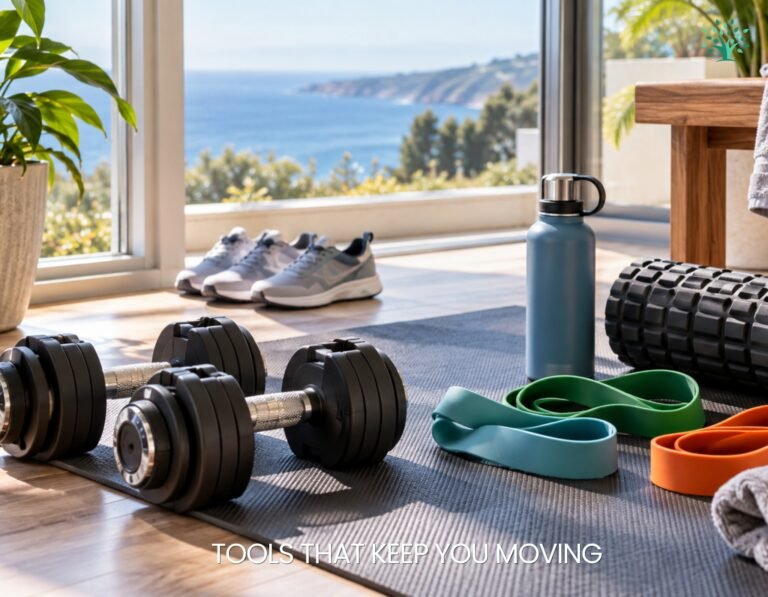
VIII. Stay Strong | LTL Shop
Staying strong becomes easier when the things we use support the way we actually live.
The LTL Shop brings together products we use and recommend across Look Good, Travel Far, and Live Well, including practical picks for movement, strength, recovery, nutrition, mobility, and everyday wellness.
You don’t need a home gym full of equipment to take care of your body. Sometimes a few useful tools—and a routine you’ll actually continue—are enough to help keep you moving in the right direction.
As an Amazon Associate, I earn from qualifying purchases. These are products I personally use and recommend because they support healthy aging without making my daily routine more complicated.
iX. Live Well Planner
Sometimes looking back isn’t about living in the past. It’s about recognizing how much has changed, what we’ve learned along the way, and how far we’ve already come.
Life rarely follows the exact path we imagined. Priorities change, plans get interrupted, difficult seasons test us, and occasionally we find ourselves starting over in ways we never expected. Yet those experiences also shape how we think about the years still ahead.
That’s one of the reasons we created the Live Well Planner.
It isn’t designed around becoming a completely different person or setting another list of ambitious goals. Instead, the planner helps you take stock of where you are today, pay attention to the everyday habits that support your well-being, and think more intentionally about how you want to live moving forward.
Inside, you’ll find practical guidance and planning pages focused on daily habits, movement, hydration, nutrition, sleep, recovery, reflection, personal goals, consistency, and creating routines that fit the life you’re living now.
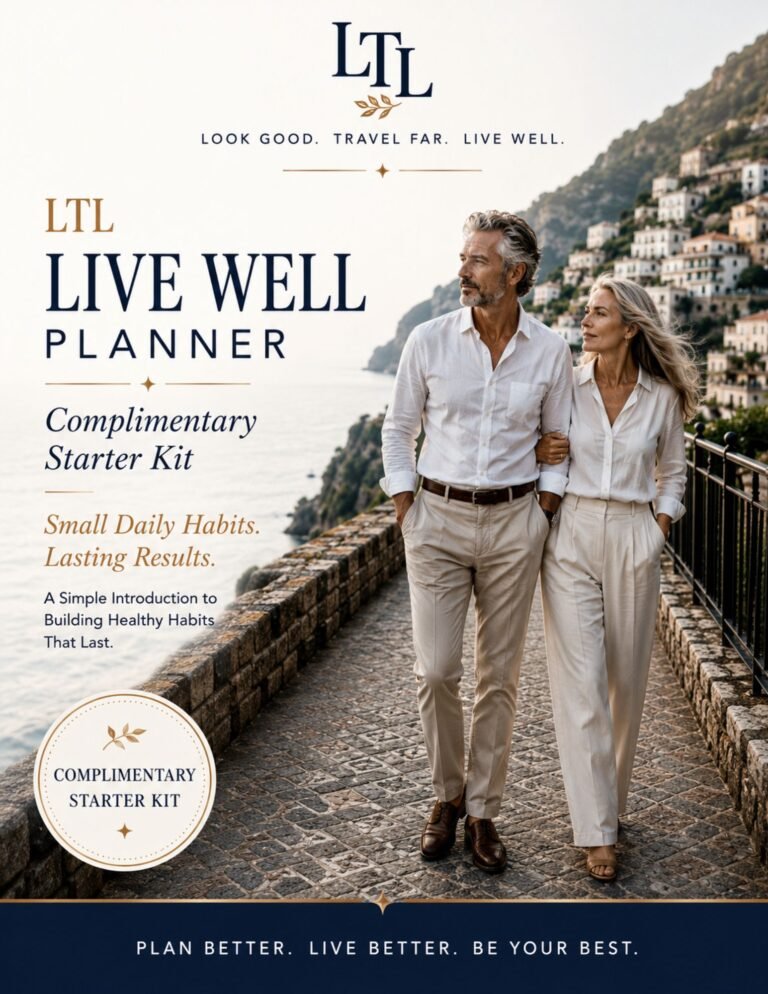
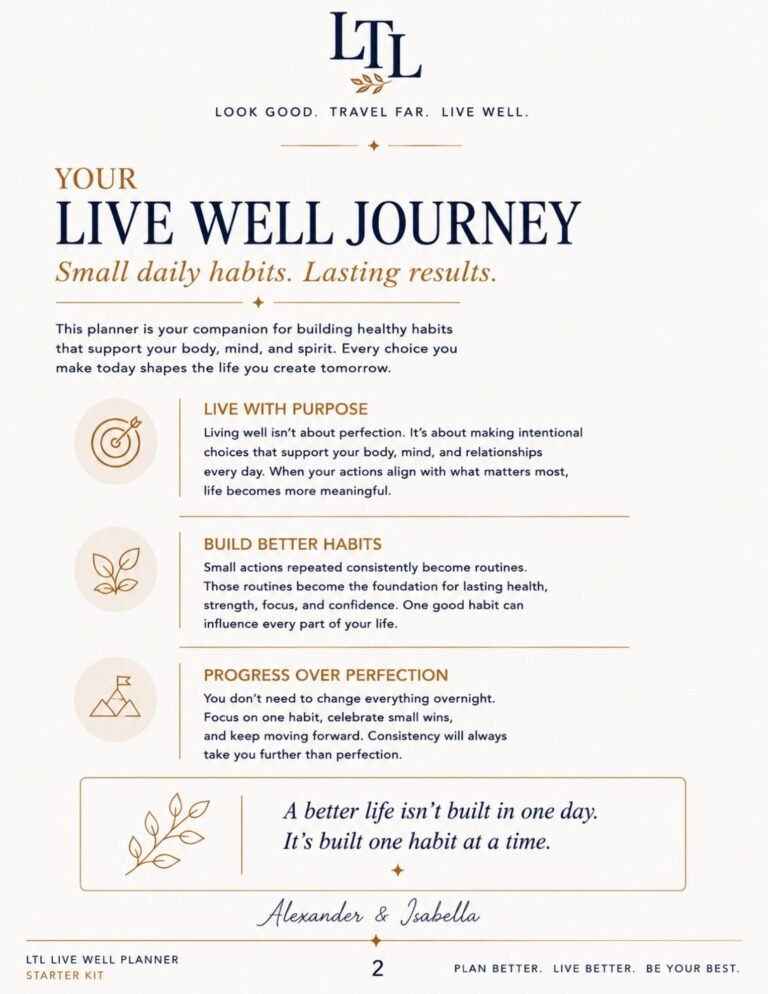
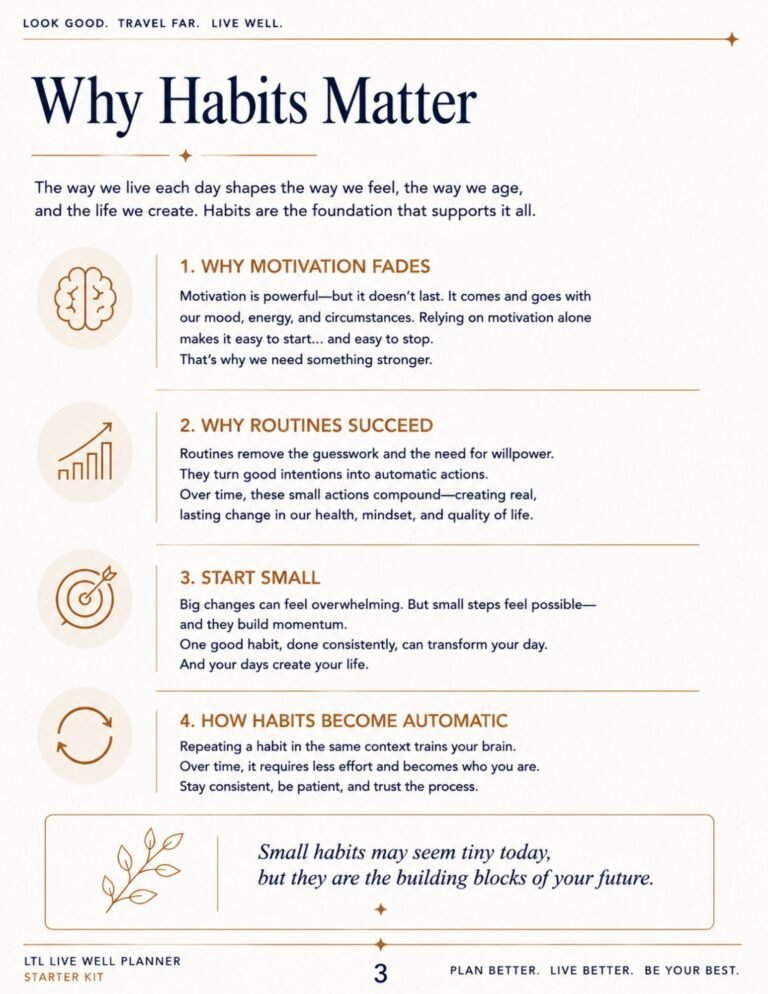
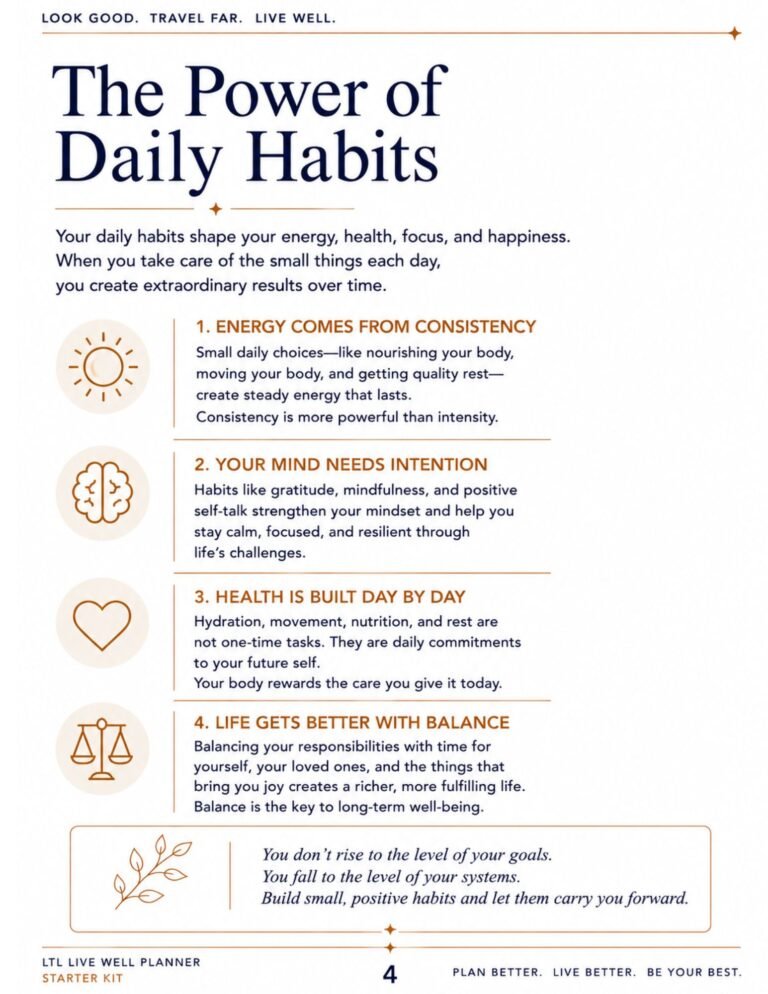
👉 Get your complimentary “Live Well Planner” 4-Page Sampler. Click here to download.
A selected preview from the complete planner to help you reflect on where you are today and begin thinking about the small changes that could make the next chapter even better.
🛍 If you’d like to continue, the complete Live Well Planner is a 24-page premium LTL Living Guide designed to help you build healthier routines, create greater balance, and become more intentional about how you spend the years ahead.
You’ve already traveled a long road to get here.
Take a moment to appreciate how far you’ve come. Then decide where you’d like to go next.
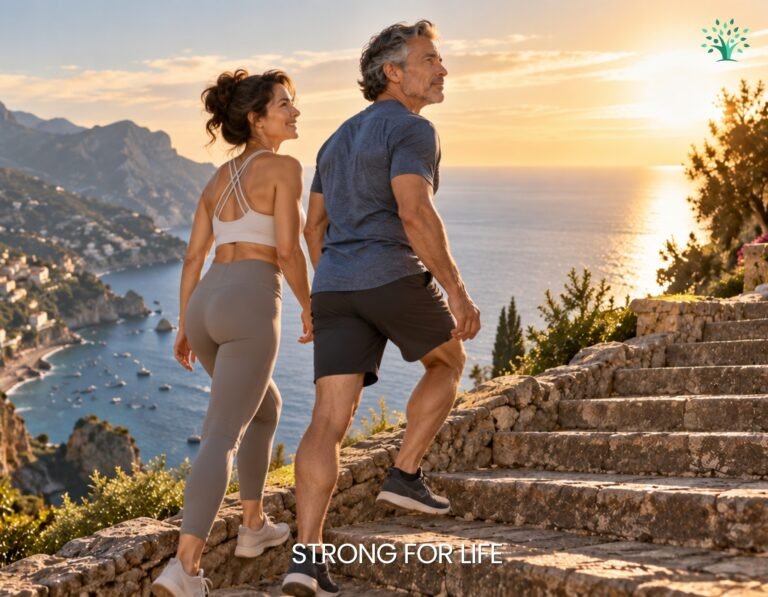
X. Strength After 50 - Strong for Life | Final Thoughts
At this stage of life, strength means something different to me than it did when I was younger.
It’s less about what I can lift and more about what I can continue to do.
Carry my own luggage. Walk all day when we’re traveling. Climb the stairs without thinking about it. Handle things around the house. Get down on the floor and know I can get back up. Keep saying yes to experiences without wondering whether my body is going to hold me back.
That’s the real value of strength after 50.
None of us can stop getting older, and our bodies will continue to change. But that doesn’t mean we should voluntarily surrender strength before we have to.
A little resistance. Better nutrition. Enough recovery. Consistency over time.
Those aren’t dramatic changes, but they can help protect something incredibly valuable: the physical freedom to keep participating in our own lives.
We don’t need to be the strongest we’ve ever been.
We need to stay strong enough for where we still want to go.
STAY STRONG. LIVE WELL.
With care,
Samuel