

Why Your Energy Feels Different After 50 | Live Well
◆Functional Health & Wellness by Samuel
I. INTRODUCTION — Why Your Energy Feels Different After 50
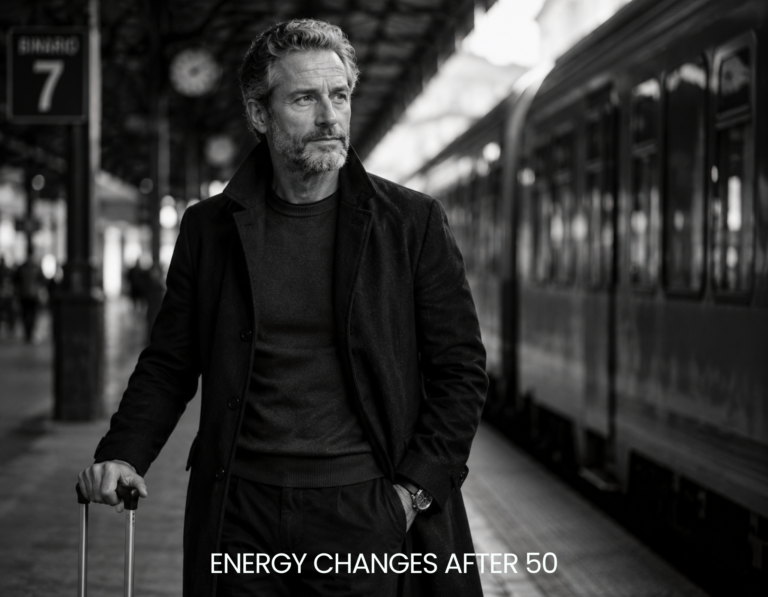
Why your energy feels different after 50 became something I started noticing during travel.
A long flight that would not have bothered me years earlier required more recovery. Busy days seemed to take more out of me. Sleep mattered more. Hydration mattered more. Even stress felt different.
At first, I assumed it was simply part of getting older.
The reality turned out to be more complicated than that.
Many people reach a point where they begin noticing similar changes. Energy is still there, but it feels different. Recovery takes longer. A poor night’s sleep has a bigger impact. Stress seems harder to shake off. Things that once felt routine suddenly require more effort.
The good news is that lower energy is not always about age itself.
In many cases, recovery, sleep quality, hydration, nutrition, stress, physical activity, and overall wellness habits begin playing a much larger role than they did years earlier. While aging does create changes, many of the factors that affect energy remain within our control.
That realization changed the way I looked at energy.
Instead of asking how to get back to where I was twenty years ago, I started focusing on how to better support the body I have today.
This article explores some of the most common reasons energy changes after 50 and practical ways to support recovery, consistency, and a more active lifestyle moving forward.
QUICK GUIDE
• Why energy often changes after 50
• The connection between recovery and daily energy
• How stress affects energy levels
• Why hydration and nutrition matter more than many people realize
• The role of sleep quality and physical activity
• Simple habits that support better energy and wellness
• Products that may help support recovery and consistency
• A practical reset plan for improving daily energy
THIS GUIDE IS FOR YOU IF…
• You feel more tired than you used to
• Recovery takes longer than it once did
• Stress seems to affect your energy more than before
• Sleep no longer feels as restorative
• Daily energy feels less consistent
• You want practical ways to support wellness and recovery
• Staying active remains important to you
• You want to feel your best during the years ahead
II. Why Your Energy Feels Different After 50 Is More Common Than You Think
Many people assume declining energy is simply part of getting older.
While age can influence energy levels, what surprised me is how many people experience similar changes even when they remain active, healthy, and engaged with life. The pattern often sounds familiar. Recovery takes longer. A busy week feels more exhausting than it used to. Sleep becomes more important. Stress seems to have a bigger impact.
At first, these changes can be frustrating because they often appear gradually. Most people do not wake up one morning feeling completely different. Instead, they begin noticing small shifts over time.
A long day requires more recovery. Travel feels more demanding. Skipping sleep carries a bigger price. Even periods of stress seem to linger longer than they once did.
What makes this confusing is that many people are still doing the same things they have always done. The workload may be similar. Daily responsibilities may not have changed very much. Yet the body responds differently.
That is one reason why your energy feels different after 50 often has less to do with motivation and more to do with recovery. The body is still capable of performing well, but it usually requires more support than it did years earlier.
Understanding that difference can be important because it shifts the conversation away from simply blaming age and toward identifying the factors that may be affecting energy the most.
⭐ Recommended Reading
III. What Really Changes After 50
One of the biggest misconceptions about aging is that lower energy comes from a single cause.
In reality, several things often begin changing at the same time.
Sleep quality may become less consistent. Recovery can take longer after physical activity. Stress may affect the body more noticeably. Muscle mass naturally declines with age if it is not maintained. Hydration, nutrition, and activity levels often become more important than they were earlier in life.
Individually, these changes may seem small.
Combined, they can have a meaningful impact on how a person feels throughout the day.
This is one reason why your energy feels different after 50 can sometimes be difficult to pinpoint. The issue is rarely caused by one factor alone. More often, several smaller factors gradually begin influencing energy, recovery, and overall well-being.
The encouraging part is that many of these factors are modifiable.
Improving sleep quality, staying physically active, managing stress, maintaining hydration, and supporting overall nutrition may not completely stop the aging process, but they can help support better energy and resilience.
The goal is not to feel twenty-five again.
The goal is to understand what has changed and learn how to work with it rather than against it.
⭐ Recommended Reading
IV. Stress, Recovery, and Everyday Fatigue
One thing I did not fully appreciate when I was younger was how much recovery affects energy.
For years, I focused almost entirely on activity. Work harder. Travel more. Push through busy schedules. Keep going.
What eventually changed was not my motivation. It was my recovery.
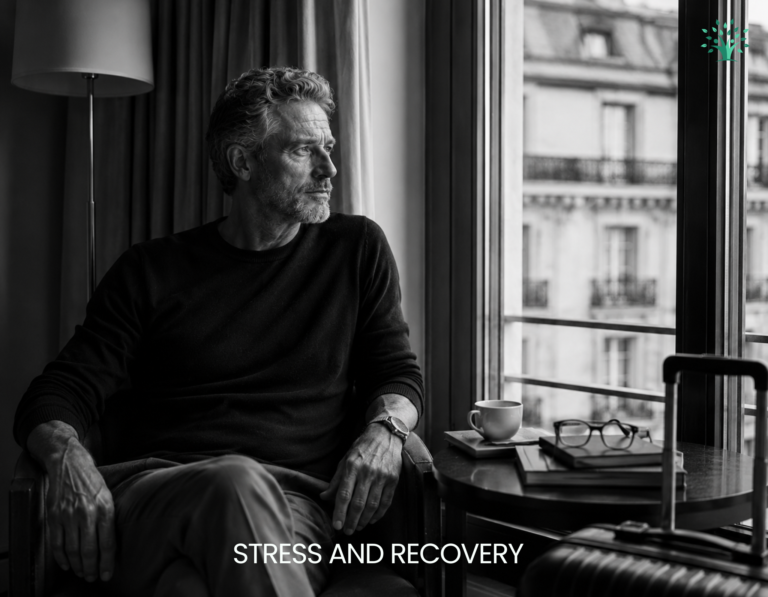
Stress, poor sleep, dehydration, and inconsistent routines began having a bigger impact than they once did. A busy week could leave me feeling drained much longer than it would have years earlier. Even small disruptions seemed to take a greater toll.
Many people experience something similar.
The body is often still capable of doing the same things, but it may require more recovery to perform at the same level. When recovery falls behind, energy often follows.
That is one reason why your energy feels different after 50 is frequently connected to stress and recovery rather than age alone.
Over time, I found that supporting recovery became just as important as staying active. Magnesium Glycinate – Nature’s Bounty gradually became part of my routine because it helped support relaxation and recovery, while L-Theanine became useful during periods when stress levels were higher than usual.
The goal is not to eliminate stress completely.
The goal is to recover from it more effectively.
⭐ Recommended Reading

V. Why Your Energy Feels Different After 50 Often Starts With Recovery
Sleep was another area where I noticed a difference.
Years ago, a poor night’s sleep felt like a temporary inconvenience. These days, it can affect energy, focus, recovery, and overall well-being much more noticeably.
Hydration also became more important than I realized.
During travel, busy work periods, and long days away from home, I often noticed energy levels were more consistent when hydration remained a priority. That is one reason Electrolytes Powder – Liquid IV became a regular part of my routine during travel and demanding schedules.
Nutrition plays a role as well.
Many people focus on energy drinks or quick fixes when they feel tired. In my experience, long-term consistency comes from supporting the body with better recovery habits rather than searching for a temporary boost.
That is where products like AG1 Greens Powder Supplement can be helpful. During periods when travel, work, or life became busier than expected, it helped support nutritional balance and overall consistency.
The reality is that recovery is not one thing.
It is the combination of sleep, hydration, nutrition, stress management, and daily habits working together.
When those areas improve, energy often follows.

VI. The Hidden Role of Movement and Muscle
One thing I have learned over the years is that energy often creates more energy.
When people feel tired, the natural reaction is usually to do less. Sometimes rest is exactly what the body needs. Other times, reduced activity can create a cycle where energy continues to decline.
Movement plays an important role in breaking that cycle.
Walking, strength training, stretching, and staying physically active all help support circulation, mobility, recovery, and overall well-being. The goal is not to train like a professional athlete. The goal is to continue moving consistently.
One reason this becomes more important after 50 is that muscle mass naturally declines with age when it is not maintained. Strength, endurance, balance, and recovery can all be affected over time.
That does not mean those changes are unavoidable.
Many people remain remarkably active well into their later years because they continue making movement part of their routine.
This is another reason why your energy feels different after 50 is not always about age itself. Sometimes the body is simply responding to lower levels of activity, reduced recovery, or changes that have gradually accumulated over time.
The people who seem to maintain the highest energy levels are often not the people doing the most. They are the people who remain consistently active.
VII. Everyday Habits That Support Better Energy
The longer I pay attention to wellness, the more I appreciate simple habits.
Most of the improvements I noticed happened gradually.
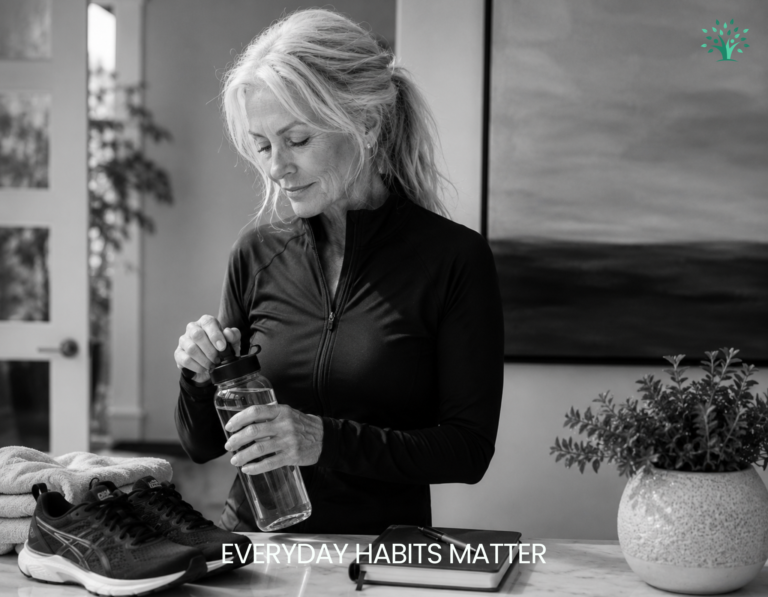
Paying more attention to sleep. Staying hydrated during travel. Managing stress before it became overwhelming. Remaining physically active even when life became busy. Making recovery a priority instead of treating it as an afterthought.
None of those habits felt particularly significant at the time.
What made the difference was consistency.
The body responds surprisingly well when it receives the support it needs on a regular basis. Better recovery often leads to better energy, and better energy makes it easier to stay active, engaged, and involved in the things that matter.
I also found that a few products helped support that consistency. Omega-3 Fish Oil became part of my routine because of its overall wellness benefits, while Vitamin B Complex helped support daily nutritional consistency during busier periods.
Whenever travel schedules became demanding or my immune system needed additional support, Echinacea & Goldenseal – Horbäach remained one of the first supplements I reached for because it has been part of my wellness routine for years.
Small habits may not seem important in the moment.
Over time, they often become the foundation that supports better energy, recovery, and overall well-being.
VIII. Products That Support Daily Energy and Recovery
By this point, I had stopped looking for quick fixes.
What interested me more was finding simple ways to support consistency.
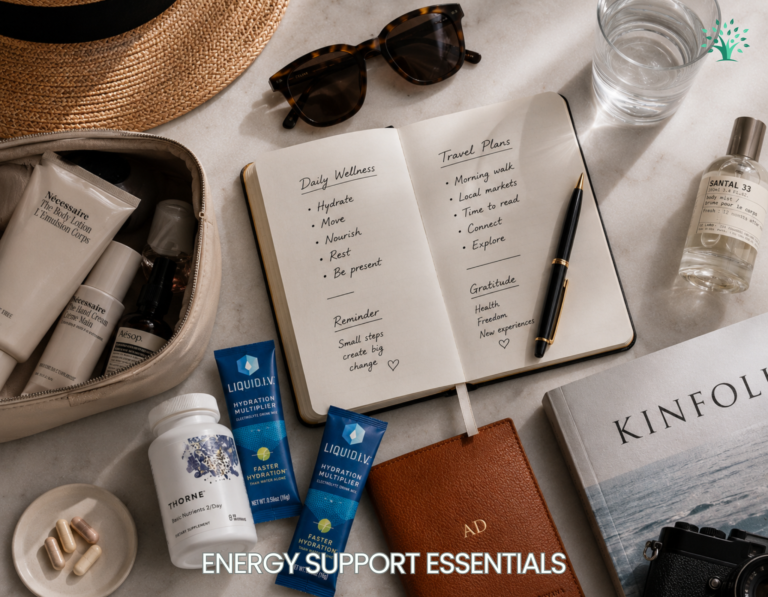
No supplement can replace sleep, hydration, movement, stress management, or good nutrition. At the same time, I found that a few products helped support the habits I was already trying to maintain.
Electrolytes Powder – Liquid IV became part of my routine during travel and busy work periods when staying properly hydrated was not always easy.
Magnesium Glycinate – Nature’s Bounty gradually earned a permanent place in my routine because it helped support recovery and overall wellness, especially during periods when stress and activity levels were higher than usual.
During demanding schedules, L-Theanine and Ashwagandha – Horbäach helped support a steadier routine and made it easier to stay focused on the things that mattered most.
AG1 Greens Powder Supplement became useful during periods when travel, work, or life became busier than expected because it helped support nutritional balance and overall consistency. Omega-3 Fish Oil and Vitamin B Complex also became part of my routine as simple ways to support overall wellness during demanding schedules.
Whenever travel became more frequent or my immune system needed additional support, Echinacea & Goldenseal – Horbäach remained one of the first supplements I reached for because it has been a trusted part of my wellness routine for years.
The goal was never to create a complicated wellness routine.
The goal was to support consistency.
Over time, I learned that consistency often matters more than intensity when it comes to maintaining energy, recovery, and overall well-being.
As an Amazon Associate, I earn from qualifying purchases. These are products I personally use because they help support consistency, recovery, and better long-term balance without overcomplicating daily life.

IX. Your Best Years Are Not Behind You
I have come to appreciate is that energy changes are not necessarily a sign that life is moving in the wrong direction.
Many people assume feeling different means their best years are behind them.
I do not believe that.
The people who continue to inspire me most are often the people who remain active, curious, and engaged with life. They continue learning. They continue traveling. They continue building relationships, creating experiences, and finding reasons to stay involved in the world around them.
What changes is often not the desire to live fully.
What changes is the way we support ourselves along the way.
That is one reason why your energy feels different after 50 can be a valuable reminder rather than simply a frustration. It encourages us to pay closer attention to recovery, wellness, and the habits that help us continue doing the things we enjoy.
In many ways, that shift in perspective changed how I look at energy.
The goal is not to have the same energy I had twenty years ago.
The goal is to have the energy needed to enjoy the life I have today.

X. Your Live Well Planner
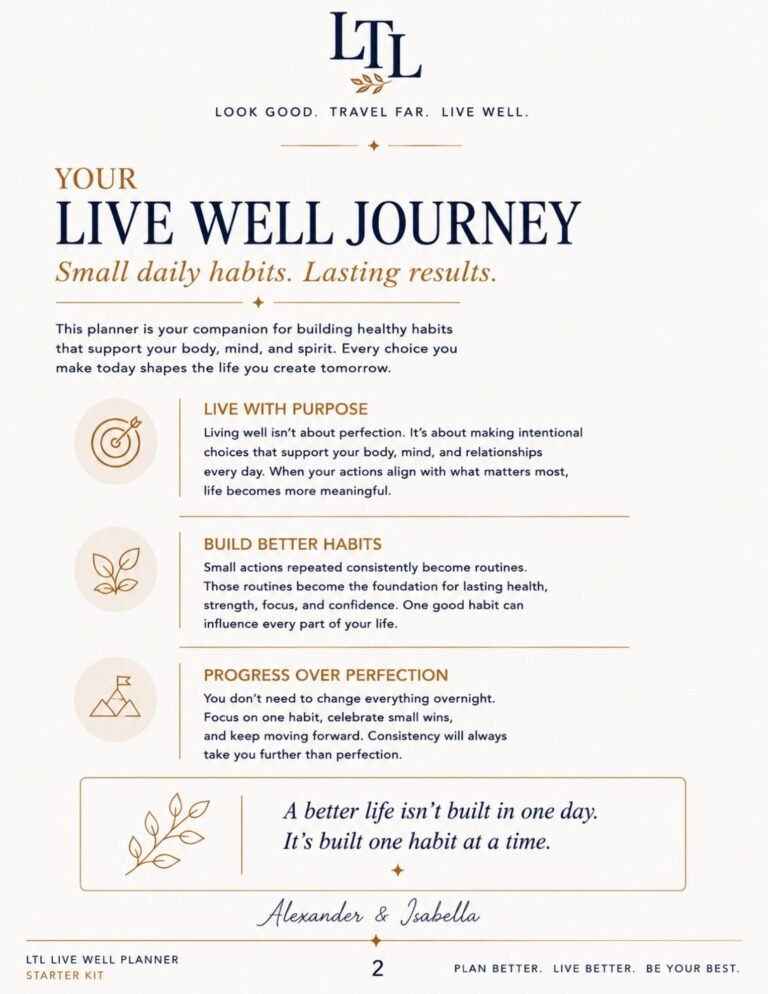
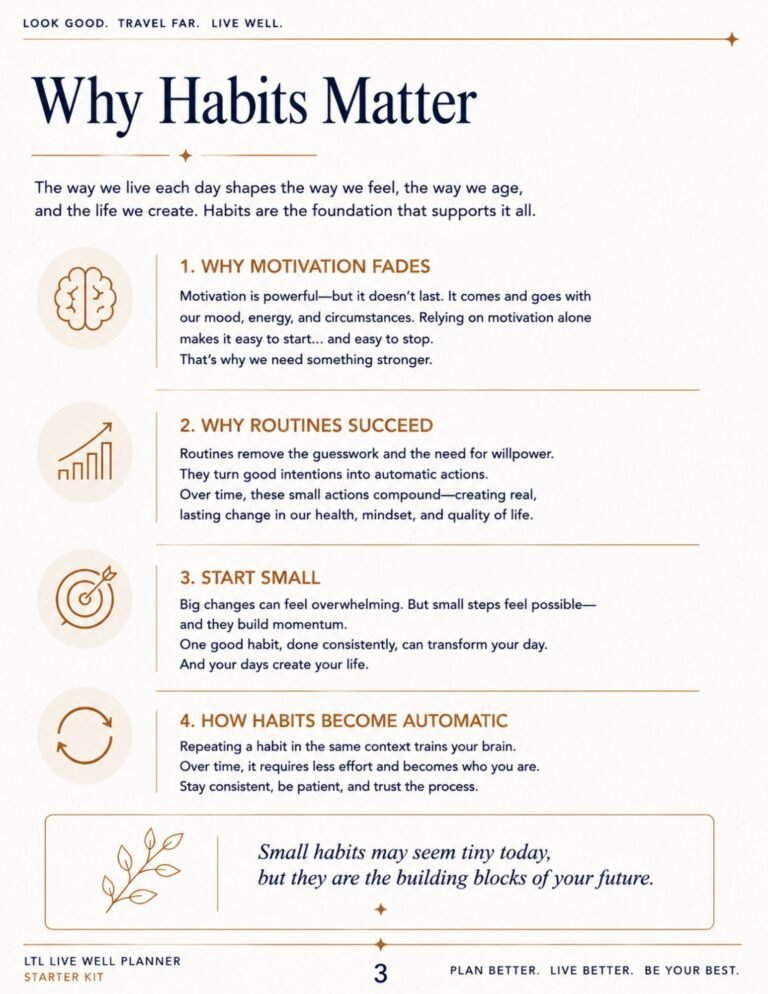
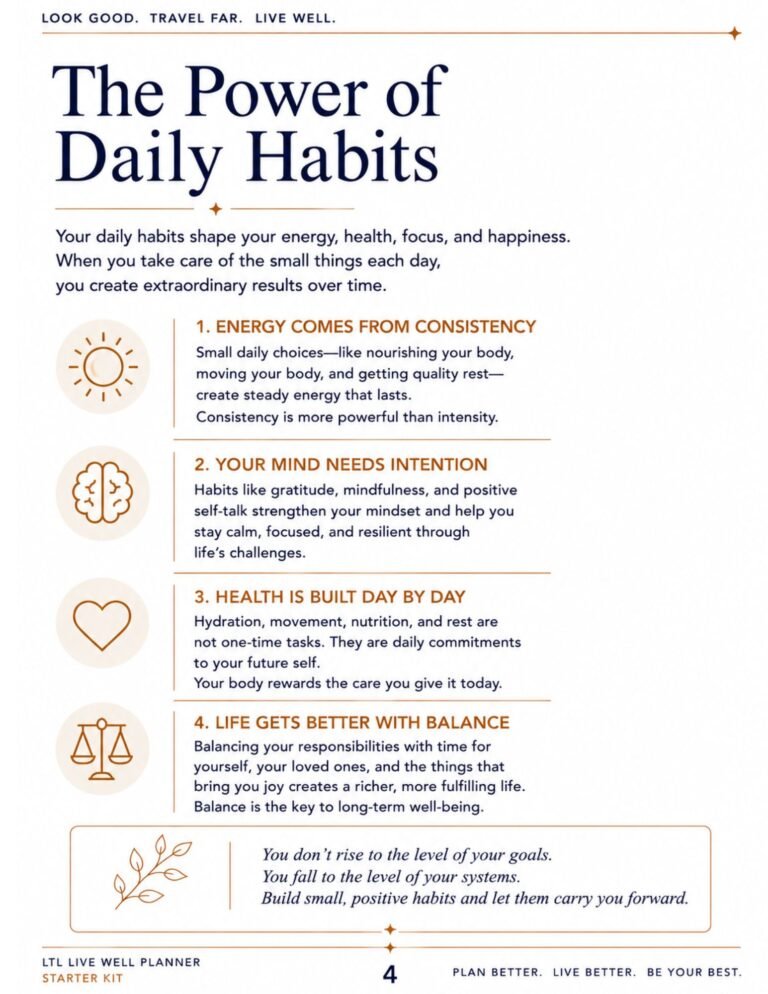
Living well rarely comes from changing everything at once. More often, it’s the everyday habits—how we move, eat, hydrate, sleep, recover, and take care of ourselves—that shape how we feel over time.
That’s one of the reasons we created the Live Well Planner..
The planner provides a simple framework for building healthier routines, staying consistent, and making wellness easier to fit into everyday life.
Inside, you’ll find practical guidance and planning pages focused on:
- Daily wellness habits
- Movement and activity
- Hydration and nutrition
- Sleep and recovery
- Reflection and progress
- Building greater consistency
👉 Get your complimentary “Live Well Planner” 4-Page Sampler. Click here to download.
A selected preview to help you take a fresh look at your daily routine and begin building healthier habits you can realistically maintain.
🛍 The complete Live Well Planner is a 24-page premium LTL Living Guide designed to help you create healthier routines, stay consistent, and make living well part of everyday life.
Small habits. Better days. Live Well.
XI. FINAL THOUGHTS — your energy feels different after 50
For a long time, I assumed lower energy was simply something that happened with age.
The reality turned out to be more complicated than that.
Sleep mattered more. Recovery mattered more. Stress had a bigger impact. Hydration became more important. Small habits that once seemed insignificant gradually started influencing how I felt on a daily basis.
What surprised me most was discovering how much remained within my control.
The goal was never to turn back the clock.
The goal was to better support the body I have today.
That shift in perspective changed the way I looked at energy.
Instead of focusing on what had changed, I started paying more attention to the habits that helped me feel and function at my best.
Why your energy feels different after 50 is a question many people eventually ask.
The encouraging part is that the answer is often about much more than age itself.
With better recovery, healthier routines, and greater consistency, it is often possible to maintain more energy, stay active, and continue doing the things that make life enjoyable for years to come.
Energy is different. It is not gone.
With care,
Samuel