

Skincare Ingredients You Should Never Mix
Skincare & Beauty by Mijung | Korean Beauty & Flight Attendant Experience
I. Introduction on Skincare Ingredients You Should Never Mix
If you’ve ever mixed a few new serums and felt your skin tingle or turn red the next morning, you’re not alone. Many of us discover the hard way that there are certain skincare ingredients you should never mix—and learning which ones clash can save you from weeks of irritation. I’ve been there too: layering brightening acids on top of retinol because I wanted faster results, only to end up with flaky cheeks and a tight, burning feeling that took far longer to calm down.
The problem isn’t enthusiasm—it’s chemistry. Even the best-formulated products can cancel each other out or overload your skin when combined the wrong way. That’s why understanding the skincare ingredients you should never mix is so important—it’s not just about smoother skin; it’s about protecting your glow, your confidence, and your time. In this guide, we’ll cover:
The skincare ingredients you should never mix—and what really happens when you do
The science behind why actives clash and how to fix it without quitting your routine
Real product pairings that actually work better together (tested by flight attendants and dermatologists)
A quick layering checklist you can use tonight to keep every step in harmony
Think of this as your cheat sheet to skin harmony—the truth no product label will tell you. By the end, you’ll know exactly which skincare ingredients you should never mix, how to layer smartly, and how to get visible results without irritation or wasted product.
📥 BONUS: Download your FREE 1-page “Skincare Ingredients You Should Never Mix” cheat sheet at the end of this post.
II. Why Some Skincare Ingredients You Should Never Mix Clash
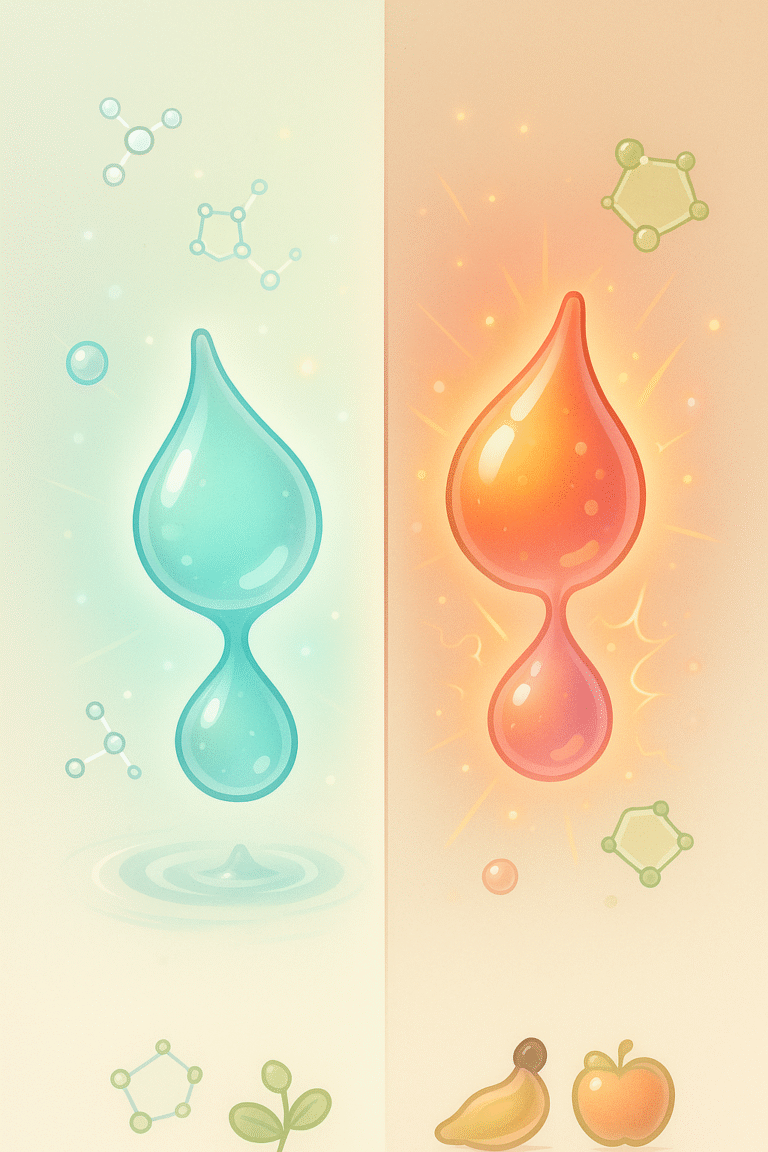
Hey ladies, let’s be honest—we’ve all had that moment when our skin suddenly reacts and we can’t figure out why. It’s usually not the product itself but the mix. Many of the skincare ingredients you should never mix start reacting to each other before they even touch your skin. When their pH levels or molecular structures collide, they can cancel each other out—or worse, create tiny chemical wars on your skin’s surface.
Think of your skincare like relationships: some pairings bring out the best in each other, while others end in drama. Vitamin C and retinol, for example, fight for the same space in your routine; strong acids don’t get along with peptides; and mixing exfoliants with actives can break your barrier before it even has a chance to defend itself.
Your skin barrier is like a wall made of lipids, proteins, and natural moisture—it keeps the good stuff in and the bad stuff out. When that wall gets damaged by over-layering or incompatible actives, your skin suddenly becomes sensitive, red, or chronically dry. That’s why learning the skincare ingredients you should never mix isn’t about fear; it’s about strategy. When you know what clashes, you can create harmony—products that support each other instead of competing.
For now, the key is awareness. If your skin ever feels tight, itchy, or flaky after adding something new, pause before layering another “miracle” serum on top. Skincare isn’t a race; it’s chemistry that works best when it’s respected.
Recommended Reading:
III. The Science Behind Common Skincare Ingredient Conflicts
Behind every glowing complexion is balance—and behind every reaction is a little chemistry gone wrong. Many of the skincare ingredients you should never mix behave like strong personalities in a small room: they all want attention, but they don’t share the spotlight well.
Each active ingredient has its own comfort zone, measured by pH level and molecular stability. Vitamin C thrives in an acidic environment; retinol prefers neutral ground. When layered together, their opposing pH levels can destabilize both, making them less effective or even irritating. The same happens when you stack too many acids—your skin’s natural barrier can’t keep up, leading to redness, dryness, or sudden breakouts that seem to appear overnight.
Dermatologists explain it this way: your skin operates on a rhythm, repairing and renewing itself in cycles. When incompatible actives interrupt that rhythm, inflammation increases and cell turnover becomes erratic. Over time, that can mean more sensitivity and slower healing. Understanding this simple science makes it easier to spot danger signs early—tingling that lasts more than a few seconds, patchy dryness, or dullness that doesn’t go away. Those are signals that your actives are fighting instead of cooperating.
Think of this section as your skincare decoder. Once you grasp how these reactions happen, you’ll never fall for the “more is better” trap again. Instead, you’ll start pairing formulas that complement each other and avoid the skincare ingredients you should never mix before they cause trouble.
iv. Top 5 Skincare Ingredients You Should Never Mix (and Safe Alternatives)
Let’s break this down into real-life examples. We all want glowing, even-toned skin, but sometimes the right ingredients used in the wrong order can undo all our hard work. Here are the top skincare ingredients you should never mix, and what to do instead—so your skin stays calm, balanced, and radiant.
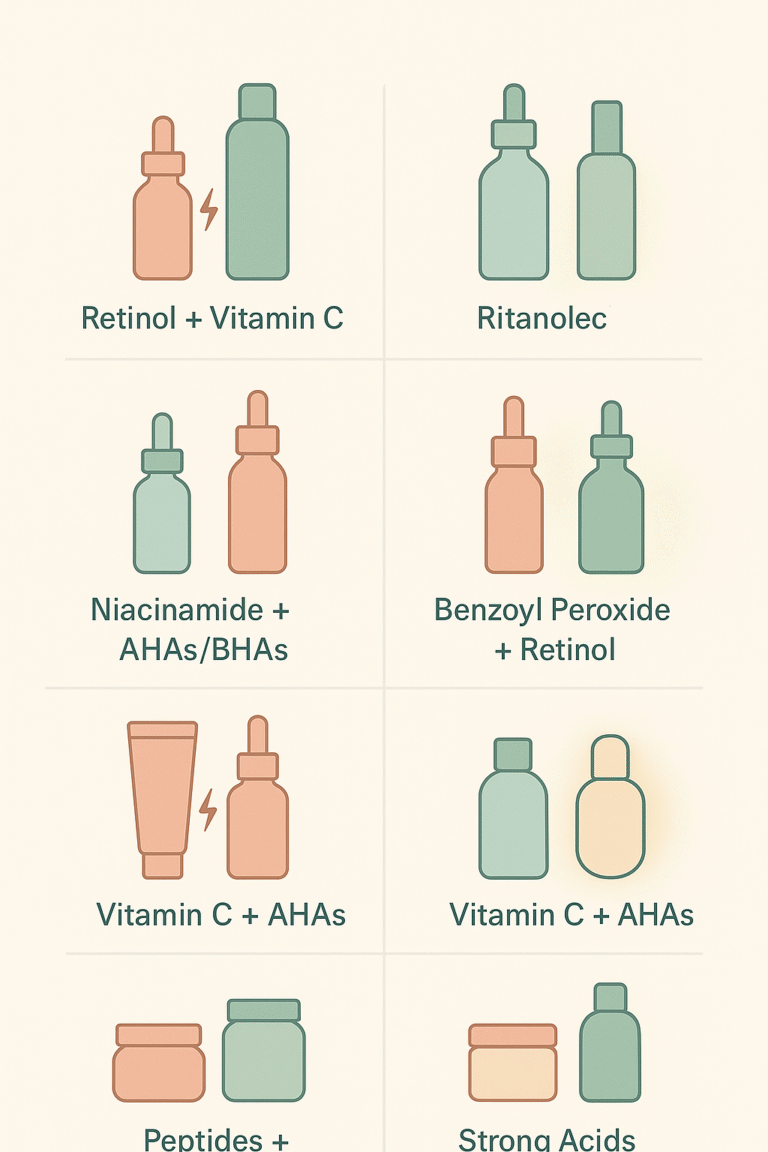
1. Retinol + Vitamin C
Both are powerhouse ingredients, but they don’t like sharing the same routine. Retinol works best at night in a neutral pH environment, while Vitamin C thrives in acidic daylight conditions.
✅ What to do instead: Use Vitamin C in the morning under sunscreen and retinol at night.
2. Niacinamide + AHAs/BHAs
Niacinamide calms inflammation while acids exfoliate. Used together, they can cause redness and neutralize each other.
✅ What to do instead: Alternate days or apply niacinamide in AM and acids in PM.
3. Benzoyl Peroxide + Retinol
Benzoyl peroxide oxidizes retinol, breaking it down before it works.
✅ What to do instead: Alternate nights—benzoyl peroxide for breakouts, retinol for repair.
4. Vitamin C + AHAs
Combining two acids pushes skin’s pH too low, leading to stinging or flaking.
✅ What to do instead: Pick one acid-based product per routine.
5. Peptides + Strong Acids
Peptides rebuild your barrier but degrade in acidic environments.
✅ What to do instead: Use peptides at night, acids on exfoliation days.
💧 Try barrier-safe partners like the RNW Der. Concentrate Ceramide Ampoule or Ma:nyo Bifida Biome Complex Ampoule to calm and protect after exfoliating.
Mastering these pairings doesn’t mean you need a complicated routine—it just means knowing what not to mix.
V. How to Layer Skincare Correctly (So You Never Have to Guess Again)
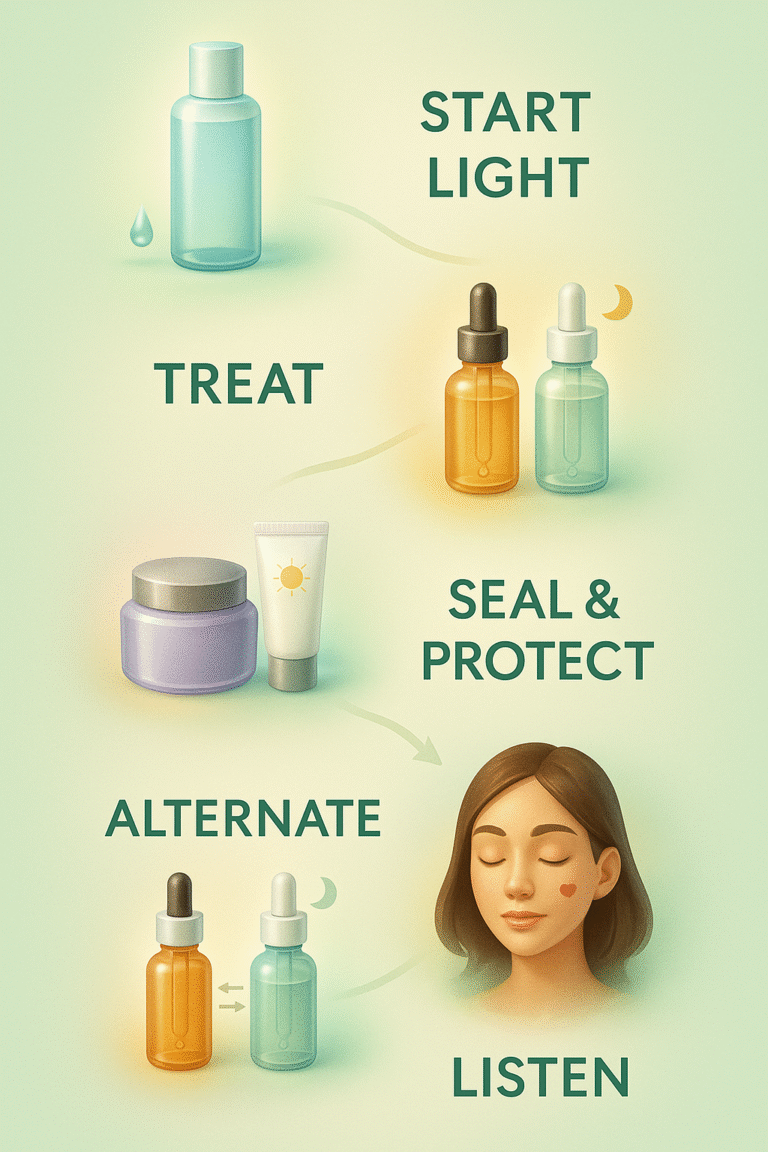
Once you understand the skincare ingredients you should never mix, layering becomes easier. Think of it as giving your products a schedule—each one has its moment to shine.
Simple Layering Roadmap
Start Light: water-based toner or essence such as Torriden DIVE-IN Toner.
Target Treatments: apply serums like d’Alba White Truffle First Spray Serum in AM or niacinamide for calm days.
Seal and Protect: finish with moisturizer and sunscreen by day or Medi-Peel Peptide 9 Volume Bio Tox Cream at night.
Alternate, Don’t Overlap: separate acids & retinoids.
Listen to Your Skin: tightness or redness means pause.
Layering correctly isn’t about being perfect—it’s about being consistent. Ladies, give yourself credit for learning your skin instead of chasing perfection. When you honor your skin’s rhythm and space out actives properly, you’ll notice your products finally start performing the way they promised. The real glow isn’t from a miracle bottle—it’s from a woman who knows what works for her skin and gives it the care it deserves.
Recommended Reading:
Vi. Real-Life Lessons: What I Learned After Mixing the Wrong Ingredients
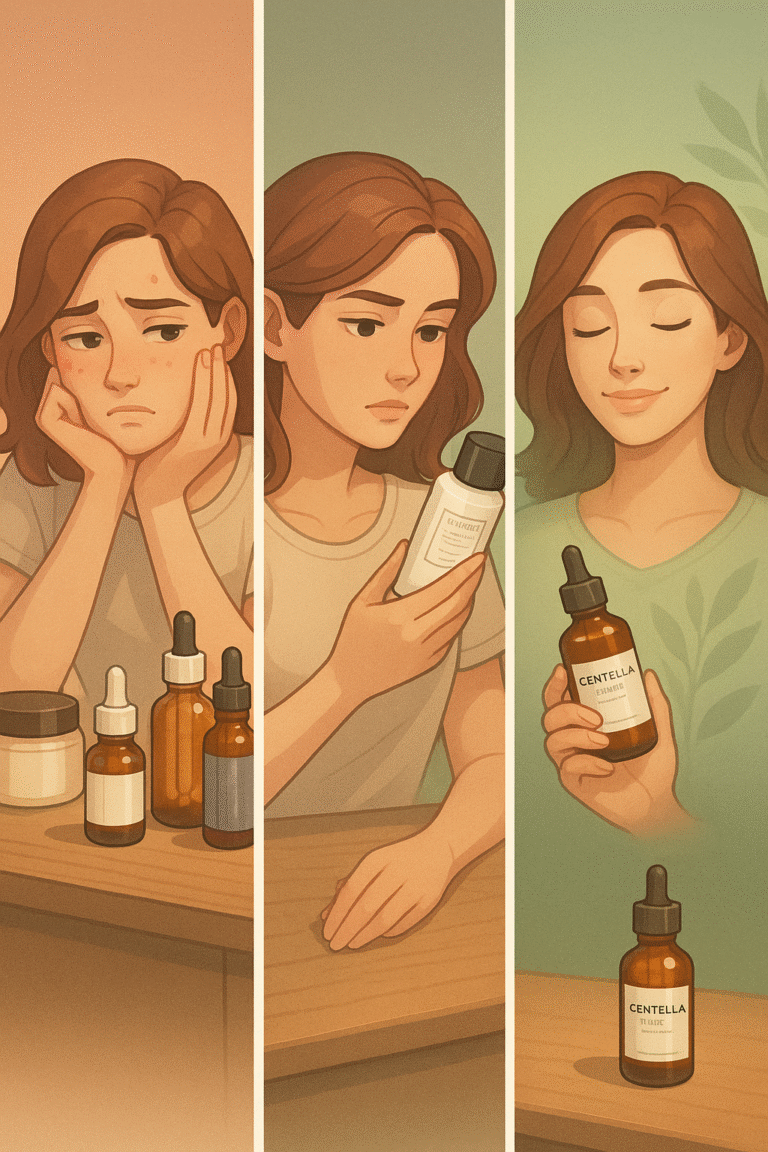
When it comes to skincare, I’ve learned that “more” doesn’t always mean “better.” My skin is sensitive, so I research every ingredient before trying something new. Even when labels say “safe together,” I go slow—patch test, wait, and observe.
Before I buy, I read the full ingredient list and separate any potential clashes. I start small, a few nights a week, and give it time. Most women with sensitive skin don’t need more actives—they need more patience. It’s not fear; it’s respect.
If you’ve ever felt pressured to do everything at once, remember: glowing skin is a marathon. The more I studied, the more I realized how many skincare ingredients you should never mix if you want lasting calm. Playing it safe isn’t boring—it’s wisdom.
💧 When irritation hits, I reach for the Skin1004 Madagascar Centella Asiatica Ampoule Facial Serum to reset and soothe.
Recommended Reading:
Vii. Mijung’s Tip: How I Keep My Skin Calm While Trying New Products
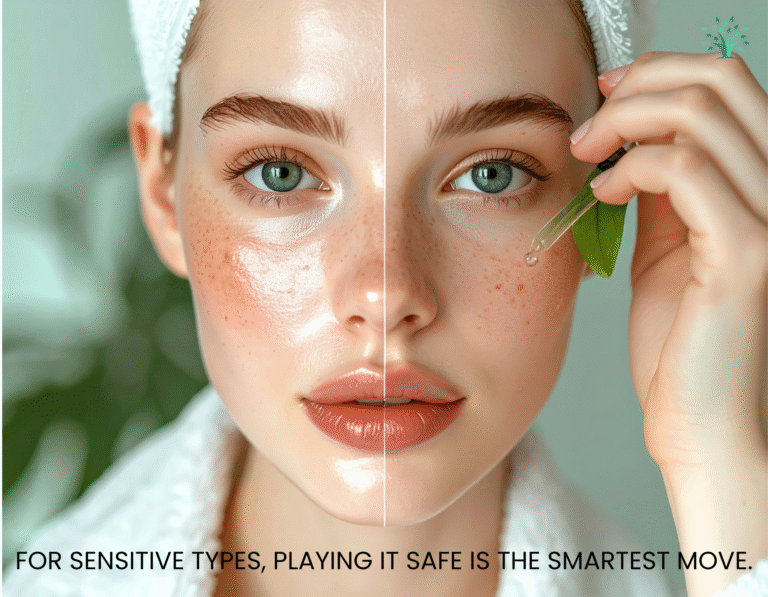
Over the years, I’ve learned that skincare confidence comes from listening to your skin. For sensitive types, playing it safe is the smartest move.
🌿 Research first. Check ingredients and avoid overlapping the skincare ingredients you should never mix.
🧴 Patch test. Apply small amounts for several days.
💧 One change at a time. Never test two new products at once.
🌸 Rest days. Hydrating toner + moisturizer only.
💤 Trust time, not trends. Consistency > speed.
Use recovery helpers like the Mediheal Hyaluronate Watermide Essential Face Mask for calm, hydrated rest nights.
ViII. ✨ Mijung’s Product Tip: Smart Skincare Partners for Sensitive Skin
To make your shopping easier, I’ve pulled together the exact budget-friendly skincare partners I personally recommend in this article. As an Amazon Associate, I earn from qualifying purchases.
These aren’t random picks—they’re the tried, tested swaps I trust after years of flying, studying ingredient interactions with Korean cosmetic labs, and comparing notes with 25 + flight attendants every month. Each one has earned its place by delivering results without the luxury markup—and by being safe to pair when you’re mindful of the skincare ingredients you should never mix.
Torriden DIVE-IN Toner – Hydrates and preps skin before actives.
RNW Der. Concentrate Ceramide Ampoule – Strengthens barrier after acids or retinol.
Skin1004 Madagascar Centella Asiatica Ampoule Facial Serum (1.85 fl.oz) – Soothes redness and irritation.
Mediheal Hyaluronate Watermide Essential Face Mask – Deep hydration for recovery nights.
d’Alba White Truffle First Spray Serum – Adds safe morning glow.
Ma:nyo Bifida Biome Complex Ampoule – Strengthens barrier after exfoliation.
Medi-Peel Peptide 9 Volume Bio Tox Cream – Peptide-rich night repair cream.
Vi. Final Takeaway on Skincare Dupes 2025
At the end of the day, good skincare isn’t about having the trendiest shelf—it’s about knowing what works for you. Once you understand the skincare ingredients you should never mix, everything else falls into place.
✨ Less is clarity. Use fewer actives at once.
💡 One change at a time. Give products room to perform.
🕊️ Your skin tells the truth. Redness means pause.
🌙 Respect your rhythm. AM and PM serve different purposes.
💖 Confidence looks better than confusion.
If you take away one thing from this guide, let it be this: caring for your skin isn’t a race, it’s a relationship. When you treat it with patience and respect, it rewards you with lasting balance, not temporary glow.
With care,
Mijung
📥 BONUS: Download your FREE 1-page “Skincare Ingredients You Should Never Mix”
📥 Download Printable PDF – 1 Page
Recommended Reading: American Academy of Dermatology – Tips for Healthy Skin Care
📌 Related posts from Our Blogs: