
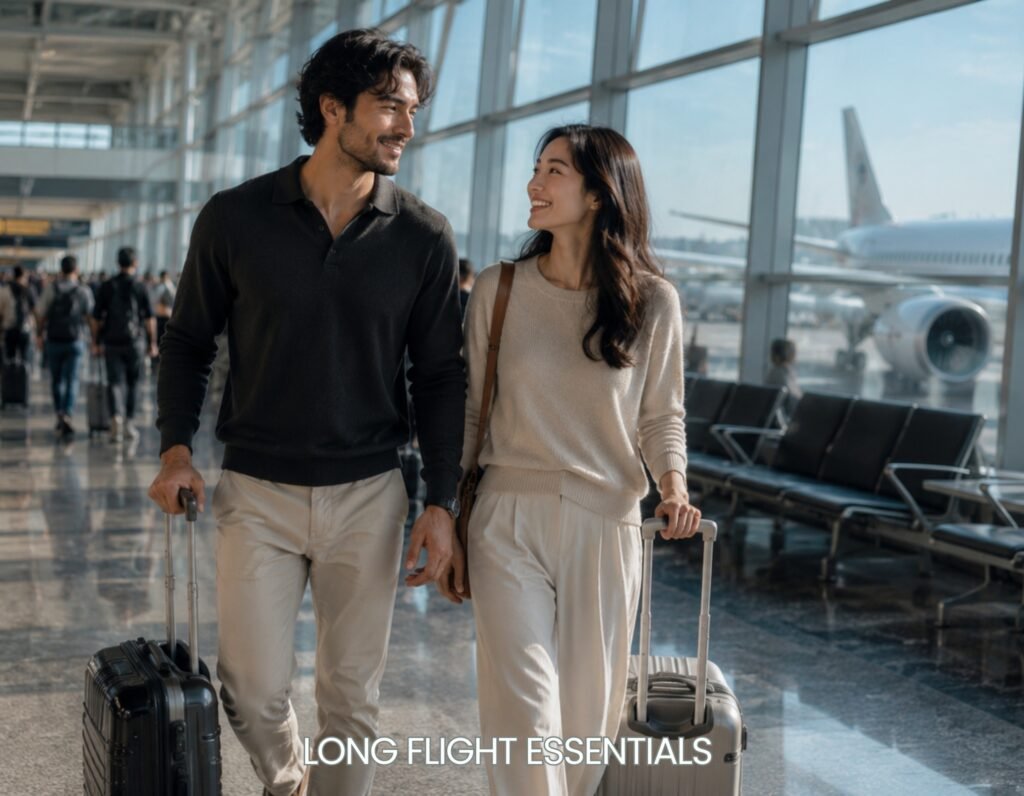
Long Flight Essentials: What Actually Makes a Long Flight Better
Look Good. Travel Far. Live Well ◆ Love Well by Samuel
I. INTROduction: Long Flight Essentials That Actually Matter
Long flight essentials should solve real problems, not simply give us more things to carry.
After years of international travel, I’ve learned that a 12-hour flight usually becomes uncomfortable for the same handful of reasons. The cabin is dry. It’s difficult to sleep. Temperatures change throughout the flight. We’ve been sitting far too long, our bodies start feeling stiff, and the small things we packed in the wrong bag suddenly become the things we need most.
I’ve also learned that carrying more doesn’t necessarily make the flight better.
I’ve bought travel products that sounded brilliant at home and barely touched them once onboard. Meanwhile, a good sleep mask, earplugs, something warm to wear, easy access to water, and a few carefully chosen items in the seat pocket can make an enormous difference several hours into a flight.
For me, the goal isn’t to recreate the comfort of home at 35,000 feet. That’s unrealistic, particularly in economy. It’s to remove enough of the unnecessary discomfort that I can rest, move when I need to, stay reasonably hydrated, and arrive feeling more like myself.
The preparation starts before boarding. What we wear matters. Where we put things in the carry-on matters. When we sleep, eat, drink, and get up to move can matter just as much as what we’ve packed.
And that’s really what this guide is about.
Not everything you could bring on a long flight.
The things that actually make one better.
Quick Guide
In this guide, we’ll cover:
- What to do before boarding
- The long flight essentials that can make sleeping easier
- Hydration and dealing with dry cabin air
- Movement and circulation during long flights
- What should stay within reach at your seat
- Simple ways to manage temperature and physical comfort
- Preparing during the final hours before landing
- Products we actually use and recommend
- The Travel Wellness Planner for organizing a healthier, more comfortable trip
This Guide Is For…
This guide is for anyone looking at a 10-, 12-, or 15-hour flight and already wondering how they’re going to feel by the time the doors open at the other end.
It’s particularly useful for travelers who don’t want to carry an entire collection of gadgets just to survive a flight. Most of us have limited carry-on space, and anything we bring should earn its place.
The goal isn’t a perfect flight. Airlines, seats, turbulence, other passengers, delays, and whether we actually manage to sleep aren’t entirely within our control.
What we can control is how well we prepare.
A few thoughtful choices can mean less searching through the overhead bin, fewer hours feeling uncomfortable, and a much better chance of stepping off the plane ready to begin the trip instead of needing a day to recover from getting there.
Pack less. Choose better. Arrive better.
II. Comfort Starts Before You Board
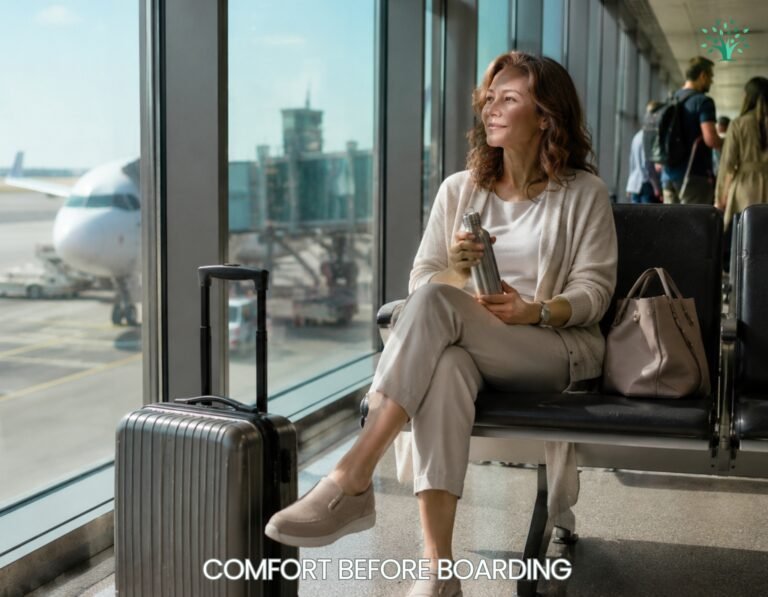
A better long flight begins before we ever sit down.
Seat choice matters more to me now than it did years ago. On a long-haul flight, an aisle seat makes it easier to stand, stretch, use the restroom, and move around without repeatedly asking someone else to get up. A window seat can be better for uninterrupted sleep, so there isn’t one right answer. I choose based on what matters most for that particular flight.
What we wear matters too. Long flights aren’t the place for clothing that looks great standing up but becomes uncomfortable after six hours in the same seat. I prefer soft layers, comfortable pants, breathable fabrics, and shoes that are easy to manage. Cabin temperatures can change dramatically, so having one warm layer within reach is more useful than hoping the airline blanket will be enough.
I also start thinking about hydration before boarding rather than waiting until I’m thirsty in the air. And once I’m at the gate, I organize the carry-on so anything I’ll need during the flight is easy to reach.
That last part sounds minor until you’re several hours into an overnight flight trying to find something buried in the overhead bin.
The less I need to search for once I’m seated, the more comfortable the flight becomes.
III. Long Flight Essentials for Better Sleep
Sleeping on an airplane is never going to feel exactly like sleeping in bed, but a few long flight essentials can remove some of the things that make it unnecessarily difficult.
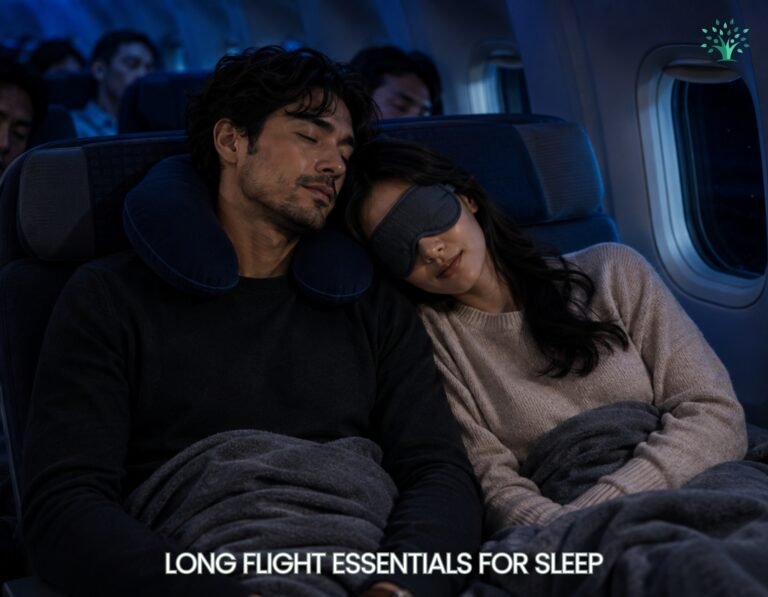
For me, controlling light and noise comes first. A comfortable sleep mask helps when cabin lights, reading lights, and screens are still glowing around me. Earplugs reduce the constant background noise and are small enough that there’s almost no reason not to pack them.
Physical support is more personal.
Some travelers love neck pillows; others spend the entire flight moving them around. The same is true of lumbar cushions and travel blankets. If something genuinely helps you sleep or keeps your back and neck more comfortable, it’s worth bringing. If you’ve carried it across three countries without using it, it may not deserve another trip.
Temperature can make or break sleep as well. I keep a light sweater or layer close enough to reach without standing up because cabins can become surprisingly cold once the lights go down.
The bigger lesson I’ve learned is not to wait until I’m exhausted before trying to sleep. On overnight flights, I begin winding down deliberately—put away the screen, lower the light, get comfortable, and give my body a reasonable chance to rest.
I may not get eight perfect hours.
Even a few decent hours can change how the first day of a trip feels.
Recommended Reading:
IV. Hydration Matters More Than Snacks
Airplane cabins are dry, and after several hours most of us can feel it.
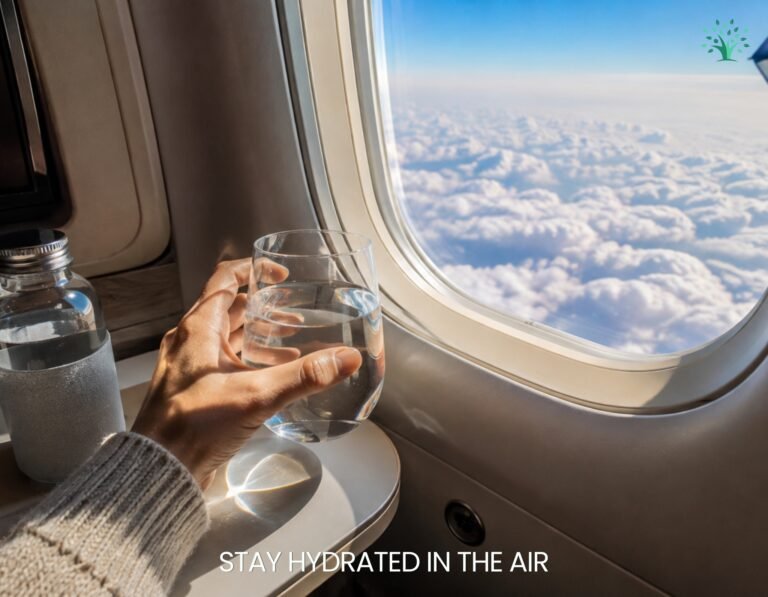
My mouth gets dry, my skin feels different, and if I haven’t been drinking enough water, I usually notice it long before landing. That’s why hydration has become one of the simplest parts of my long-flight routine.
I drink water regularly rather than trying to make up for it all at once. For particularly long travel days, electrolytes can also be convenient, especially when the flight is only one part of a much longer day involving airports, connections, walking, and unfamiliar schedules.
Coffee and alcohol require a little more judgment.
I enjoy both, but neither is something I want working against the sleep or hydration I’m trying to protect. A glass of wine with dinner may be part of the experience, and coffee can be useful when it matches the schedule I’m trying to follow. The problem is relying on either without considering what time it is at the destination or when I’m hoping to sleep.
Food is similar. I don’t need to turn a long flight into twelve hours of snacking simply because food is available. Eating enough to feel comfortable without feeling overly full usually works better for me.
The goal is simple:
Drink regularly, eat reasonably, and don’t make the cabin environment harder on your body than it already is.
Recommended Reading:
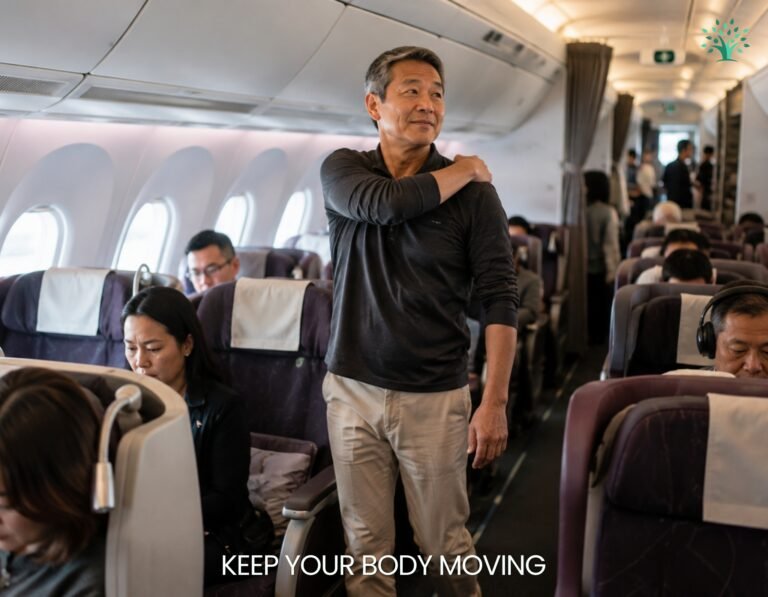
V. Keep Your Body Moving
After several hours in the same seat, my body usually tells me it’s time to move long before I look at the clock.
I try not to wait until my back, hips, and legs already feel stiff. When it’s practical and safe, I get up periodically, walk through the cabin, and spend a few minutes standing rather than remaining seated for the entire flight. Even while sitting, simple ankle circles, foot movements, and changing position regularly can help break up long periods of inactivity.
This is one reason I often prefer an aisle seat on very long flights. Having easy access to the aisle removes one more excuse for staying seated.
Compression socks are another travel item many people use on long flights. They can help reduce leg swelling, and graduated compression stockings may be recommended for some travelers at increased risk of blood clots. However, individual medical risks vary, so anyone with circulation problems, a history of blood clots, or other health concerns should discuss long-distance travel with their healthcare professional.
Movement doesn’t need to become an airplane workout.
Stand when you can. Walk occasionally. Move your feet and legs while seated. Give your body something other than the same position for ten hours.
Your seat may be where you spend most of the flight.
It doesn’t have to be where you spend all of it.
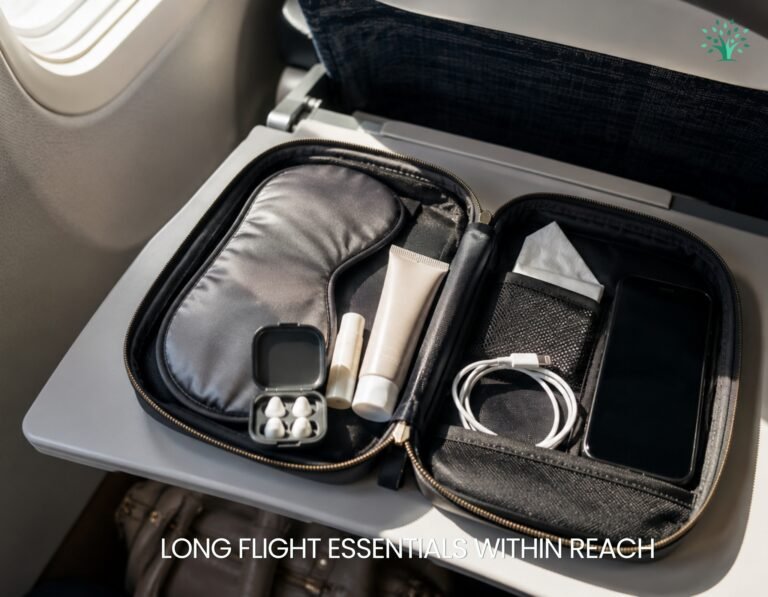
VI. Long Flight Essentials Within Reach
One of the easiest mistakes I’ve made is packing everything I need—and then putting it somewhere I can’t easily reach.
That’s why I now keep a small in-flight pouch with the long flight essentials I’m most likely to use while seated. It goes into the personal item under the seat rather than the suitcase in the overhead bin.
Mine doesn’t need much.
Lip balm and a small moisturizer help with the dry cabin environment. Earplugs and a sleep mask stay there when I’m not using them. Charging cables, any permitted medications I may need during the flight, tissues, and a few basic hygiene items belong there too.
The phone is another consideration. On a long flight, it may hold the boarding pass, itinerary, hotel information, entertainment, notes, and everything needed once we land. I make sure it’s charged before boarding and keep the charging cable or power source accessible rather than buried inside luggage.
The important part isn’t copying someone else’s packing list.
Think about what you actually reach for during a flight and give those few items a permanent place.
When the cabin is dark and everyone around you is sleeping, you’ll appreciate not having to open the overhead bin to find your lip balm.
Recommended Reading:
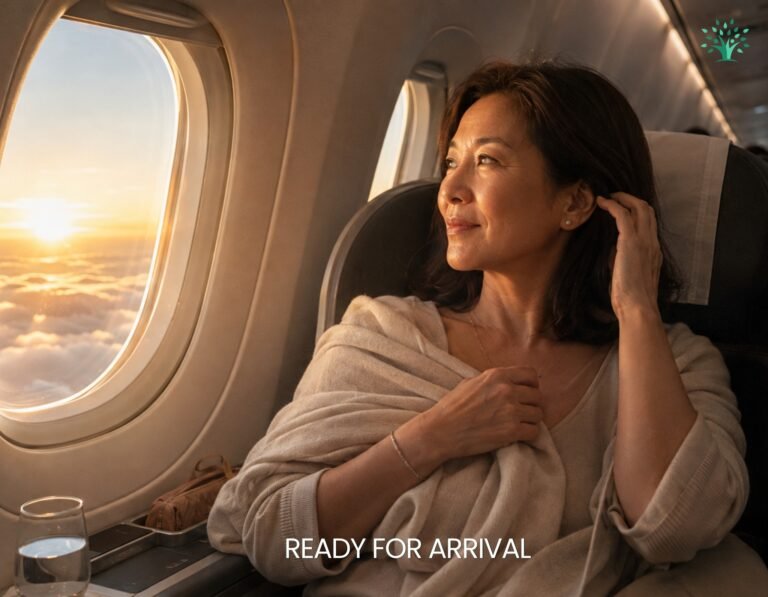
VII. Make the Last Few Hours Count
The final hours of a long flight can influence how we feel when we arrive.
If we’re crossing several time zones, I start paying more attention to the local time at the destination. Depending on when we’re landing, that may mean trying to stay awake, getting a little more sleep, eating when it makes sense, or beginning to expose myself to light rather than remaining in sleep mode until touchdown.
About an hour or two before arrival, I like to reset.
I drink some water, use the restroom before everyone decides to do the same thing, brush my teeth, wash or freshen my face, and change or adjust layers if needed. Then I put everything back where it belongs so I’m not searching beneath the seat while everyone else is standing in the aisle.
None of this eliminates jet lag or turns a long-haul economy seat into first class.
But there’s a noticeable difference between arriving dehydrated, stiff, disorganized, and half asleep and arriving having moved, rested when possible, freshened up, and already started adjusting mentally to the destination.
The flight is only how we get there.
The real goal is having enough energy left to enjoy what comes next.
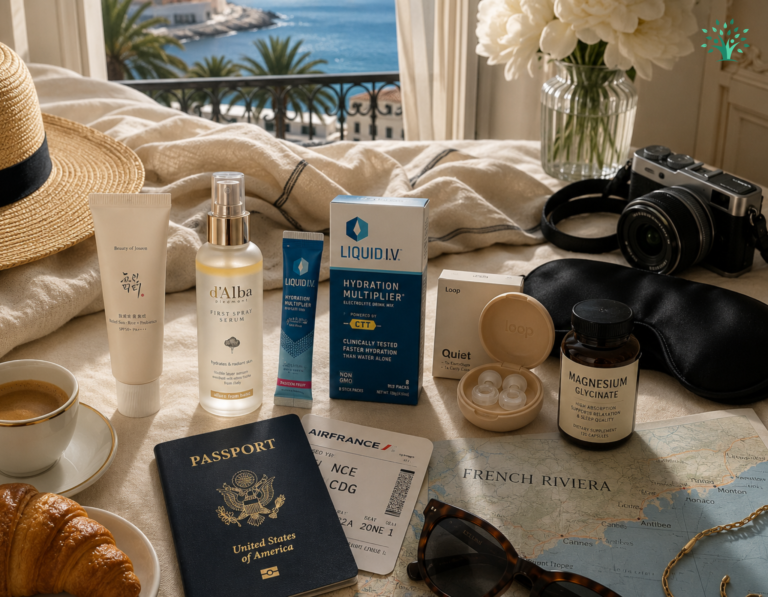
VIII. Products We Use & Recommend
The best long flight essentials aren’t the products that fill an entire carry-on. They’re the few things that help solve the problems we actually experience after spending ten or twelve hours in the air—dryness, dehydration, noise, poor sleep, and difficulty getting comfortable.
These are some of the products we personally use and recommend for long-haul travel.
Electrolytes Powder – Liquid I.V.
Convenient hydration support during long travel days when flights, airport connections, and changing schedules can make it easy to fall behind on fluids.
d’Alba First Spray Serum
An easy refreshing step when skin begins feeling dry or uncomfortable after several hours in low-humidity cabin air.
Magnesium Glycinate – Nature’s Bounty
Part of our regular wellness routine for relaxation, muscle function, and restful sleep, particularly useful when travel disrupts our normal schedule.
Loop Quiet Ear Plugs
One of the smallest things we pack and one of the most useful when we’re trying to reduce cabin noise and get some rest during a long flight.
Alaska Bear Natural Silk Sleep Mask
Lightweight and easy to pack for blocking cabin lights, reading lights, and glowing screens when we’re trying to sleep.
None of these products turns an economy seat into a bed. They simply help remove some of the small discomforts that become much bigger after ten hours in the air.
Looking for more of the travel essentials we use? Visit the LTL Amazon Shop for our complete collection of travel comfort, packing, and wellness picks.
As an Amazon Associate, I earn from qualifying purchases. These are products we personally use and recommend because they help make travel more comfortable, enjoyable, and uncomplicated.

ix. LTL Travel Wellness Planner
Travel is more enjoyable when we feel good enough to experience it.
Long flights, dehydration, disrupted sleep, jet lag, and unfamiliar routines can take some of the energy out of a trip. A little preparation can make it easier to stay comfortable in transit, recover after arrival, and enjoy more of the destination.
That’s one of the reasons we created the LTL Travel Wellness Planner.
The planner focuses on practical habits that support wellness before you leave, while you’re traveling, and after you arrive.
Inside, you’ll find guidance and planning pages focused on:
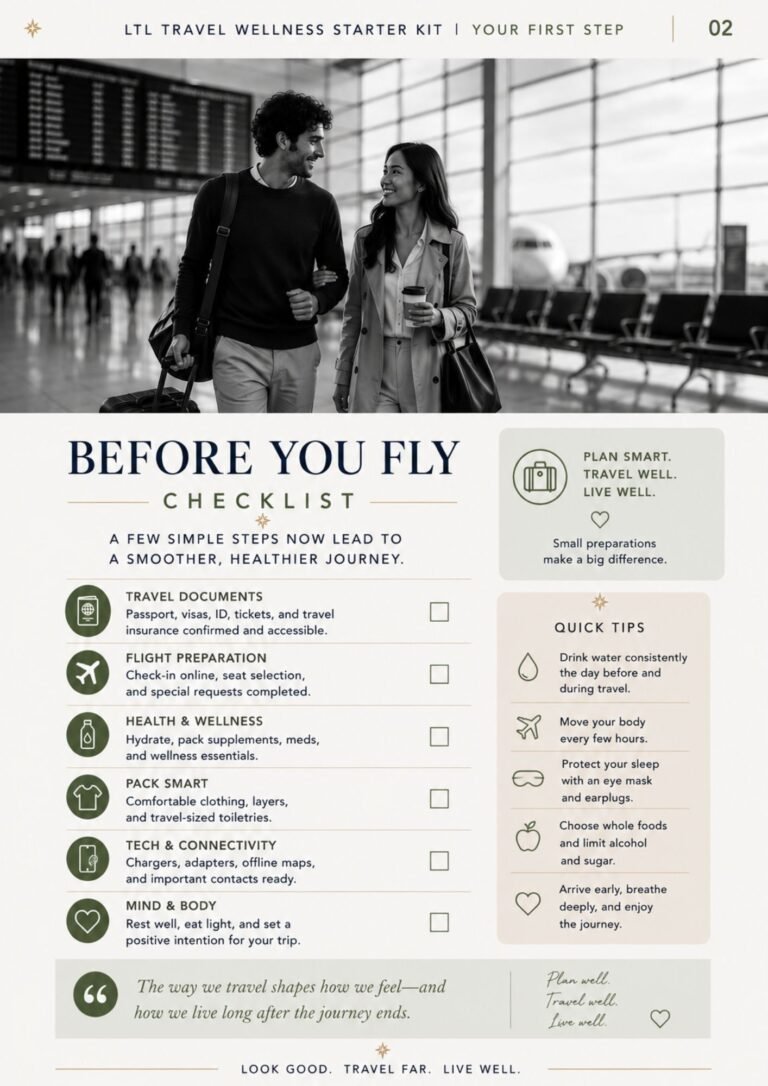
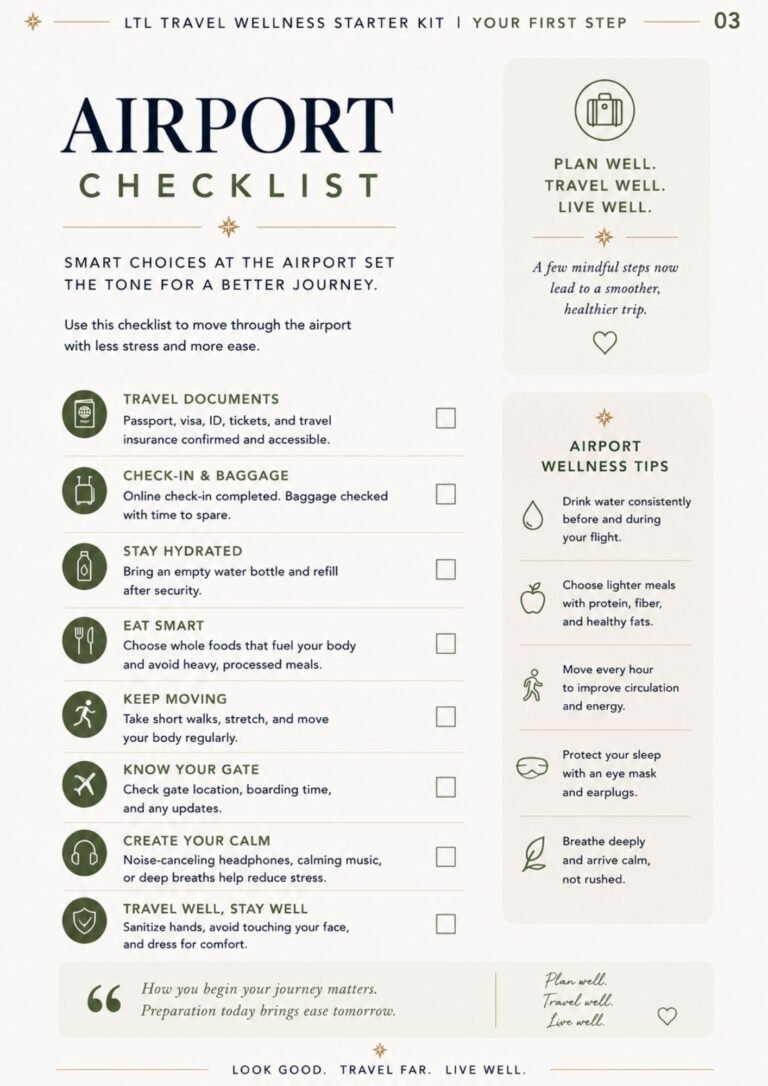
- Flight preparation and airport wellness
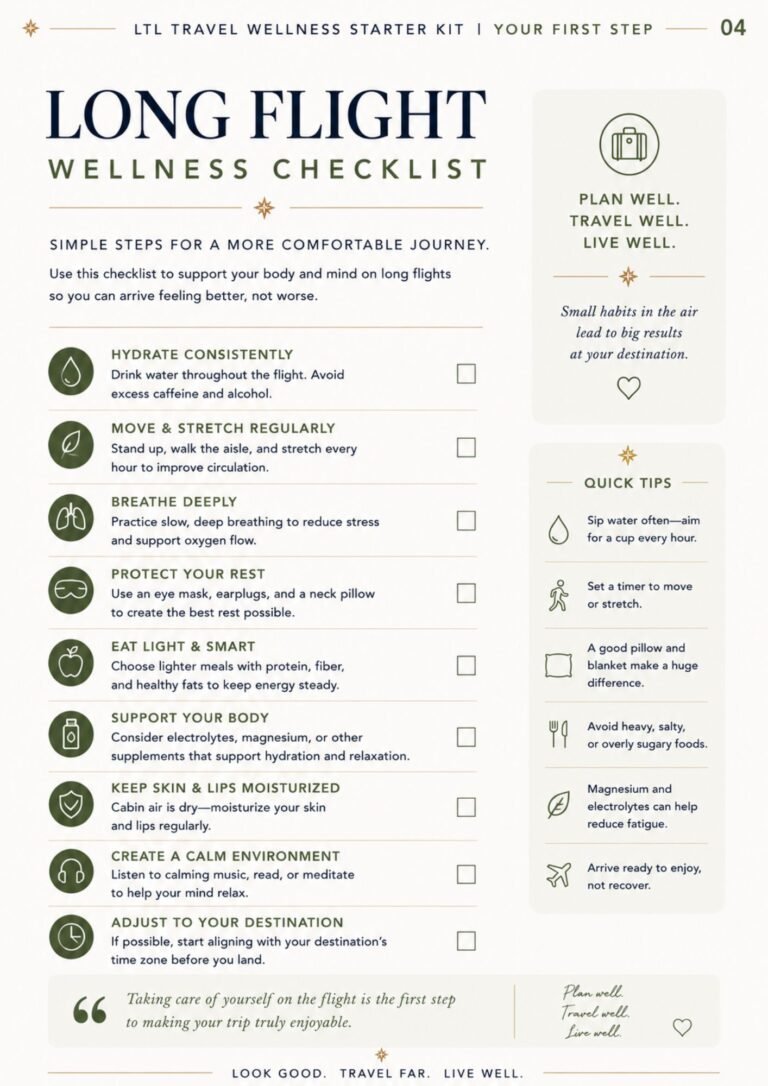
- Hydration and movement
- Long-flight recovery
- Jet lag and hotel resets
- Travel packing
- Restaurant and walking habits
- Daily travel wellness
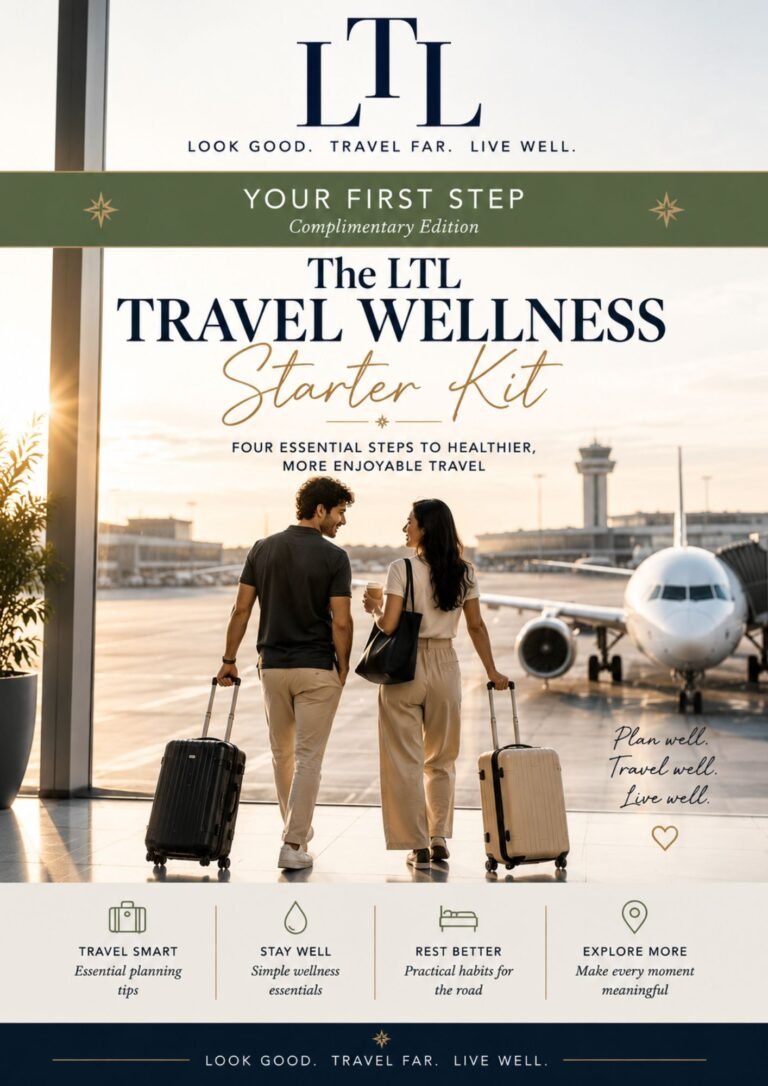
👉 Get your complimentary “LTL Travel Wellness Planner” 4-Page Sampler. Click here to download.
A selected preview from the complete planner to help you prepare for the flight, recover after arrival, and spend more of your time enjoying the destination.
🛍 If you’d like to continue, the complete LTL Travel Wellness Planner is a 24-page premium LTL Living Guide designed to support your wellness before you leave, while you’re traveling, and after you arrive.
The better we feel when we arrive, the sooner the journey can really begin.
X. Long Flight Essentials | Final Thoughts
After enough long flights, I’ve stopped trying to make flying feel luxurious.
I want it to feel manageable.
That means wearing something comfortable, organizing what I’ll need before I sit down, drinking enough water, getting up occasionally, controlling light and noise when I want to sleep, and keeping a few useful things close enough that I don’t have to dig through my luggage at two in the morning.
None of those decisions is particularly exciting.
Together, they make a difference.
The best long flight essentials work the same way. They don’t need to be clever, expensive, or take up half the carry-on. They should solve a problem you know you’re going to have.
And perhaps the most important lesson is that the flight isn’t the trip.
It’s the twelve hours standing between you and the trip.
If a little preparation helps us step off the plane feeling more rested, comfortable, and ready to experience where we’ve traveled so far to reach, then it has done its job.
LONG FLIGHT. TRAVEL FAR.
Samuel