

How to Sleep Better After 50 | Live Well
Look Good. Travel Far. Live Well ◆ Functional Health & Wellness by Samuel
I. INTRODUCTION — Sleep Better After 50
Learning how to sleep better after 50 isn’t as simple as going to bed earlier. That’s one of the things I’ve come to appreciate as I’ve gotten older. There are nights when I’m exhausted and expect to fall asleep immediately, only to find myself wide awake. Other nights I fall asleep easily, wake up at two or three in the morning, and suddenly my brain decides it’s time to start thinking about everything.
Sleep changes.
What worked in our 30s may not work quite the same way in our 50s and 60s. Sleep can become lighter. We may wake more easily. Our internal body clock can shift, and things like stress, caffeine, alcohol, temperature, medications, aches and pains, or simply needing to use the bathroom can interrupt a night that once would have passed without much thought.
But I’ve never liked the idea that getting older means we should simply accept feeling tired.
Sleep remains one of the most important parts of how we recover. It affects how we feel in the morning, how clearly we think, how much energy we have, our mood, our appetite, and whether we actually feel like doing the things that make life enjoyable.
The encouraging part is that we have more influence over sleep than it sometimes feels like we do.
Better sleep isn’t only about what happens at 10 or 11 at night. It begins with when we wake up, whether we see daylight, how much we move, when we drink caffeine, whether we nap, what we eat and drink in the evening, and how we prepare our minds and bodies for the transition from being awake to being asleep.
The bedroom matters too. A room that’s too warm, unexpected noise, light coming through a window, or a pillow that never quite feels right can become much more noticeable when sleep is already lighter.
And then there are those middle-of-the-night awakenings. I’ve learned that sometimes the worst thing we can do is turn waking up into a battle. Watching the clock and worrying about tomorrow doesn’t usually make sleep arrive any faster.
So this isn’t a guide to sleeping like a teenager again.
It’s about understanding how sleep evolves, paying attention to the things we can actually change, and building habits that give us a better chance of getting the rest we need.
Because at this stage of life, I don’t want to spend my days recovering from my nights.
I want to sleep well enough to enjoy them.
Quick Guide
In this guide, we’ll look at:
- Why sleep naturally changes as we get older
- How our internal body clock influences sleep and waking
- Why better sleep often starts in the morning
- How daylight, movement, naps, and caffeine can affect the night ahead
- Building an evening routine that helps the body wind down
- How temperature, darkness, noise, pillows, and bedding affect sleep
- What to do when you wake up in the middle of the night
- When persistent sleep problems deserve more attention
- Helpful sleep products in our LTL Sleep Well Shop
- The Live Well Planner for building healthier daily routines
This Guide Is For…
This guide is for anyone who remembers when sleep used to feel easier.
Maybe falling asleep isn’t the problem, but staying asleep is. Perhaps you wake at two or three in the morning and have trouble settling down again. Or you spend enough hours in bed but still wake up feeling as though you didn’t get the rest you needed.
Some changes in sleep are a normal part of getting older, but that doesn’t mean every restless night should automatically be blamed on age.
Instead of chasing perfect sleep or building an increasingly complicated nighttime routine, we’ll focus on something more practical: understanding what may be affecting our sleep, improving the things we can control, and developing habits that give our bodies a better opportunity to rest.
Learning to sleep better after 50 isn’t about trying to sleep exactly as we did at 25.
It’s about getting the rest we need for the life we want to keep living.
II. Why Sleep Changes After 50
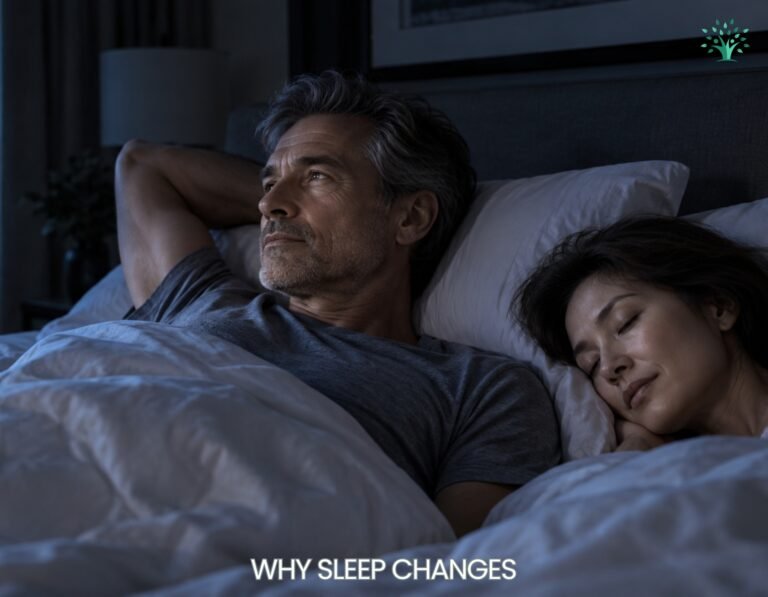
Sleep doesn’t suddenly become difficult the day we turn 50, but many of us begin noticing that it isn’t quite as forgiving as it once was. We may fall asleep earlier, wake earlier, spend more time in lighter stages of sleep, or find ourselves awake several times during the night.
Part of this comes from natural changes in the way our bodies regulate sleep. Our internal body clock can shift as we age, and the amount of deep sleep we get may gradually decrease. That means noises, temperature changes, discomfort, or a trip to the bathroom can wake us more easily than they might have years ago.
Life changes too. Stress doesn’t disappear with age. Work, family responsibilities, caregiving, travel, medications, physical discomfort, and changes in daily activity can all influence how well we sleep. Sometimes what feels like an age problem is actually several small things working together.
I’ve found it more useful to stop asking, “Why can’t I sleep like I used to?” and start asking what might be interfering with sleep now. That changes the conversation from something we have to accept into something we can begin to understand and improve.
Getting older may change sleep, but it doesn’t eliminate our ability to support it.
⭐ Recommended Reading

III. Sleep Better After 50 by Starting in the Morning
It sounds backward, but one of the best places to begin improving sleep is the morning.
Our bodies use light as an important signal for setting the internal clock that helps regulate when we feel awake and when we become sleepy. Getting outside after waking—even for a walk, a cup of coffee on the patio, or simply a few minutes in natural daylight—helps reinforce that daytime has begun.
A reasonably consistent wake-up time can help too. Sleeping several hours later after a bad night is tempting, and occasionally we all need extra rest. But constantly shifting between early mornings and very late mornings can make it harder for the body to establish a predictable rhythm.
Movement belongs in the morning conversation as well. It doesn’t have to mean an intense workout. Walking, stretching, gardening, cycling, or whatever keeps us physically active during the day can support both health and sleep while giving the body a clearer distinction between active daytime hours and nighttime recovery.
If we want to sleep better after 50, bedtime isn’t the only hour worth paying attention to. Sometimes the first decisions we make after waking help shape what happens sixteen hours later.

IV. What You Do During the Day Matters
By afternoon, several ordinary choices can either support the coming night or quietly work against it.
Caffeine is an obvious example, but timing matters as much as quantity. A late-afternoon coffee may feel harmless, especially when we’ve been drinking coffee for decades, yet caffeine can remain in the body for hours. If falling asleep has become more difficult, moving that last cup earlier is a simple experiment worth trying.
Naps are similar. A short nap can be wonderfully restorative, particularly after a poor night’s sleep. A long or late nap, however, may reduce some of the natural sleep pressure that has been building throughout the day. The goal isn’t necessarily to eliminate naps; it’s to notice whether they are helping the day without stealing from the night.
Regular physical activity can also make a meaningful difference. We don’t need to exhaust ourselves to earn sleep, but spending the entire day sedentary gives the body fewer signals that daytime is for activity and nighttime is for recovery.
Alcohol deserves attention as well. It may make us feel sleepy initially, but feeling sedated isn’t the same as getting uninterrupted, restorative sleep. If nighttime waking has become common, paying attention to whether evening alcohol makes it worse can tell us more than following a rigid rule.
Better sleep is often built from these ordinary daytime decisions. None of them looks particularly dramatic on its own, but together they help prepare the body for something we can’t simply command it to do later: naturally become ready for sleep.
⭐ Recommended Reading

V. Build an Evening That Leads to Sleep
A good night’s sleep rarely begins the moment our head touches the pillow. Our bodies need some indication that the active part of the day is ending.
For me, the biggest difference is creating a transition rather than going directly from work, television, emails, or whatever else has my attention straight into bed. The routine doesn’t need to be elaborate. Lowering the lights, putting away work, taking a warm shower, reading, listening to music, or simply spending some quiet time can become familiar signals that the day is winding down.
Bright light and screens deserve some attention, but I don’t think we need to turn the evening into a technology-free ceremony. The more practical goal is reducing stimulation as bedtime approaches. If something on a phone or television keeps the brain engaged, irritated, or endlessly scrolling, that’s probably not helping us become sleepy.
Late meals can matter too. Going to bed overly full isn’t particularly comfortable, while going to bed hungry can be distracting in its own way. Finding an evening eating pattern that leaves us comfortable at bedtime is more useful than following an arbitrary rule about when everyone should stop eating.
Consistency helps tie everything together. When we repeat a similar sequence most evenings, the routine itself begins to tell the body what comes next.
We spend all day asking our brains to stay alert. It makes sense to give them a little time to do the opposite.
⭐ Recommended Reading
VI. Sleep Better After 50 by Fixing the Bedroom
Sometimes we focus so much on ourselves that we forget to look at the room we’re trying to sleep in.
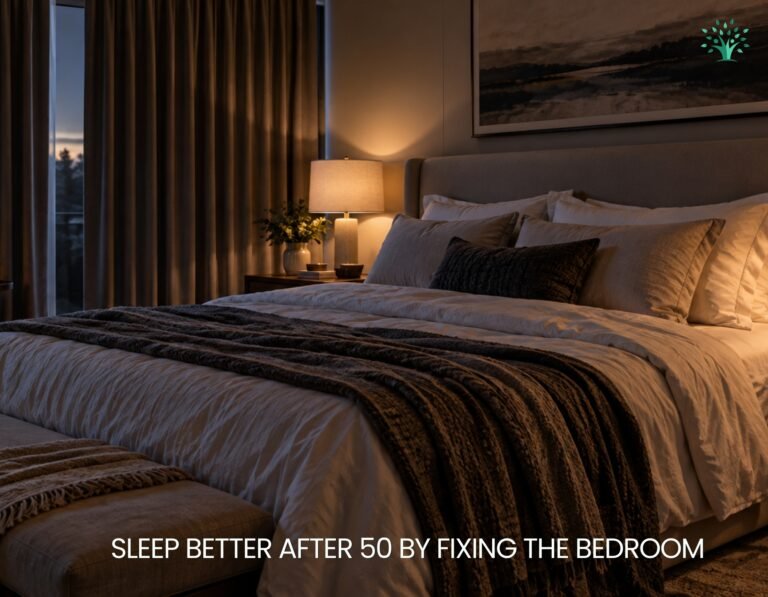
As sleep becomes lighter, small disturbances can become surprisingly important. A bedroom that’s too warm, light coming through the window, traffic outside, a partner’s different sleep schedule, or a pillow that leaves the neck uncomfortable can turn minor annoyances into repeated awakenings.
To sleep better after 50, I think the bedroom should do one job particularly well: make sleep easy. That generally means keeping it comfortably cool, dark, quiet, and uncluttered enough that walking into the room feels different from walking into the rest of the house.
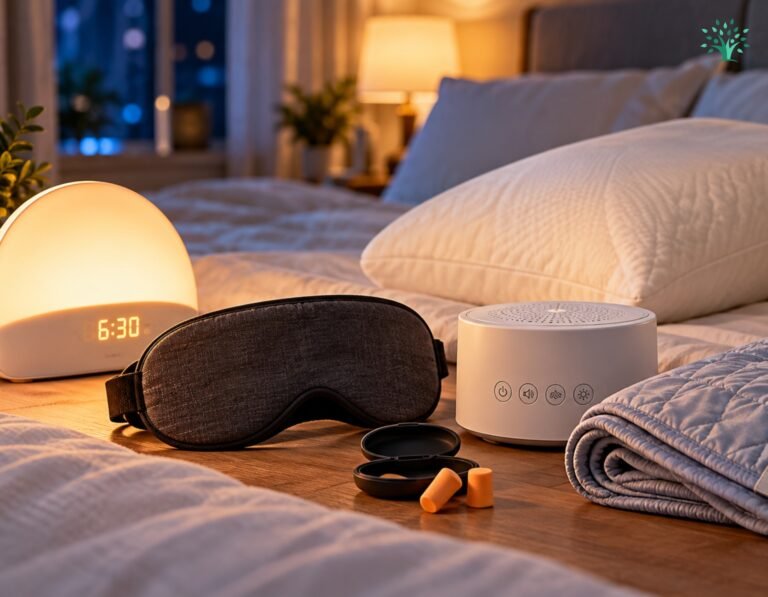
This is also where a few practical sleep products can genuinely earn their place. A good sleep mask can help when complete darkness isn’t possible. Earplugs or steady white noise may soften unpredictable sounds. Comfortable pillows and bedding matter, especially for anyone who tends to sleep hot or wakes because they can’t find a comfortable position.
None of these things can force us to sleep. They’re simply ways of removing obstacles.
Before assuming we need another supplement or complicated sleep strategy, it’s worth standing in the bedroom during the evening and asking a very basic question: is this actually a comfortable place to spend eight hours?
Sometimes improving the environment is one of the easiest changes we can make.
VII. When You Wake Up at 3 AM
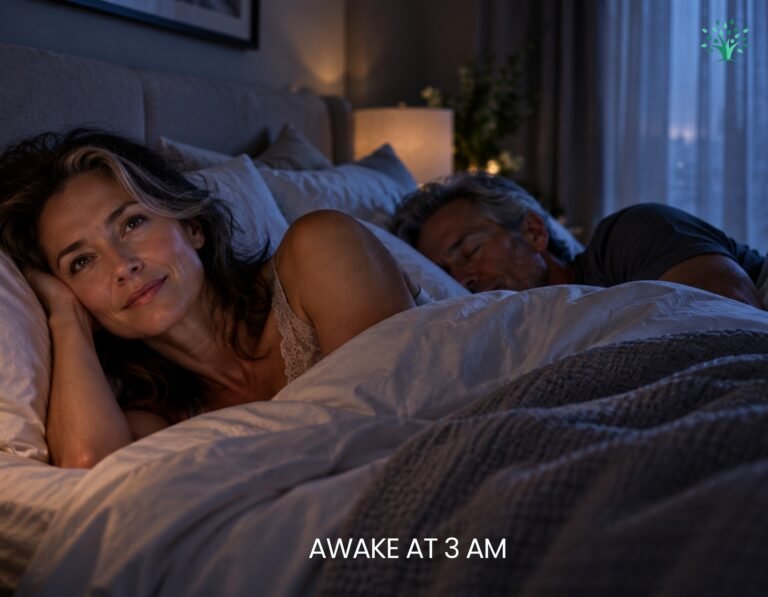
This may be the most frustrating part of sleep after 50: waking in the middle of the night and realizing that the rest of the house is quiet while our brain is suddenly wide awake.
The first instinct is often to check the time. Then we calculate how many hours remain before morning. Then we start thinking about how tired we’ll be tomorrow. Before long, a simple awakening has become a stressful event.
I’ve learned that watching the clock rarely helps.
If I wake briefly, I try to treat it as exactly that—a brief awakening rather than proof that the night is ruined. Staying relaxed and giving sleep an opportunity to return is often better than immediately reaching for the phone or beginning tomorrow’s mental to-do list.
When sleep doesn’t return after a while, getting out of bed for a quiet, low-stimulation activity can sometimes be more helpful than lying there becoming increasingly frustrated. Keep the lights low, read something calm, or sit quietly until sleepiness returns, then go back to bed.
What matters is avoiding the transformation of nighttime waking into nighttime activity. Bright lights, work, news, social media, and a kitchen expedition can send the opposite message to the body: we’re awake now.
Not every awakening can be prevented. The more useful skill may be learning how to keep one interruption from taking over the rest of the night.
VIII. When Better Sleep Still Doesn't Come
Good sleep habits can improve a lot, but they can’t solve every sleep problem.
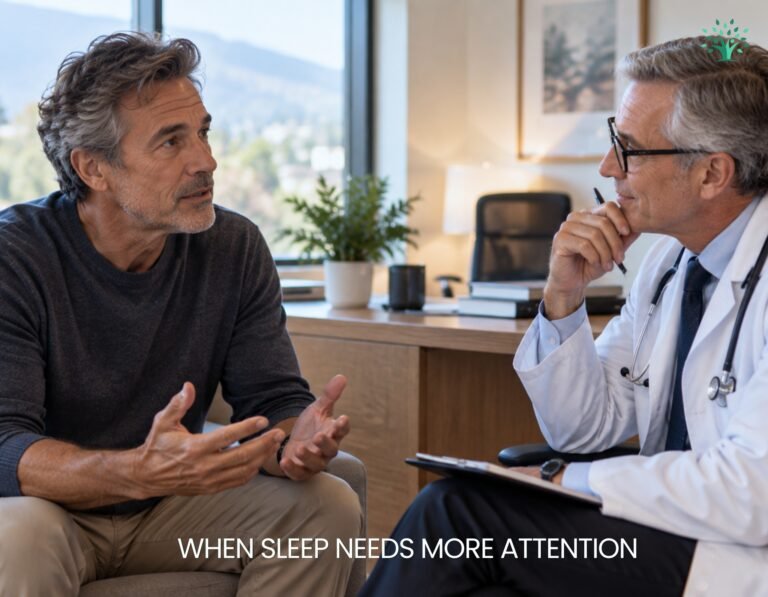
If poor sleep continues for weeks or months, regularly affects daytime concentration or energy, or makes it difficult to function normally, it’s worth discussing with a healthcare professional rather than continuing to experiment on our own.
The same applies when something about sleep doesn’t seem right. Loud persistent snoring, gasping or pauses in breathing during sleep, frequent morning headaches, uncomfortable sensations in the legs, or overwhelming daytime sleepiness can point to issues that deserve proper evaluation.
Medications can also affect sleep, and the list tends to grow as we get older. If sleep changed around the same time a medication or dosage changed, that’s worth mentioning to a doctor or pharmacist rather than simply assuming age is responsible.
I also wouldn’t rush toward sleep aids just because sleep has become frustrating. There is a difference between occasionally needing help through a difficult period and regularly depending on something to get through the night. Persistent insomnia deserves more than another product promising eight perfect hours.
The goal isn’t to medicalize every restless night. Everyone sleeps poorly sometimes. It’s recognizing when we’ve improved the things within our control and sleep still isn’t getting better.
At that point, asking for help isn’t giving up on better sleep. It may be the next practical step toward finding it.
IX. Sleep Well | LTL Shop
Over time, we’ve found that a few simple products can make the sleep environment noticeably more comfortable. A good sleep mask can block unwanted light, earplugs or white noise can soften nighttime sounds, and the right pillow or cooling bedding can make a meaningful difference when comfort or temperature keeps interrupting sleep.
We’ve collected our sleep-focused picks in the LTL Sleep Well Shop, including sleep masks, earplugs, white-noise options, pillows, cooling bedding, sunrise lights, and sleep-tracking tools.
They’re not shortcuts to perfect sleep, and we don’t think anyone needs all of them. They’re simply practical tools worth considering when they solve a specific problem that’s getting between us and a better night’s rest.
As an Amazon Associate, I earn from qualifying purchases. These are products I personally use and recommend because they support healthy aging without making my daily routine more complicated.

X. Live Well Planner
Sometimes looking back isn’t about living in the past. It’s about recognizing how much has changed, what we’ve learned along the way, and how far we’ve already come.
Life rarely follows the exact path we imagined. Priorities change, plans get interrupted, difficult seasons test us, and occasionally we find ourselves starting over in ways we never expected. Yet those experiences also shape how we think about the years still ahead.
That’s one of the reasons we created the Live Well Planner.
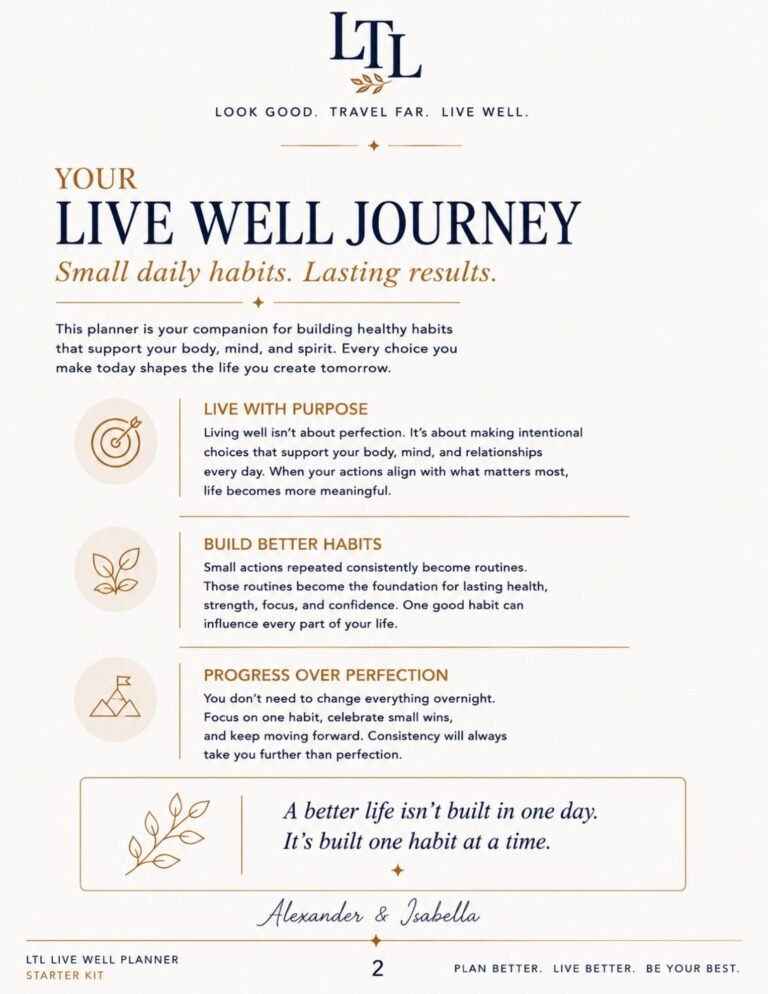
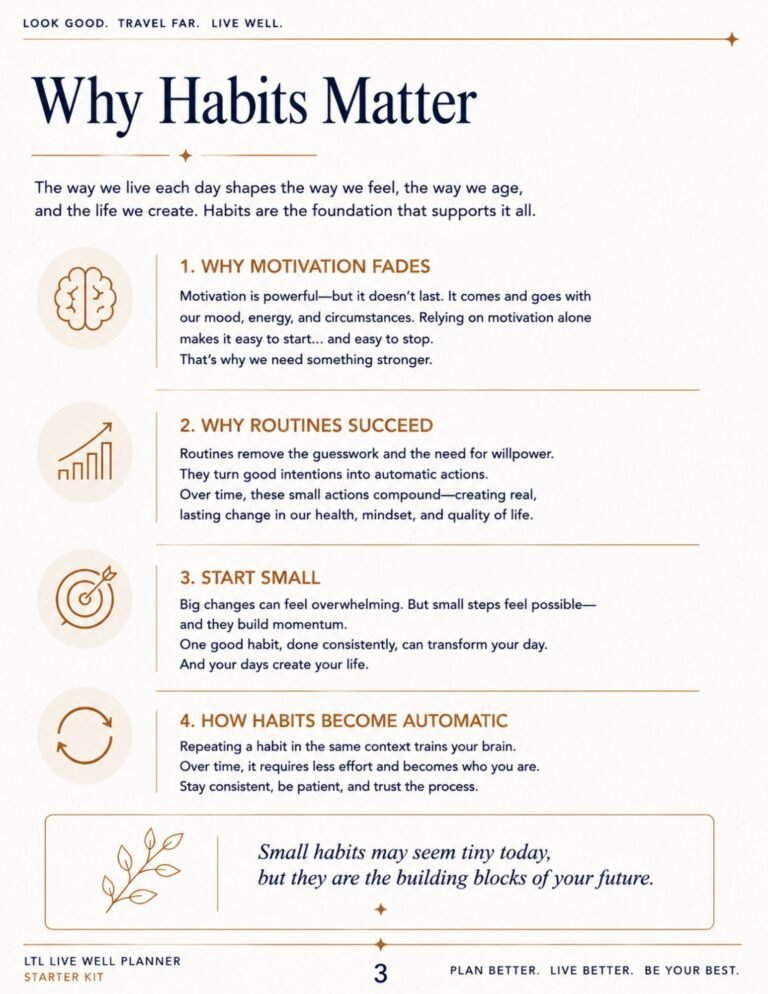
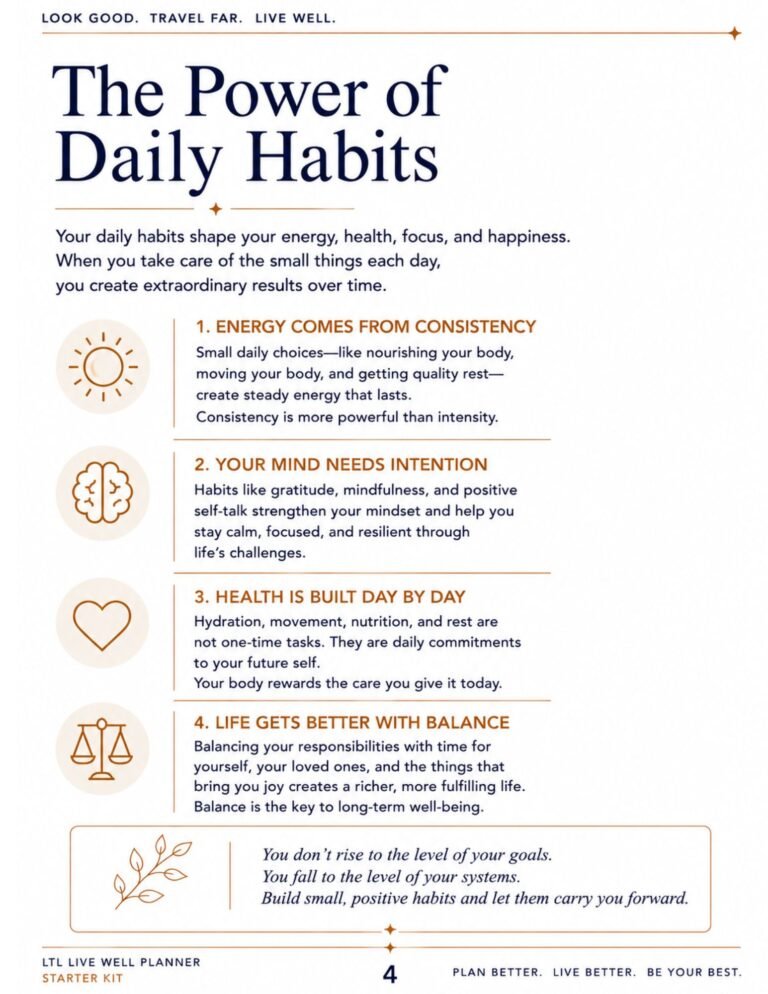
It isn’t designed around becoming a completely different person or setting another list of ambitious goals. Instead, the planner helps you take stock of where you are today, pay attention to the everyday habits that support your well-being, and think more intentionally about how you want to live moving forward.
Inside, you’ll find practical guidance and planning pages focused on daily habits, movement, hydration, nutrition, sleep, recovery, reflection, personal goals, consistency, and creating routines that fit the life you’re living now.
👉 Get your complimentary “Live Well Planner” 4-Page Sampler. Click here to download.
A selected preview from the complete planner to help you reflect on where you are today and begin thinking about the small changes that could make the next chapter even better.
🛍 If you’d like to continue, the complete Live Well Planner is a 24-page premium LTL Living Guide designed to help you build healthier routines, create greater balance, and become more intentional about how you spend the years ahead.
You’ve already traveled a long road to get here.
Take a moment to appreciate how far you’ve come. Then decide where you’d like to go next.

XI. Better Nights | Final Thoughts
I’ve stopped judging a good night’s sleep by whether I stayed unconscious for eight uninterrupted hours.
Some nights are better than others. Sometimes I wake up. Sometimes life follows me into bed despite my best efforts to leave it outside the bedroom. That’s part of being human, and getting frustrated about it usually doesn’t make the night any easier.
What matters more is what happens over time.
Learning to sleep better after 50 means paying attention to the entire day rather than searching for one magical bedtime solution. Morning light matters. Movement matters. When we drink caffeine matters. Our evening routine matters. The temperature and noise in the bedroom matter. Even the way we react when we wake at three in the morning can matter.
None of these habits guarantees a perfect night. Together, though, they give sleep a better chance to happen naturally.
And that’s really what I’m after now. I don’t need to sleep like I did when I was 25. I want enough good, restorative sleep to wake up with the energy to travel, work, spend time with the people I love, and enjoy the day in front of me.
Because sleep isn’t time taken away from living.
It’s part of what makes living well possible.
REST BETTER. LIVE WELL.
With care,
Samuel