

Why Your Skin Looks Tired in January
◆Skincare & Beauty by Mijung | Korean Beauty & Flight Attendant Experience
I. Introduction
Tired skin in January is one of the most common concerns women quietly notice after the holidays. You may still be using good products, following your routine, and taking care of your skin — yet your complexion looks dull, flat, or simply worn out.
If this feels familiar, you’re not alone. Tired skin in January often shows up even when nothing is “wrong” with your skincare. Makeup doesn’t sit the same. Hydration seems to disappear by midday. Redness lingers longer than usual, or your skin just lacks the glow it normally has.
This doesn’t mean your products suddenly stopped working.
And it doesn’t mean your skin is aging overnight.
After weeks of travel, late nights, richer food, sugar, alcohol, stress, indoor heating, and cold winter air, skin often enters January fatigued rather than damaged. Tired skin in January is usually a sign that the skin’s natural rhythm has been disrupted, not that it needs stronger treatment.
When skin is tired, pushing actives or chasing quick fixes often makes things worse. What it needs first is calm, consistency, and space to recover.
In this article, I’ll explain why tired skin in January happens even when you’re using good products, and what actually helps skin regain glow without pushing it harder. This is about restoring rhythm, listening to your skin, and allowing balance to return naturally.
By the end of this article, you’ll understand what your skin has been asking for — and how restoring rhythm is the first step toward a healthier, more natural glow.
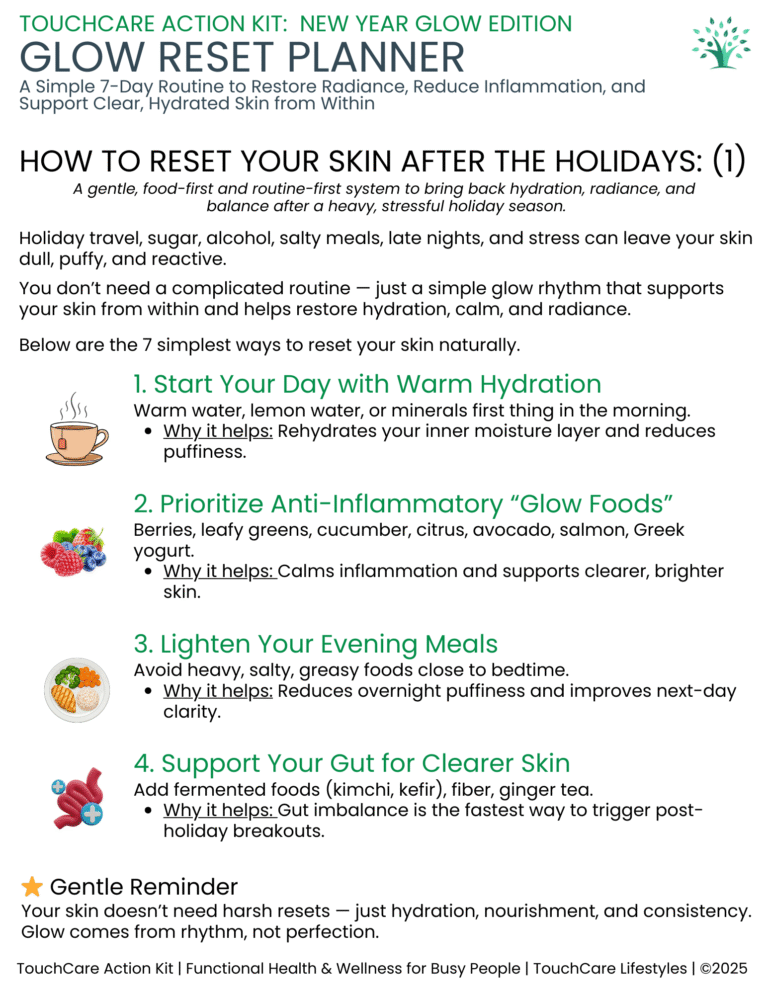
📥 BONUS: “Glow Reset Planner Free Download”
Preview your Planner below and download the free printable at the end of this post!
Stick it to your mirror and carry them.
Quick Jump Guide
Why skin looks tired after the holidays
How winter disrupts skin rhythm and repair
Why good products stop delivering results in January
Signs your skin barrier is fatigued, not broken
Common January skincare mistakes
A gentle skin rhythm reset that restores glow
This Guide Is for You If…
Your skin looks dull or flat despite good products
Makeup sits poorly or emphasizes texture
Redness or sensitivity lingers longer than usual
Hydration doesn’t seem to “hold” through the day
You want calm, glow, and balance — not another aggressive routine

II. Why Tired Skin in January Feels Different After the Holidays
January skin fatigue feels different from the kind of tired skin you might notice after a late night or a stressful week. This is the kind of tired that lingers. Your skin doesn’t look terrible, but it doesn’t look like itself either. Glow feels muted. Texture feels more noticeable. Even on “good skin days,” something feels off.
That’s because skin repair depends on rhythm, and December quietly disrupts it. Sleep schedules shift. Travel exposes skin to dry air and temperature changes. Meals are richer. Stress is higher, even when it’s joyful. Indoor heating dries the air. All of this adds up in small ways that skin feels before we consciously notice.
By the time January arrives, your routine may be back in place, but your skin hasn’t fully caught up yet. Tired skin in January isn’t a sign that your products stopped working. It’s a sign that your skin is still recovering from weeks of subtle disruption.
This is why January skin fatigue feels frustrating. You’re doing “everything right,” but results feel slower. Skin isn’t broken — it’s simply behind.
Recommended Reading:

III. How Holiday Stress Creates Tired Skin in January at the Barrier Level
Stress doesn’t just live in the mind. It shows up on the skin, often quietly. During the holidays, even positive stress keeps the nervous system more alert than usual. That affects circulation, hydration retention, and how well skin repairs itself overnight.
When stress hormones stay elevated, the skin barrier becomes less efficient. Moisture escapes more easily. Inflammation lingers longer. Redness shows up where it normally wouldn’t. Skin may feel sensitive one day and dull the next. Makeup settles differently because the surface of the skin isn’t as balanced.
This is why tired skin in January often looks uneven rather than simply dry. It’s not just missing moisture — it’s missing stability. The barrier hasn’t fully recovered yet, so skin struggles to protect itself and hold hydration.
Until the skin feels safe and supported again, it prioritizes defense over radiance. Glow becomes secondary. Calm comes first.
⭐ Recommended Reading
IV. Why Actives Stop Working When You Have Tired Skin in January
When skin looks tired, the natural reaction is to fix it. Many women reach for exfoliation, stronger serums, or new products hoping to jump-start glow. In January, this often makes things worse.
Active ingredients rely on a healthy barrier to work well. When the barrier is fatigued, those same ingredients can penetrate unevenly, trigger irritation, or quietly increase inflammation. Instead of glow, skin looks more reactive, more textured, or more sensitive.
This is why so many women feel confused in January. The products are good. The routine hasn’t changed. Yet results feel disappointing. Tired skin in January simply isn’t in the right state to respond to stimulation.
Pulling back isn’t giving up. It’s allowing the skin to recover its balance. Once rhythm returns, actives begin to work again — often more effectively than before.
⭐ Recommended Reading

V. Signs Your Skin Is Fatigued, Not Broken
One of the hardest parts about January skin is that nothing feels dramatically wrong — it just doesn’t feel right. Skin fatigue is subtle, which is why it’s often misread as a problem that needs fixing instead of a signal that something needs rest.
You may notice that your skin looks dull even after cleansing. Hydration feels temporary, as if moisture disappears faster than usual. Makeup may emphasize texture or sit unevenly, even when you haven’t changed products. Some days your skin feels sensitive, other days it feels flat, and occasionally it feels both at the same time.
These mixed signals can be confusing. When skin is truly damaged, the signs are obvious. Fatigued skin, however, is more about inconsistency. It hasn’t lost its ability to function — it’s just struggling to keep up.
This is an important distinction, because fatigued skin responds best to calm and consistency, not correction. Treating it like a problem to solve often delays recovery.
VI. Common January Skincare Mistakes That Keep Skin Looking Tired
January is often when good intentions quietly work against the skin. After weeks of disruption, many women feel pressure to “get back on track,” and that urgency shows up in skincare choices.
Exfoliation is usually the first place things go wrong. When glow disappears, it’s tempting to scrub, peel, or resurface it back. In reality, tired skin rarely needs more removal. It needs time to rebuild what was lost. Over-exfoliating at this stage thins the barrier further, making skin look duller and more sensitive instead of brighter.
Another common issue is layering heavier creams to chase hydration. When skin is fatigued, it often struggles to hold water rather than lacking oil. Thick products can sit on the surface without improving comfort, leaving skin feeling coated but still flat. This is where lighter, water-focused hydration tends to work better, especially when the goal is to help skin regain balance rather than force results.
Frequent product switching is another quiet disruptor. Changing serums every few days prevents skin from settling into any rhythm at all. Even excellent products need consistency to show results. In January, fewer decisions usually lead to better skin days.
VII. The Glow Reset Approach: Why Rhythm Comes Before Results
Glow is not something skin produces on demand. It’s a byproduct of balance.
The Glow Reset approach is built around one idea: skin performs best when it feels safe. That sense of safety comes from predictability — gentle cleansing, steady hydration, and products that support the barrier instead of challenging it.
During this phase, the focus shifts away from stimulation and toward stability. Barrier-supportive hydration, such as Dr. Jart Ceramidin Skin Barriers Face Cream, helps reinforce moisture retention when skin feels fatigued or out of sync. To support hydration without heaviness, lightweight water-binding layers like Torriden DIVE-IN Toner help skin hold moisture more consistently throughout the day. When redness or sensitivity lingers, calming support from Skin1004 Madagascar Centella Ampoule allows skin to settle while its natural rhythm restores.
Rather than layering aggressively, hydration is maintained gently. A light mist like d’Alba White Truffle First Spray Serum can replenish moisture during the day without overstimulating the skin. On days when skin feels especially depleted, Mediheal Hyaluronate Watermide Essential Mask is used occasionally to restore comfort without disrupting recovery.
When routines are simplified and repeated consistently, inflammation gradually quiets. Hydration starts to hold longer. Texture softens. Glow returns not because it’s chased, but because the skin is finally ready to produce it again.
This is why patience matters more than intensity in January. Rhythm restores function. Function restores glow.
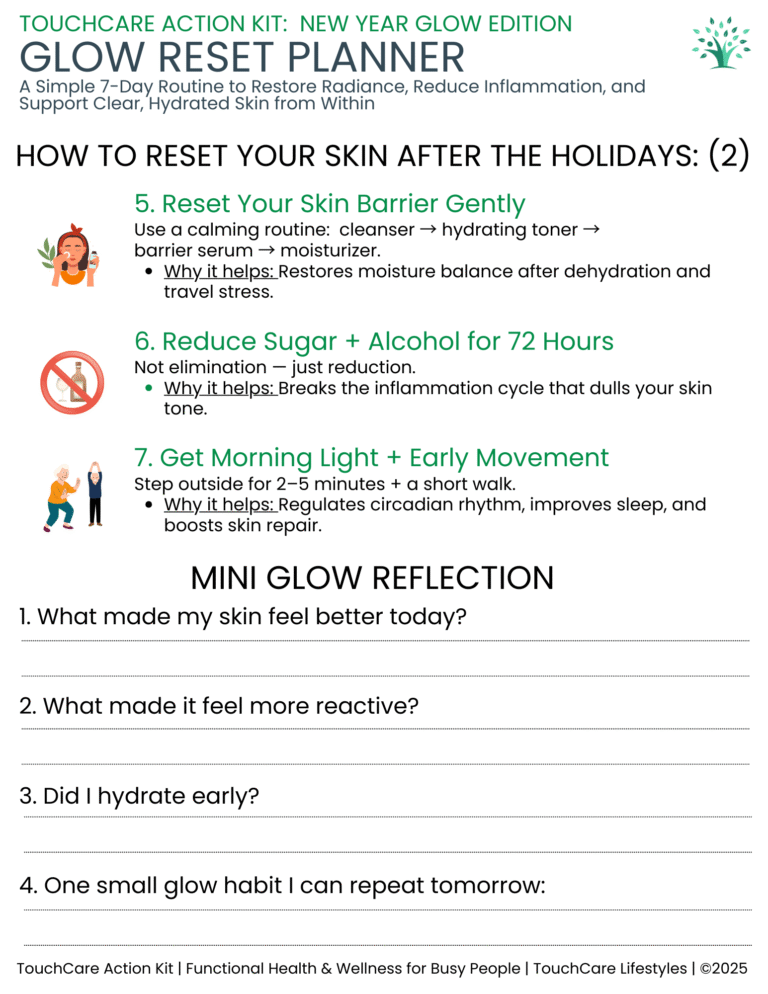
VIII. A Simple Reset You Can Start Today (Free Resource)
When skin looks tired in January, starting small works better than trying to correct everything at once. This is the point in the season where piling on new products or tightening routines often backfires. What skin usually needs instead is a calmer entry point back into balance.
That’s why I use the Glow Reset Planner as a gentle reset during this time of year. It’s designed to help skin recover rhythm without pressure, overwhelm, or aggressive changes.
This free 2-page printable focuses on restoring daily skin rhythm through hydration timing, barrier-first skincare habits, simplified routines, and short reflection prompts that help you notice what your skin is actually responding to. It supports skin recovery without asking you to do more.
📥 Download Free Glow Reset Planner Printable PDF
A calm, practical starting point when your skin, digestion, and energy feel out of sync.

IX. Glow Reset Essentials
The products below are used to support skin recovery during the Glow Reset phase. They focus on hydration, barrier repair, calming inflammation, and restoring comfort. These are not meant to “fix” skin quickly. They are used to assist rhythm while the skin resets.
Dr. Jart Ceramidin Skin Barriers Face Cream – Barrier-support cream that helps reinforce moisture retention when skin feels fatigued or unstable.
Torriden DIVE-IN Toner – Lightweight, water-based hydration that absorbs easily and helps skin hold moisture without heaviness.
Skin1004 Madagascar Centella Ampoule – Calming support for redness and sensitivity that often show up when skin looks tired in January.
d’Alba White Truffle First Spray Serum – Gentle mist to replenish moisture throughout the day without overstimulation or layering stress.
Mediheal Hyaluronate Watermide Essential Mask – Occasional hydration support when skin looks depleted or tight, used once or twice a week.
Affiliate Disclaimer
These are the products I personally use during my glow reset routine. As an Amazon Associate, I earn from qualifying purchases at no extra cost to you.
XI. Final Thoughts: Restore rhythm. Let glow return.
January skin doesn’t look tired because you’re doing something wrong. It looks tired because it’s still recovering.
After weeks of disruption, the skin needs time to stabilize before it can perform again. When routines stay inconsistent or pressure stays high, the skin remains reactive, dull, or flat no matter how good the products are.
This is why January isn’t the season for correction. It’s the season for recalibration. When rhythm returns — through steady hydration, barrier support, simpler routines, and fewer decisions — the skin begins to respond on its own. Texture softens. Hydration holds. Glow becomes visible again without being forced.
Restoring rhythm first isn’t a delay. It’s the fastest way back to healthy, resilient skin that actually responds when you’re ready to do more.
If your skin has felt stuck this month, it isn’t broken.
It’s just waiting for balance.
Restore rhythm. Let glow return.
With care,
Mijung
⭐ Upgrade Your Wellness Routine
If this post helped you understand why skin needs rhythm more than actives in January, you may appreciate the Glow Reset Planner designed to support this approach more gently and consistently.
It’s a structured TouchCare Action Kit that builds on what you learned here, including simple daily glow habits, hydration rhythm, barrier-first skincare guidance, digestion and stress support, reflection pages, and an easy reset flow to help overstimulated skin calm down naturally—without piling on products.
If you’d like a printable, guided version of this full rhythm-based skin reset, you can find the Glow Reset Planner in its premium edition on Etsy.