
Why Nervous System Stress Is Blocking Focus, Digestion & Energy
Functional Health & Wellness on the Go by Samuel
I. INTROduction to Nervous System Stress
If your focus feels scattered, digestion feels off, and your energy never fully comes back in January, it’s not a motivation problem. It’s nervous system stress.
January is the month when people start blaming themselves. You’re eating better. Sleeping more. Trying to get back on track. Yet your body still feels heavy, foggy, and uncooperative. Focus slips. Meals sit differently. Energy rises briefly, then crashes. That disconnect is frustrating—and confusing.
What most people don’t realize is that the nervous system doesn’t reset just because the holidays are over. After weeks of late nights, travel, social pressure, richer food, alcohol, disrupted sleep, and constant stimulation, the body often stays stuck in alert mode. Even when life slows down, the stress signal lingers.
When nervous system stress is still driving the system, the body prioritizes protection over performance. Digestion slows. Deep focus becomes harder to access. Energy turns inconsistent. This isn’t failure—it’s survival.
This article explains how nervous system stress blocks focus, digestion, and energy in January, why pushing harder backfires, and how gentle regulation helps your body recover naturally.
📥 BONUS: Download Free 1-page printable infographic at the end of this post!
Stick it to your mirror and carry them. Your full “Stress Reset Planner“
Quick Jump Guide
Why nervous system stress lingers after the holidays
How nervous system stress blocks focus, digestion, and energy
Signs your body is stuck in fight-or-flight mode
Common January habits that increase nervous system stress
How gentle regulation restores focus, digestion, and energy
This Guide Is for You If…
Your focus feels scattered or foggy in January
Digestion feels off even when eating “normally”
Energy comes in short bursts, then crashes
You feel wired but tired at the same time
You want calm, steady energy—not another push or reset
II. Why Nervous System Stress Feels Worse in January
Nervous system stress often feels worse in January not because stress suddenly increases, but because the body finally slows down enough to feel it.
December runs on momentum. You push through late nights, travel, social obligations, deadlines, richer food, alcohol, and disrupted sleep because there’s no real pause built in. The nervous system stays elevated, fueled by adrenaline and cortisol, just to keep up. You may feel tired, but you’re still moving.
In January, that external pressure drops. The calendar opens up. Expectations shift. Yet instead of feeling relief, many people feel heavier, foggier, and less motivated. This is when nervous system stress becomes obvious. The body no longer has adrenaline to mask exhaustion, and the nervous system hasn’t yet learned that it’s safe to relax.
This is why January stress feels different from everyday stress. It’s quieter and more internal. You may feel emotionally flat, resistant to routines you normally enjoy, or strangely overwhelmed by small tasks. Even things meant to help—like exercise, productivity goals, or “getting back on track”—can feel harder than expected.
Nothing is wrong with you. Your nervous system is still recalibrating after weeks of overdrive. Until it feels safe again, it stays cautious, conserving energy and slowing non-essential functions.
Recommend Reading:
III. How Nervous System Stress Blocks Focus, Digestion & Energy
When nervous system stress stays high, the body shifts into a protective mode. This affects focus, digestion, and energy in very practical ways.
Focus is often the first thing people notice. You may feel mentally foggy, easily distracted, or unable to sustain attention even on simple tasks. This isn’t a lack of intelligence or discipline. When the nervous system is stressed, the brain prioritizes awareness and vigilance over deep thinking. It’s scanning, not concentrating.
Digestion is closely tied to the nervous system, which is why stress shows up so clearly in the gut. Under stress, blood flow is redirected away from digestion. Enzyme production slows. Motility changes. Meals may feel heavier or sit longer than usual. Bloating, discomfort, or irregular digestion can appear even when your diet hasn’t changed.
Energy becomes unpredictable. Instead of steady output, you may experience brief bursts of energy followed by sharp drops. You feel wired but tired—awake but not restored. Rest doesn’t fully recharge you because the nervous system remains on alert, burning energy inefficiently.
These symptoms often lead people to push harder: more caffeine, stricter routines, harder workouts. Unfortunately, that usually reinforces nervous system stress instead of resolving it.
Recommend Reading:
IV. Signs Your Nervous System Is Stuck in Stress Mode
Nervous system stress doesn’t always announce itself loudly. More often, it shows up through patterns you start to normalize.
You may notice that relaxing feels uncomfortable. Sitting still makes you restless. Even during downtime, your mind keeps racing or planning. Your body may feel tense without a clear reason—tight shoulders, clenched jaw, shallow breathing.
Sleep may feel unrefreshing. You get enough hours, but wake up tired. Digestion feels unpredictable. Some days are fine, others aren’t, with no clear pattern. Focus comes and goes. Motivation feels inconsistent.
Emotionally, you may feel less patient or more easily overstimulated. Noise, screens, or busy environments feel draining faster than usual. There’s often a subtle sense of urgency to stay productive even when exhausted.
These are not signs of failure or weakness. They’re signs of a nervous system that hasn’t yet received the signal that the stressful season has ended. The goal isn’t to override these signals, but to work with them so the body can gradually shift back into balance.
Recommended Reading:
V. Common January Habits That Increase Nervous System Stress
In January, many well-intentioned habits quietly work against the nervous system.
One of the most common is pushing productivity too fast. After the holidays, there’s pressure to catch up, optimize, and “get back to normal.” You try to work harder, focus longer, and be more disciplined. For a nervous system still in recovery, this feels like another demand rather than relief.
Another issue is over-reliance on caffeine. When energy feels low, coffee becomes the solution. A little caffeine can help, but too much keeps the nervous system in a stimulated loop. You may feel temporarily alert, then crash harder later, reinforcing the wired-tired pattern.
Hard workouts can also backfire. Exercise is healthy, but intense training in a stressed state adds more strain instead of restoring balance. The body reads it as another stressor, not a release.
Skipping meals or eating inconsistently is another subtle trigger. Irregular nourishment tells the nervous system that resources are uncertain, which keeps it on guard. Even healthy food doesn’t help if the timing feels chaotic to the body.
None of these habits are “bad.” They’re simply mistimed. In January, the nervous system responds better to steadiness than intensity.
Recommend Reading:
VI. Supporting the Nervous System During a Stress Reset
When nervous system stress is high, support works best when it feels gentle, predictable, and non-demanding.
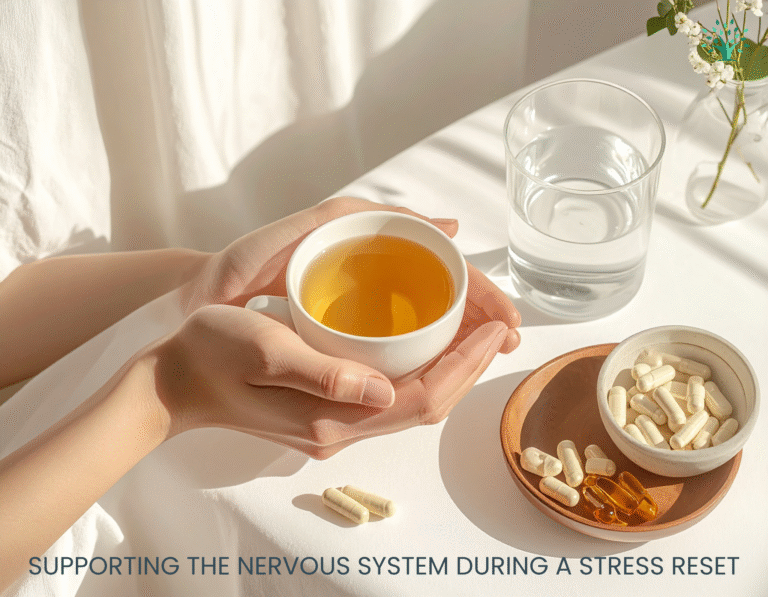
Hydration is often the first stabilizer. Consistent hydration helps signal safety to the body, which is why simple electrolytes like Electrolytes Powder – Liquid IV can support energy without stimulation. For digestion and overall calming, warm options such as Organic Ginger Tea help soothe the gut while reinforcing a sense of routine.
Mineral support also matters during stress recovery. Magnesium Glycinate – Nature’s Bounty is commonly used to support nervous system relaxation, muscle tension, and sleep quality when the body feels stuck in alert mode. For mental clarity without overstimulation, L-Theanine – Horbäach supports focus by calming excess nervous system activity rather than forcing alertness.
Short-term adaptogenic support can also help some people during post-holiday stress. Ashwagandha – Horbäach is often used to help regulate stress response when the body feels overworked, especially when used conservatively and consistently.
These supports aren’t meant to override stress. They assist the nervous system while regulation returns naturally.
VII. Why Small, Consistent Inputs Work Better Than Big Changes
A stressed nervous system doesn’t respond well to dramatic change. It responds to repetition.
Small actions done daily—hydrating at the same time, breathing slowly for a few minutes, eating regular meals, taking a short walk—teach the body that conditions are stable. Stability is what allows the nervous system to downshift.
This is why five calm minutes often help more than an hour of effort. Consistency reduces uncertainty. Predictability builds trust inside the body.
When the nervous system begins to feel safe, focus improves without force. Digestion settles. Energy becomes steadier. These shifts don’t come from pushing—they come from signaling safety over and over again.
VIII. A Simple Reset You Can Start Today (free Resource)
If your body still feels off in January, the goal isn’t to fix everything at once. It’s to reduce input and restore rhythm.
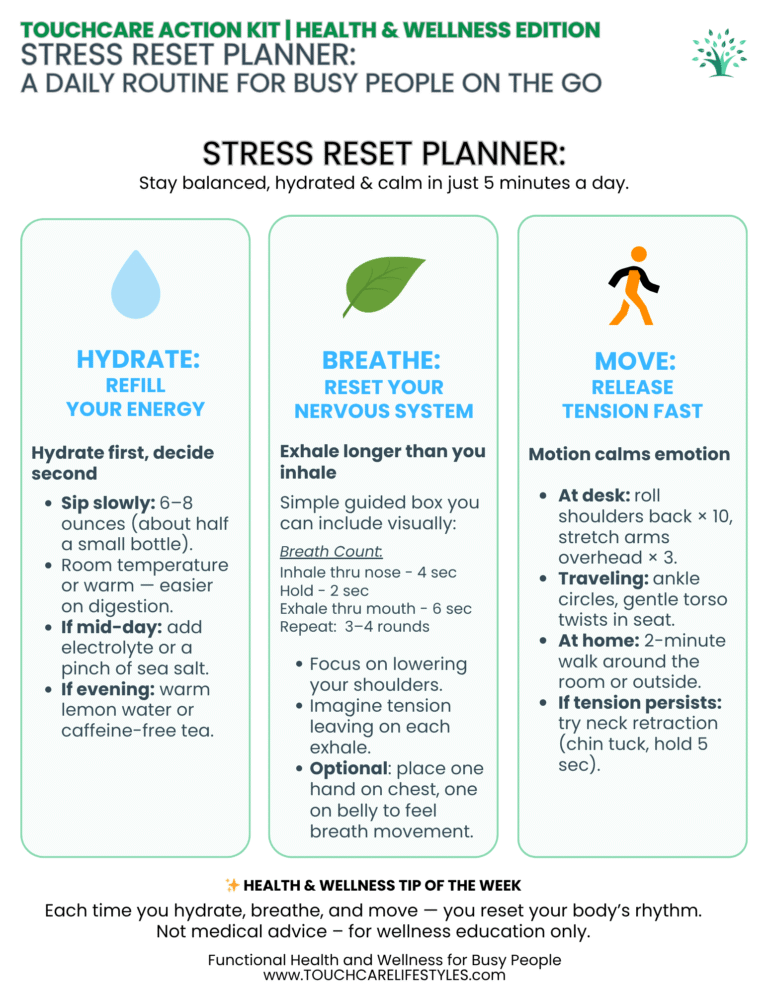
That’s why I use the 📥 Download Free “Stress Reset Planner” PDF during this season. It’s designed to help calm nervous system stress without overwhelm. Instead of adding tasks, it focuses on hydration timing, gentle movement, breathing, and simple daily cues that help the body settle.
This reset isn’t about discipline or perfection. It’s about giving your nervous system consistent signals that it no longer needs to stay on high alert.
IX. Nervous System Support Essentials
When my focus, digestion, and energy felt unpredictable in January, these were the tools that consistently helped calm nervous system stress. They’re simple, reliable, and easy to integrate into a busy schedule without adding pressure.
Magnesium Glycinate – Nature’s Bounty — Supports nervous system regulation, muscle relaxation, and sleep quality when stress keeps the body in a heightened state.
Electrolytes Powder – Liquid IV — Consistent hydration helps signal safety to the nervous system and supports steady energy without relying on caffeine or stimulants.
Organic Ginger Tea — A gentle, food-first way to support digestion while also providing warmth and calming sensory input to the nervous system.
L-Theanine – Horbäach — Helps quiet mental overactivity and supports focus without sedation, making it useful when stress interferes with clarity rather than sleep.
Ashwagandha – Horbäach — Short-term adaptogenic support to help regulate the stress response when the body feels overworked after prolonged holiday pressure.
Affiliate Disclaimer:
As an Amazon Associate, I earn from qualifying purchases. These are products I personally use and trust to support nervous system balance during periods of stress.
X. Final Thoughts:
If January feels harder than it should, that doesn’t mean you’re undisciplined, behind, or failing at self-care. It means your nervous system is still doing its job.
After weeks of sustained stress, the body doesn’t respond to pressure or optimization. It responds to safety. Until that signal is restored, focus, digestion, and energy remain inconsistent no matter how hard you try to force them.
This is why pushing harder in January often backfires. Productivity hacks, stricter routines, and more stimulation don’t solve nervous system stress—they prolong it. Regulation comes first. Performance follows.
When you calm the signal instead of fighting it, the body stops resisting. Focus sharpens. Digestion settles. Energy becomes steady again, not because you forced it, but because the system finally feels safe enough to function.
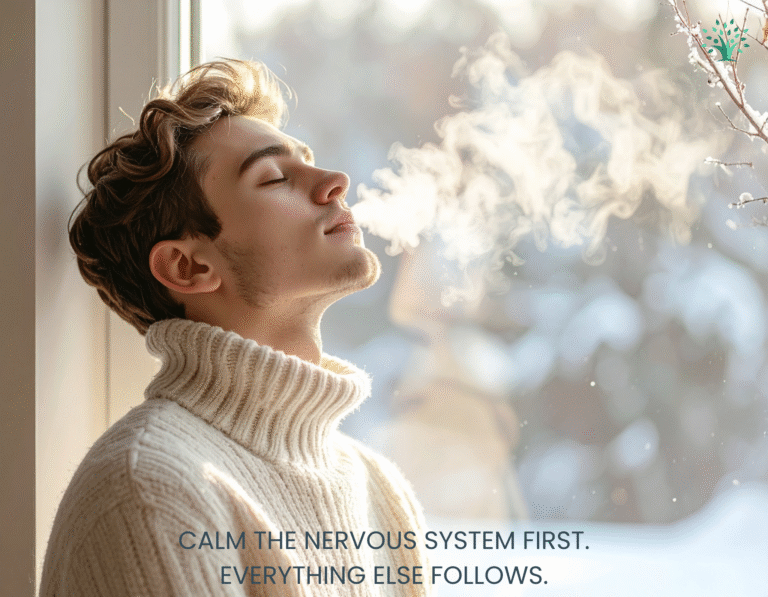
Calm the nervous system first.
Everything else follows.
With care,
Samuel
⭐ Upgrade Your Wellness Routine
If this post helped you slow down, breathe, and reconnect with yourself, you may appreciate the premium Stress & Self-Care Reset Planner I created to go with it.
It’s a clean, structured TouchCare Action Kit that guides you through simple daily resets, grounding routines, micro-self-care habits, stress recovery check-ins, hydration cues, mood tracking, and quick 3–5 minute resets that fit even the busiest days.
If you’d like a printable, guided version of this stress and self-care routine — the same one I use during demanding weeks — you can find the premium edition on Gumroad.
📌 Related posts from Our Blogs: