

Why Your Body Stops Responding in Late Winter
Functional Health & Wellness on the Go by Samuel
I. INTRODUCTION — Why Your Body Stops Responding in Late Winter
Late winter is when many people quietly realize something isn’t working anymore. Even though routines haven’t changed, energy stays flat. Recovery feels slower. Habits that helped earlier in the season no longer land the same way. This is often the moment when your body stops responding in late winter, despite steady effort.
What makes this phase especially frustrating is how subtle it feels. You’re not sick. Life may even feel calmer than it did during the holidays. Internally, though, your system feels less flexible. Motivation becomes fragile. Small efforts feel heavier than they should. At some point, it’s natural to wonder why the basics no longer move the needle.
I’ve experienced this pattern across multiple winters. On paper, I was doing the “right” things. In practice, my body felt less responsive with each passing week. Sleep didn’t fully restore me. Rest helped, but not deeply. It wasn’t burnout. It was something quieter — a sense that my system had lost some of its adaptive edge.
By late winter, a unique kind of load has already accumulated. Months of cold, reduced daylight, lower movement, immune vigilance, and subtle routine shifts quietly stack up. None of it feels urgent. Together, however, these factors change how the body responds to input. At this stage, the issue isn’t effort. It’s capacity.
In this article, we’ll explore why your body stops responding in late winter, what’s happening beneath the surface when healthy habits lose their effect, and how understanding this phase helps you reset without pushing harder or adding more pressure.
📥 BONUS: Download Free 1-page printable infographic at the end of this post!
Stick it to your mirror and carry them. Your full “7-Day Body Reset — Daily Recovery Routine for Busy People on the Go“
Quick Jump Guide
• Why your body stops responding in late winter even when habits stay consistent
• The quiet seasonal load that drains adaptability over time
• How nervous system fatigue reduces responsiveness to food, sleep, and rest
• Why pushing discipline often backfires at this stage
• What helps the body respond again without forcing change
This Guide Is for You If…
• You’re doing “healthy things,” but they don’t feel effective anymore
• Energy feels flat rather than depleted
• Rest helps, but doesn’t fully restore you
• Late winter feels heavier than early winter did
• You want to reset capacity, not add more rules

II. What Late Winter Quietly Changes Inside the Body
By this point in the season, winter is no longer just another point on the calendar. The body has already been adapting for months. Early winter asks for small adjustments. Later winter asks for endurance.
Short daylight hours compress circadian cues over time. Cold temperatures require constant low-level effort to maintain balance. Movement often shrinks without intention. Social patterns shift. Immune vigilance stays slightly elevated even when you are not actively sick. None of this feels dramatic, but all of it demands ongoing internal work.
In response to prolonged demand, priorities begin to shift. Rather than staying flexible and responsive, the system favors stability. This is protective, not problematic. Still, it changes how the body reacts to inputs. By late winter, optimization gives way to preservation.
That shift explains why many people notice that their body stops responding the way it did earlier in the season. The routines remain the same, but the internal environment they act upon has changed.
Recommend Reading:
III. How Prolonged Seasonal Load Reduces Energy, Recovery, & Flexibility
Seasonal load doesn’t arrive all at once. Instead, it builds quietly. Each day asks the body to regulate temperature, energy, mood, and immune readiness with fewer environmental supports than other seasons provide.
Over time, this steady demand narrows the body’s margin. Energy becomes flatter rather than depleted. Recovery takes longer without completely failing. Focus fades in and out instead of remaining steady. These shifts are not signs of breakdown. They reflect conservation.
When ongoing demand lacks a clear endpoint, the system becomes less reactive by design. Strong responses to food, sleep, movement, and rest are dialed down. As a result, effort can start to feel disconnected from outcome.
It’s common to interpret this as failure. In reality, it’s an adaptive response. The body limits output to prevent deeper depletion. This is one of the core reasons the body stops responding in late winter, even when habits remain consistent.
Recommend Reading:

IV. Why Healthy Habits Lose Their Impact at This Stage
Healthy habits work best when the body has enough internal capacity to respond to them. In late winter, that capacity is often partially tied up in maintenance.
Sleep may increase, but its restorative effect feels muted. Meals may be balanced, but energy doesn’t rebound the same way. Rest days help, but they don’t fully reset you. This creates confusion because the habits themselves are not wrong.
The issue is timing. When the body is in conservation mode, it prioritizes baseline function over improvement. Healthy inputs are still used, but they are directed toward stability instead of adaptation.
This is why pushing harder rarely helps at this point. More discipline, stricter routines, or higher expectations can increase internal pressure without increasing responsiveness. When the body stops responding, it is not resisting care. It is signaling that it needs replenishment before it can benefit from effort again.
Late winter is not a time to optimize. It is a time to restore the conditions that allow responsiveness to return.
Recommend Reading:
Supporting Energy, Digestion, and Recovery When the Body Stops Responding
When late winter reaches this point, the body is not asking for intensity. It is asking for support that reduces background strain. Energy, digestion, and recovery are tightly linked, and when one feels off, the others quietly follow.
Energy flattens first because the body is prioritizing consistency over output. Digestion slows as resources shift toward maintenance rather than processing. Over time, recovery takes longer because the nervous system is conserving rather than rebuilding. None of this is a failure. It is a coordinated response.
This is where simple physical supports can matter, not as solutions, but as signals. Magnesium Glycinate – Nature’s Bounty helps release low-level muscle tension that often goes unnoticed in colder months. When the body experiences physical ease, it no longer needs to stay guarded, which frees energy for recovery.
Hydration also plays a larger role than most people realize in late winter. Indoor heating, dry air, and reduced thirst cues quietly increase strain. Electrolytes Powder – Liquid IV supports fluid balance more effectively than water alone, helping remove one of the subtle stressors that keeps systems working harder than they need to.
Vitamin demand rises quietly in late winter too. Vitamin C – Garden of Life supports immune function and cellular repair, which can help reduce background strain when recovery feels slower than it should.
When these background loads are reduced, the body begins to respond again, not dramatically, but steadily.
Recommended Reading:
VI. How to Help When the Body Stops Responding Without Forcing Change
When the body stops responding, the instinct is often to tighten routines or add new ones. Late winter usually asks for the opposite.
Responsiveness returns when the system feels supported rather than pressured. This means lowering internal noise so the body can actually register the help it is already receiving.
Omega-3 Fish Oil – Nordic Naturals supports cellular communication and inflammatory balance, which becomes especially important after months of cold exposure and reduced movement. When internal signaling improves, energy and recovery become more efficient.
Mental load also matters. Late winter stress is rarely emotional, but it often shows up as mental tension. L-Theanine – Horbäach supports calm focus without sedation, helping the nervous system ease out of constant readiness so the body can respond more fully to rest and nourishment.
The goal here is not stimulation or suppression. It is reducing the reasons the body feels it must stay guarded.
VII. Products That Support Recovery and Adaptation Gently
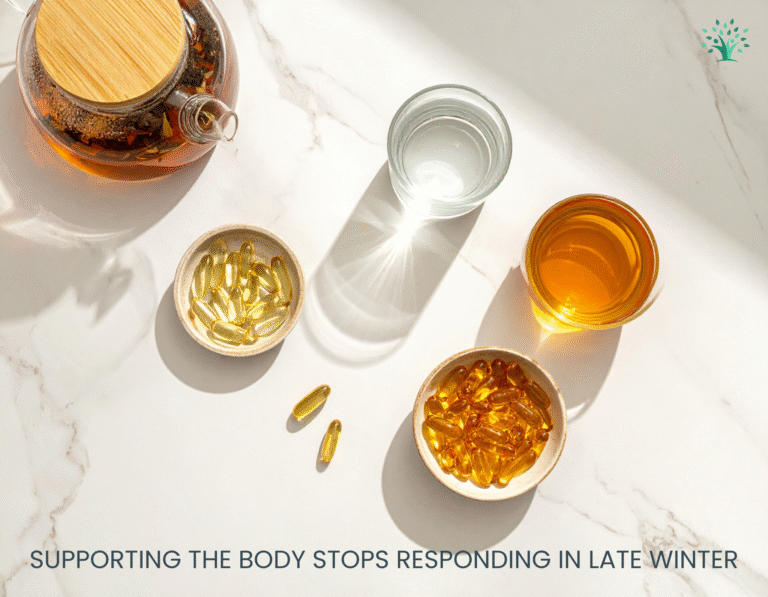
Late winter often carries a quiet immune and stress load even when you are not actively sick. The body stays alert longer than necessary because it senses vulnerability.
Echinacea & Goldenseal – Horbäach supports immune resilience, helping reduce the background vigilance that quietly drains energy. When the immune system feels supported, the body can redirect resources toward repair instead of defense.
Adaptation also matters at this stage. Ashwagandha – Horbäach supports stress regulation by helping the body respond more flexibly to ongoing demand rather than staying locked in conservation mode. This is especially helpful when nothing feels “wrong,” yet responsiveness remains low.
These supports do not override the body’s signals. They reduce the load that keeps those signals stuck.
As an Amazon Associate, I earn from qualifying purchases. These are products I personally rely on and recommend because they support recovery without forcing change.
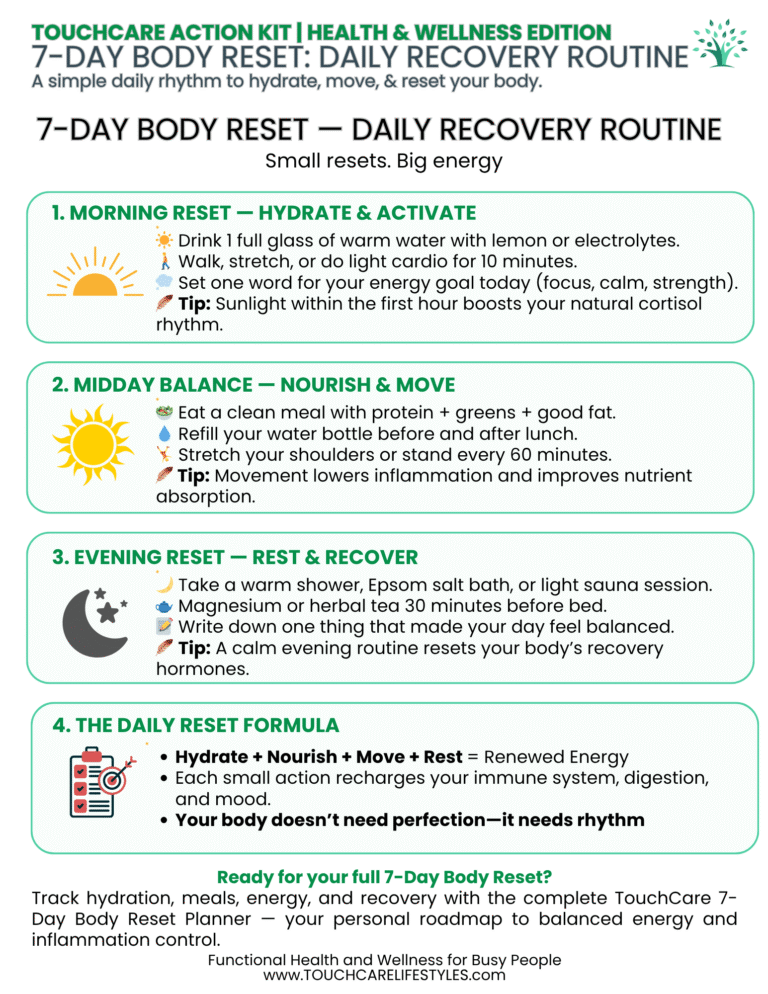
VIII. A Simple 7-Day Reset to Restore Responsiveness (FREE PDF)
When the body stops responding, the answer is rarely to do more. What helps instead is restoring predictable signals that rebuild trust between the nervous system and daily rhythm.
The 7-Day Body Reset for Busy People on the Go was created for this exact late-winter phase. It focuses on timing, hydration cues, gentle movement, and recovery signals rather than discipline or restriction.
Responsiveness does not return through intention alone. It returns through repetition. When the same supportive signals show up day after day, the body begins to respond naturally again.
The reset is quiet by design. That’s what makes it work.
📥 BONUS: Download Free “7-Day Body Reset — Daily Recovery Routine for Busy People on the Go” PDF
IX. Products That Support When the Body Stops Responding
In late winter, reduced responsiveness is rarely about a single failure. The goal is not stimulation or suppression, but lowering background strain so the system has enough capacity to respond again. The products below support that process by addressing immune load, nervous system tension, hydration stress, inflammation, and stress adaptation.
Echinacea & Goldenseal – Horbäach
Late winter often carries low-grade immune vigilance even when you’re not actively sick. That constant readiness quietly drains energy and recovery. This supports immune resilience so the body doesn’t need to stay on high alert.
Magnesium Glycinate – Nature’s Bounty
Cold exposure and reduced movement often leave muscles subtly tense for months. That tension feeds the nervous system a constant “on” signal. Magnesium supports physical relaxation and nervous system signaling, especially in the evening.
Electrolytes Powder – Liquid IV
Dry indoor air and weaker thirst cues make winter dehydration easy to miss. When hydration drops, the body works harder to maintain balance. Electrolytes help restore fluid balance more effectively than water alone.
Vitamin C – Garden of Life
Vitamin C supports immune function and cellular repair, both of which are under quiet demand late in the season. It helps reduce recovery strain without overstimulating the system.
Omega-3 Fish Oil – Nordic Naturals
Omega-3s support inflammatory balance and cellular communication. After months of winter stress, this helps the body respond more efficiently to rest, nutrition, and movement.
Ashwagandha – Horbäach
At this stage, stress is often environmental rather than emotional. Ashwagandha supports stress adaptation, helping the body respond flexibly instead of staying locked in conservation mode.
L-Theanine – Horbäach
Mental tension keeps the nervous system alert even when life feels calm. L-Theanine supports relaxed focus, helping the body register safety and restore responsiveness.
As an Amazon Associate, I earn from qualifying purchases. These are the same products I personally rely on and recommend because they support recovery without forcing change.
X. Final Thoughts — Restore Capacity Before Effort
Late winter doesn’t break the body. It narrows its margin.
If your body stops responding, it isn’t rejecting healthy habits. It is conserving energy until conditions feel safe enough to adapt again.
Support the system instead of pushing it.
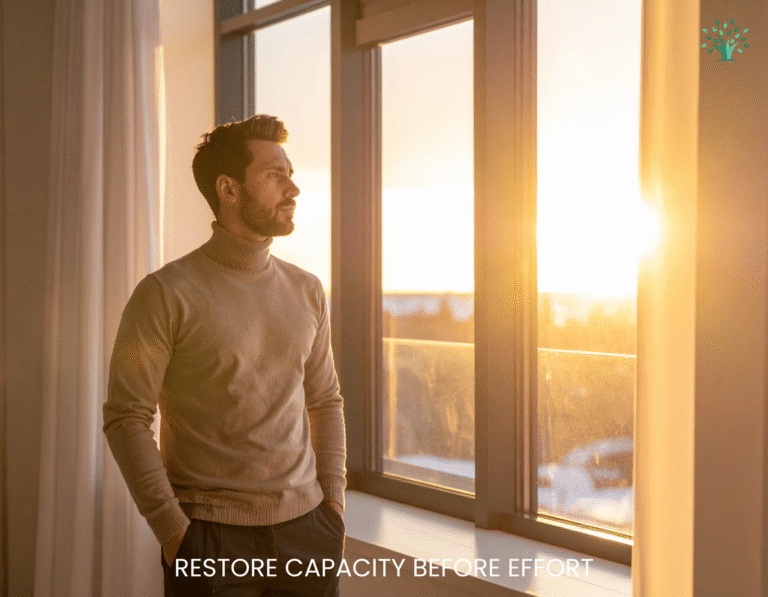
Restore capacity before effort.
Restore capacity. Let the body respond again.
With care,
Samuel
⭐ Upgrade Your Wellness Routine
📥 BONUS: Download Free “7-Day Body Reset — Daily Recovery Routine for Busy People on the Go” PDF
If this guide helped you simplify your routine and feel a bit more grounded, you may appreciate the premium 7-Day Body Reset Planner I created to go with it.
It’s a clean, structured TouchCare Action Kit that walks you through a full 7-day reset — with daily hydration cues, movement suggestions, digestion and bloat support, simple meals, evening wind-down steps, mindset check-ins, and a gentle system to help your body feel balanced again.
If you’d like a printable, guided version of this complete 7-day recovery routine, you can find the premium edition on ETSY.
📌 Related posts from Our Blogs: