

Why Your Body Craves Stability Before Spring
Functional Health & Wellness on the Go by Samuel
I. INTRODUCTION — Why Your Body Craves Stability Before Spring
Late winter is the moment when progress quietly stalls. You’re doing the right things, sticking to habits, and showing up consistently, yet your body doesn’t respond the way it should. Energy feels muted. Motivation thins out. Recovery lags. This is when the Body Craves Stability, even though everything around you suggests it’s time to push forward.
What makes this phase confusing is that it doesn’t feel like failure. Nothing is obviously wrong. Life isn’t heavier than usual. Still, the body hesitates. Effort produces less return. Rest doesn’t fully land. The instinct is to try a new reset, tighten routines, or add structure. That often backfires.
I’ve seen this pattern repeat year after year. Right before spring, the body enters a transition window. Winter stress hasn’t fully cleared, yet the energy of a new season hasn’t arrived. Systems are depleted, not broken. What they need isn’t another overhaul. They need stability long enough to recalibrate.
This article explains why the body resists change before spring, what’s happening beneath the surface during late winter, and how stability restores responsiveness without forcing momentum that isn’t ready yet.
📥 BONUS: Download Free 1-page printable infographic at the end of this post!
Stick it to your mirror and carry them. Your full “7-Day Body Reset — Daily Recovery Routine for Busy People on the Go“
Quick Jump Guide
• Why late winter is a transition phase, not a reset window
• How accumulated stress lowers recovery capacity
• Why adding habits often stalls progress before spring
• What stability actually looks like for the nervous system
• How gentle structure prepares the body for seasonal change
This Guide Is for You If…
• Your habits suddenly feel less effective
• Energy stays flat despite consistency
• Recovery feels slower than it should
• Resets feel harder instead of helpful
• You want to feel ready for spring without forcing change

II. The Late-Winter Phase Most Resets Ignore
Late winter is not just a calendar moment. It’s a physiological holding pattern. By this point, the body has already spent months compensating for cold exposure, reduced daylight, disrupted sleep cycles, and lower overall movement. Even if life feels calmer externally, internal systems have been working overtime.
What makes late winter tricky is that depletion doesn’t feel dramatic. Energy hasn’t collapsed. Motivation hasn’t vanished. Instead, everything feels slightly harder. Effort produces less return. Recovery feels incomplete. That’s because reserves have been quietly drawn down over time.
Most reset plans ignore this phase entirely. They assume the body is ready for change simply because winter is “almost over.” In reality, late winter is when recovery capacity is at its lowest. Stress hormones have been elevated longer. Circadian rhythms are still compressed. Immune and nervous systems remain on quiet alert.
When resets fail here, it’s not because they’re poorly designed. It’s because they’re mistimed. The body isn’t resisting improvement. It’s conserving resources. Without acknowledging this phase, even gentle changes can feel like pressure. This is often the first sign the Body Craves Stability before it can respond to anything new.
Recommend Reading:

III. Why the Nervous System Resists Change Before Spring
Change always requires energy. Even positive change asks the nervous system to adapt, reassess, and recalibrate. In late winter, that cost feels higher because baseline energy is already reduced.
The nervous system relies on environmental cues to decide when it’s safe to expand. Light, temperature, movement, and social rhythm all matter. In late winter, those cues are inconsistent. Days are getting longer, but mornings are still dark. Cold persists even as the calendar shifts. Outdoor movement increases sporadically, not reliably.
This creates mixed signals. The nervous system senses upcoming change but doesn’t yet trust it. When trust is low, stability becomes the priority. Predictability feels safer than novelty. Familiar routines feel easier than new ones.
This resistance isn’t psychological stubbornness. It’s protective behavior. The nervous system is buying time until conditions support expansion again. Pushing change during this window often leads to fatigue, irritability, or loss of consistency—not because the plan is wrong, but because the timing is off.
Recognizing this reframes the experience. Resistance isn’t failure. It’s feedback.
Recommend Reading:

IV. How the Body Craves Stability When Recovery Capacity Is Low
When recovery capacity drops, the body starts asking for fewer variables. Stability becomes the signal it understands best. Regular sleep timing. Familiar meals. Gentle, repeatable movement. Consistent daily rhythms.
Late winter reduces tolerance for disruption. Skipped meals matter more. Irregular sleep lingers longer. Overloaded schedules drain faster. What once felt manageable now feels taxing because the buffer is thinner.
Stability works by reducing internal noise. When inputs become predictable, the nervous system stops scanning for threat or change. Energy that was being used to maintain vigilance becomes available for repair and recovery.
This is why stability often restores responsiveness when nothing else does. It creates conditions where the body feels safe enough to respond again. Once that safety is established, energy, motivation, and adaptability begin to return naturally.
Stability isn’t about standing still. It’s about restoring the ground beneath you so movement forward doesn’t cost as much.

V. Why Pushing Resets Backfires When the Body Craves Stability
Late winter reduces the margin for error. Systems are already carrying load, so adding intensity—hard workouts, strict routines, aggressive changes—often produces resistance instead of results. What feels like discipline can register as threat when reserves are low.
This is where simple supports make a difference. Electrolytes Powder – Liquid IV helps restore hydration efficiency after months of dry air and inconsistent intake, reducing one of the quiet stressors that amplifies fatigue. Magnesium Glycinate – Nature’s Bounty supports physical relaxation and nervous system signaling, which matters when sleep looks adequate on paper but doesn’t feel restorative.
Nutrient sufficiency also shapes how the body responds to change. Vitamin C – Garden of Life supports cellular repair during a period when immune and recovery demands remain elevated, helping the system feel supported rather than pressured. Late winter also carries a quiet immune load, especially when travel and stress stack up, so Echinacea & Goldenseal – Horbäach supports immune resilience without forcing stimulation.
When resets backfire, it’s usually a timing issue. Stability lowers the cost of recovery so responsiveness can return.
Recommended Reading:

VI. What Actually Helps When the Body Craves Stability
Stability works because it reduces internal noise. Consistent sleep and meal timing, gentle movement, and predictable routines send clear safety signals. Once those signals repeat, adaptability returns on its own.
Stress adaptation is part of that process. Ashwagandha – Horbäach supports stress regulation, helping the body respond flexibly instead of staying locked in conservation mode. Mental tension also plays a role; L-Theanine – Horbäach supports calm focus, allowing the nervous system to downshift without sedation.
Inflammatory balance influences how quickly the body rebounds. Omega-3 Fish Oil – Nordic Naturals supports cellular communication and recovery after months of winter strain. Together, these supports don’t force change—they remove friction so stability can do its job.
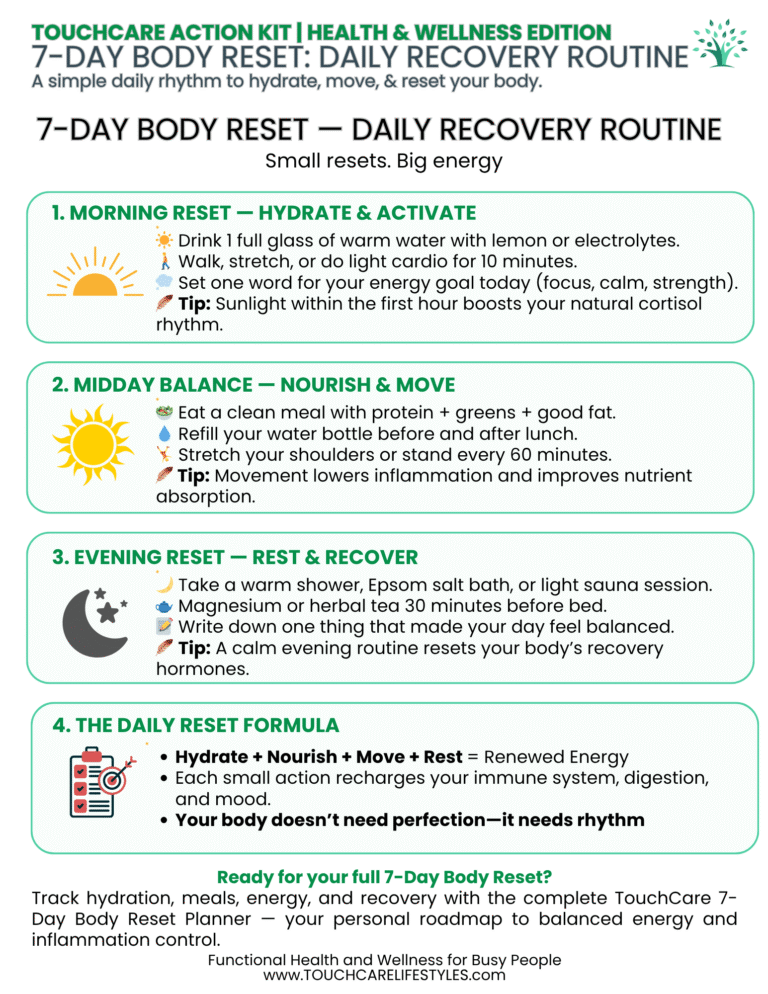
VII. A Simple 7-Day Reset to Restore Responsiveness (FREE PDF)
When stability is the priority, structure matters more than intensity. The 7-Day Body Reset for Busy People on the Go was designed for this exact window. It emphasizes timing, hydration cues, gentle movement, and consistent rhythms—so the body feels supported while it recalibrates.
It works best when the Body Craves Stability and needs predictable signals more than intensity.
📥 BONUS: Download Free “7-Day Body Reset — Daily Recovery Routine for Busy People on the Go” PDF

VIII. Products That Support When the Body Stops Responding
When the body craves stability before spring, the goal isn’t stimulation. It’s support. These are the products I rely on because they help restore capacity without forcing momentum.
Echinacea & Goldenseal – Horbäach
Supports immune resilience during late winter, reducing background vigilance.
Magnesium Glycinate – Nature’s Bounty
Supports relaxation and sleep quality, aiding nervous system recovery.
Electrolytes Powder – Liquid IV
Improves hydration efficiency when thirst cues are unreliable.
Vitamin C – Garden of Life
Supports immune function and cellular repair during seasonal transition.
Omega-3 Fish Oil – Nordic Naturals
Helps balance inflammation and supports recovery responsiveness.
L-Theanine – Horbäach
Promotes relaxed focus, helping the nervous system register safety.
Ashwagandha – Horbäach
Supports stress adaptation when reserves are low.
As an Amazon Associate, I earn from qualifying purchases. These are the same products I personally rely on and recommend because they support recovery without forcing change.

IX. Final Thoughts — Stability Is the Foundation Before Spring
Late winter is not the season for forcing change. It’s the phase when the body is asking for steadiness after months of quiet strain and compensation. Progress slowing down does not mean effort disappeared. It means capacity has been stretched thinner than usual.
Many people respond to this moment by tightening routines or chasing another reset. That reaction feels productive, but it usually creates more resistance. When reserves are low, intensity doesn’t build momentum. It drains what little margin remains and delays recovery even further.
Stability is not inactivity. It is active support. Consistent rhythms, predictable inputs, and reduced internal noise allow the nervous system to stand down. Once that happens, energy begins to respond again. Motivation returns without being forced. Change becomes possible because the foundation underneath it is finally solid.
Spring readiness is built quietly. It comes from respecting timing instead of fighting it. When stability is restored first, progress no longer feels heavy or fragile. It feels natural.
Honor the phase.
Rebuild the base.
Let strength return on its own.
Stability Is the Foundation Before Spring.
With care,
Samuel
⭐ Upgrade Your Wellness Routine
📥 BONUS: Download Free “7-Day Body Reset — Daily Recovery Routine for Busy People on the Go” PDF
If this guide helped you simplify your routine and feel a bit more grounded, you may appreciate the premium 7-Day Body Reset Planner I created to go with it.
It’s a clean, structured TouchCare Action Kit that walks you through a full 7-day reset — with daily hydration cues, movement suggestions, digestion and bloat support, simple meals, evening wind-down steps, mindset check-ins, and a gentle system to help your body feel balanced again.
If you’d like a printable, guided version of this complete 7-day recovery routine, you can find the premium edition on ETSY.
📌 Related posts from Our Blogs: