

Why You Feel Puffy Before Summer
◆ Functional Health & Wellness by Mi Jung
I. INTRODUCTION — When You Start to Feel Off as Summer Approaches
If you feel puffy before summer, you are not imagining it.
There is a specific kind of frustration that shows up in May. You wake up, look in the mirror, and something feels softer. Your rings fit tighter. Your stomach feels heavier by evening. Nothing dramatic has changed in your diet, yet your body looks different.
That quiet shift creates anxiety.
Many women assume it must be weight gain. That assumption leads to restriction. Restriction increases stress. Stress increases water retention. The cycle builds quickly.
Seasonal temperature changes, accumulated stress from the first half of the year, travel planning, sodium fluctuations, and hormonal rhythm all converge right before summer. The body responds by holding fluid. The scale may barely move, yet the mirror reacts.
This is not failure. It is physiology.
Understanding what is happening allows you to respond with structure instead of panic. Stability always works better than aggression.
📥 BONUS: Download the FREE 1-page printable infographic PDF at the end of this post! Stick it to your mirror and carry them. Your Daily Recovery Routine.
Quick Jump Guide
• Why you feel puffy before summer even without weight gain
• Fluid retention versus real fat accumulation
• How cortisol affects water balance
• Hormonal and heat-related sodium shifts
• Why routine disruption makes swelling worse
• How the 7-Day Body Reset restores rhythm
This Guide Is for You If…
• Your face or fingers look swollen as summer approaches
• You feel heavier even though your meals are consistent
• Bloating increases in warmer weather
• You are tempted to diet harder but something feels off
• You want stability before summer, not another extreme reset
II. Why You Feel Puffy Before Summer (Physiology First)
When you feel puffy before summer, the first assumption is fat gain. In most cases, that is not what is happening.
Your body regulates fluid constantly. Sodium, potassium, cortisol, estrogen, sleep quality, and digestive rhythm all influence how much water your tissues hold. Even small seasonal shifts can change how your face, abdomen, and fingers look within 24 to 72 hours.
Warmer temperatures alone can increase mild fluid shifts. Blood vessels dilate in heat. Circulation patterns adjust. Some people naturally retain slightly more water during these transitions.
Carbohydrate intake also plays a role. Glycogen stored in muscle binds water. When your routine changes — more social meals, slightly higher sodium, inconsistent hydration — water follows quickly. That change can soften your appearance without reflecting true fat gain.
Digestive slowdown adds another layer. If bowel rhythm becomes irregular due to stress or travel planning, abdominal pressure increases. The result feels like weight, even though it is temporary retention.
Understanding this distinction lowers panic. Fluid retention behaves differently than fat storage. One fluctuates rapidly. The other changes slowly.
Clarity reduces overreaction.
Recommended Reading:

III. Stress, Cortisol, and Why You Feel Puffy Before Summer Without Gaining Fat
Stress chemistry quietly influences water balance.
As summer approaches, pressure builds. There are social events, vacations, clothing changes, and internal comparisons. Even subtle psychological stress elevates cortisol. That hormone helps you respond to challenges, but it also affects sodium regulation and fluid retention.
When cortisol stays elevated for days, your body becomes more protective. It holds onto water. Tissue may feel softer. The scale may move slightly. Visually, you feel swollen.
Sleep disruption compounds this pattern. Longer daylight hours and busier schedules often reduce sleep depth. Poor sleep increases stress signaling, which reinforces water retention.
Many women react by tightening their diet. That reaction seems logical, yet it can intensify the stress response. More restriction does not calm cortisol. In some cases, it amplifies it.
When you feel puffy before summer, the answer is rarely aggressive dieting. It is nervous system stabilization, hydration rhythm, and structured routine.
The body responds best to regulation, not punishment.
Recommended Reading:

IV. Fluid Retention vs. Fat Gain — What’s Actually Happening
Not every visible change represents fat accumulation.
True fat gain requires a sustained calorie surplus over time. Fluid retention can shift within a single day. That difference alone should calm urgency.
Water weight commonly fluctuates two to five pounds depending on sodium intake, carbohydrate intake, hormonal timing, and stress load. Carbohydrates naturally bind water. When intake rises slightly during seasonal social events, stored glycogen increases. Water follows.
Texture also tells a story. Retained fluid feels soft and slightly compressible. Fat gain develops gradually and does not reverse in 48 hours.
Hydration rhythm influences this process more than most people realize. Inconsistent water intake often triggers rebound retention. Supporting electrolyte balance with Electrolyte Powder – Liquid IV can help stabilize fluid regulation when hydration patterns have been erratic.
Digestive rhythm also matters. When bloating increases due to microbiome imbalance, abdominal pressure exaggerates swelling. Supporting gut stability with Probiotics – Physician’s Choicecan reduce that pressure over time.
Observation creates clarity. When changes reverse within days, fluid balance is the likely cause.

V. Hormones, Heat, and Sodium Shifts Before Summer
Hormonal rhythm strongly influences water balance.
Estrogen and progesterone fluctuate across the menstrual cycle. In the luteal phase, fluid retention naturally increases. That shift can soften facial contours and increase abdominal fullness even when meals remain consistent.
Seasonal heat adds another variable. As temperatures rise, vascular dilation changes how fluid distributes in tissues. Circulation patterns shift subtly. Sodium sensitivity may increase during this transition.
Stress overlays all of it. Cortisol influences aldosterone, a hormone tied to sodium retention. When stress remains elevated, the body protects itself by holding onto fluid.
Supporting the nervous system becomes important here. Evening relaxation with Magnesium Glycinate – Nature’s Bounty can promote sleep stability, which indirectly supports fluid regulation.
For periods of sustained stress, Ashwagandha – Horbäach may help modulate cortisol response, especially when emotional pressure builds around seasonal body image concerns.
Inflammation also contributes to tissue softness. Adding Omega-3 Fish Oil – Nordic Naturals supports anti-inflammatory pathways that influence recovery and fluid distribution.
Hormonal water shifts are temporary. Stability improves when sleep, stress, and sodium rhythm are regulated instead of restricted aggressively.
VI. The 7-Day Body Reset Approach
The goal is not dieting harder. The goal is regulation.
A structured reset focuses on stabilizing hydration, digestion, inflammation, and nervous system rhythm simultaneously. Each system influences the others.
Start with hydration timing. Drinking water consistently throughout the day prevents rebound retention. Pairing this with balanced electrolytes improves absorption rather than flushing.
Digestive comfort reduces abdominal tension. Simple support such as Organic Ginger Tea after meals can ease bloating and promote circulation.
Connective tissue integrity also affects how skin and soft tissue appear during fluid shifts. Supplementing with Collagen Peptides – Garden of Life can support elasticity during hormonal transitions.
Movement remains moderate during this reset. Walking, light strength training, and mobility work enhance circulation without spiking stress hormones.
Consistency across seven days often reveals how responsive the body is when rhythm returns.
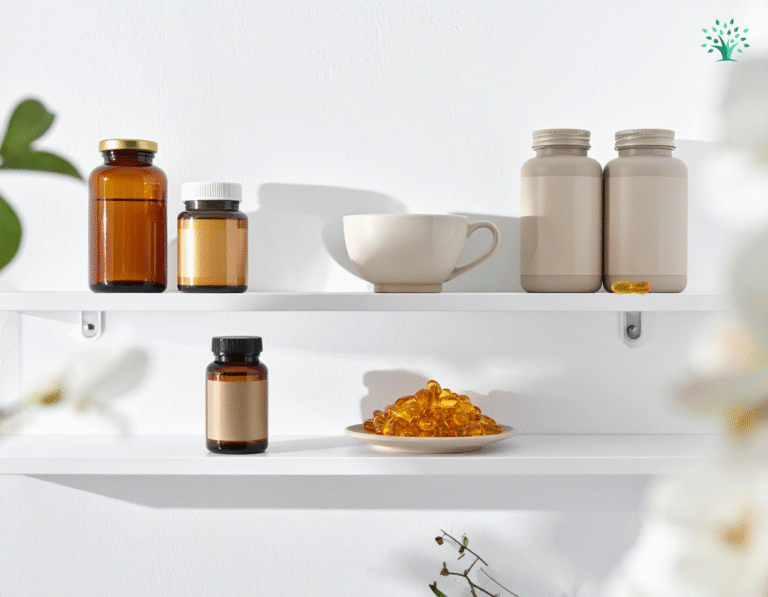
VII. Products That Support Stress Reset
Each product supports a specific physiological lever involved when the body holds fluid before summer. None of them replace structure. They reinforce it.
Magnesium Glycinate – Nature’s Bounty
Sleep depth influences cortisol rhythm. When sleep fragments, stress hormones rise and sodium retention increases. Magnesium supports nervous system relaxation, which indirectly stabilizes water balance.
Electrolyte Powder – Liquid IV
Many women drink water inconsistently. Large gaps followed by heavy intake can trigger rebound retention. Balanced electrolytes improve absorption and reduce erratic fluid shifts.
Omega-3 Fish Oil – Nordic Naturals
Inflammatory signaling influences tissue softness and vascular permeability. Omega-3 fatty acids support anti-inflammatory pathways that help maintain tissue resilience.
Probiotics – Physician’s Choice
Digestive imbalance increases abdominal pressure and visible bloating. Supporting microbiome stability improves regularity and reduces internal swelling.
Organic Ginger Tea
Ginger supports gastric motility and circulation after meals. Reduced stagnation decreases the heavy, distended feeling that often gets mistaken for fat gain.
Ashwagandha – Horbäach
Cortisol influences aldosterone, which affects sodium retention. Ashwagandha supports stress modulation during seasonal transitions and social pressure periods.
Collagen Peptides – Garden of Life
Connective tissue elasticity affects how fluid distributes in the face and abdomen. Collagen supports structural integrity, particularly during hormonal fluctuation.
As an Amazon Associate, I earn from qualifying purchases.
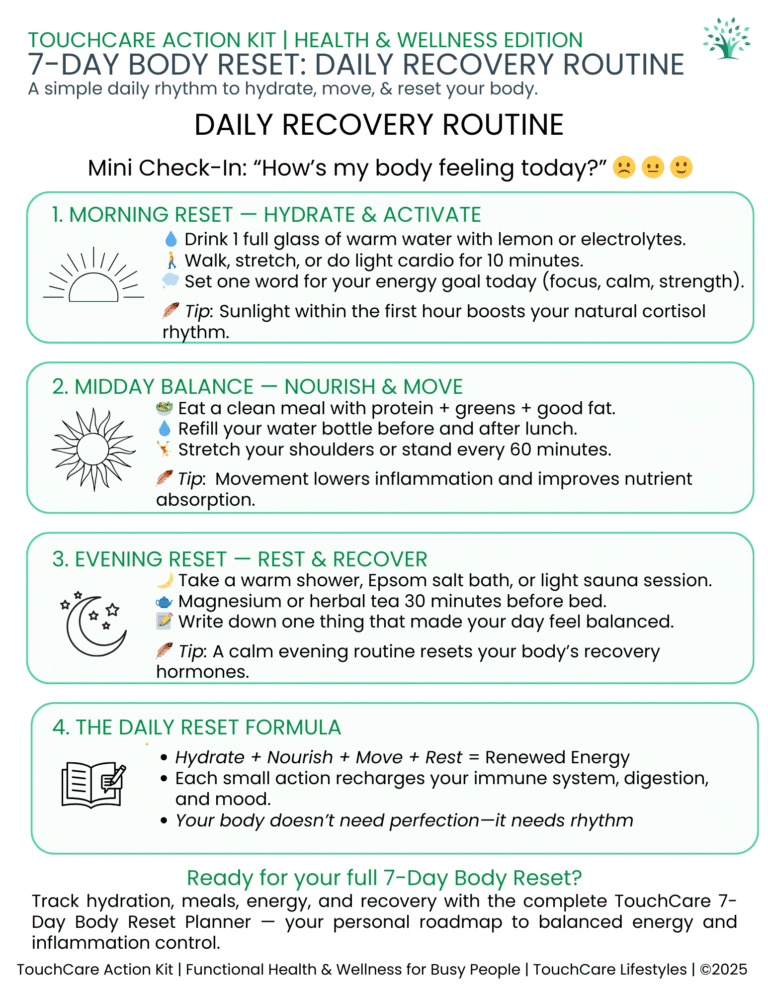
VIII. 7-Day Body Reset + Free 1-Page Sampler
Feeling puffy before summer is rarely about discipline. It reflects rhythm disruption.
The 7-Day Body Reset: Daily Recovery Routine on Etsy was designed for exactly this seasonal pattern. Instead of focusing on calories, it guides you to track:
• Sodium exposure
• Hydration timing
• Stress load
• Sleep consistency
• Digestive rhythm
• Hormonal timing
Patterns become visible when you observe them. Once you see how your body responds, puffiness feels predictable rather than alarming.
This reset is not about perfection. It builds awareness so your body stabilizes naturally before summer begins.
For this post, I included a structured overview of how to implement the Daily Recovery Routine without overwhelming your routine.
📥 Download – Free Sampler of Daily Recovery Routine
If you want the full structured system, the complete 7-Day Body Reset: Daily Recovery Routine PDF walks you step by step through rhythm stabilization.
🛍 Explore the full 7-Day Body Reset: Daily Recovery Routine on Etsy if you’d like the complete system.

IX. Final Thoughts - Puffiness fades. Rhythm remains.
When you feel puffy before summer, your body is not betraying you. It is adjusting.
Water retention communicates stress load. Hormonal shifts communicate timing. Digestive slowdown communicates imbalance. None of these mean failure.
Aggressive dieting amplifies stress. Structure lowers it.
Instead of reacting with restriction, restore rhythm.
Instead of tightening control, stabilize routine.
When you feel puffy before summer, choose rhythm over restriction.
Puffiness fades. Rhythm remains.
With care,
Mijung