

Why Winter Travel Drains Energy Faster
LifeStyle Wellness on the Go by Samuel
I. Introduction: Why Winter Travel Drains Energy Faster
Winter travel looks simple on the calendar. Shorter trips. Fewer plans. A quick flight in and out. But the body often tells a different story. You arrive already tired. Energy dips faster than expected. Even a two- or three-day trip feels heavier than it should. That’s because winter travel drains energy in ways most people don’t recognize until it’s already happening.
I noticed this pattern years ago during winter travel. The trips weren’t long. The schedules weren’t extreme. Yet my energy fell off faster than in summer. Mornings felt sluggish. Afternoons dragged. By the time I returned home, recovery took longer than it should have. At first, I blamed sleep or food. Over time, it became clear that winter travel places a different kind of load on the body.
Cold exposure, dry air, disrupted routines, and nervous system strain don’t just add up in winter. They stack. Even short trips compress those stressors into a tight window, draining energy before the body has a chance to adapt. What feels manageable in warmer months becomes quietly exhausting in winter.
In this article, we’ll break down why winter travel drains energy faster than expected, how short trips can be just as demanding as long ones, and what helps protect energy without forcing productivity or overcorrecting.
📥 BONUS: Download the 2-pages printable infographic at the end of this post!
Stick it to your mirror and carry them. Your full “Travel Wellness Routine: In-Flight & Destination Plan”s
Quick Jump Guide
• Why winter travel drains energy faster than summer travel
• How cold, dry air, and routine disruption quietly exhaust the body
• Why short trips can feel just as draining as long journeys
• The nervous system load most travelers overlook
• What helps preserve energy during winter travel days
This Guide Is for You If…
• You feel unusually tired after short winter trips
• Travel recovery takes longer in colder months
• Energy drops faster during winter flights or drives
• Sleep alone doesn’t restore travel fatigue
• You want to travel smarter without pushing harder
II. Why Winter Travel Drains Energy Even on Short Trips
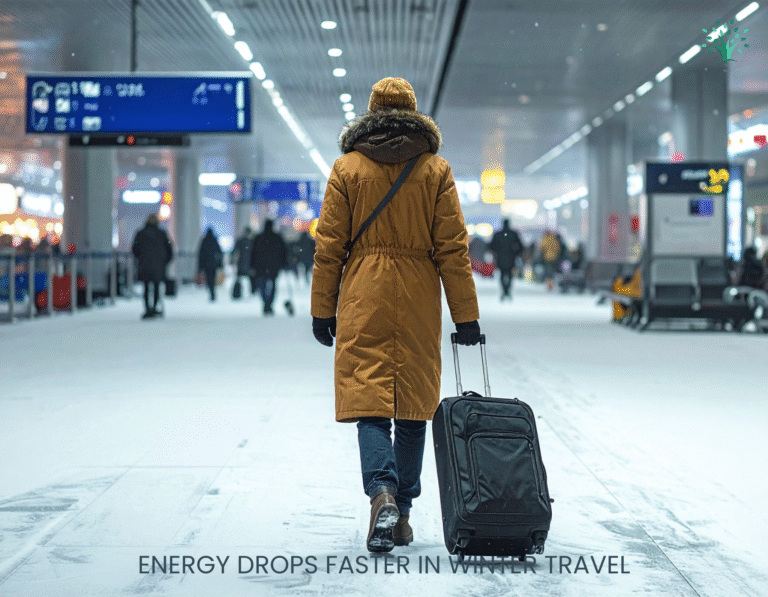
Energy loss during travel isn’t only about distance. In winter, the body has less margin for disruption. Cold weather already asks more of your system before you even leave home. Add travel on top of that, and energy drains faster than expected.
Short trips compress stress. Early mornings, rushing to pack, sitting for long periods, and unfamiliar environments all happen back-to-back. In warmer months, the body adapts quickly. In winter, adaptation is slower because baseline energy is already being used to regulate temperature and maintain balance.
This is why a two-day winter trip can feel more exhausting than a weeklong summer vacation. The body doesn’t have time to recover between stressors. Energy gets spent upfront, not gradually.
When winter travel drains energy, it’s not because you’re doing too much. It’s because everything is happening closer together, with fewer natural recovery cues.
Recommended Reading:
III. How Cold, Dry Air, and Routine Disruption Quietly Exhaust the Body
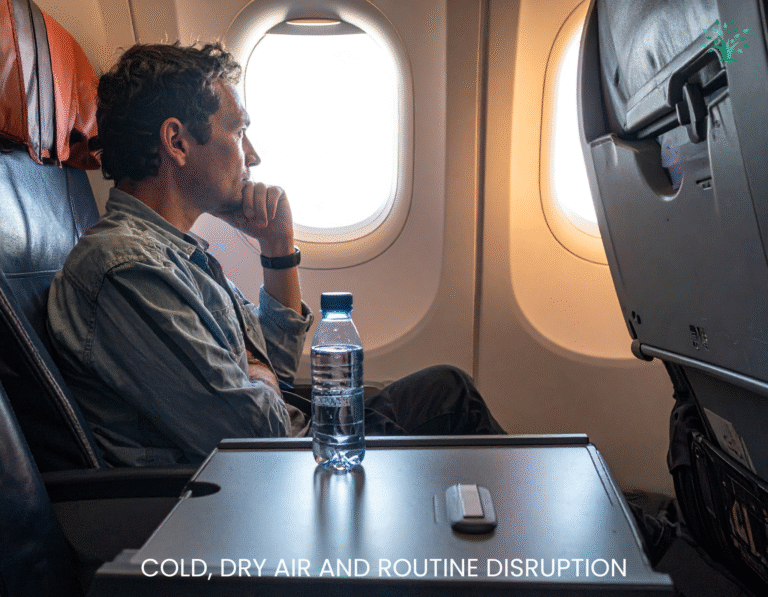
Cold air changes how the body uses energy. Muscles stay slightly tense. Circulation shifts to protect core temperature. Breathing patterns become shallower. All of this increases energy demand without feeling dramatic.
Dry environments add another layer. Airplane cabins, heated hotels, and cold outdoor air increase fluid loss even when you don’t feel thirsty. Dehydration doesn’t always show up as thirst first. It often shows up as fatigue, brain fog, and heaviness.
Routine disruption makes things worse. Meal timing shifts. Movement decreases. Sleep schedules slide. These small changes remove signals that normally help the body regulate energy efficiently.
None of these factors alone are extreme. Together, they quietly exhaust the system. That’s why winter travel drains energy in a way that feels subtle but persistent rather than sudden.
Recommend Reading:
IV. The Nervous System Load That Makes Winter Travel More Draining
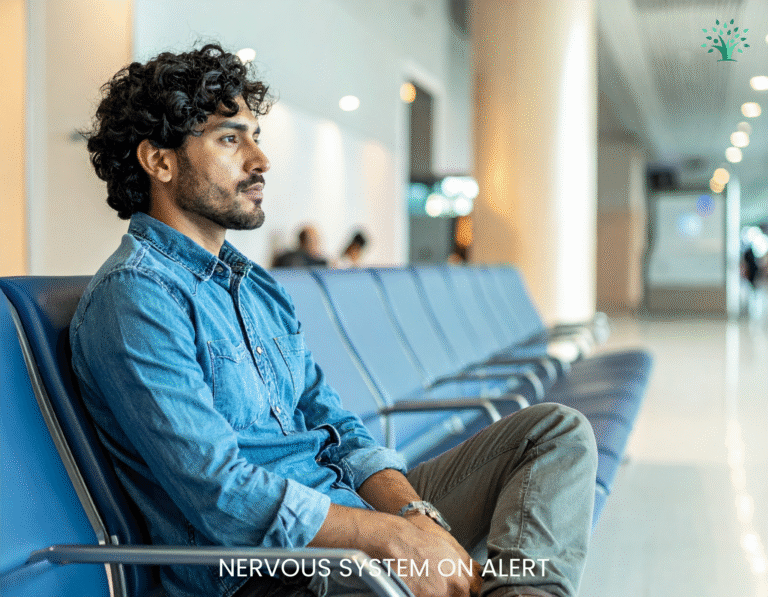
Energy isn’t just physical. It’s regulated by the nervous system. When the nervous system stays alert, energy gets used faster.
Winter travel keeps the nervous system engaged longer than we realize. Cold exposure, crowded spaces, time pressure, and unfamiliar environments signal the body to stay vigilant. Even when nothing goes wrong, the system remains “on.”
This low-grade alertness doesn’t feel like anxiety. It feels like being slightly tense all day. Focus takes more effort. Rest doesn’t fully recharge you. Energy fades earlier than expected.
When winter travel drains energy, it’s often because the nervous system never fully settles. Without clear signals of safety and rhythm, the body keeps spending energy just to stay ready.
V. Why Rest and Sleep Don’t Fully Restore Energy During Winter Travel
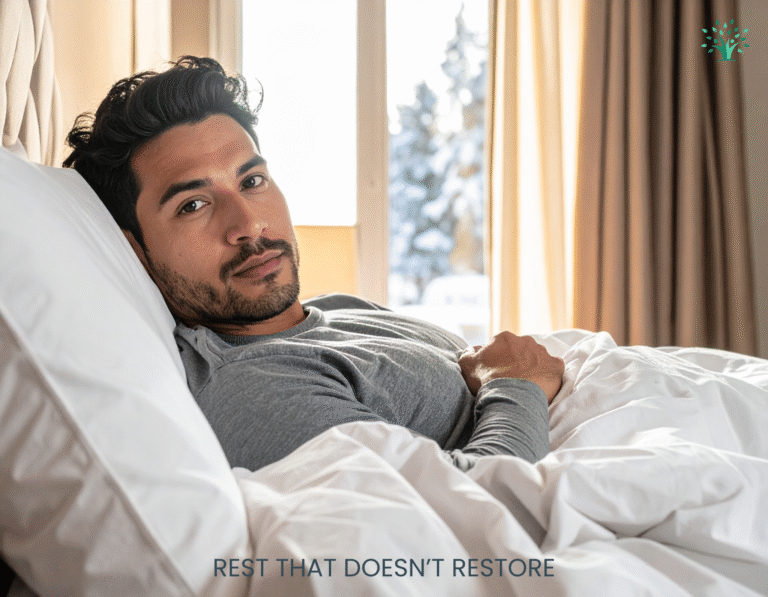
One of the most frustrating parts of winter travel fatigue is realizing that rest alone doesn’t fix it. You may sleep longer, go to bed earlier, or take it easy during the trip, yet energy still feels low.
That’s because energy recovery depends on more than sleep time. In winter, the body uses energy differently. Cold exposure keeps muscles slightly tense. Long periods of sitting reduce circulation. Subtle stress keeps the nervous system alert even when you’re resting.
I noticed this most on short winter trips. Even when I slept reasonably well, my body felt tight and slow to recover. Supporting physical relaxation made a noticeable difference. Magnesium Glycinate – Nature’s Bounty helps muscles release and supports nervous system recovery, allowing rest to actually register as restorative instead of neutral.
Rest works best when the body feels safe enough to let go, not just inactive.
VI. How Dehydration and Digestion Quietly Drain Travel Energy
Winter travel fatigue often starts in the gut, not the muscles. Cold air, dry cabins, and indoor heating increase fluid loss while dulling thirst cues. You may not feel dehydrated, but your body feels it.
When hydration drops, circulation becomes less efficient and digestion slows. Energy gets diverted toward managing discomfort instead of supporting movement and focus. Meals feel heavier. Energy dips after eating.
This showed up repeatedly for me during winter travel. Fatigue often followed meals, not activity. Supporting hydration changed that pattern. Electrolytes Powder – Liquid I.V. helps restore fluid balance more effectively than water alone, reducing one of the most common physical drains on travel energy.
Digestion also matters. When food sits too long or feels uncomfortable, energy gets pulled away from everything else. Organic Ginger Tea helps digestion move more smoothly, reducing that hidden energy drain during travel days.
VII. Stress and Immune Load Pull Energy Faster in Winter Travel
Winter travel places a higher demand on both the nervous system and the immune system. Cold exposure, recycled air, disrupted sleep, and constant transitions keep the body on alert even when nothing feels wrong.
I noticed that when stress accumulated quietly, energy dropped faster. This wasn’t emotional stress. It was environmental. Supporting nervous system balance helped energy feel steadier. Ashwagandha – Horbäach and L-Theanine – Horbäach help reduce stress-driven nervous system activation, making it easier for energy to remain stable instead of spiking and crashing.
Immune demand also plays a role. When the body stays vigilant, energy gets diverted toward defense. During winter travel, this can happen even without obvious illness. Echinacea & Goldenseal – Horbäach supports immune resilience, helping prevent energy from being quietly siphoned away.
When stress response and immune load are supported, energy feels more available for the trip itself.

VIII. Why Protecting Energy Requires a System, Not a Single Fix
Winter travel drains energy because multiple systems are under pressure at the same time. Cold, dehydration, stress, digestion, and immune vigilance don’t operate separately. They compound.
That’s why there’s no single solution. More sleep alone doesn’t work. More caffeine often backfires. Pushing through only deepens the deficit.
Energy recovers when the body receives consistent signals of support: hydration, relaxed muscles, calm nervous system input, steady digestion, and immune balance. When those systems are aligned, energy stops leaking away.
This is about prevention, not rescue.
IX. Products That Support Energy During Winter Travel
These products support energy during winter travel by addressing hydration loss, nervous system fatigue, immune demand, and digestive strain. They are not quick fixes. They work best when used consistently and thoughtfully.
Electrolytes Powder – Liquid I.V. supports hydration in dry airplane cabins and heated indoor spaces, reducing one of the most common physical contributors to winter travel fatigue.
Magnesium Glycinate – Nature’s Bounty supports muscle relaxation and nervous system recovery, helping the body release background tension that drains energy.
Organic Ginger Tea supports digestion and circulation, reducing the energy cost of digestive discomfort during travel.
Ashwagandha – Horbäach supports stress adaptation when winter travel demand accumulates quietly over short periods.
L-Theanine – Horbäach supports calm focus, preventing the wired-but-tired feeling that often accompanies winter travel fatigue.
Echinacea & Goldenseal – Horbäach supports immune resilience so energy isn’t constantly redirected toward defense.
Affiliate Disclaimer:
As an Amazon Associate, I earn from qualifying purchases at no extra cost to you. These are products I personally use and trust.
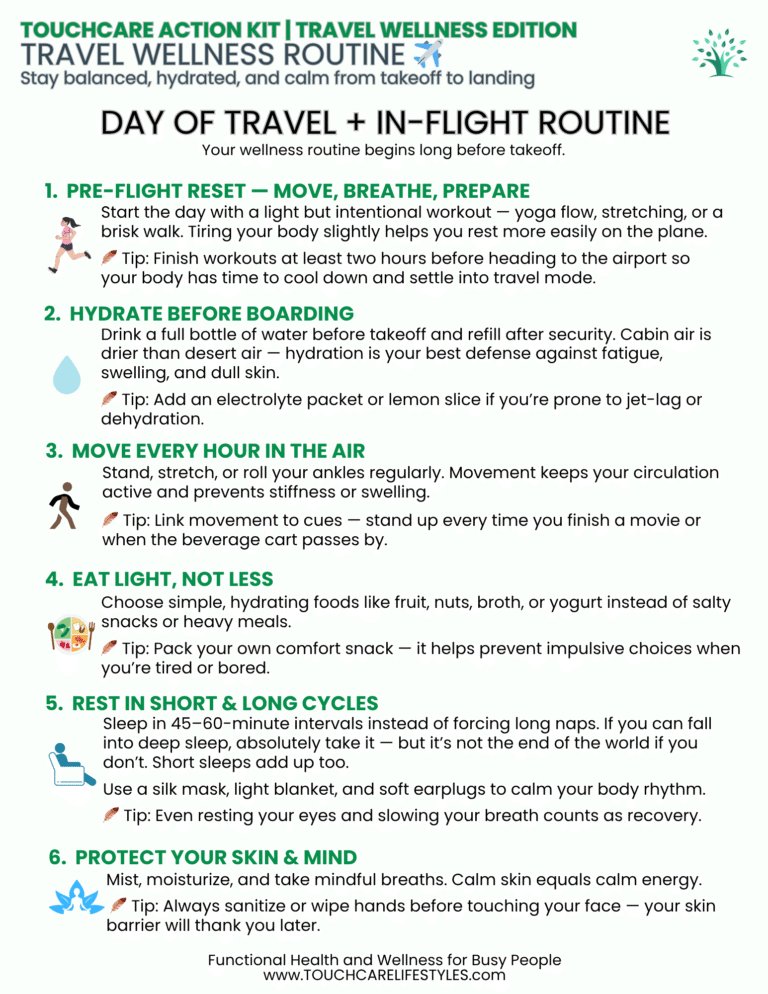
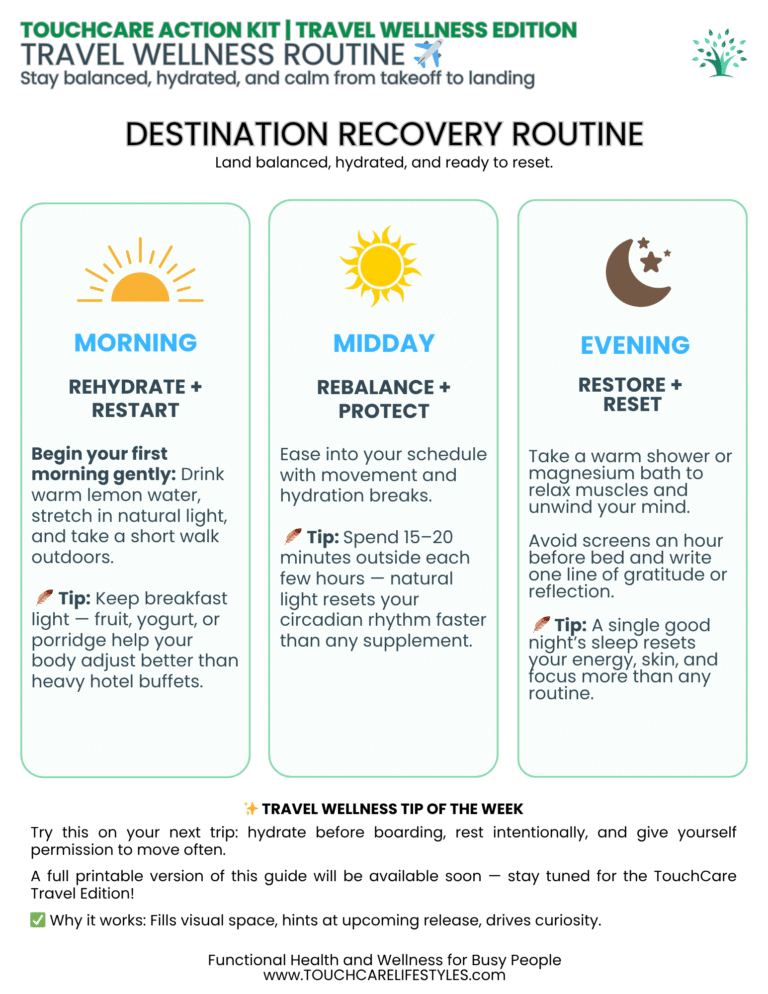
X. Travel Wellness Routine: In-Flight & Destination Plan (FREE PDF)
📥 BONUS: Download Free “Travel Wellness Routine: In-Flight & Destination Plan”
When winter travel drains energy, doing more rarely helps. What works is restoring rhythm before, during, and after travel.
The Travel Wellness Routine: In-Flight & Destination Plan focuses on protecting energy through simple, repeatable actions. Hydration timing. Nervous system settling. Gentle movement. Digestive support. Immune awareness.
It’s designed to reduce energy loss rather than fix burnout after the fact. The goal is to arrive with energy intact, not recover once it’s gone.
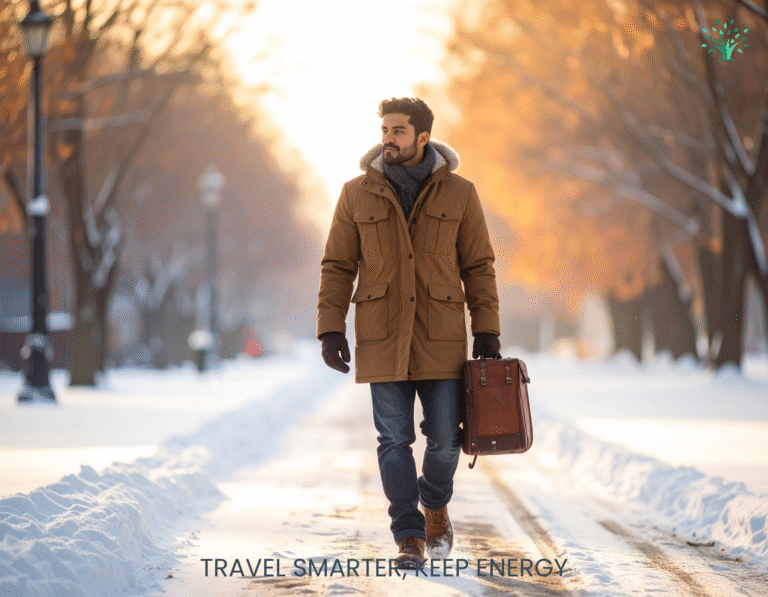
XI. FINAL THOUGHTS — Travel Smarter. Keep Your Energy.
Winter travel doesn’t have to leave you depleted. But it does require a different approach.
When energy drops faster in winter, it’s not a personal failure. It’s a systems issue. Cold, stress, dehydration, digestion, and immune demand are all pulling at once.
Support the system instead of pushing through.
Travel smarter. Keep your energy.
With care,
With care,
Samuel
⭐ Upgrade Your Wellness Routine
If this guide helped you feel more prepared and supported during your travel days, you may appreciate the premium Travel Wellness Planner I created to go with it.
It’s a clean, structured TouchCare Action Kit designed specifically for in-flight wellness and destination recovery — including hydration cues, movement routines, digestion support, energy resets, circulation check-ins, light meal strategies, and simple actions you can follow from takeoff to your first night at your destination.
If you want a printable, guided version of this travel wellness plan, you can find the premium edition on Gumroad.