

Why Travel Disrupts Your Digestion More in Winter
LifeStyle Wellness on the Go by Samuel
I. Introduction: Why Travel Disrupts Your Digestion More in Winter
Travel disrupts your digestion more in winter than most people expect. Even short trips can leave you feeling bloated, backed up, or oddly uncomfortable after meals that normally wouldn’t cause any trouble. You’re eating familiar foods. You’re not traveling far. Yet your gut feels off almost immediately.
I learned this the hard way through years of international travel, especially during winter. Long flights, cold destinations, dry cabins, time changes, and constant movement don’t just add up — they multiply. Digestion slows. Hydration drops faster. Stress stays higher. What feels manageable on a summer trip becomes much harder on the body in winter.
This is one of those winter travel issues people quietly tolerate instead of questioning. We assume digestive problems only happen on long-haul flights or extreme travel. In reality, cold weather changes how your body responds to movement, dehydration, nervous system stress, and routine disruption. The gut is especially sensitive when those systems are already under strain.
In winter, digestion slows more easily. Cold temperatures reduce circulation. Indoor heating dries you out faster. Travel stress hits the nervous system harder. At the same time, immune demand increases, which pulls even more resources away from digestion. Everything is working at once — not in isolation.
That’s why winter travel discomfort isn’t just about food. It’s about systems working as a team. When digestion, hydration, stress response, and immune support aren’t aligned, the gut is usually the first place you feel it.
In this article, we’ll break down why travel disrupts your digestion more in winter — even on short trips — and how understanding this system-wide response helps you travel with less discomfort and more resilience.
📥 BONUS: Download the 2-pages printable infographic at the end of this post!
Stick it to your mirror and carry them. Your full “Travel Wellness Routine: In-Flight & Destination Plan”s
Quick Jump Guide
• Why digestion slows more easily during winter travel
• How cold, dehydration, and stress disrupt gut rhythm
• Why short trips can still trigger bloating and constipation
• The gut–nervous system connection most travelers miss
• What helps digestion stay steadier when traveling in winter
This Guide Is for You If…
• Your digestion feels off when traveling in winter, even briefly
• You experience bloating, constipation, or heaviness on trips
• Cold weather travel affects you more than summer travel
• You notice digestion and immunity feel linked when traveling
• You want to travel more comfortably without extreme fixes
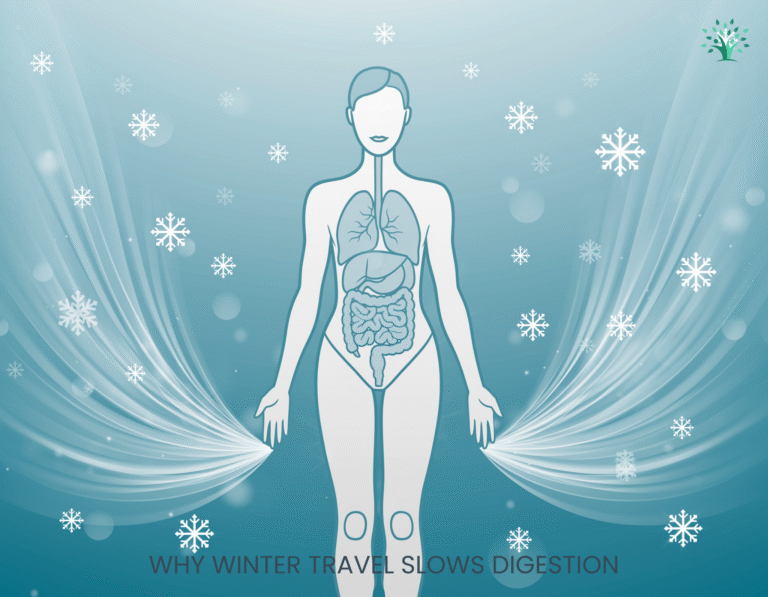
II. Why Winter Travel Slows Digestion When Travel Disrupts Your Digestion
Digestion naturally slows in colder weather. Blood flow shifts away from the digestive tract to help maintain body temperature, which means the gut works less efficiently even before travel begins. When you add movement, schedule changes, and unfamiliar environments, that slowdown becomes more noticeable.
Travel amplifies this effect. Sitting for long periods, reduced physical movement, and altered meal timing all signal the body to conserve energy. In winter, the body is already in conservation mode. This is one of the clearest reasons travel disrupts your digestion more noticeably during colder months.
This is why winter travel digestion feels heavier rather than chaotic. Food sits longer. Transit through the gut slows. You may feel full faster, bloated after small meals, or uncomfortable hours later instead of immediately. Nothing feels dramatic, just off.
The body isn’t malfunctioning. It’s adapting to cold, stress, and movement all at once.
Recommended Reading:
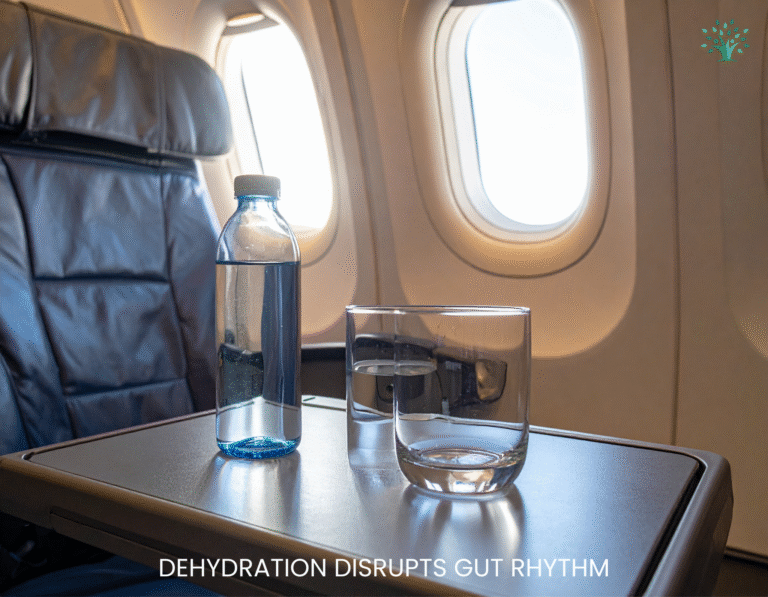
III. How Dehydration and Dry Environments Disrupt Gut Rhythm
Winter travel is quietly dehydrating. Cold air reduces thirst cues. Indoor heating pulls moisture from the body. Airplane cabins compound this dryness further. Many travelers don’t feel thirsty, but their digestion feels the effects quickly.
Water plays a direct role in digestion. It softens stool, supports enzyme activity, and keeps the intestines moving smoothly. When hydration drops, digestion slows and discomfort increases.
This is why winter travel digestion issues often show up as constipation or bloating rather than stomach upset. The gut is dry, not irritated. Food moves, but it doesn’t move well.
Because dehydration doesn’t always feel obvious in winter, people often overlook it as the root cause. Digestion becomes sluggish long before thirst becomes noticeable.
Recommend Reading:

IV. The Nervous System Connection Most Travelers Miss
Digestion depends heavily on the nervous system. When the body feels calm and safe, digestion flows. When the nervous system is alert, digestion slows.
Winter travel keeps the nervous system subtly activated. Cold exposure, crowded airports, schedule pressure, and disrupted sleep all signal the body to stay on guard. Even short trips can keep the nervous system from fully settling.
This matters because the gut and nervous system are deeply linked. Stress doesn’t just affect mood. It changes how digestive muscles contract, how enzymes are released, and how quickly food moves.
In winter, digestion doesn’t fail because of one stressor. It slows because small stressors stack. This is another reason travel disrupts your digestion even when food choices stay the same.

V. Why Winter Travel Hits Digestion Harder Than Summer Travel
Winter travel asks more of the body before digestion even enters the picture. Cold exposure alone increases baseline stress. Add early mornings, security lines, cramped seating, and unfamiliar environments, and the body stays in low-grade alert mode far longer than it would in warmer months.
When this happens, digestion becomes secondary. Blood flow prioritizes warmth and vigilance. Gut muscles contract less rhythmically. Signals between the brain and the digestive tract become less coordinated. Food still moves, but not smoothly.
This is why winter travel digestion feels unpredictable rather than obviously wrong. One meal feels fine. The next sits heavy. Bloating shows up hours later. Regularity disappears without warning.
Your body isn’t failing. It’s reallocating resources to get you through travel in a colder, more demanding environment.

VI. Why Short Trips Can Disrupt Digestion When Travel Disrupts Your Digestion
Many people expect digestive disruption on long-haul trips, but winter changes that equation. Even short trips compress stress into a tighter window.
A single early wake-up. A rushed meal. Sitting for several hours. Sleeping in a dry hotel room. Missing normal movement. In winter, those small disruptions carry more weight.
Because digestion is already slower, the margin for error shrinks. What your body tolerates easily in summer becomes noticeable discomfort in winter. That’s why a two-day trip can leave digestion feeling off for a week.
This is also why eating perfectly doesn’t always help. Digestion during winter travel is less about food choices and more about conditions.

VII. How Supporting Digestion Requires a System, Not a Single Fix
When travel disrupts your digestion, it’s tempting to look for one solution. More fiber. Less dairy. No carbs. Skip meals. None of those address the full picture.
Winter travel digestion improves when hydration, nervous system support, immune demand, and gut function work together.
For example, dehydration alone can slow digestion. Electrolytes Powder – Liquid IV helps restore fluid balance more effectively than water alone, especially in cold, dry environments where thirst cues are unreliable.
At the same time, muscle tension and stress affect gut motility. Magnesium Glycinate – Nature’s Bounty supports smooth muscle relaxation and nervous system calming, which directly affects bowel regularity during travel.
When digestion feels heavy or bloated after meals, Organic Ginger Tea supports gastric movement and helps the stomach empty more comfortably without harsh stimulation.
Changes in routine and meals during winter travel make Probiotics – Physician’s Choice useful for maintaining gut balance and steadier digestion.
Digestion doesn’t respond to pressure. It responds to support.

VIII. Why Immune Load and Digestion Are Linked in Winter Travel
Winter travel places a higher demand on the immune system. Cold exposure, recycled air, disrupted sleep, and close contact all increase immune vigilance. When immune demand rises, digestion often slows.
This is something I noticed repeatedly during international winter travel. When immune support slipped, digestion followed. Everything felt harder.
That’s where Echinacea & Goldenseal – Horbäach plays a role. Supporting immune resilience during winter travel helps free up energy for digestion. When the body isn’t on high alert, the gut functions more smoothly.
Stress also pulls resources away from digestion. Ashwagandha – Horbäach and L-Theanine – Horbäach help reduce stress-driven nervous system activation, making it easier for digestion to stay steady during travel days.
When immune load, stress response, and digestion are aligned, travel becomes far more tolerable.

IX. How to Tell If Winter Travel Digestion Is Improving
Improvement doesn’t usually show up as perfect digestion right away. Instead, the signs are subtle.
You feel less bloated after meals. Bowel movements become more predictable. Your stomach feels lighter instead of tight or heavy. You’re less aware of your gut throughout the day.
Sleep improves. Appetite normalizes. Meals feel satisfying instead of risky.
These are signals that the digestive system is no longer operating in survival mode. That’s when progress compounds.
X. Products That Support Winter Travel Digestion (Used Gently)
These products support digestion during winter travel by addressing hydration, stress, immune demand, and gut function. They work best when used consistently, not reactively.
- Electrolytes Powder – Liquid IV supports hydration in dry cabins and heated indoor spaces.
- Magnesium Glycinate – Nature’s Bounty supports regularity and nervous system relaxation.
- Organic Ginger Tea helps reduce bloating and supports stomach emptying.
- Probiotics – Physician’s Choice support gut balance when routines and meals change.
- Ashwagandha – Horbäach helps buffer stress-related digestive disruption.
- L-Theanine – Horbäach supports calm digestion during travel anxiety.
- Echinacea & Goldenseal – Horbäach supports immune resilience so digestion isn’t deprioritized.
Affiliate Disclaimer:
As an Amazon Associate, I earn from qualifying purchases at no extra cost to you. These are products I personally use and trust.
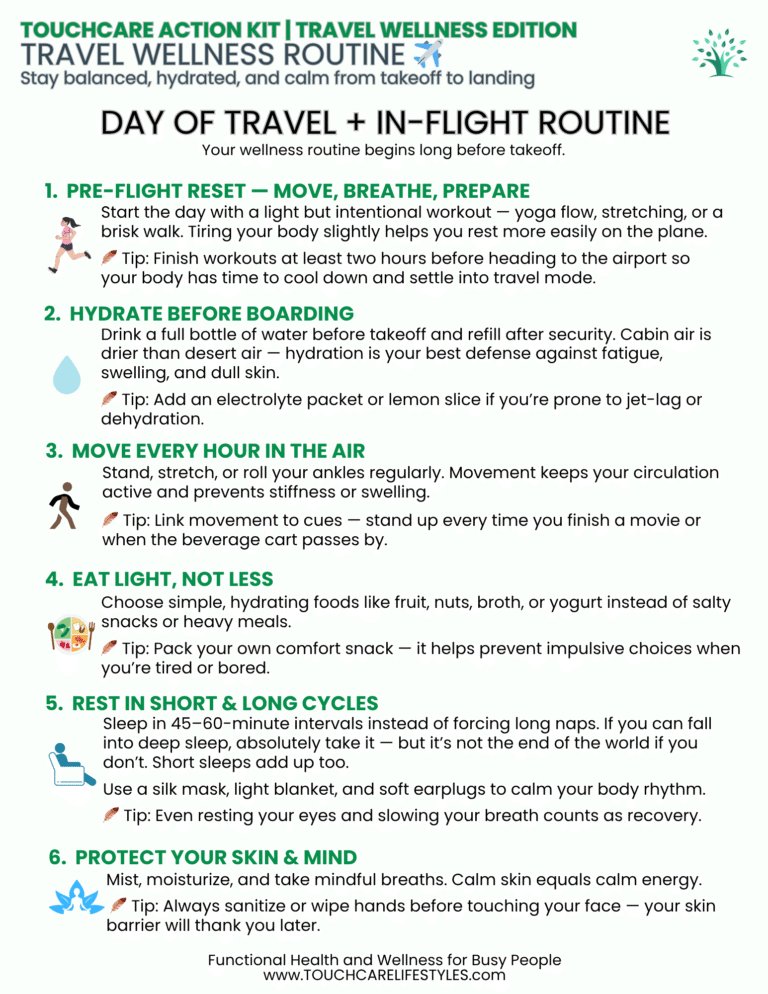
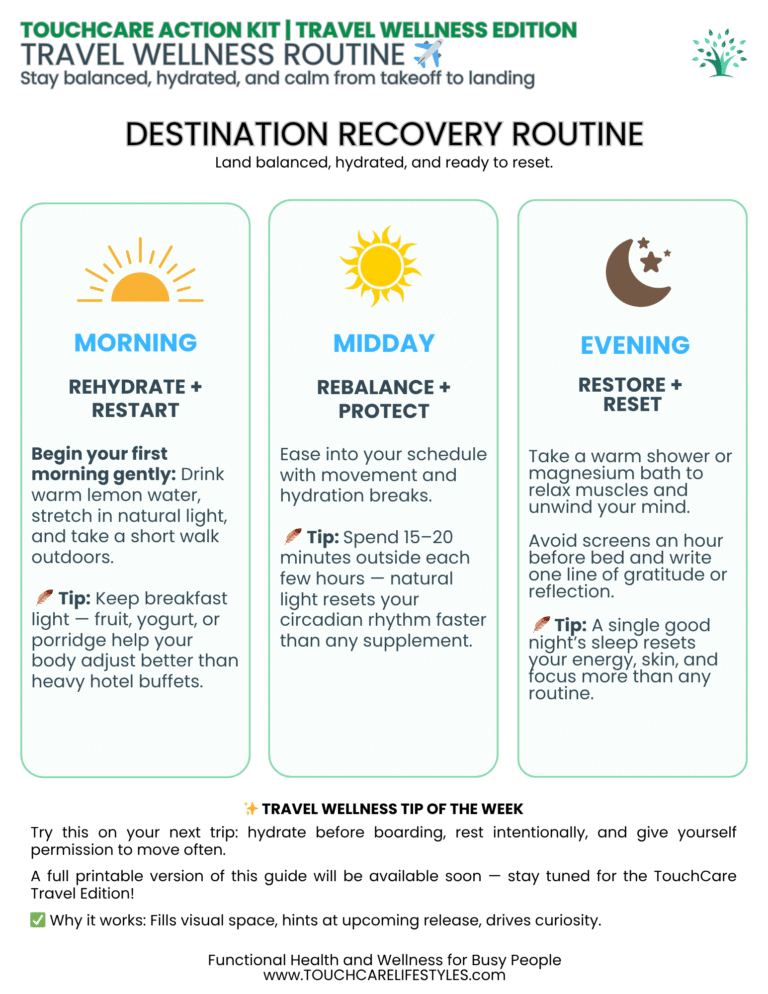
XI. A Gentle Reset for Winter Travel Digestion (FREE PDF)
When winter travel digestion feels unpredictable, complexity makes it worse. That’s why the Travel Wellness – Inflight & Preflight guide focuses on rhythm, not rules. 📥 BONUS: Download Free “Travel Wellness Routine: In-Flight & Destination Plan”
It helps you prepare before travel, support digestion during flights, and reset gently after arrival. No strict protocols. No food policing. Just practical support for hydration, nervous system balance, and digestive timing.
Consistency restores digestion faster than control.

XI. FINAL THOUGHTS — Travel smarter in winter. Let digestion keep up.
Winter travel doesn’t just move your body. It challenges every system that digestion depends on.
When digestion feels off, it’s not because you did something wrong. It’s because cold, stress, dehydration, immune demand, and routine disruption are all pulling in different directions.
When you support the whole system, digestion follows.
You don’t need stricter rules.
You need better support.
Travel smarter in winter. Let digestion keep up.
With care,
Samuel
⭐ Upgrade Your Wellness Routine
If this guide helped you feel more prepared and supported during your travel days, you may appreciate the premium Travel Wellness Planner I created to go with it.
It’s a clean, structured TouchCare Action Kit designed specifically for in-flight wellness and destination recovery — including hydration cues, movement routines, digestion support, energy resets, circulation check-ins, light meal strategies, and simple actions you can follow from takeoff to your first night at your destination.
If you want a printable, guided version of this travel wellness plan, you can find the premium edition on Gumroad.