
Why Small Habits Work Better Than Big Resets in January
Functional Health & Wellness on the Go by Samuel
I. INTROduction to Small Habits Work
Every January, people feel the pressure to start over. New rules. Bigger goals. Hard resets. And yet, deep down, many already sense how this will end. Exhaustion. Frustration. Another plan that doesn’t last. What most people don’t realize is that small habits work, especially in January, when the body and mind are still recovering from stress.
After weeks of late nights, travel, disrupted sleep, richer food, alcohol, and constant stimulation, the nervous system is not ready for intensity. It’s cautious. Protective. Looking for stability. This is why big January resets feel exhausting instead of motivating. They demand more from a system that’s already stretched thin.
January isn’t a discipline problem. It’s a timing problem. When stress is high, the body resists drastic change. Strict routines, all-or-nothing rules, and dramatic overhauls don’t build momentum—they trigger shutdown. That’s why so many resets fail before February even arrives.
Small habits work because they lower resistance instead of raising it. They fit into real life. They calm the nervous system rather than challenge it. And over time, they quietly rebuild consistency, confidence, and energy without the burnout.
This article explains why small habits work better than big resets in January, how stress affects habit formation, and how gentle daily actions create progress that actually lasts.
📥 BONUS: Download Free 1-page printable infographic at the end of this post!
Stick it to your mirror and carry them. Your full “Stress Reset Planner“
Quick Jump Guide
Why big January resets fail after stress
How stress affects habit consistency
Why small habits work better in January
Common mistakes that make habits hard to sustain
How to reset gently without burning out
This Guide Is for You If…
Big January plans never seem to stick
You feel motivated at first, then exhausted
Stress makes routines feel harder than usual
You want progress without pressure or perfection
You’re ready for habits that actually last
II. Why Big January Resets Fail After Stress
Big January resets fail because they assume you’re starting from neutral. Most people aren’t.
By the time January arrives, your body has already spent weeks compensating. Late nights stretch into early mornings. Travel disrupts sleep. Meals happen at odd hours. Alcohol, sugar, and richer food sneak in more often. Even positive social time keeps the nervous system switched on longer than usual. You keep going because you have to.
Then January shows up with the expectation to “clean everything up.”
Suddenly you’re supposed to wake up earlier, eat perfectly, exercise harder, focus longer, and be more productive — all at once. On paper, it sounds motivating. In the body, it feels like pressure. For a system that hasn’t recovered yet, a big reset doesn’t feel like a fresh start. It feels like another demand.
This is why so many January plans collapse quietly. Not dramatically — just slowly. You miss a day. Then two. Then the routine starts to feel heavy. Motivation fades, and guilt replaces it. The reset didn’t fail because you’re inconsistent. It failed because it ignored recovery.
Big resets work best when energy is high. January usually isn’t that season.
Recommend Reading:

III. Why Small Habits Work Better in January
Small habits work because they respect where you actually are, not where you think you should be.
In January, energy is uneven. Some mornings feel okay. Others feel heavy before the day even starts. Small habits don’t require you to feel motivated or “ready.” They fit into imperfect days. They can happen even when focus is low or time feels tight.
Instead of asking for a full lifestyle overhaul, small habits ask one simple question: What can I repeat today without resistance?
That might be drinking water before coffee. Taking a five-minute walk instead of a full workout. Sitting down to eat instead of grabbing food while multitasking. Pausing to breathe before opening your laptop. None of these actions look impressive, but they do something important — they lower stress instead of adding to it.
When the nervous system feels less threatened, it stops pushing back. Over time, consistency builds quietly. Energy stabilizes. Confidence returns. This is why small habits work when big resets stall — they create momentum without requiring force.
Recommend Reading:
IV. How Stress Changes Habit Formation in January
Stress doesn’t just affect mood. It changes how habits are formed in the brain and body.
When stress is high, the brain shifts into protection mode. It looks for certainty and avoids anything that feels risky or demanding. Big resets feel risky because failure feels personal. Miss one workout or break one rule, and the whole plan feels compromised.
That emotional weight is enough to make the brain resist starting at all.
Small habits remove that pressure. They’re easier to complete, which means the brain registers success more often. Each small win reinforces the idea that change is safe and manageable.
This is especially important in January, when stress hasn’t fully cleared yet. Habit formation isn’t about willpower during this phase. It’s about reassurance. When the body feels supported, habits stick naturally. When it feels pressured, it shuts down.
January isn’t the month to prove discipline. It’s the month to rebuild trust with your system.
Recommended Reading:
V. Common January Mistakes That Make Habits Harder to Keep
In January, most habit problems aren’t about what you’re doing — they’re about when you’re doing it.
One common mistake is trying to fix everything at once. You clean up your diet, overhaul your schedule, restart intense workouts, and set ambitious goals all in the same week. Even if each change makes sense on its own, stacking them together overwhelms a system that’s still recovering.
Another issue is tying habits to motivation. In January, motivation is unreliable. Some days you feel ready to start fresh. Other days you feel heavy before the day even begins. When habits depend on feeling motivated, they collapse the moment energy dips.
Perfection is another quiet trap. Missing one day suddenly feels like failure. One skipped habit turns into an excuse to stop entirely. This all-or-nothing thinking makes consistency feel fragile instead of flexible.
Finally, many people underestimate how much stress they’re still carrying. They assume the holidays are over, so their body should cooperate. When it doesn’t, frustration grows. The habit isn’t wrong — the timing is.
January habits fail most often because they’re built on pressure instead of support.
Recommend Reading:
VI. Small Habits That Actually Work in January
Small habits work best in January when they lower stress instead of demanding energy you don’t have.
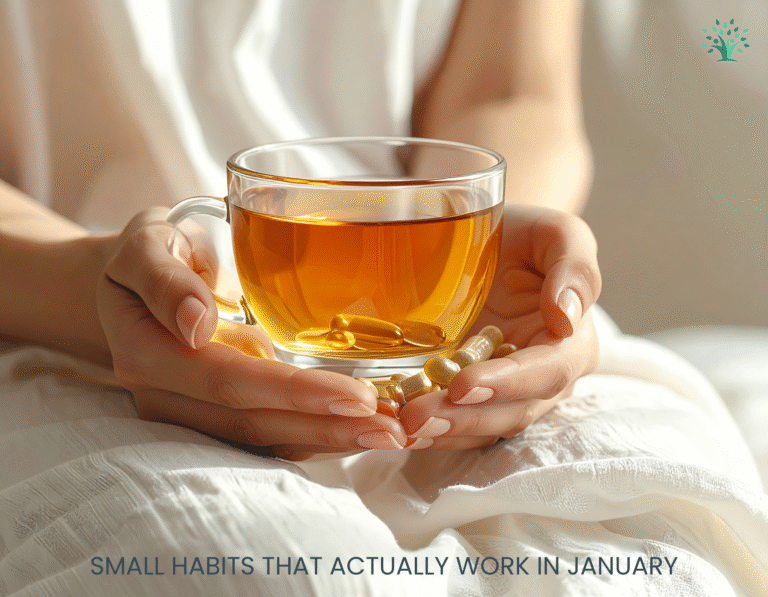
Hydration is often the easiest place to start because it stabilizes the body before you ask it to perform. On days when motivation is low, consistent hydration support like Electrolytes Powder – Liquid IV can make small habits easier to repeat without relying on caffeine or stimulation.
Digestion is another quiet anchor for habit consistency. Something as simple as pausing for Organic Ginger Tea creates warmth, supports digestion, and gives the nervous system a moment to slow down instead of staying reactive.
When stress shows up as tension, restlessness, or shallow sleep, mineral support matters. Magnesium Glycinate – Nature’s Bounty supports relaxation and nervous system balance, making it easier for the body to stay regulated enough to keep routines steady.
Mental noise is another reason habits fall apart in January. When focus feels scattered or overwhelmed, L-Theanine – Horbäach helps calm excess mental stimulation without forcing alertness, which supports consistency rather than intensity.
For periods when stress feels prolonged and the body seems stuck in overdrive, Ashwagandha – Horbäach can offer short-term support for stress response while habits are rebuilt gently.
None of these are meant to replace habits or accelerate results. They exist to reduce friction so small habits feel doable, repeatable, and sustainable during recovery.

VII. Why Consistency Beats Intensity After the Holidays
Intensity feels productive, but consistency is what actually changes behavior.
After the holidays, energy is uneven. Some days feel manageable. Others feel heavy for no obvious reason. Intense plans assume stable energy. Consistent habits adapt to fluctuation.
When you repeat small actions daily, the body begins to trust the process. There’s less internal resistance because nothing feels extreme. Over time, those repetitions stack. Focus improves. Digestion settles. Energy becomes steadier.
This is why five minutes done daily often works better than an hour done once a week. The nervous system learns through repetition, not effort. It responds to what feels safe enough to repeat.
Consistency isn’t about discipline in January. It’s about patience.
VIII. A Simple Reset You Can Start Today (free Resource)
If January feels overwhelming, the best reset usually isn’t doing more — it’s doing less, more consistently.
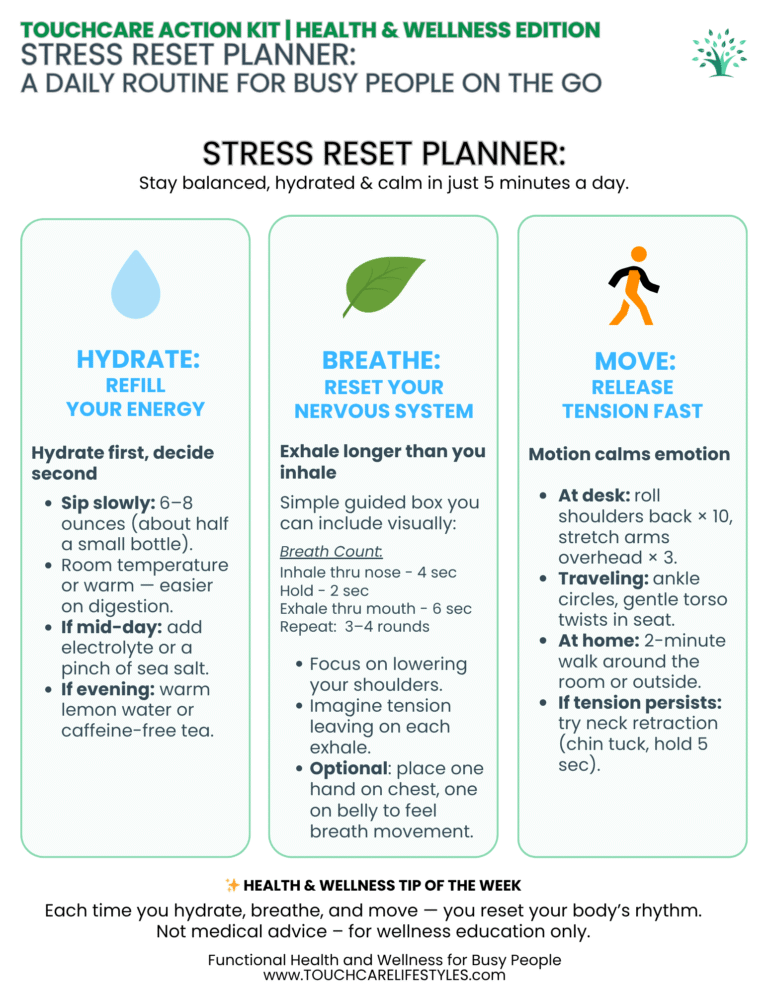
That’s why the 📥 Download Free “Stress Reset Planner” PDF focuses on rhythm instead of rules. It doesn’t ask you to overhaul your life. It helps you choose a few small habits that fit where you are right now and repeat them without pressure.
The planner is designed to reduce decision fatigue. You don’t wake up wondering what to fix today. You simply follow a gentle structure that supports hydration, movement, breathing, and rest.
This kind of reset works because it aligns with how the body actually recovers. When stress lowers, capacity returns naturally. You don’t have to chase motivation — it shows up on its own.
IX. Small Habit Reset Essentials
When my habits felt fragile in January, these were the tools that consistently helped me stay steady. They’re simple, reliable, and easy to integrate without turning self-care into another task.
Magnesium Glycinate – Nature’s Bounty— Supports nervous system regulation and relaxation when stress makes consistency harder.
Electrolytes Powder – Liquid IV — Helps maintain hydration and energy on days when motivation is low and routines feel harder to keep.
Organic Ginger Tea — A grounding, food-first habit that supports digestion and creates a natural pause in the day.
L-Theanine – Horbäach — Supports calm focus when stress makes it hard to concentrate without stimulation.
Ashwagandha – Horbäach — Short-term support for stress response during post-holiday recovery.
Affiliate Disclaimer:
As an Amazon Associate, I earn from qualifying purchases. These are products I personally use and trust to support nervous system balance during periods of stress.
X. Final Thoughts: Small Habits Work. Result Follow
January isn’t the month to prove how disciplined you are. It’s the month to rebuild trust with your body.
When stress is high, big resets feel like pressure. Small habits feel like relief. That difference matters more than motivation, willpower, or goals.
You don’t need a dramatic restart to move forward. You need habits that fit the season you’re in — habits you can repeat without arguing with yourself every day.
Small habits work because they respect recovery.
And when recovery comes first, progress follows.
With care,
Samuel
⭐ Upgrade Your Wellness Routine
If this post helped you slow down, breathe, and reconnect with yourself, you may appreciate the premium Stress & Self-Care Reset Planner I created to go with it.
It’s a clean, structured TouchCare Action Kit that guides you through simple daily resets, grounding routines, micro-self-care habits, stress recovery check-ins, hydration cues, mood tracking, and quick 3–5 minute resets that fit even the busiest days.
If you’d like a printable, guided version of this stress and self-care routine — the same one I use during demanding weeks — you can find the premium edition on Gumroad.
📌 Related posts from Our Blogs: