
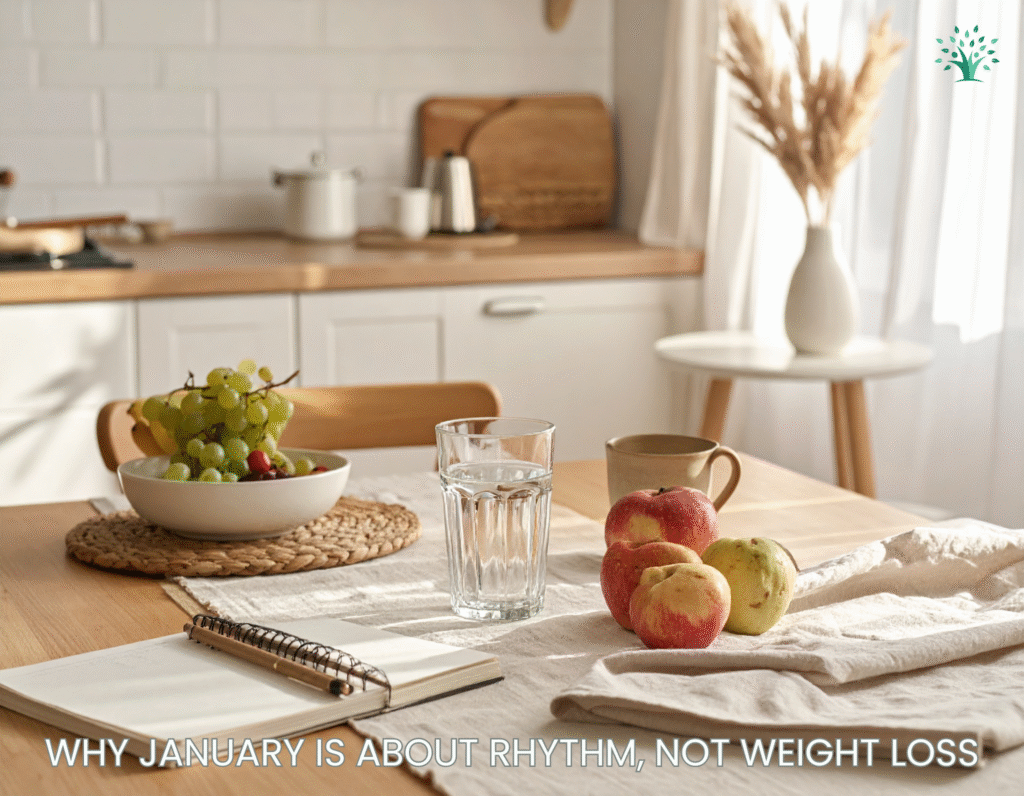
Why January Is About Rhythm, Not Weight Loss
Functional Health & Wellness on the Go by Samuel
I. Introduction to Why January Is About Rhythm, Not Weight Loss
January Is About Rhythm, not weight loss. Even after the holidays end and routines begin to normalize, many people notice that their body still feels off. Hunger feels unpredictable. Energy comes and goes. Sleep may be lighter than expected. Digestion can feel slower or more reactive, even though life is supposed to be back to normal.
For most of us, the holidays don’t just disrupt a few days. Weeks of irregular eating times, late nights, travel, stress, richer foods, and constant stimulation quietly accumulate. By the time January arrives, the calendar has reset, but the body hasn’t fully caught up yet.
That disruption often shows up physically before it becomes obvious mentally. Appetite swings appear without warning. Cravings feel louder at night. Energy dips at odd times of the day. Digestion may feel heavier or less predictable than usual. These are not signs of failure. They are signs that your internal rhythm has been pushed off schedule.
In this article, I’ll explain why January Is About Rhythm and why focusing on weight loss too early often makes January harder, not easier. You’ll learn how disrupted rhythm affects hunger cues, digestion, cravings, and energy, and what actually helps restore balance gently. Instead of forcing control or restriction, we’ll focus on stabilizing daily rhythm so the body can settle and recover naturally.
If you’ve felt like January should feel easier by now but doesn’t, this is where to start.
📥 BONUS: Download Free printable“WEIGHT RHYTHM RESET PLANNER“at the end of this post!
Stick it to your mirror and carry them.
Quick Jump Guide
- Quick Jump Guide
- Why January rhythm breaks after the holidays
- How disrupted rhythm affects hunger and cravings
- Why digestion and energy are often hit first
- Signs your body hasn’t fully reset yet
- Why pushing weight loss too early backfires
- A simple rhythm reset that actually helps
This Guide Is for You If…
- Your appetite feels unpredictable in January
- Energy rises and crashes throughout the day
- Digestion feels slower, heavier, or inconsistent
- Cravings show up late in the day or at night
- You want a gentle reset, not another extreme plan
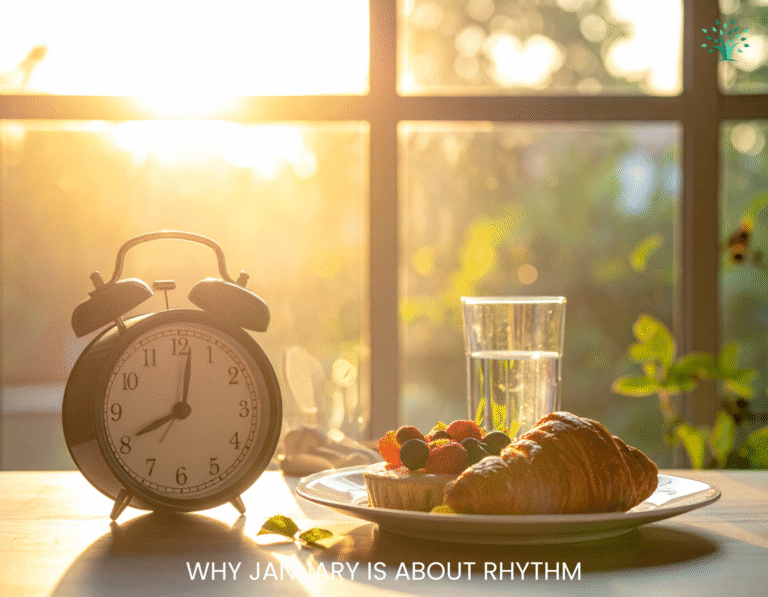
II. How the Holidays Throw Off Your Natural Rhythm
January feels difficult because the body is still recovering from disruption, not because it suddenly needs discipline. During the holidays, timing disappears. Meals shift later. Sleep shortens. Stress stays elevated. When those patterns repeat for weeks, the body adapts by staying alert instead of settling.
Weight gain, bloating, cravings, and fatigue are not the root problem. They are signals that rhythm has been lost. The body regulates hunger, digestion, energy, and even weight through predictable timing. When timing breaks down, those systems stop communicating clearly.
Pushing weight loss too early often increases stress hormones, which can intensify cravings and slow digestion further. Rhythm restores stability first. Once stability returns, the body becomes more responsive and less reactive.
Recommend Reading:

III. Why January Rhythm Breaks After the Holidays
Holiday life disrupts the body in small but powerful ways. Eating happens later or gets skipped. Portions change. Alcohol and sugar become more frequent. Travel and social commitments keep the nervous system activated longer than usual.
Even when January begins, those patterns don’t shut off instantly. The body remains in a semi-alert state, waiting for the next disruption. Appetite becomes inconsistent. Hunger cues weaken or arrive suddenly. Digestion may feel sluggish or sensitive.
Because biological systems adjust slowly, January often feels frustrating. The body needs consistency before it can feel calm again. Rhythm has to be rebuilt, not forced.
Recommend Reading:

IV. How Disrupted Rhythm Affects Hunger, Digestion, and Energy
When rhythm is disrupted, hunger loses its timing. Appetite may be absent in the morning and overwhelming at night. Cravings increase because the body looks for fast energy when signals are unclear.
Digestion also depends on rhythm. Regular meal timing helps digestive enzymes, gut motility, and blood sugar function smoothly. Irregular eating can cause bloating or heaviness even with familiar foods.
Energy follows the same pattern. Without predictable input, energy spikes and crashes become common. Coffee replaces meals. Fatigue builds quietly. Rest feels less restorative. These are signals that rhythm needs attention before anything else.
Recommended Reading:

V. A Simple January Rhythm Reset That Actually Helps
Restoring rhythm does not require extreme change. What matters is consistency in a few anchors the body recognizes quickly.
Starting the day with hydration helps reset hunger cues that were dulled by late nights and skipped meals. Using Electrolytes Powder – Liquid IV in the morning can support hydration and energy without overstimulation.
Eating at similar times each day allows digestion and blood sugar to regain stability. Meals do not need to be perfect, but timing matters. After meals, warm beverages like Organic Ginger Tea can help digestion feel lighter and more comfortable.
Gut rhythm also benefits from consistency. When digestion feels slow or unpredictable, Probiotics – Physician’s Choice can support gut balance while eating patterns normalize.
Movement supports rhythm when it is gentle and repeatable. Short walks after meals help digestion and energy without stressing the system.
Evenings benefit from signals that encourage the body to wind down. Supporting calm with Magnesium Glycinate – Nature’s Bounty can help the nervous system shift toward rest. When sleep feels shallow or disrupted, Tart Cherry – Carlyle can support more restorative nighttime rhythm.
Mental tension often drives late-day cravings. On days when stress feels high, L-Theanine – Horbäach can help calm the nervous system so hunger cues are easier to interpret.

VI. Mini Weight Rhythm Reflection
Daily reflection helps the body-mind connection catch up with physical changes. This step is not about judgment or tracking perfectly. It is about noticing patterns so rhythm can be adjusted gently.
At the end of the day, consider when eating felt easiest and when it felt harder. Notice whether hydration happened early or late. Pay attention to energy changes rather than calories or portions. Choose one small shift for the next day rather than trying to correct everything at once.
Reflection turns rhythm restoration into a process instead of a rule set. The body responds better when it feels supported rather than monitored.
VII. Supplements That Support Rhythm Recovery
These six supplements are used to support hydration, digestion, cravings, stress response, and sleep while rhythm is being restored. They are not weight-loss tools. They are rhythm-support tools.
Electrolytes Powder – Liquid IV helps restore hydration early in the day, which supports hunger signaling and energy.
Magnesium Glycinate – Nature’s Bounty supports nervous system calm and evening relaxation, which improves sleep rhythm.
Organic Ginger Tea supports digestion and helps reduce heaviness after meals.
Probiotics – Physician’s Choice supports gut rhythm, especially when digestion feels slower or inconsistent.
L-Theanine – Horbäach supports calm focus and helps reduce stress-driven cravings later in the day.
Tart Cherry – Carlyle supports evening wind-down and sleep quality, which directly affects appetite and energy the next day.
These are used as support, not as fixes. Rhythm comes first. Supplements simply make the transition smoother.
Affiliate Disclaimer
These are tools I personally use in my own routine. As an Amazon Associate, I earn from qualifying purchases at no extra cost to you.
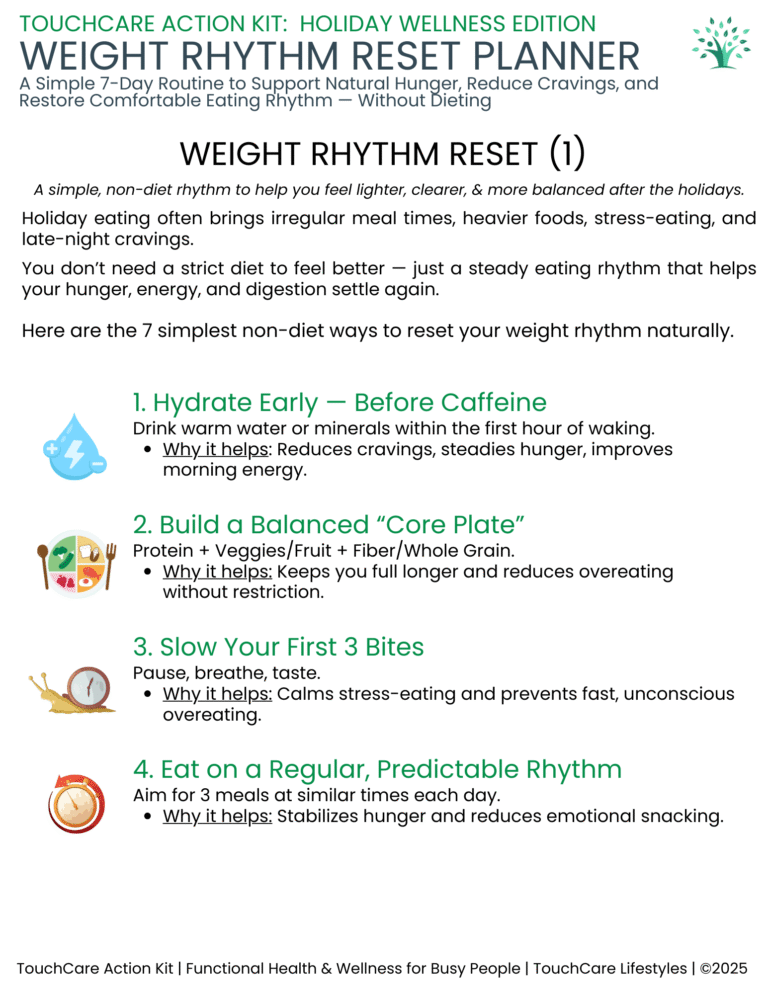
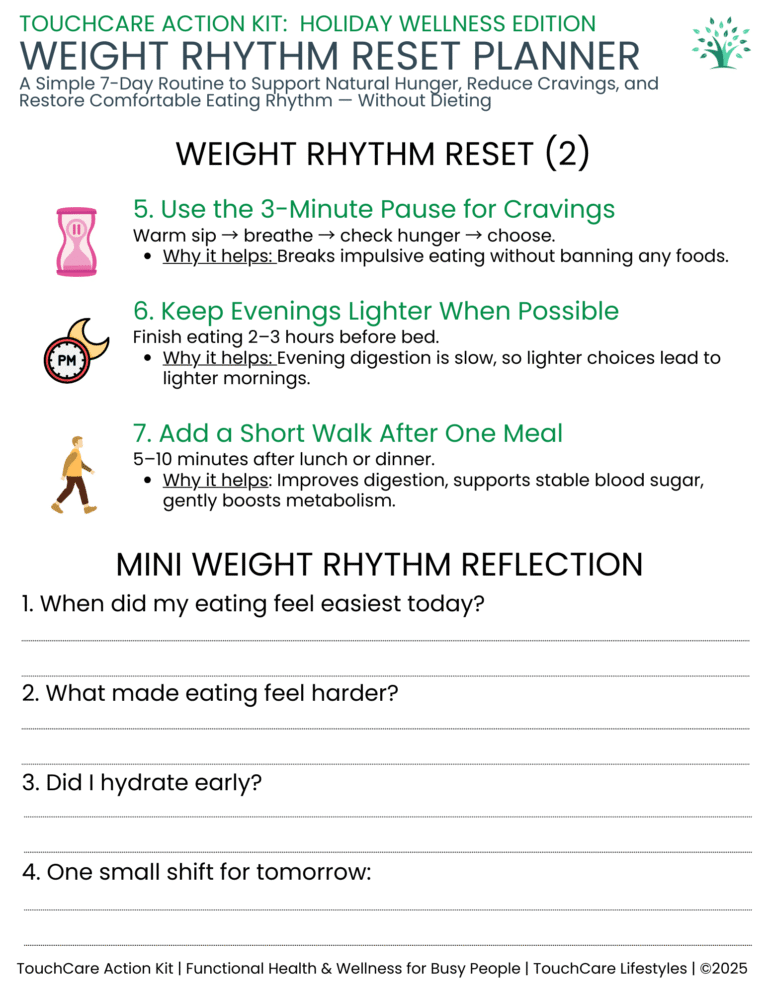
VIII. A Simple Reset You Can Start Today (Free Resource)
When January rhythm feels off in your body, starting small works better than trying to fix everything at once. That’s why I use the Weight Rhythm Reset as a gentle reset point during this time of year.
This free 2-page printable focuses on restoring daily rhythm through hydration timing, simple eating anchors, digestion awareness, and short reflection prompts. It’s designed to support your body without dieting, tracking, or adding pressure.
📥 Download the free Download Free “WEIGHT RHYTHM RESET” PLANNER PDF
A simple, practical starting point when your appetite, energy, and digestion haven’t fully settled yet.
X. Final Thoughts on January Is About Rhythm
January Is About Rhythm, not forcing results. When rhythm is restored first, the body feels safer. Hunger becomes clearer. Digestion settles. Energy evens out. Weight changes, if they happen, follow naturally instead of being chased.
This approach removes pressure from January and replaces it with consistency. Progress becomes quieter, steadier, and far more sustainable.
January Is About Rhythm. Restore rhythm first, and everything else has a place to land.
January Is About Rhythm — Not Restriction.
With care,
Samuel
⭐ Upgrade Your Wellness Routine
If this post helped you understand how daily rhythm affects appetite, digestion, energy, and cravings, you may appreciate the Weight Rhythm Reset Planner designed to support this approach more deeply.
It’s a structured TouchCare Action Kit that builds on what you learned here, including daily rhythm anchors, hydration timing, meal rhythm guidance, digestion support prompts, appetite reflection pages, and simple check-ins to help your body settle back into a steady, predictable pattern without dieting or restriction.
If you’d like a printable, guided version of this full rhythm-based reset, you can find the Weight Rhythm Reset Planner in its premium edition on ETSY.