

Why Cortisol Stays High in Winter
Functional Health & Wellness on the Go by Samuel
I. INTROduction on Why Cortisol Stays High in Winter
Winter is supposed to be easier. Fewer obligations. Quieter days. A slower pace. But if you’re being honest, your body doesn’t feel calm at all. You wake up tired but wired. Small stressors hit harder than they should. Even on “easy” days, you feel tense underneath it all. That’s because cortisol stays high in winter for many people, even when life looks calmer on the outside.
This kind of stress is frustrating because it doesn’t feel justified. Nothing dramatic is happening, yet your nervous system never fully relaxes. Sleep doesn’t restore you. Focus slips. Energy feels flat. You may even catch yourself thinking, Why am I still stressed when nothing is wrong?
I’ve lived this cycle through multiple winters. On paper, life slowed down. In reality, my body stayed on edge. Mornings felt rushed internally even when they weren’t. Rest didn’t land. Digestion, sleep, and energy all felt slightly off, like my system was bracing for something that never came.
Winter stress doesn’t shout. It whispers. Shorter daylight, colder temperatures, less movement, and subtle routine shifts quietly keep the nervous system activated. Over time, that background pressure adds up.
In this article, we’ll break down why cortisol stays high in winter, what’s actually driving that response beneath the surface, and how understanding it helps you reset stress without forcing productivity or piling on more habits.
📥 BONUS: Download Free 1-page printable infographic at the end of this post!
Stick it to your mirror and carry them. Your full “Stress Reset Planner“
Quick Jump Guide
• Why cortisol rises quietly in winter even when life slows down
• How light, temperature, and routine shifts keep stress hormones elevated
• The nervous system patterns that block true rest and recovery
• Why pushing harder makes winter stress worse
• What actually helps cortisol settle without adding more rules
This Guide Is for You If…
• You feel tired but wired most days in winter
• Life feels calmer, yet your body won’t relax
• Sleep doesn’t restore your energy the way it should
• Small stressors feel bigger than usual
• You want to reset stress gently, not force productivity
II. Why Cortisol Stays High in Winter Even Without Obvious Stress
Cortisol is often called the “stress hormone,” but that label is misleading. Cortisol doesn’t rise only when life feels hard. It rises whenever the body senses demand. In winter, demand increases quietly, even when your schedule looks lighter.
Shorter days mean less natural light reaching your eyes, which disrupts the signals that normally tell your body when to feel alert and when to relax. Cold temperatures add another layer of effort. Your body has to work harder just to stay warm, balanced, and functional. Movement usually drops too, even if you don’t notice it happening.
None of this feels like stress in the traditional sense. There’s no crisis. No urgency. But your body still has more to manage. That’s why cortisol stays elevated in the background, supporting energy, focus, and temperature regulation all at once.
When cortisol stays high this way, people often describe feeling “off” rather than stressed. You may feel slightly tense, less resilient, or harder to recharge. Rest helps, but it doesn’t fully land. The body isn’t broken. It’s adapting to a season that quietly asks more of it.
Recommend Reading:
III. How Light, Cold, and Routine Changes Keep Cortisol Elevated
Light is one of the strongest regulators of cortisol. In healthy rhythm, cortisol rises in the morning to help you wake up, then gradually falls throughout the day. Winter compresses that rhythm.
Dark mornings delay the natural cortisol rise. Early sunsets blur the signal that it’s time to wind down. Artificial lighting fills the gap, but it doesn’t provide the same clarity to the nervous system. As a result, cortisol timing becomes less precise.
Cold exposure reinforces this effect. Cold tells the body to stay alert. Muscles tense slightly. Breathing becomes shallower. The nervous system stays engaged longer, even during everyday activities. Over time, this makes it harder for cortisol levels to drop fully.
Routine changes add to the problem. Later wake times, irregular meals, less outdoor movement, and more indoor sitting all remove cues that normally help the body settle. Without those signals, cortisol remains elevated because the system never receives a clear “stand down” message.
Recommended Reading:

IV. The Nervous System Pattern That Keeps Cortisol Elevated All Season
Cortisol follows the nervous system. When the nervous system stays alert, cortisol stays elevated to support it. In winter, the nervous system rarely gets a full reset.
Indoor environments dominate daily life. Sensory input becomes repetitive. Movement decreases. Social interaction often shifts. The body stays mildly vigilant without a clear release point. This isn’t fight-or-flight stress. It’s low-grade readiness.
Over time, this creates a pattern where the nervous system expects demand even during rest. Cortisol supports that expectation. Because nothing dramatic happens, the system never fully discharges. Weeks pass, and the body stays in a subtly activated state.
This is why winter stress often shows up as shallow sleep, restless focus, slower recovery, or feeling tired but wired. The body isn’t signaling danger. It’s signaling that it hasn’t been given enough clear cues to truly relax.

V. Why Rest and “Doing Less” Don’t Automatically Lower Cortisol
One of the most confusing parts of winter stress is realizing that slowing down doesn’t always make you feel better. You may be sleeping longer, working less, and canceling plans, yet your body still feels tense underneath it all.
That’s because cortisol doesn’t respond to rest alone. It responds to signals of safety and stability. If your nervous system doesn’t clearly recognize when it’s allowed to relax, cortisol stays elevated even during downtime.
This is why magnesium can matter in winter. Magnesium Glycinate – Nature’s Bounty supports muscle relaxation and nervous system signaling, helping the body recognize when it’s safe to let go. When the body physically relaxes, cortisol doesn’t have to stay elevated to keep you alert.
Rest works best when the body feels supported, not just inactive.

VI. How Elevated Cortisol Quietly Drains Energy, Focus, and Digestion
When cortisol stays elevated for weeks, the effects rarely show up all at once. Energy feels flatter instead of depleted. Focus comes and goes. Motivation feels fragile.
Digestion often slows because cortisol shifts resources away from rest-and-digest functions. Meals may feel heavier. Appetite becomes inconsistent. Bloating shows up without obvious food triggers.
Hydration plays a role here. Winter dryness and indoor heating quietly increase stress load. Electrolytes Powder – Liquid I.V. supports fluid balance more effectively than water alone, helping reduce one of the background stressors that keeps cortisol elevated during colder months.
These changes don’t mean something is wrong. They mean your body is staying in readiness mode longer than it should.
Recommended Reading:
VII. Why Cortisol Needs System Support, Not a Single Fix
Cortisol is rarely elevated for one reason. In winter, multiple systems are involved at the same time: nervous system tension, immune demand, hydration loss, and disrupted rhythm.
Stress-support products work best when they help the nervous system settle without forcing sedation. L-Theanine – Horbäach supports calm focus by reducing nervous system overactivation, making it easier for cortisol levels to drift down naturally rather than crash.
Immune load also matters. When the body feels vulnerable, cortisol rises to maintain alertness. Echinacea & Goldenseal – Horbäach supports immune resilience during winter, reducing the background vigilance that keeps stress hormones elevated.
The goal isn’t to suppress cortisol. It’s to reduce the reasons the body feels it needs to stay high.

VIII. When Emotional Stress Isn’t the Driver, Adaptogens Can Help
Not all winter stress feels emotional. Sometimes life truly is calmer, yet the body stays tense. This is where adaptogens can be helpful.
Ashwagandha – Horbäach supports stress regulation by helping the body adapt to ongoing demand rather than reacting to it. It doesn’t force relaxation. It supports balance, especially when cortisol feels chronically elevated without a clear cause.
This kind of support works best when paired with consistent daily rhythm. Adaptogens aren’t meant to override stress. They’re meant to help the body respond more flexibly.
IX. Products That Support Cortisol Gently in Winter
When cortisol stays elevated through winter, the goal isn’t to shut stress down. It’s to reduce the reasons your body feels it must stay alert. The products below support that process by addressing physical tension, nervous system load, hydration stress, and immune demand.
Magnesium Glycinate – Nature’s Bounty supports relaxation at the physical level. In winter, muscles often stay subtly tense from cold exposure and reduced movement. That tension feeds the nervous system a constant “on” signal. Magnesium helps muscles release and supports the nervous system’s ability to shift into a calmer state, especially in the evening.
L-Theanine – Horbäach supports calm mental focus rather than sedation. This matters in winter, when stress often shows up as racing thoughts or low-grade alertness instead of anxiety. By softening that mental edge, the nervous system no longer needs cortisol to maintain focus.
Ashwagandha – Horbäach supports long-term stress adaptation. Winter stress isn’t usually acute. It’s repetitive and environmental. Ashwagandha helps the body respond more flexibly to ongoing demand rather than staying locked in a defensive posture.
Electrolytes Powder – Liquid I.V. addresses a commonly overlooked stressor: dehydration. Cold air, indoor heating, and reduced thirst cues quietly strain the body. When hydration drops, cortisol often rises to compensate. Electrolytes help restore balance more effectively than water alone.
Echinacea & Goldenseal – Horbäach supports immune resilience. In winter, immune vigilance stays higher even when you’re not sick. That constant readiness pulls resources and keeps cortisol elevated. Supporting immune balance helps free energy for recovery instead of defense.
These products don’t replace rhythm. They support it.
As an Amazon Associate, I earn from qualifying purchases. These are the same products I personally rely on and recommend because they consistently work.
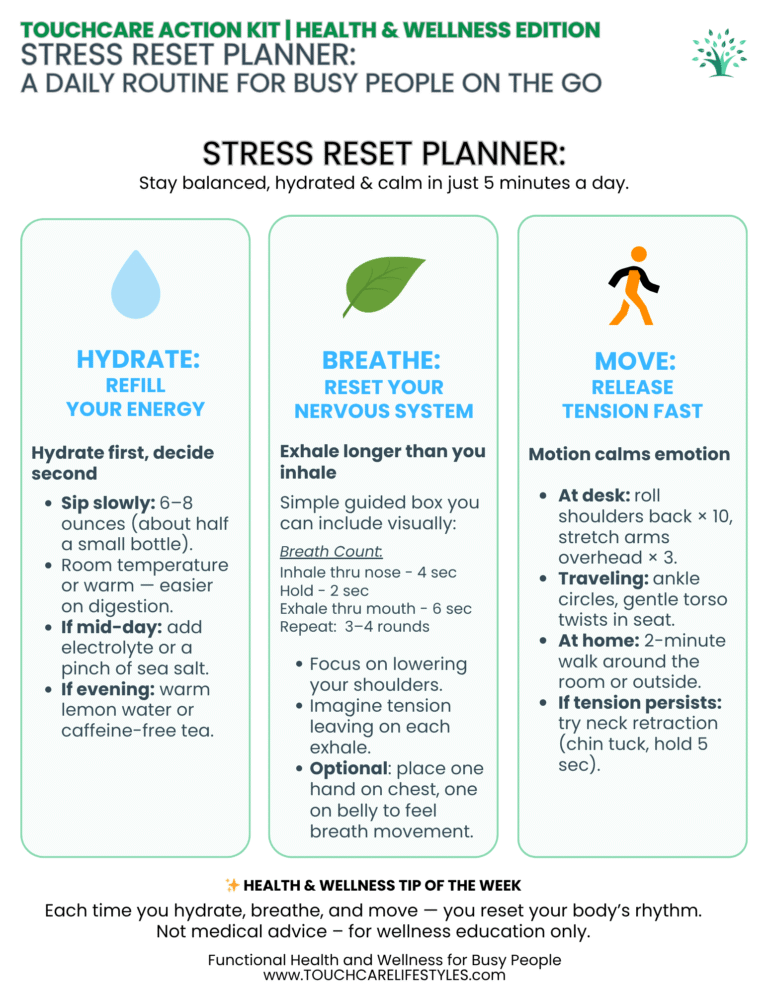
X. A Gentle Winter Reset When Cortisol Feels Stuck (FREE PDF)
When cortisol stays elevated, doing more usually backfires. What helps is restoring predictable signals that tell the nervous system it’s safe to downshift.
The Stress & Self-Care Reset Planner was designed around that idea. Instead of asking for discipline or motivation, it focuses on timing, repetition, and simplicity. Morning light exposure. Hydration cues. Gentle movement. Nervous system settling at night.
This matters because cortisol doesn’t respond to intention. It responds to consistency. When the body experiences the same calming signals day after day, cortisol no longer needs to stay high to keep you functional.
The reset isn’t dramatic. That’s the point. Small signals repeated over time restore trust between the nervous system and the environment.
📥 BONUS: Download Free “Stress Reset Planner” PDF
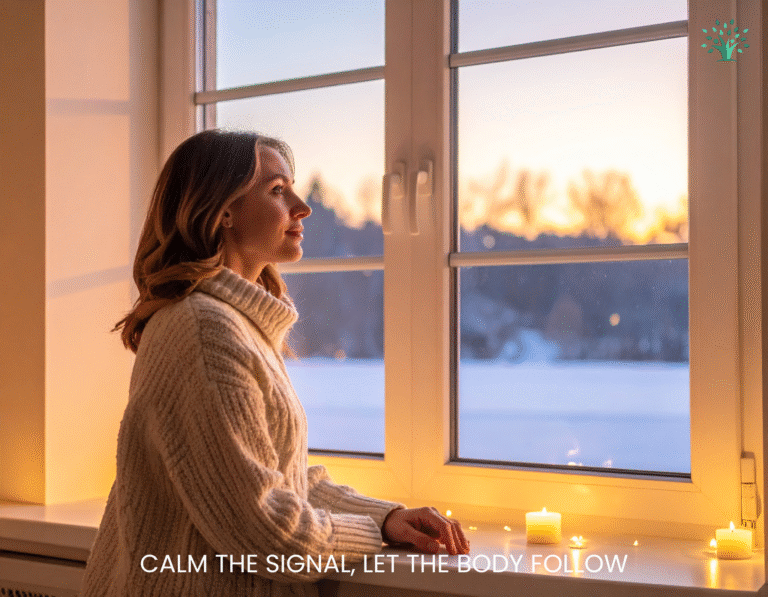
XI. Final Thoughts — Calm the Signal, Let the Body Follow
Winter stress isn’t always emotional. Often, it’s environmental. Short days, cold temperatures, disrupted rhythm, and quiet pressure add up without announcing themselves.
If cortisol stays elevated, it doesn’t mean you failed to relax. It means your body hasn’t received enough clear signals that it’s safe to let go.
Support the system instead of fighting it.
Restore rhythm instead of forcing rest.
Calm the signal. Let the body follow.
With care,
Samuel
⭐ Upgrade Your Wellness Routine
If this post helped you slow down, breathe, and reconnect with yourself, you may appreciate the premium Stress & Self-Care Reset Planner I created to go with it.
It’s a clean, structured TouchCare Action Kit that guides you through simple daily resets, grounding routines, micro-self-care habits, stress recovery check-ins, hydration cues, mood tracking, and quick 3–5 minute resets that fit even the busiest days.
If you’d like a printable, guided version of this stress and self-care routine — the same one I use during demanding weeks — you can find the premium edition on Gumroad.
📌 Related posts from Our Blogs: