
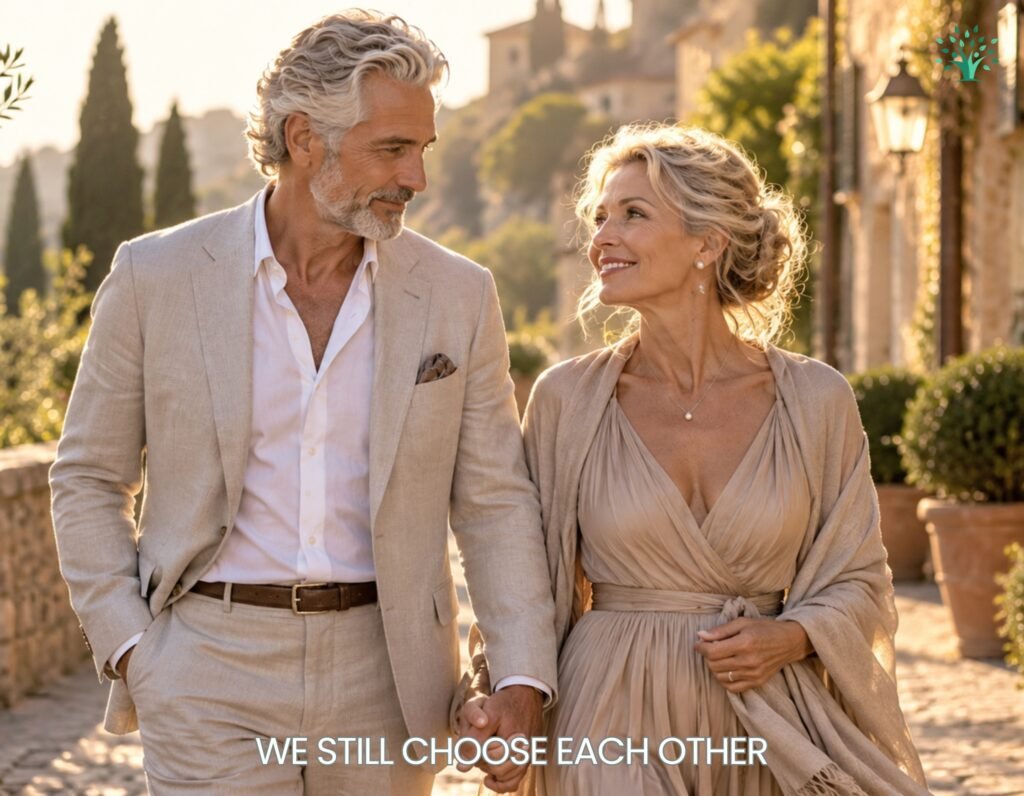
We Still Choose Each Other | Forever Together
Look Good. Travel Far. Live Well ◆ Love Well by Samuel
I. Introduction: We Still Choose Each Other
We choose each other differently today than we did when we were young.
Back then, choosing each other felt exciting. There were dates to look forward to, places to discover, plans to make, and an entire life together that hadn’t happened yet. We were building something without really knowing what that something would eventually become.
Decades later, the choice feels different.
We’ve seen each other tired, worried, disappointed, stubborn, successful, afraid, and completely ridiculous. We’ve watched our bodies change and our priorities shift. There have been wonderful years and difficult ones, along with thousands of perfectly ordinary days that we barely remember.
Somewhere inside all of that, love became less about the big moments and more about continuing to turn toward the same person.
It might be making coffee before the other person asks. Sitting together after a long day. Giving each other space when it’s needed. Planning another trip. Laughing at the same old story. Reaching for a familiar hand without thinking about it.
A long relationship isn’t one decision made years ago.
It’s choosing again and again as life changes around us—and discovering that after everything we’ve been through, we still want to be here together.
Quick Guide
- How love changes as we change
- Why ordinary days matter so much in a long relationship
- What it means to choose each other during difficult seasons
- Why giving each other room to grow can strengthen a relationship
- How friendship becomes one of the most important parts of lasting love
- Why couples still need things to look forward to together
- The small choices that keep two people connected over the years
- Our Forever Together Journal for preserving the life and memories we’ve built together
This Guide Is For…
This is for couples who have already lived enough life together to know that lasting love doesn’t look like a movie.
There have probably been years when everything felt easy and others when it didn’t. You’ve changed. Your partner has changed. The life you imagined when you first met may look very different from the life you’re living now.
And yet, you’re still here.
Not because every day is romantic or because you’ve somehow figured out the secret to a perfect relationship. You’re here because through all those changes, there are still reasons to reach for each other.
That’s what Forever Together means to us.
Not never changing.
Changing—and still choosing each other.

II. Love Changes Because We Change
The two people who fall in love aren’t the same two people who will be sitting across from each other thirty years later.
Life makes sure of that.
Careers change us. Raising children changes us. So do success, disappointment, loss, responsibility, illness, travel, and simply getting older. Priorities that once seemed incredibly important can quietly disappear, while things we barely thought about when we were younger begin to matter much more.
Sometimes the changes are easy to recognize. Someone who once wanted a busy social life may begin craving quieter evenings at home. A person completely focused on career may eventually care more about time, family, health, or seeing the world. Other changes happen so gradually that we don’t notice them until we look back and realize how different both of us have become.
That can be one of the harder parts of a long relationship.
It’s tempting to hold someone to the version of themselves we first fell in love with. We remember how adventurous they were, how affectionate they were, or how much energy they seemed to have. But expecting another person to remain unchanged for decades isn’t really love. It’s nostalgia.
The better question may be: Who is this person becoming now?
That requires curiosity. It means continuing to ask what matters to each other instead of assuming we already know. It means making room for new interests, changing priorities, different dreams, and even opinions we don’t always share.
There may also be periods when one person changes faster than the other. For a while, it can feel as though we’re moving at different speeds. Those seasons require patience and sometimes uncomfortable conversations.
Perhaps that’s part of what makes lasting love so remarkable. We don’t simply fall in love with someone once and spend the rest of our lives preserving that exact relationship.
We keep meeting new versions of each other.
And when we’re fortunate, we find new reasons to love them too.

III. We Choose Each Other in the Ordinary Days
Anniversaries are wonderful. So are romantic dinners, beautiful vacations, flowers, and celebrations.
But most of a life together happens somewhere in between.
It’s morning coffee and deciding what to have for dinner. Running errands. Asking how an appointment went. Picking up something because you remembered the other person likes it. Knowing when they need advice and when they simply need someone to listen.
These moments rarely feel important while they’re happening. Nobody takes a photograph because their partner warmed up the car, saved them the last piece of something they love, or remembered exactly how they take their coffee.
Yet these small acts quietly say something: I still notice you.
This is where we often choose each other without realizing we’re doing it. A kiss before leaving the house. Sitting together instead of disappearing into separate screens. Laughing about something nobody else would understand. Reaching for a familiar hand without thinking.
Familiarity is one of the great comforts of a long relationship, but it can also make it easy to stop noticing what we have.
The extraordinary memories are the ones we photograph.
The ordinary days are where we build the relationship that makes those memories matter.
Recommended Reading:

IV. Choosing Each Other When Life Gets Hard
Every long relationship eventually encounters seasons neither person would have chosen.
There may be financial pressure, health concerns, family responsibilities, grief, caregiving, career problems, or simply periods when too many things seem to go wrong at once. Stress can make us impatient, fear can make us quiet, and exhaustion can bring out versions of ourselves that aren’t particularly easy to love.
This is also when the idea of everything being 50/50 starts to fall apart.
Sometimes one person carries more because the other simply can’t. Years later, those roles may reverse. Long-term partnership isn’t about keeping a perfect ledger. It’s about trusting that we’re still on the same side.
Choosing each other can mean taking over without being asked, listening when we’d rather defend ourselves, apologizing when pride gets in the way, or simply staying close when there isn’t anything useful to say.
It doesn’t mean ignoring serious problems or accepting hurtful behavior. Lasting relationships still require honesty, respect, boundaries, and difficult conversations.
But there’s a difference between fighting each other and remembering that we’re supposed to be facing the difficult season together.
After enough years, most couples can probably remember a time when one helped carry the other through.
Sometimes that’s part of why they’re still standing together today.
Recommended Reading:

V. Sometimes Choosing Each Other Means Giving Space
Being close doesn’t mean doing everything together.
One of the things we’ve learned about long relationships is that two people still need room to remain themselves. Different interests, friendships, hobbies, and occasional time apart don’t have to weaken a relationship. In many cases, they help protect something important—the individuality that made us interesting to each other in the first place.
When couples have been together for decades, their lives naturally become intertwined. There are shared friends, routines, responsibilities, finances, family, and countless decisions made together. That’s part of building a life. But somewhere inside that shared life, there should still be room for “me” as well as “us.”
Space can also be emotional. Not every bad mood needs to be fixed, and not every disagreement needs to be resolved in the next ten minutes. Sometimes one person needs time to think, cool down, read, walk, or simply be quiet. Learning not to interpret that space as rejection can make a relationship feel much safer.
The important part is coming back.
Independence and connection don’t have to compete. We can encourage each other’s interests, spend time apart, continue growing individually—and still look forward to telling each other about it afterward.
The goal isn’t to become one person.
It’s to remain two people who continue choosing a life together.

VI. We Still Choose Each Other Because We Still Like Each Other
Romance matters. Attraction matters. But after many years together, friendship becomes one of the strongest parts of love.
Do we still enjoy talking to each other? Can we make each other laugh? Would we choose this person for dinner, a long drive, a trip, or an afternoon when absolutely nothing interesting is happening?
Those questions may sound simple, but after thirty or forty years together, they’re significant.
Life gives couples plenty of other roles. We become parents, providers, caregivers, homeowners, problem-solvers, and partners in managing everything from bills to family emergencies. A relationship can become very efficient while the friendship underneath it slowly gets less attention.
That’s why continuing to have fun together matters. Inside jokes matter. Teasing each other matters. Sharing a dessert, taking a walk, dancing badly in the kitchen, or staying at the table longer because the conversation is good—all of those things keep reminding us that this isn’t only the person we’ve built a life with.
It’s also someone whose company we enjoy.
We choose each other because underneath the history, responsibilities, and years together, there’s still a person we genuinely like having beside us.
After decades together, being able to say “I’d still pick you to spend the day with” is a pretty wonderful form of love.
Recommended Reading:

VII. Keep Giving Each Other Something to Look Forward To
A long relationship needs memories, but it also needs a future.
Couples naturally spend years looking ahead together. Early on, there may be a first home, careers, children, family vacations, and countless milestones on the horizon. Later in life, some of those built-in reasons to plan together begin to disappear.
That’s when creating new ones can matter even more.
It doesn’t require an expensive vacation every few months. Something to look forward to might be dinner next Friday, a weekend drive, concert tickets, visiting friends, trying a new restaurant, or finally taking the trip that’s been discussed for years.
The plan itself is only part of the pleasure. There is also anticipation—talking about where we’ll stay, what we’ll eat, what we want to see, or simply saying, “I can’t wait until Saturday.”
Those conversations keep part of the relationship facing forward.
Travel has always been one of our favorite ways to create that feeling because a new place takes us out of our normal roles and routines. Suddenly we’re exploring again, figuring things out together, laughing when something goes wrong, and creating stories we didn’t have before.
But we don’t need a plane ticket to do that.
What matters is continuing to make plans that belong to us, rather than allowing the relationship to become only a collection of things we’ve already done.
There are wonderful memories behind us.
There should still be things ahead that make us say, “Let’s do that together.”

VIII. Choose Each Other Again Tomorrow
Forever can sound like one enormous promise.
In reality, a long relationship is built from thousands of much smaller choices made after that promise.
We choose whether to pay attention or stay distracted. Whether to ask what’s wrong or assume it will pass. Whether to apologize, reach across the distance after an argument, make time for each other, or keep putting the relationship somewhere near the bottom of the list.
None of us gets those choices right every day.
There will be mornings when we’re impatient, evenings when we’re tired, and periods when life gets so busy that the relationship receives whatever energy is left over. Long-term love isn’t proof that two people handled every moment perfectly.
It’s proof that they kept finding their way back.
That’s why choose each other means something different to us now. It isn’t about recreating how love felt when everything was new. It’s about looking at the person beside us today—with all the years, changes, imperfections, and history between us—and deciding that what we’ve built still deserves our attention.
We made that choice yesterday.
Tomorrow, we get to make it again.


IX. Forever Together Journal
The longer we’re together, the more I appreciate how much of a relationship is built from moments that seemed ordinary when they happened.
A restaurant becomes memorable because we celebrated something there. A trip becomes part of the family story. A photograph brings back an entire afternoon we’d almost forgotten. Even the smallest traditions can eventually become some of the things we value most.
That’s the idea behind our Forever Together Journal — Creating a Lifetime of Memories Together.
It isn’t a relationship workbook designed to fix something that’s wrong. It’s a place for couples to remember what brought them together, celebrate the life they’ve already shared, and keep thinking about what they still want to experience side by side.
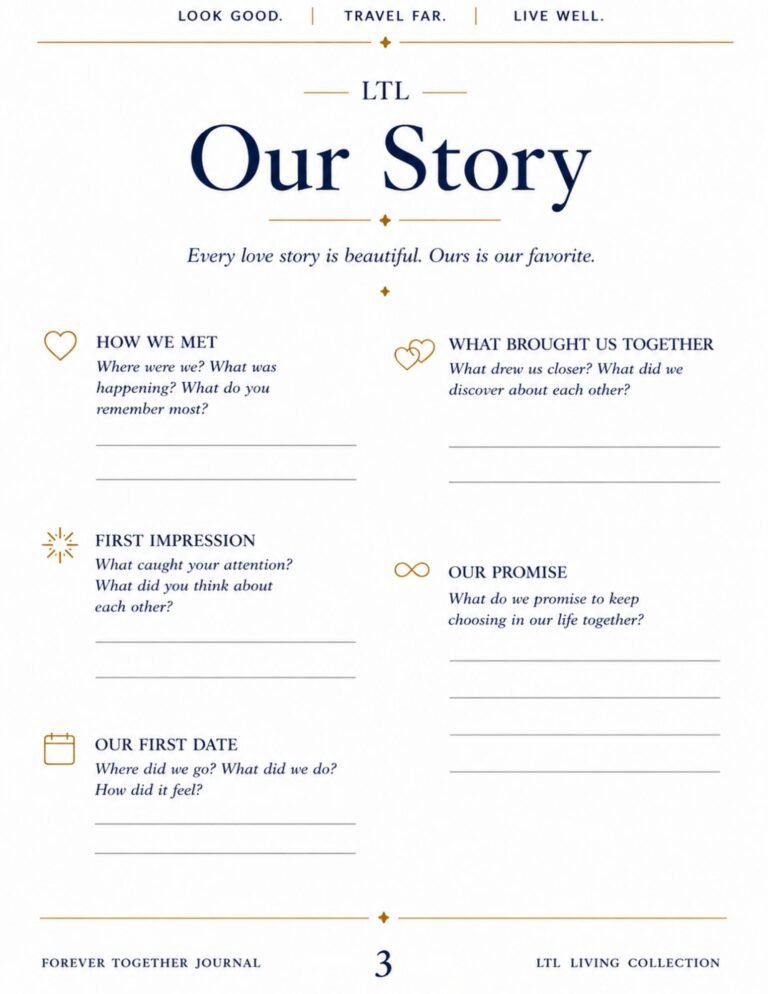
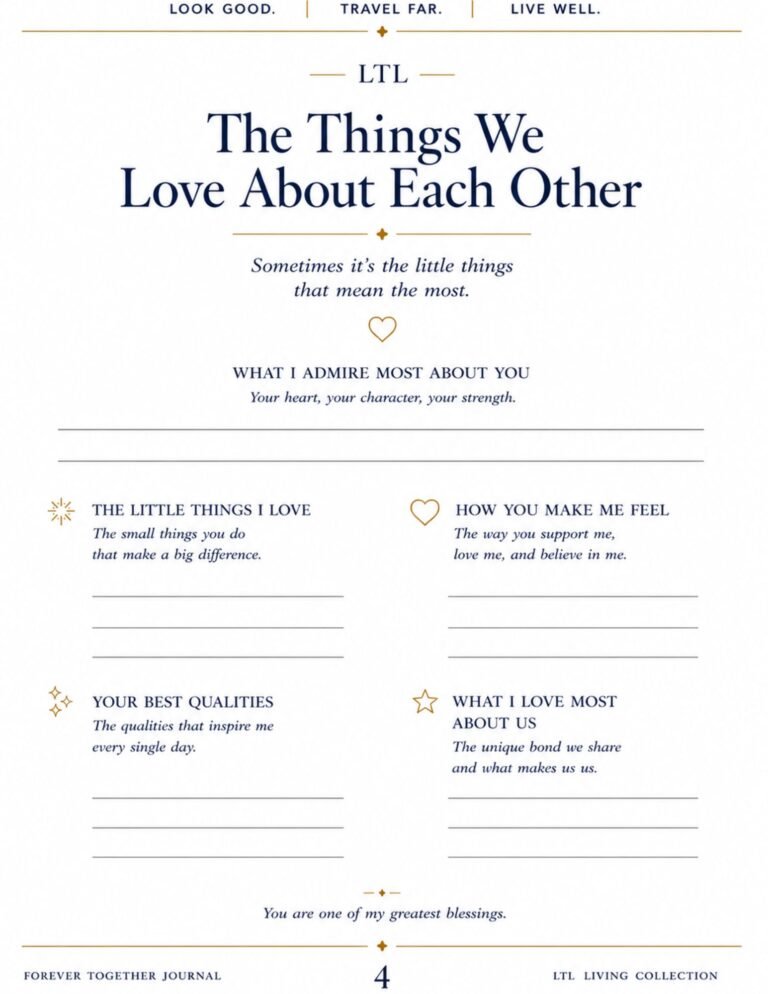
Inside, you’ll find thoughtful pages for your story, favorite memories, places you’ve traveled, traditions, lessons learned together, gratitude, photographs, anniversary reflections, letters to each other, future dreams, and a Forever Bucket List built around experiences rather than possessions.
👉 Get your complimentary “Forever Together Journal” 4-Page Sampler. Click here to download.
A selected preview from the complete journal to help you revisit a few favorite memories and perhaps start talking about some new ones you’d still like to create.
🛍 If you’d like to continue, the complete Forever Together Journal — Creating a Lifetime of Memories Together is a 24-page premium keepsake journal designed to help couples celebrate the life they’ve shared, preserve the memories that matter, and dream about the chapters still ahead.
Love doesn’t retire.
There will always be memories worth preserving.
Hopefully, we’re nowhere near finished making them.

X. Forever Together | LTL Shop
The things we buy aren’t what make a relationship last. But the right products can make everyday life, travel, wellness, and the experiences we share a little more enjoyable.
The LTL Shop brings together products we use and recommend across Look Good, Travel Far, and Live Well—thoughtfully selected for the way we want to keep living in the years ahead.
Because growing older together isn’t only about looking back at the life we’ve shared.
It’s about enjoying what’s still ahead.
SHOP LTL →
As an Amazon Associate, I earn from qualifying purchases. These are products we personally use and recommend because they help make living well more comfortable, enjoyable, and uncomplicated.

XI. Still You | Final Thoughts
When we’re young, we tend to imagine forever as one long continuation of the way love feels at the beginning.
It isn’t.
People change. Bodies change. Families change. Plans change. There are years that turn out better than we imagined and others we would never choose to live through again.
The remarkable part isn’t that two people somehow avoid all of that.
It’s that they experience it together.
After enough years, the person beside us carries an extraordinary amount of our history. They remember versions of us that no longer exist. They were there for conversations we’ve forgotten, places we’ll never visit again, people we’ve lost, ridiculous arguments, private jokes, difficult nights, and some of the happiest days of our lives.
And somehow, after seeing all those versions of each other, we’re still here.
Maybe that’s what forever really looks like.
Not two people who never changed. Not a relationship that was always easy. Not one promise that magically carried them through decades.
Just two people who kept finding reasons to turn toward each other and say, in a thousand different ways:
I’d still choose you.
STILL YOU. FOREVER TOGETHER.
Samuel