
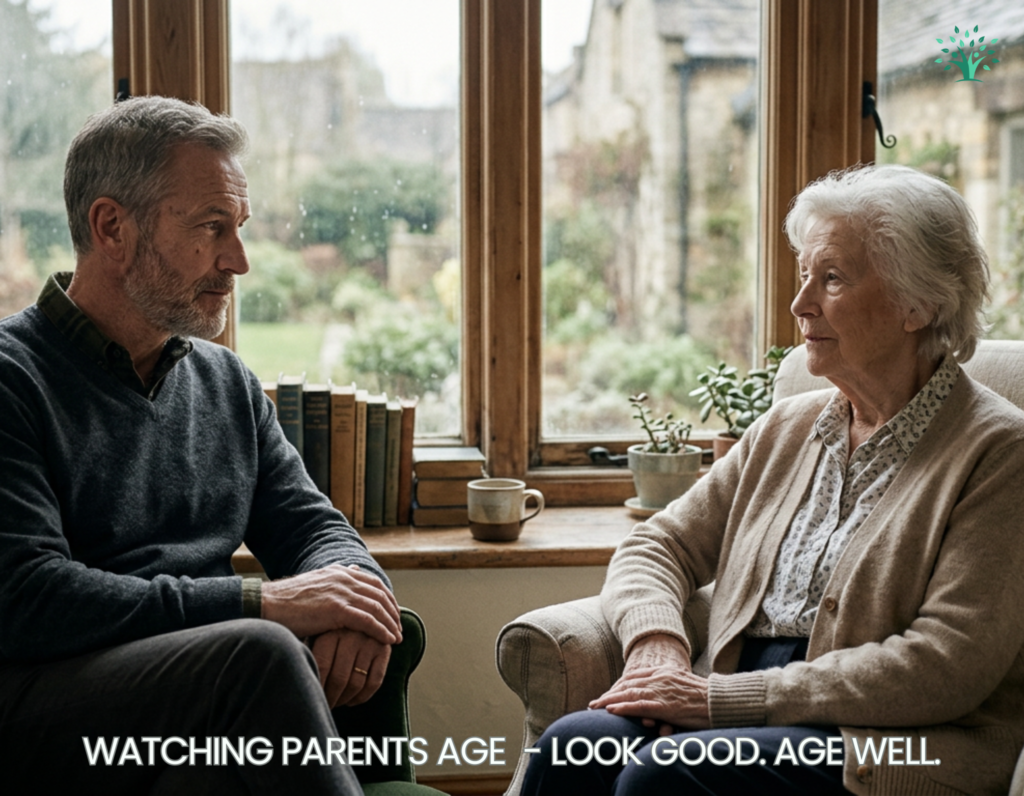
Watching Parents Age Changes You - Look Good. Age Well.
Part 6 of the Look Good. Age Well. Series
◆Functional Health & Wellness by Samuel
I. INTRODUCTION - Watching Parents Age Changes You
Some moments in life quietly change the way you see everything, and for me, one of the biggest was watching parents age.
Not suddenly. Not dramatically. Slowly.
At first, the changes barely stand out. A little less energy. More appointments. Repeating stories more often. Walking slightly slower than before. Then one day, you realize the people who once carried the entire family are beginning to need support themselves.
That realization changes something internally.
Many adults continue moving through work, responsibilities, bills, deadlines, and daily routines while quietly carrying emotional stress they rarely discuss openly. At the same time, there is often guilt for not spending enough time together and anxiety about how quickly life can change during the later years.
Part of the reason I wanted to write this article is because I was not fully prepared when my own father reached old age and eventually lost many of his memories. There were moments when he no longer recognized me, and honestly, that was one of the hardest experiences of my life.
That experience permanently changed the way I think about stress, health, aging, emotional resilience, and the importance of quality time together.
This article is not meant to be negative or hopeless.
In many ways, it is about awareness, preparation, perspective, and learning how to stay emotionally grounded while navigating one of the most difficult transitions adults eventually face.
That shift changes you.
Not through panic.
Through perspective.
QUICK GUIDE
- Why watching parents age affects emotional health more than most people expect
- The hidden stress many adults quietly carry while balancing responsibility
- How emotional overload slowly impacts sleep, recovery, and energy
- Simple habits that help create emotional stability and consistency
- Wellness support strategies that reduce stress without overcomplicating life
- The Stress Reset Planner for rebuilding structure and emotional balance
THIS GUIDE IS FOR YOU IF…
- Your parents are beginning to slow down physically or mentally
- Emotional stress has been building quietly over time
- Balancing work, family, and responsibility feels mentally exhausting
- Sleep, recovery, and focus have become inconsistent
- You have started thinking differently about aging and long-term health
- Daily life feels emotionally heavier than it used to
- You want a calmer and more grounded way to manage stress
- You are trying to stay emotionally steady while supporting others
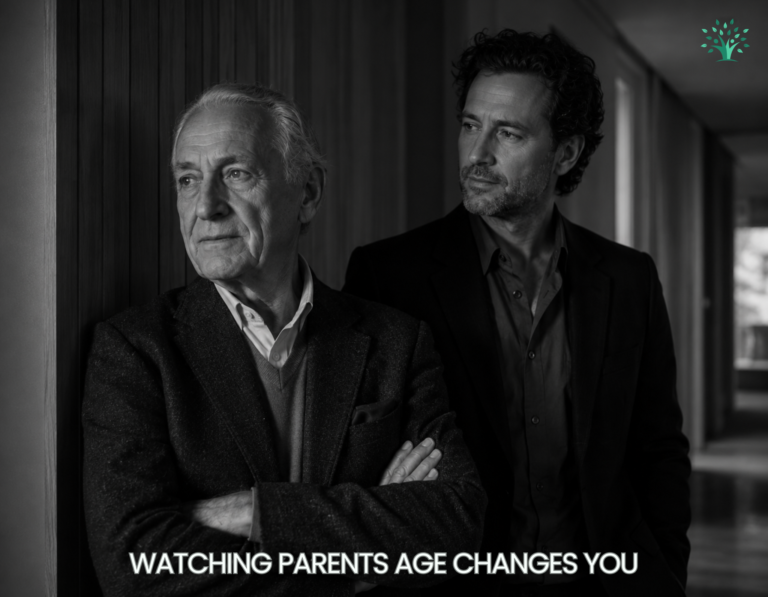
II. Why Watching Parents Age Feels Different Than Expected
Most people understand intellectually that their parents will grow older someday.
Living through it is completely different.
What often makes the experience emotionally difficult is not simply aging itself. It is watching gradual changes happen to the people you have looked up to your entire life. The emotional roles slowly begin shifting, and many adults are not mentally prepared for how deeply that affects them.
One of the hardest parts can be seeing behavior changes that feel unfamiliar.
Parents who were once disciplined, independent, sharp, and emotionally steady may begin repeating themselves more often, forgetting details, becoming emotionally reactive, or acting in ways that feel unexpectedly childlike. That shift can be shocking because the image you carried of them for decades no longer fully matches reality.
For many adults, that realization creates emotional conflict internally.
Part of you still sees them as the strong people who protected and guided the family. Another part begins recognizing they are becoming physically and mentally vulnerable. Trying to emotionally process both versions at the same time can quietly create stress, sadness, frustration, guilt, and emotional exhaustion.
What makes it even harder is that most people continue functioning normally on the outside.
They still go to work.
Still manage responsibilities.
Still take care of others.
Meanwhile, mentally and emotionally, they are carrying far more than people around them realize.
This is why emotional awareness becomes so important during this stage of life.
Without realizing it, many adults begin neglecting their own recovery, sleep, stress management, physical health, and emotional balance while focusing entirely on supporting everyone else around them.
Over time, that pressure accumulates quietly.
Not all at once.
Gradually.
Recommended Reading:
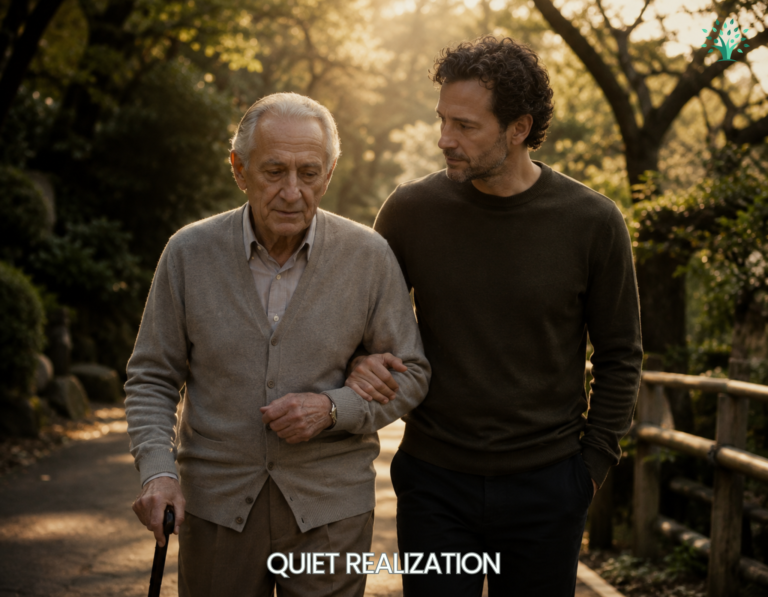
III. Watching Parents Age Changes Your Priorities
One of the biggest things I learned through this experience is how quickly your perspective on life can change.
Watching your parents grow older forces you to think differently about health, energy, time, and what truly matters long term. Things that once felt distant suddenly feel personal.
For me, that shift became even more powerful after watching my father decline mentally and physically during the later years of his life.
What made it difficult emotionally was knowing the kind of man he had always been.
My father was incredibly strong and disciplined. He never took medicine his entire life. Not even a single pill. He carried himself with consistency, toughness, and quiet resilience for decades. In many ways, he represented stability and strength throughout my childhood.
That is why seeing his memory fade was so difficult.
Once his mind started declining, his physical condition followed soon afterward. Experiencing that firsthand changed the way I think about aging completely.
It also made me realize how important preparation becomes before those years arrive.
Not only financially.
Emotionally.
Physically.
Mentally.
Many adults spend decades preparing for careers, retirement, business, and responsibilities, but very few prepare emotionally for the experience of seeing their parents age.
That realization changed the way I approach wellness now.
Sleep matters more.
Stress management matters more.
Recovery matters more.
Quality time matters more.
Most importantly, I started realizing that emotional resilience is just as important as physical health as we get older.
That awareness changes the way you move through life.
⭐ Recommended Reading
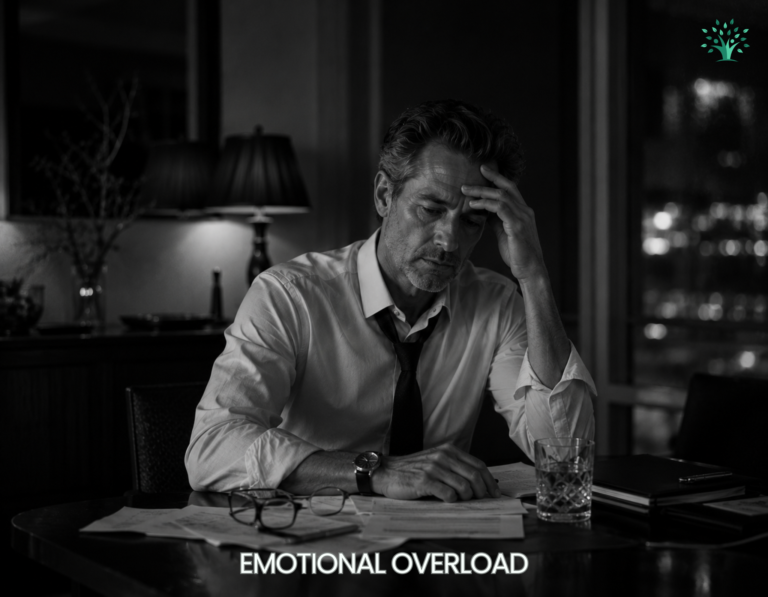
IV. The Stress Most Adults Don’t Talk About
One of the hidden challenges of adulthood is learning how to carry emotional pressure while continuing to function normally every day.
Most people do not openly discuss how mentally exhausting it can become balancing careers, responsibilities, financial pressure, family obligations, and the emotional reality of aging parents at the same time. On the outside, life often appears stable. Internally, however, many adults are running on emotional fatigue for years without fully recognizing it.
Part of the difficulty is that emotional stress rarely arrives all at once.
Instead, it builds gradually through constant responsibility, interrupted sleep, worry, decision-making, caregiving, and the pressure of trying to stay strong for everyone else. Over time, the nervous system never fully resets, which slowly affects energy, patience, focus, recovery, and emotional resilience.
During heavier stress periods, I also noticed better hydration and recovery became far more important, which is one reason I started using Electrolytes Powder – Liquid IV more consistently during long workdays and emotionally exhausting stretches.
For many adults, the experience of watching parents age also creates a quiet sense of time moving faster. Priorities begin changing. Health concerns feel more personal. Recovery becomes more important. Even simple conversations or family moments begin carrying different emotional weight.
At the same time, many people neglect themselves during this phase of life.
Exercise becomes inconsistent.
Stress levels remain elevated.
Sleep quality declines.
Mental recovery gets pushed aside.
Eventually, the body starts responding to that accumulated pressure.
This is why emotional awareness and recovery matter far more than most people realize during middle adulthood and later years. Managing stress is no longer only about productivity. It becomes part of protecting long-term physical health, emotional stability, and overall quality of life.
⭐ Recommended Reading
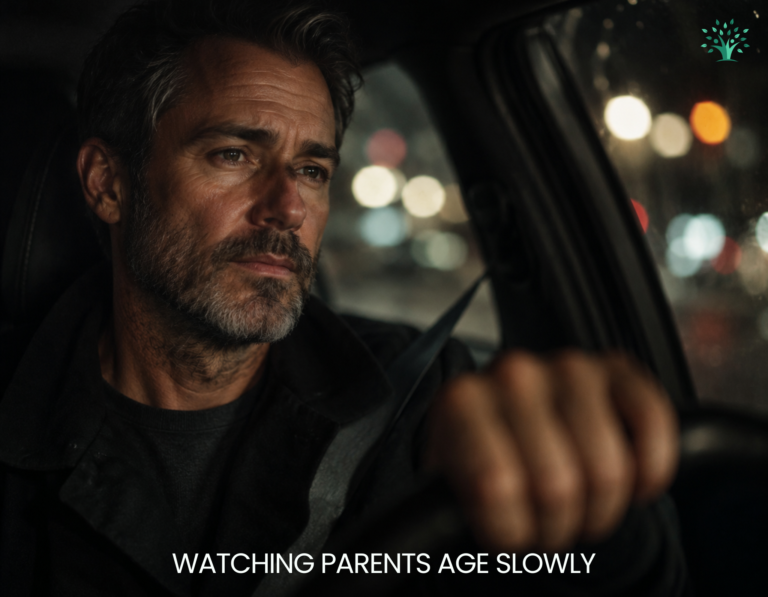
V. Watching Parents Age Can Slowly Drain Your Energy
The emotional impact of watching parents age is not always dramatic or visible day to day.
Many times, it feels more like a slow mental drain that quietly affects the body over time.
Concentration becomes harder.
Patience becomes shorter.
Sleep feels lighter and less restorative.
Small problems begin feeling mentally heavier than before.
Improving sleep quality became a priority for me later on, and supplements like Magnesium Glycinate – Nature’s Bounty helped support more consistent recovery during stressful periods.
Without realizing it, emotional stress can slowly push the body into a constant state of tension and mental fatigue. That pressure often becomes worse when people continue suppressing emotions while trying to stay productive and dependable for others.
Another challenge is that many adults feel guilty focusing on their own wellness while their parents are struggling physically or mentally. As a result, recovery habits are usually the first things people sacrifice.
Walking routines disappear.
Sleep schedules become inconsistent.
Stress management gets ignored.
Physical recovery becomes secondary.
Over time, that imbalance starts affecting overall wellness far beyond emotional health alone.
Energy drops more easily.
Inflammation increases.
Mental clarity declines.
Consistency becomes harder to maintain.
This is one reason emotional resilience becomes increasingly important as people get older. Long-term wellness is not only built through medical care or physical health routines. Mental recovery, emotional stability, sleep quality, and daily consistency all become connected together.
That realization changed the way I started approaching stress and wellness in my own life, focusing more on awareness, recovery, and long-term consistency instead of extreme routines.

VI. Small Habits That Help You Stay Grounded
During emotionally difficult periods of life, most people do not need more complexity.
They need more stability.
One of the biggest lessons I learned while watching parents age is that small consistent habits often matter more than dramatic changes. Emotional stress becomes harder to manage when sleep is inconsistent, physical movement disappears, recovery declines, and the nervous system never fully resets.
That is why simple routines become important.
Daily walks help calm mental overload while improving circulation and emotional clarity. Better sleep routines improve recovery and emotional resilience. Slowing down long enough to eat properly, hydrate consistently, and reduce overstimulation helps the body recover from constant stress pressure over time.
I also became more intentional about stress regulation and emotional balance over time, including using Ashwagandha – Horbäach and L-Theanine during periods when mental overload started affecting focus and recovery.
Equally important is creating moments of emotional presence.
Sometimes that means sitting longer during conversations instead of rushing through them. Sometimes it means listening more carefully. Other times, it simply means making time together feel intentional while parents are still healthy enough to enjoy those moments fully.
Many adults underestimate how important those quieter experiences become later in life.
Eventually, the routines, conversations, dinners, short walks, and ordinary moments often become the memories people value most.
This is one reason emotional wellness should never be separated from physical wellness as we get older. Mental recovery, sleep quality, emotional balance, stress regulation, and overall health become increasingly connected together over time.
Supporting long-term wellness also became more important to me personally, including maintaining consistency with Vitamin B Complex, Omega-3 Fish Oill, AG1 Greens Powder Supplement, and Echinacea & Goldenseal – Horbäach during demanding periods of life.
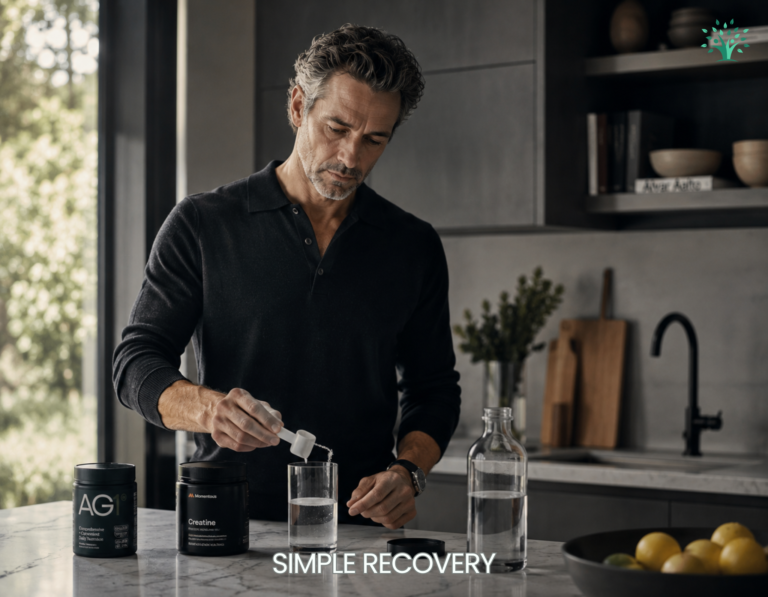
VII. SIMPLE PRODUCTS
When routines start to feel inconsistent, the issue is rarely effort.
Most of the time, it comes down to supporting the body in the areas that matter—hydration, recovery, sleep quality, stress regulation, and staying physically well during emotionally demanding periods of life.
Electrolytes Powder – Liquid IV
Keeps hydration and energy more consistent during long workdays, stressful periods, travel, or emotionally exhausting stretches.
Magnesium Glycinate – Nature’s Bounty
Supports recovery and improves sleep quality, allowing the body and mind to reset more consistently.
Ashwagandha – Horbäach
Helps regulate stress levels so mental tension does not constantly drain energy and focus.
L-Theanine
Promotes calmer focus without overstimulation, helping support emotional balance and mental clarity.
AG1 Greens Powder Supplement
Helps support daily nutrition, energy, and recovery consistency during stressful or physically demanding periods.
Vitamin B Complex
Supports energy metabolism and helps maintain steadier daily output during stressful periods.
Omega-3 Fish Oil
Supports long-term brain health, recovery, and inflammation management as stress levels increase over time.
Echinacea & Goldenseal – Horbäach
One supplement I consistently trust during stressful or emotionally exhausting periods when the body feels run down and recovery becomes more important.
As an Amazon Associate, I earn from qualifying purchases. These are products I personally use because they support consistency and recovery without overcomplicating the routine.
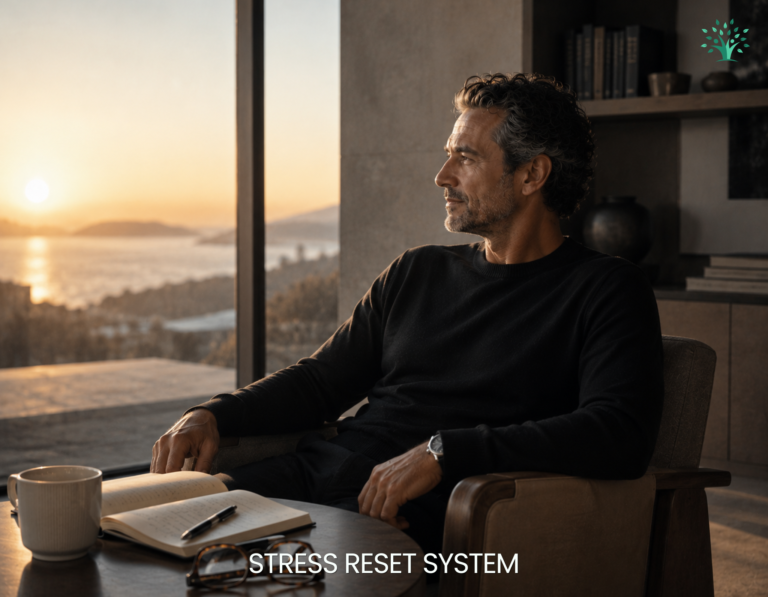
VIII. Stress Reset System
One thing I have learned over the years is that stress management becomes more important with age, not less.
The body recovers differently.
Sleep becomes more important.
Emotional overload lasts longer.
Consistency matters more.
Many adults continue approaching wellness through intensity when what they often need most is structure and recovery.
That shift becomes especially important during emotionally demanding seasons of life, including watching parents age, managing family pressure, balancing work responsibilities, and dealing with long-term stress accumulation.
The goal is not perfection.
The goal is creating enough consistency to protect physical health, emotional stability, sleep quality, mental clarity, and recovery over time.
For me, that usually comes back to simple systems:
- walking consistently
- improving sleep quality
- reducing overstimulation
- maintaining hydration
- protecting recovery time
- creating emotional breathing room during stressful periods
Those habits may sound simple, but over time they create far more stability than most people realize.
Long-term wellness is often built quietly.
Not through intensity.
Through consistency and recovery practiced repeatedly over time.
👉 Get My Stress Reset Planner (in 5 Minutes)
A simple system to help reset stress, protect your energy, and bring your routine back into balance without overcomplicating your day.
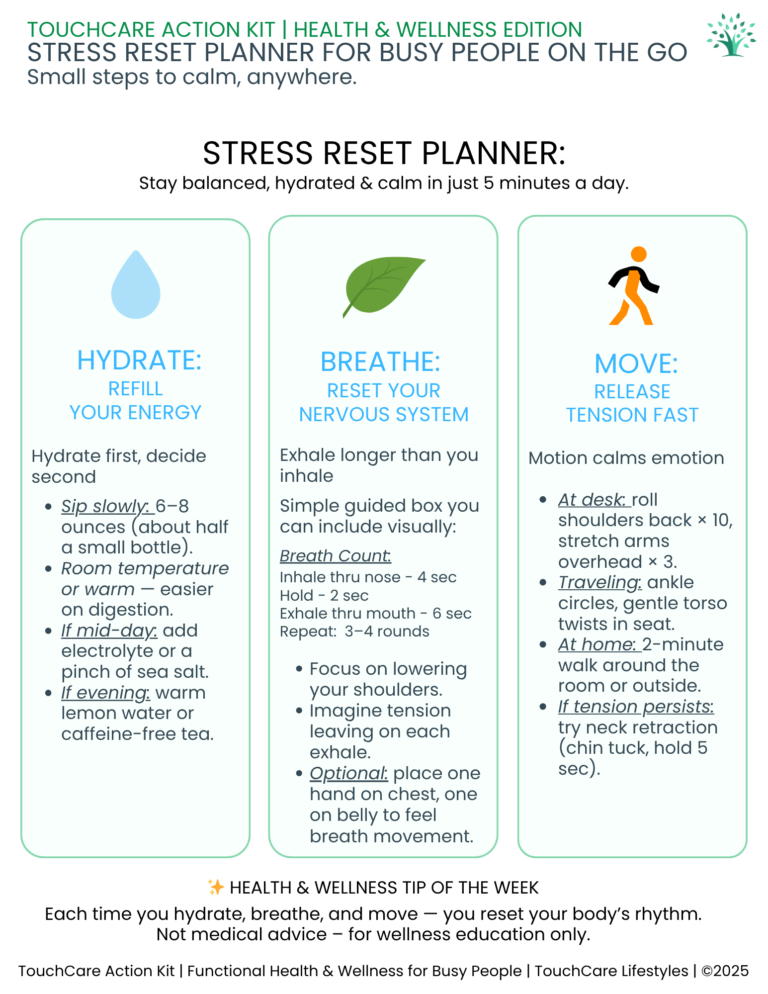
IX. STRESS RESET PLANNER — ENERGY OVER AGE FRAMEWORK
One of the reasons I created the Stress Reset Planner was because emotional overload often becomes difficult to recognize until the body and mind are already exhausted.
Most adults continue pushing forward without giving themselves enough structure for recovery, sleep, emotional balance, hydration, and stress management. Over time, that pressure slowly affects energy, focus, patience, motivation, and overall wellness.
The Stress Reset Planner was designed to help simplify that process.
Instead of overwhelming routines, the planner focuses on small consistent habits that support emotional recovery and long-term stability, including:
- stress awareness
- hydration tracking
- sleep consistency
- walking and movement
- emotional reset habits
- recovery routines
- simple wellness structure
For this post, I created a 1-page sampler: THE STRESS RESET (in 5 Minutes)
👉 A simple preview of what helped bring energy, stress, and routine back into balance
📥 Get my Stress Reset Planner (in 5 Minutes)
🛍 If you want the full system, the Stress Reset Planner on Etsy expands on this approach with a structured routine you can follow anytime your body needs to reset.

X. FINAL THOUGHTS: Emotional Awareness. Look Good. Age Well.
Watching parents age changes people in ways that are difficult to fully explain until they experience it personally.
Perspective changes.
Priorities change.
The way you think about health, stress, recovery, and time changes too.
In many ways, those experiences become reminders that wellness is not only about appearance or productivity. Emotional resilience, recovery, awareness, and quality time together become just as important over time.
That realization changed me deeply.
Not through fear.
Through awareness.
Emotional Awareness. Look Good. Age Well.
With care,
Samuel