
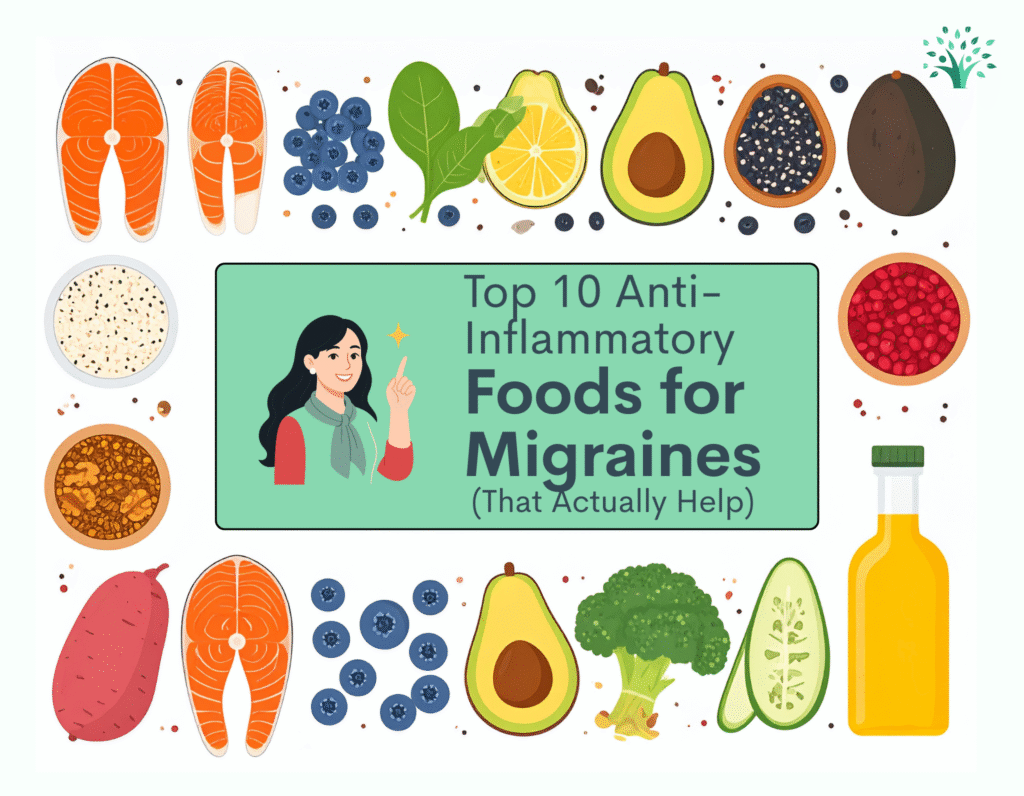
Top 10 Anti-Inflammatory Foods for Migraines (That Actually Help)
Part 2 of 4 | Eat to Ease Migraines Series
Functional Nutrients & Smart Supplements Curated by Mijung
I. Why You Should Read This – A Message from Mijung
If you’ve ever dealt with migraines—the kind that hijack your entire day—you know how powerless they can make you feel. That’s why learning how to use anti-inflammatory foods for migraines became one of the most important steps in Samuel’s recovery. When Samuel was at the height of his recovery from spinal nerve damage, migraines weren’t just painful—they were paralyzing.
While every treatment mattered—stretching, walking, rest, and procedures—it was food that I could control. And it made a huge difference.
I started asking: Could the food we’re eating be feeding his pain? Could it help calm his brain instead?
That’s when I rebuilt his meals around foods that reduce inflammation. This list became our foundation for healing.
🔍 Infographic preview: Discover the top anti-inflammatory foods that helped us reduce migraines—and get a visual list you can actually use.
II. Why Inflammation Makes Migraines Worse
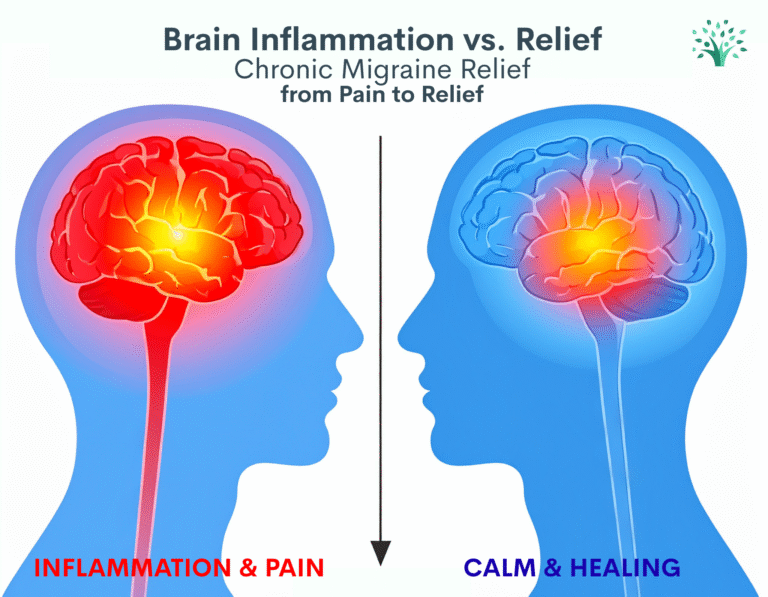
Doctors now recognize migraines as more than a neurological disorder. According to the American Migraine Foundation, inflammation plays a central role in triggering and prolonging pain.
Inflammation can:
Activate neuropeptides in the brain
Disrupt the gut-brain axis (leaky gut)
Increase cytokines that worsen pain
Deplete magnesium and serotonin levels
This Harvard Health article answers 5 key questions about migraines, including what causes them, why they differ from other headaches, and how diet, stress, and medications impact migraine frequency and intensity. It highlights inflammation and nerve sensitivity as core drivers—reinforcing how food and lifestyle changes can help prevent flares.
III. What Counts as an Anti-Inflammatory Food?
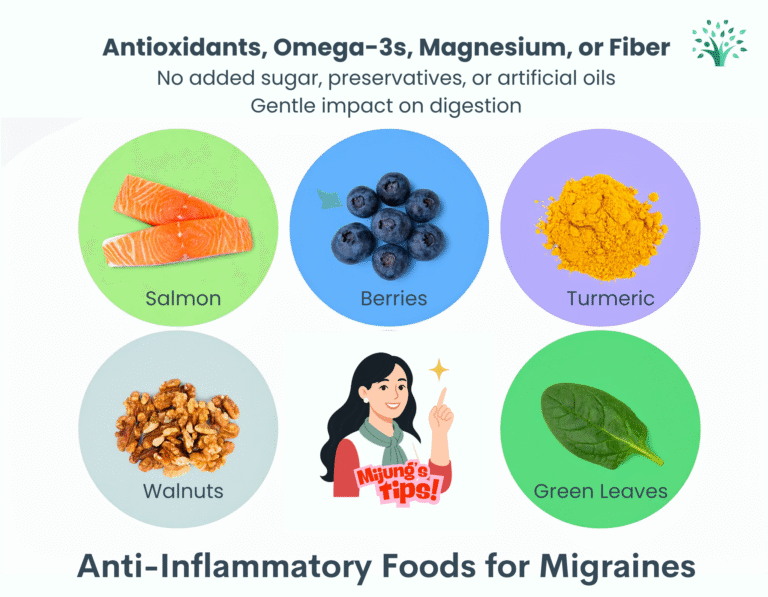
Anti-inflammatory foods help the body lower immune stress and support gut and brain healing. Most have:
Antioxidants, omega-3s, magnesium, or fiber
No added sugar, preservatives, or artificial oils
Gentle impact on digestion
The Cleveland Clinic lists salmon, greens, and berries as foods that “dampen inflammation pathways” when combined with hydration and stress control.
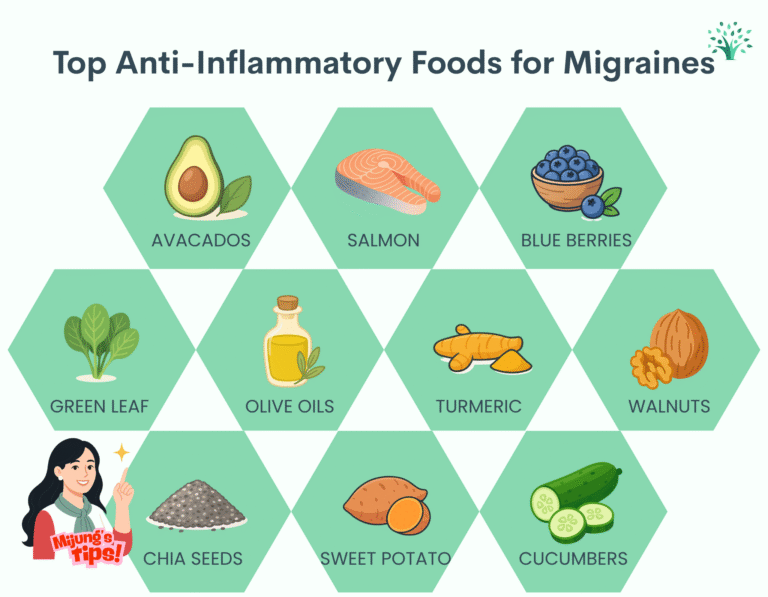
IV. Top 10 Anti-Inflammatory Foods That Help with Migraines
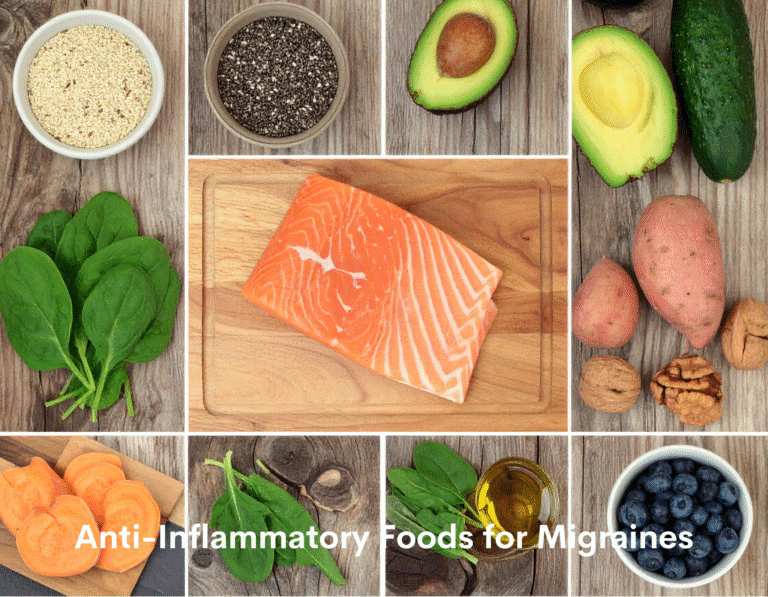
Looking for the foundational list of trigger and safe foods? Be sure to read Part 1 of our Eat to Ease Migraines series for what to avoid and what to keep on hand.
These are the real foods we used daily during Samuel’s healing.
Wild Salmon – Omega-3s to reduce neuroinflammation. Bake or pan-sear.
Avocados – Full of magnesium and healthy fats. Blend into smoothies or toast.
Chia Seeds – Fiber and plant omega-3s. Use in oatmeal or pudding.
Leafy Greens – Magnesium-rich detox helpers. Sauté, smoothie, or soup.
Blueberries – Antioxidants to ease oxidative brain stress.
Sweet Potatoes – Carotenoids and fiber to stabilize blood sugar.
Turmeric – Curcumin for inflammation and nerve calm. Use in tea or rice.
Extra Virgin Olive Oil – Oleocanthal for inflammation reduction. Use raw.
Walnuts – Omega-3s and brain protection. Add to oatmeal or snack raw.
Cucumbers – Gut-soothing, hydrating, gentle food. Infuse in water or eat fresh.
🛒 Affiliate Block: Anti-Inflammatory Essentials
As an Amazon Associate, we may earn a small commission from qualifying purchases—at no extra cost to you. We only recommend products we personally use and trust.
1. Turmeric Ginger Herbal Tea (Caffeine-Free)
Daily turmeric and ginger helped calm Samuel’s inflammation—and sipping tea made it easy to stay consistent. We love this soothing blend that’s gentle on the stomach and powerful for recovery.
👉 VAHDAM Organic Turmeric Ginger Herbal Tea (100 Bags)
Non-GMO, caffeine-free, and packed in a resealable ziplock pouch.
2. Organic Chia Seeds – On-the-Go Packets
These single-serve chia packets make it simple to boost fiber and omega-3s without measuring or prepping. We used them in smoothies, oats, and even yogurt during Samuel’s migraine healing.
👉 BetterBody Foods Organic Chia Seeds – 24 Travel Packs
USDA Organic, portable, and great for gut support on busy days.
V. Foods to Avoid (Recap from Part 1)
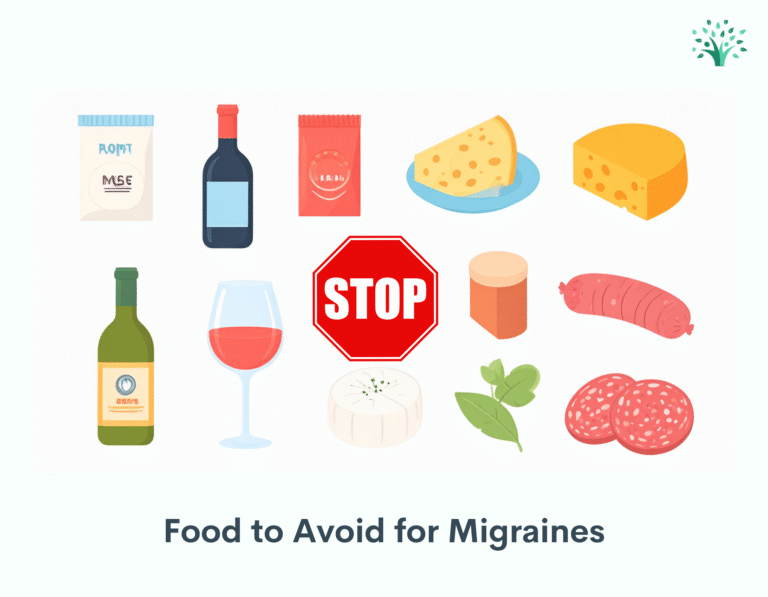
In Part 1 of this series, we covered key triggers like:
MSG
Aged cheese
Processed meats
Alcohol
Artificial sweeteners
Try replacing just one trigger with one anti-inflammatory food each day.
📥 Download Printable PDF – 2 Pages
(Use as a daily reminder or share with someone struggling with migraines.)
VI. Final Thoughts from Mijung on anti-inflammatory foods for migraines
Migraines don’t wait for perfect conditions—and neither should your food. The right ingredients can lower your risk of flares before they start.
You don’t need to overhaul everything. Start small: swap out a trigger food for one healing ingredient. For us, even those tiny shifts made a difference in breaking the pain cycle.
🔎 Mijung’s Tip: Print out our anti-inflammatory food list and keep it near your fridge or meal planner—it helps remove guesswork on hard days.
Next in this series, I’ll walk you through exactly how I prepped Samuel’s meals—batch-cooked, fresh, and migraine-safe. You’ll learn our real food routine that supports healing without stress.
🧠 Recommended Read:
If you want a step-by-step plan for using food to reduce migraine frequency, I recommend the book “The Migraine Relief Plan.” It mirrors what worked for us—and includes meal guides, anti-inflammatory swaps, and realistic recovery advice. 👉 Get it on Amazon (affiliate).
🧠 Want more support? Read how we started this journey in Part 1: Foods to Eat and Avoid.
Stay tuned for Part 3: Migraine-Friendly Meal Prep That Actually Works—coming soon.
With love,
— Mijung