
Spring Inflammation Reset: Why Your Body Feels Inflamed
◆ Functional Health & Wellness by Samuel
I. INTROduction — Why You Need a Spring Inflammation Reset Before the Season Changes
A Spring Inflammation Reset became real last March when my watch felt tighter before I even stepped on the scale. Nothing dramatic had changed in my routine. Eating patterns were steady, training was consistent, and sleep was reasonable. Even so, the body felt heavier, slightly swollen, and slower than expected.
Subtle shifts tend to appear first. Rings tighten, the midsection softens, and digestion drags longer than usual. Afternoon energy fades without a clear explanation, creating the sensation of internal pressure rather than obvious weight gain.
Late winter places cumulative load on the system. Reduced sunlight affects circadian rhythm while indoor living limits movement. Heavier meals combined with unresolved stress allow cortisol to remain elevated longer than necessary. Slower circulation encourages fluid retention even when sodium intake stays stable.
Cutting calories or increasing training volume often seems like the logical response. Adding more stress to an already stressed system typically deepens inflammation instead of relieving it. Recalibration works better by lowering inflammatory load, restoring hydration rhythm, and supporting digestion before the seasonal transition.
Structure and timing matter more than intensity. Space for recovery allows the body to reset naturally before spring arrives.
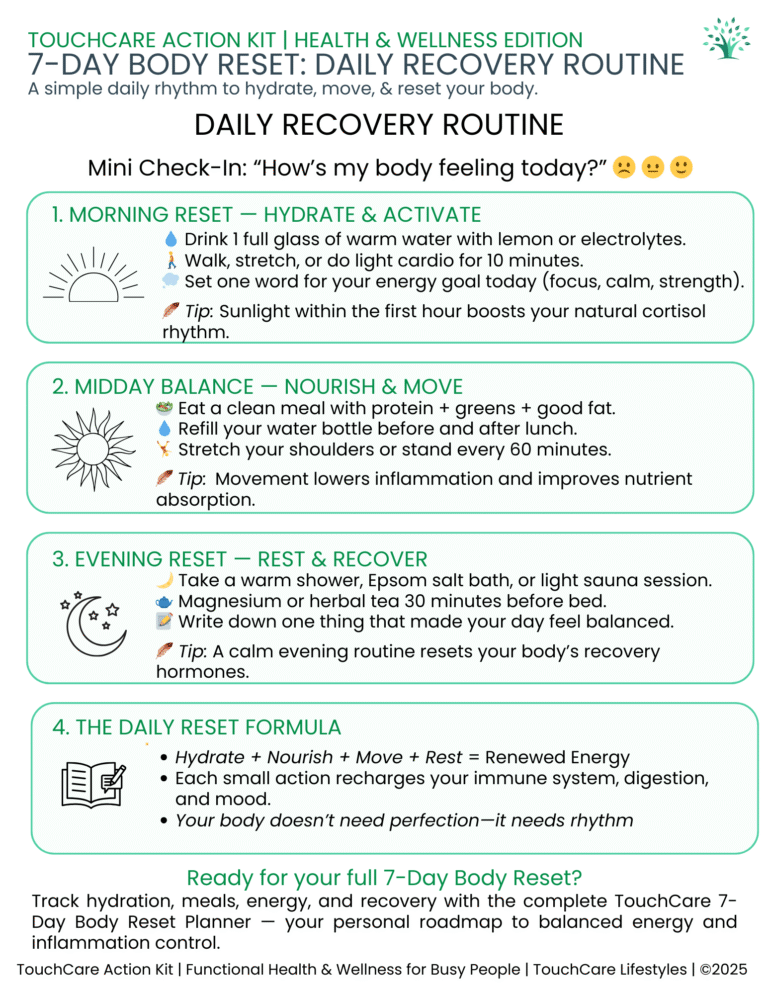
📥 BONUS: Download the FREE 1-page printable infographic PDF at the end of this post! Stick it to your mirror and carry them. Your Daily Recovery Routine.
Quick Jump Guide
• Why your body feels inflamed before spring
• How cortisol and seasonal stress accumulate
• Fluid retention versus actual weight gain
• Why digestion slows in late winter
• What a structured 7-day reset changes
This Guide Is for You If…
• You feel heavier even though your habits are steady
• Morning puffiness is becoming more noticeable
• Digestion feels slower or bloated
• Joints feel mildly stiff without injury
• Energy dips before seasonal transition
• You want structure without extreme restriction

II. Why Your Body Feels Inflamed Before Spring
Seasonal inflammation rarely announces itself loudly. Gradual accumulation usually explains the shift.
During winter, internal rhythm compresses. Shorter daylight hours disrupt circadian timing, and outdoor movement becomes inconsistent. Comfort foods appear more frequently in colder months, while unresolved stress lingers because tension does not discharge efficiently. By late February or early March, many systems have been operating under mild elevation for weeks.
Cortisol elevation plays a central role in this transition. Prolonged stress hormone exposure alters fluid regulation and inflammatory signaling. Subtle internal activation can persist even without visible illness. What feels like weight gain often reflects low-grade inflammation combined with retained fluid rather than increased fat mass.
Another contributing factor involves dietary shifts. Reduced fiber diversity and lower produce intake gradually influence gut bacteria balance. As microbiome stability declines, inflammatory signaling increases and digestion slows. Unstable energy patterns commonly follow.
Foundational support reduces accumulated load. Consistent intake of Omega-3 Fish Oil – Nordic Naturals supports long-term inflammatory balance instead of temporary suppression. Alongside that, steady use of Probiotics – Physician’s Choice may help restore gut stability during seasonal transition, reducing bloating frequently mistaken for fat gain.
Extreme measures are unnecessary. Structured recalibration allows the body to adjust naturally.
Recommended Reading:

III. Spring Inflammation Reset and Fluid Retention: It’s Not Just Water Weight
Fluid retention before spring is often misunderstood. People assume sodium is the only cause. In reality, stress hormones influence how your body distributes water.
Elevated cortisol alters mineral balance. Magnesium levels decline under chronic stress. When magnesium is low, muscle tension increases and fluid regulation becomes less efficient. Subtle swelling appears in the face, abdomen, and hands. That “puffy but not overweight” feeling is common during seasonal change.
Supporting nervous system stability with Magnesium Glycinate – Nature’s Bounty helps regulate muscle relaxation and fluid balance. It also improves sleep quality, which directly affects inflammatory control.
Hydration patterns matter just as much. Many people drink water inconsistently during winter and then suddenly increase intake when trying to “clean up” before spring. Without proper electrolyte balance, the body may hold onto water instead of releasing it. A balanced formula like Electrolytes Powder – Liquid IV can support more efficient hydration timing rather than excess fluid intake.
Stress adaptation also plays a role. When the body has been under prolonged indoor stress, cortisol rhythm becomes irregular. Supplementing strategically with Ashwagandha – Horbäach may help modulate stress response and support hormonal balance during seasonal transition.
A Spring Inflammation Reset is not about forcing weight loss. It is about restoring rhythm so the body no longer feels like it is holding onto winter.
Recommended Reading:

IV. The Gut-Immune Link in a Spring Inflammation Reset
Inflammation before spring is not only about fluid. It is often digestive.
During late winter, food variety typically narrows. Fresh produce intake declines, fermented foods become less frequent, and fiber diversity drops. Over time, those changes shift the gut microbiome. When balance in the gut shifts, inflammatory signaling increases. Bloating becomes more common, and energy grows unstable.
Seasonal immune stress also plays a role. As temperatures fluctuate and exposure patterns change, the immune system becomes more reactive. That reactivity can create subtle systemic inflammation even when you are not sick.
Digestive support during this period should remain simple and steady. Sipping Organic Ginger Teasupports circulation and digestive motility without stimulating the system aggressively. Ginger promotes warmth and movement, which helps counter the stagnation many people experience at the end of winter.
Immune stability matters during transition. Consistent use of Echinacea & Goldenseal – Horbäach can support immune balance when environmental exposure increases. The goal is not to overstimulate immunity but to reduce background immune load so inflammation does not linger unnecessarily.
When digestion stabilizes and immune signaling settles, the sense of heaviness decreases naturally.
Recommended Reading:
V. The 7-Day Body Reset Framework (Busy Lifestyle Friendly)
A Spring Inflammation Reset works best when structured. Random changes create stress, while rhythm creates adaptation.
Here is the simple 7-day framework:
1. Day 1–2: Reduce Load
Begin by lowering sodium spikes and reducing ultra-processed foods. Consistent hydration timing becomes a priority during these first days. Anti-inflammatory whole foods form the foundation.
2. Day 3–4: Restore Balance
Movement outdoors helps reset circadian rhythm. Sleep timing should stabilize. Evening magnesium support remains consistent, and probiotic intake continues steadily.
3. Day 5–6: Support Circulation
Light cardio or longer outdoor walks improve blood flow. Ongoing omega-3 intake supports systemic balance. Hydration remains steady with electrolytes rather than excess water volume.
4. Day 7: Stabilize and Assess
Notice changes in puffiness, digestion, energy, and sleep. Adjust gradually rather than intensifying.
This approach avoids extremes. Fasting is unnecessary. Harsh cleanses are not required. Metabolic shock is not the goal. Structured reduction of inflammatory load is enough.

VI. Products That Support a Spring Inflammation Reset
Each product in this Spring Inflammation Reset supports stabilization rather than stimulation.
Magnesium Glycinate – Nature’s Bounty
Supports nervous system regulation, muscle relaxation, and fluid balance.
Electrolytes Powder – Liquid IV
Promotes proper hydration timing without excess water retention.
Omega-3 Fish Oil – Nordic Naturals
Helps reduce systemic inflammatory signaling over time.
Probiotics – Physician’s Choice
Supports gut balance and reduces bloating during seasonal shifts.
Organic Ginger Tea
Encourages digestive movement and warmth during sluggish periods.
Ashwagandha – Horbäach
Supports cortisol rhythm and stress modulation.
Echinacea & Goldenseal – Horbäach
Provides immune support during seasonal transition.
As an Amazon Associate, I earn from qualifying purchases.
VII. 7-Day Body Reset: Daily Recovery Routine (FREE Sampler PDF)
Seasonal inflammation is rarely random. It reflects internal rhythm.
The 7-Day Body Reset: Daily Recovery Routine in Etsy was designed for this exact transition period. Instead of reacting to bloating or heaviness emotionally, it helps you observe patterns with structure.
Inside the reset framework, you track:
• Sodium exposure
• Hydration timing
• Sleep rhythm
• Stress load
• Digestive consistency
• Energy fluctuations
When patterns become visible, inflammation feels manageable rather than mysterious. You begin to see how sleep quality affects fluid retention. You notice how stress shifts digestion. Clarity replaces guesswork.
This reset is not about dieting or restriction. Structure is the focus. Rhythm is the goal. Once internal patterns stabilize, heaviness decreases naturally.
For this post, I created a free one-page sampler from the planner:
Daily Recovery Routine
The printable guide walks you through a simplified daily reset sequence — hydration balance, circulation support, digestive awareness, and stress recalibration — without overwhelming your routine.
That sampler previews the full 7-Day Body Reset, which expands into structured daily tracking pages, reflection prompts, and simple rhythm-building habits.
Consistency builds momentum. When the body transitions seasons with structure instead of shock, inflammation settles more predictably.
Download the free one-page sampler and begin there.
📥 FREE DOWNLOAD SAMPLER— Daily Recovery Routine
If you want the complete 7-day framework, the full planner is available for deeper structure.
🛍 Explore the full 7-Day Body Reset: Daily Recovery Routine on Etsy if you want the complete system.

VIII. Spring Inflammation Reset — Final Thoughts
Seasonal heaviness signals feedback rather than failure.
Winter adaptation differs from summer adaptation, and the transition period exposes accumulated stress. Reduced daylight, heavier food patterns, and slower movement combine to create subtle inflammation that feels disproportionate to effort.
Recalibration reduces that load more effectively than restriction. Lower inflammatory input, consistent digestive support, and balanced hydration gradually restore internal rhythm. Stabilized stress patterns allow fluid retention to resolve without aggressive intervention.
Clarity returns as inflammation decreases.
Reset with intention. Move into spring lighter.
With strength,
Samuel