
Sleep Reset Planner for Busy People on the Go
Functional Health & Wellness on the Go by Samuel
I. INTROduction: Why a Sleep Reset Planner Matters for Busy People
Most people don’t realize how much a lack of rest costs them until it starts showing up everywhere—focus, mood, energy, even motivation. That’s why I built this sleep reset planner—because you can’t perform, recover, or think clearly when you’re running on empty.
We live in a culture that glorifies hustle and caffeine but rarely honors recovery. For years I thought five hours of sleep was enough. It wasn’t. I woke up foggy, relied on coffee to push through meetings, and crashed every weekend trying to “catch up.” The more I pushed, the worse my sleep quality became.
Over time, I learned that exhaustion isn’t just about late nights—it’s about rhythm. When your body’s timing drifts from its natural clock, you lose the signals that tell you when to slow down. That imbalance builds quietly until you can’t recharge even after eight hours in bed.
If this sounds familiar, this blog will help you reset the cycle. I’ll walk you through why busy people lose sleep, what actually restores it, and how to use a simple sleep reset planner to rebuild consistency. You’ll see that improving rest isn’t about sleeping longer—it’s about sleeping smarter.
📥 BONUS: Download the 1-page printable infographic at the end of this post!
Preview your Planner below and download the free 1-page printable at the end of this post!
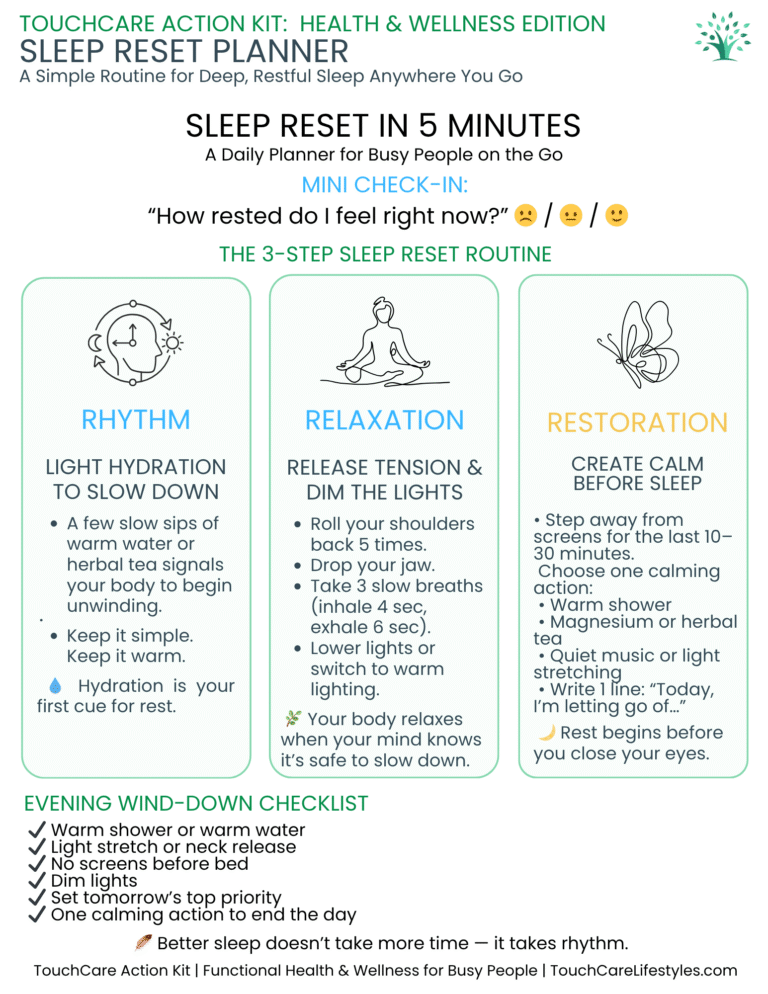
Stick it to your mirror and carry them. Your full “Sleep Reset Planner“
II. The Real Causes of Restless Nights (Sleep Reset Planner Insight)
Most people think poor sleep is just about staying up too late, but the real causes are far more complex—and often invisible. Our bodies are wired for rhythm, yet modern life constantly throws that rhythm off balance. Late meals, endless notifications, stress hormones that never wind down—all of it adds up to a cycle that keeps your brain active when it should be recovering.
The first problem is overstimulation. When you check your phone before bed, scroll social feeds, or respond to messages, your brain interprets that light and activity as a signal to stay alert. Even after the screen is off, your nervous system stays engaged for hours. It’s why you might lie in bed exhausted but wide awake.
The second is hydration imbalance. Most people underestimate how much dehydration affects sleep quality. Even mild fluid loss increases your heart rate, raises cortisol, and prevents your body from relaxing into deep rest. One of the simplest habits in the sleep reset planner is tracking your evening hydration window—stopping caffeine early and drinking mineral-rich water two hours before bed.
Then there’s stress itself. Chronic tension—whether from work, family, or travel—keeps your cortisol levels elevated long after sunset. Over time, this rewires your body’s natural cues, making it difficult to feel tired even when you are. That’s why the sleep reset planner doesn’t just track hours of rest—it helps you recognize stress triggers, schedule wind-down breaks, and bring structure back into your evenings.
When you understand these patterns, sleep stops being a mystery. The goal isn’t perfection; it’s awareness—learning what’s quietly disrupting your nights so you can finally reclaim them.
Recommend Reading:
III. How to Start a Simple Sleep Reset Planner Routine
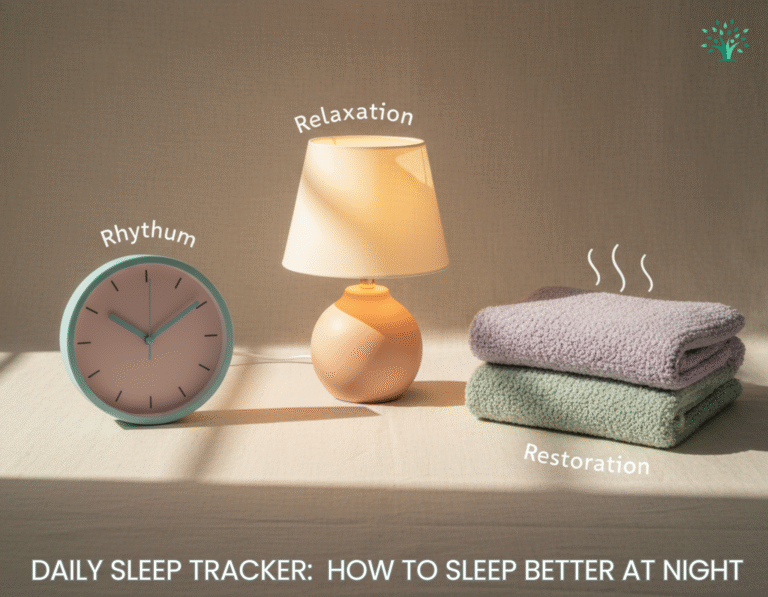
When your sleep feels broken, the worst thing you can do is overcomplicate it. Most people try new supplements, blackout curtains, or expensive gadgets, but real progress comes from restoring structure. The sleep reset planner is built around three simple pillars that make this possible: Rhythm, Relaxation, and Restoration.
Rhythm means setting a consistent pattern your body can trust. Go to bed and wake up at roughly the same time—even on weekends. It sounds simple, but consistency resets your internal clock faster than anything else. I used to travel between time zones weekly, and it wasn’t the flights that caused fatigue—it was the lack of rhythm when I got home. That’s why the sleep reset planner starts each day with a bedtime target and morning wake-up check.
Relaxation is about giving your brain permission to disconnect. You don’t need an hour-long routine—just a repeatable signal that tells your mind it’s time to wind down. Dim the lights, stretch lightly, or listen to calming audio. I keep a short playlist that starts the moment I close my laptop; by the second track, my focus shifts from work to rest.
Restoration is the part most people skip. True recovery doesn’t happen only during sleep—it starts before you close your eyes. A warm shower, light hydration, or even five minutes of slow breathing lowers cortisol and prepares your body to recharge. The sleep reset planner helps you track these nightly habits so you can see how small adjustments—like earlier hydration or less screen time—change the quality of your rest.
Think of this process as teaching your body to trust you again. Once it learns that rest is non-negotiable, sleep starts coming naturally—and staying longer.
Recommend Reading:
IV. The Power of Tracking Sleep Habits Using a Sleep Reset Planner
One of the biggest reasons people stay stuck in poor sleep cycles is that they don’t actually know what’s causing them. You can’t fix what you don’t see—and that’s where tracking changes everything. The sleep reset planner turns vague guesses into clear patterns you can work with.
When I started logging my nights, I realized my “bad sleep” had less to do with stress and more to do with dehydration and late-night screens. Writing it down showed me exactly when my energy dipped and what triggered it. For many people, this simple habit becomes the turning point—they finally see how lifestyle choices directly shape rest and recovery.
Sometimes, small tools can support the process. A warm soak using Epsom Salt Bath – Ancient Minerals Magnesium Bath Flakes helps loosen muscle tension before bed, while Magnesium Glycinate naturally supports relaxation and a calmer nervous system. Herbal choices like Chamomile Tea or Valerian Root Tea can gently settle the body when stress runs high. And for light-sensitive or noisy environments, a Blackout Sleep Mask, Silicone Earplugs , or an Osteo Cervical Pillow can make the difference between tossing and turning versus staying asleep through the night.
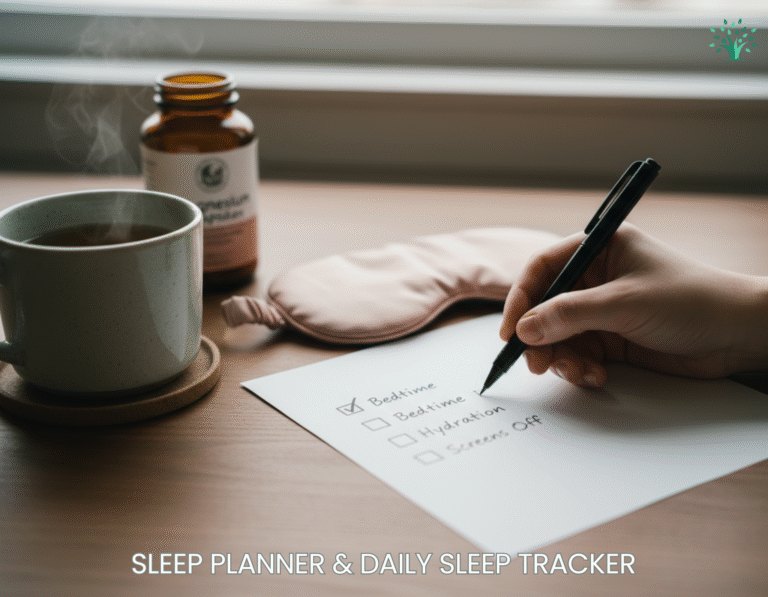
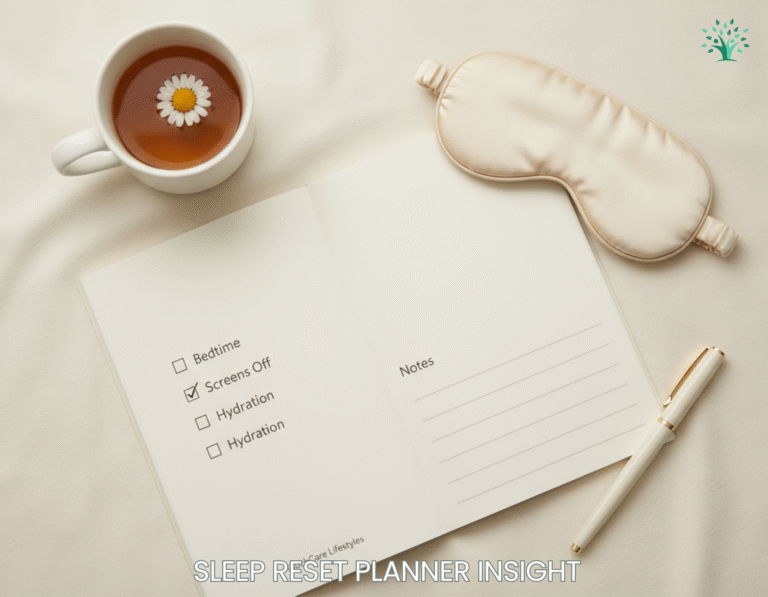
Tracking also builds accountability. The sleep reset planner includes a daily rhythm check—what time you stopped caffeine, when you turned off screens, how long you stayed in bed, and whether your mind felt calm or wired. Once you visualize that data, you begin noticing what truly matters. Sometimes, the smallest adjustments—like cutting phone time 30 minutes earlier—unlock deeper rest than any supplement ever could.
The goal isn’t perfection; it’s awareness. The more you understand your nightly rhythm, the easier it becomes to protect it. Sleep isn’t something you chase—it’s something you allow, once the conditions are right.
Recommended Reading:
V. How to Observe and Improve Sleep Patterns (per Planner Method)
Improving sleep isn’t about finding one perfect routine—it’s about understanding the rhythm of your own nights. Most people think they sleep “badly,” but very few know why. The key is paying attention to small, measurable patterns that reveal what really affects rest. That’s the foundation of every effective sleep reset planner—awareness first, adjustment second.
Start by tracking timing. When do you actually fall asleep, and when do you wake up? Even a 30-minute variation can throw off your body clock. Then note hydration—how much water you drink before bed and whether caffeine sneaks in late. Hydration levels play a bigger role in deep-sleep quality than most people realize.
Next, watch your screen habits and light exposure. Your body interprets light as time cues. Bright light after 9 p.m. tells your brain it’s still daytime, delaying melatonin release. Replace that screen glow with soft, warm lighting to signal wind-down.
Finally, observe mental load. What’s on your mind before sleep? Writing down three quick thoughts or next-day priorities can stop rumination from keeping you awake.
Once you collect a week’s worth of notes, patterns appear fast. You’ll notice which habits help and which sabotage your rest. That’s how real progress happens—not by guessing, but by learning from data you create yourself.
**If you want a simple way to track these nightly patterns, the preview above shows the one-page version of “Sleep Reset Planner” you can use right away. You’ll find the free printable download at the end of this post, along with a link to the full planner on Gumroad if you want a deeper system.
Recommended Reading:
VII. My Sleep Support Essentials
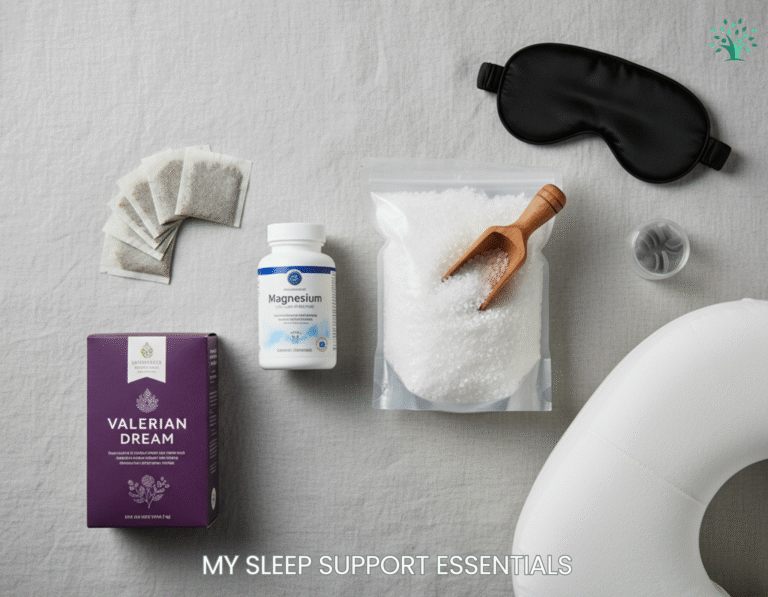
When my nights felt unpredictable, these were the tools that consistently improved my rest. They’re simple, reliable, and easy to integrate into a busy schedule.
- Nature Made Magnesium Glycinate 200 mg — Supports muscle relaxation and calms the nervous system.
- Epsom Salt Bath – Ancient Minerals Magnesium Bath Flakes — Helps release tension and ease the body into wind-down mode.
- Chamomile Tea — A gentle herbal option that promotes relaxation without grogginess.
- Valerian Root Tea — Stronger calming support for nights when stress is higher than usual.
- Blackout Sleep Mask — Blocks light and stabilizes your circadian rhythm.
- Silicone Earplugs — Reduces noise for deeper, uninterrupted rest.
- Osteo Cervical Pillow — Supports proper neck alignment to ease tension that disrupts sleep.
Affiliate Disclaimer:
As an Amazon Associate, I earn from qualifying purchases. These are products I personally use and trust to support better sleep.
VI. Final Takeaway: Sleep Reset Planner Insight
Sleep is the most overlooked form of recovery. It doesn’t just restore energy—it resets everything from memory to metabolism. Yet for most busy people, it’s the first thing sacrificed when life gets chaotic. I learned the hard way that productivity without recovery isn’t sustainable. You might power through a few late nights, but eventually your focus, patience, and creativity fade.
A consistent rhythm is what restores that balance. When your body learns to expect rest at the same time each night, sleep becomes automatic—no melatonin, no endless scrolling to “unwind.” It’s not a miracle fix; it’s biology working as intended.
Think of your evenings as the start of tomorrow’s energy, not the end of today’s effort. The more intentional you become about your wind-down, the stronger your mornings feel. If you follow the principles outlined here—or track them with a simple sleep reset planner—you’ll see progress faster than you expect.
Good sleep isn’t luxury—it’s the foundation for everything else you’re trying to build. Protect it like your health depends on it, because it does.
TouchCare Lifestyles — where wellness meets real life.
With care,
Samuel
⭐ Upgrade Your Wellness Routine
📥 BONUS: Download Free “Sleep Reset Planner” PDF
If this guide helped you build a calmer nighttime rhythm, you may appreciate the premium Sleep Reset Planner I created to go with it.
It’s a clean, structured 24-page TouchCare Action Kit that guides you through the same steps I use: a 5-minute nightly wind-down, sleep disruptor check-ins, breathing routines, light & environment setup, daily AM/PM sleep tracking, a weekly rhythm map, and a simple system to help you fall asleep easier and wake up more rested.
If you’d like a printable, guided version of this sleep routine, you can find the premium edition on Gumroad.
📌 Related posts from Our Blogs: