
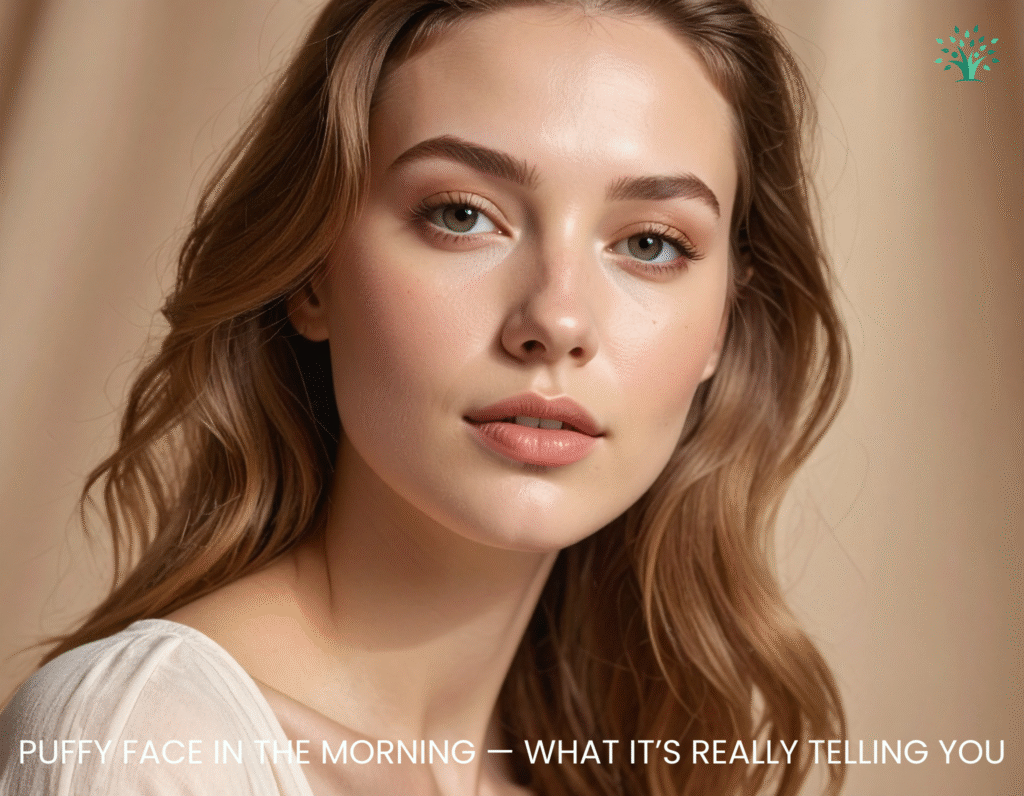
Puffy Face in the Morning — What It’s Really Telling You
◆Skincare & Beauty by Mijung | Korean Beauty & Flight Attendant Experience
I. INTRODUCTION — Why Puffy Face in the Morning Is Not Just “Bad Sleep”
Some mornings you wake up, look in the mirror, and immediately notice it — Puffy Face in the Morning. Your eyes look heavier. Your jawline feels softer. Even if you slept enough, something looks different. It can feel frustrating, especially when you cannot explain why it happened.
I have seen this pattern over and over, both in my own skin and in the women I’ve spoken with for years. We often blame salt, aging, or one late night. However, puffiness is rarely that simple. It is usually your body signaling fluid retention, inflammation, or stress imbalance that built up quietly over several days.
During the night, your body shifts into repair mode. Circulation changes. Cortisol rises naturally in the early morning hours. Lymphatic movement slows while you are lying still. If your system is already stressed — emotionally, hormonally, or nutritionally — that combination can show up directly on your face.
What makes this confusing is that puffiness does not always mean you are “unhealthy.” It often means your body is holding onto fluid because it feels inflamed or overstimulated. When stress lingers, even at low levels, recovery slows. The skin becomes less efficient at draining fluid and more reactive to small triggers.
This is why I always tell women: do not panic and do not overcorrect. Morning swelling is not a flaw. It is information. When you understand what your body is trying to communicate, you can respond calmly instead of aggressively.
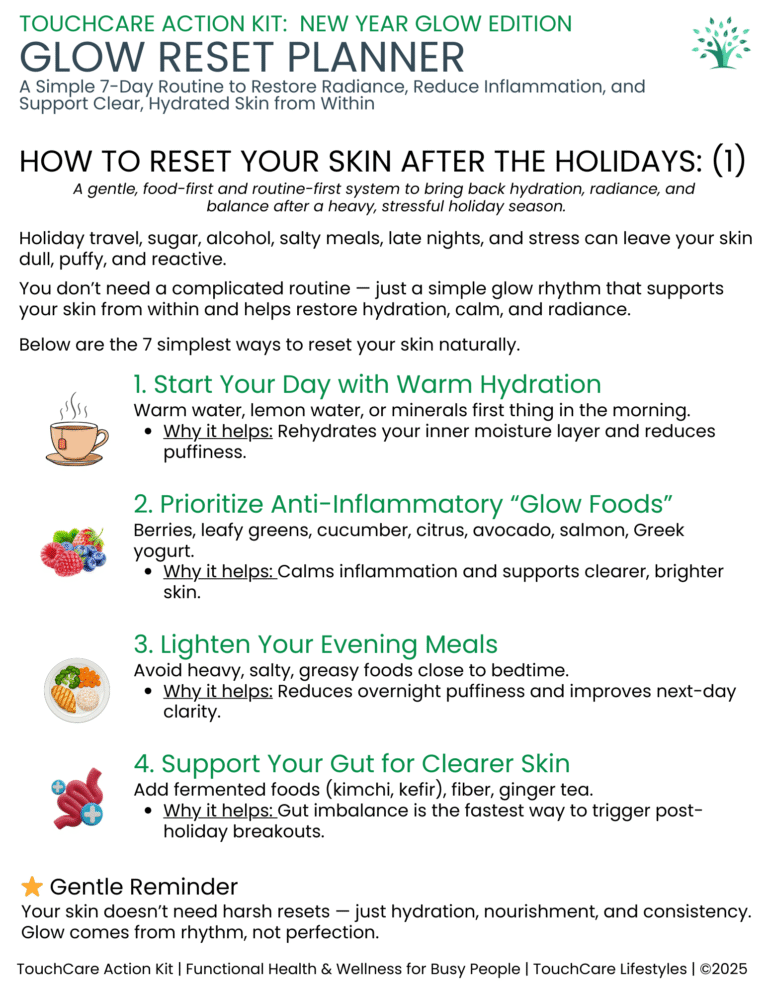
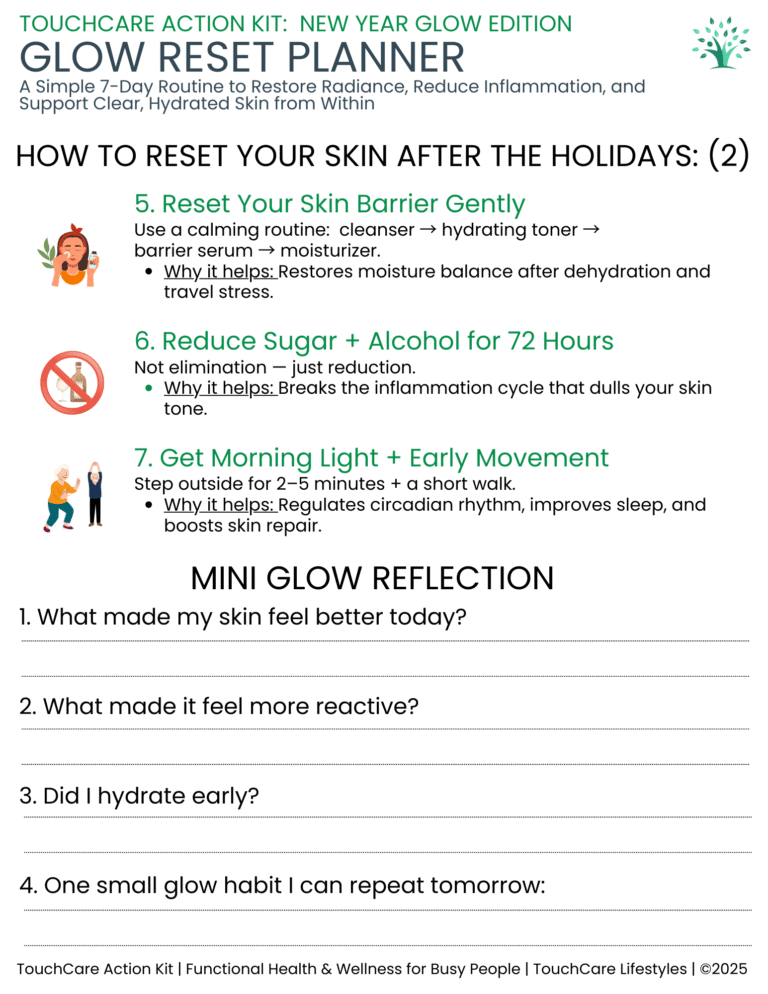
📥 BONUS: “How to Reset Your Skin After the Holidays – Free Download”
Preview your Planner below and download the free printable at the end of this post!
Stick it to your mirror and carry them.
Quick Jump Guide
• Why fluid retention increases overnight
• How cortisol contributes to morning swelling
• The connection between inflammation and dull skin
• Why sodium is not always the main cause
• When your skin barrier plays a role
• How to calm puffiness without overstimulating your skin
This Guide Is for You If…
• You wake up looking swollen even after decent sleep
• Your under-eyes feel heavy before noon
• Your jawline looks less defined in the morning
• Makeup sits unevenly until later in the day
• Puffiness fades by afternoon but keeps returning
II. What Puffy Face in the Morning Really Means Inside the Body
When we talk about puffiness, we often focus only on the surface. In reality, what you see in the mirror is the end result of several internal shifts that happen overnight.
First, cortisol naturally rises in the early morning. This is part of your circadian rhythm. It helps wake you up. However, if you’ve been under emotional stress, sleeping lightly, or consuming inflammatory foods, that cortisol rise can be amplified. Elevated cortisol influences fluid balance and encourages your body to hold onto water more aggressively.
Second, lymphatic flow slows while you sleep. During the day, your facial muscles move constantly when you talk, smile, and chew. That movement helps push fluid through delicate lymph channels. At night, especially if you sleep flat, fluid can settle in softer areas like under the eyes and along the jawline. If inflammation is already present, drainage becomes even less efficient.
Inflammation is the quiet factor most women overlook. Even mild systemic inflammation makes blood vessels slightly more permeable. That allows fluid to move more easily into surrounding tissue. The face shows it first because the skin is thinner and more reactive than other areas of the body.
This is why puffy mornings often follow emotionally heavy days, travel, poor digestion, or even subtle hormonal shifts. Your body is not failing you. It is responding to internal stress signals.
Understanding this changes the reaction. Instead of attacking your skin with stronger products, you begin to ask: what needs calming?
Recommended Reading:

III. Why Puffy Face in the Morning Often Comes With Dull Skin
Puffiness and dullness seem like opposites. One looks swollen. The other looks flat. Yet they frequently appear together.
When fluid collects in facial tissue, it stretches the surface slightly. That soft swelling blurs natural contours and disrupts how light reflects off the skin. Glow depends on smooth texture and healthy circulation. When circulation slows and fluid stagnates, light scatters instead of reflecting evenly.
At the same time, stressed skin often becomes mildly dehydrated on the surface. This is the confusing part. You can look swollen but still lack true hydration within the barrier. When the barrier is weakened, it loses water more easily. The result is skin that feels tight yet looks puffy.
Sleep quality plays a role here as well. Deep sleep supports collagen repair and cellular turnover. If sleep is fragmented, the overnight renewal cycle is incomplete. Dead skin cells linger longer, contributing to a slightly gray or tired appearance by morning.
Many women respond by exfoliating or layering brightening products immediately. That can temporarily increase surface glow, but if inflammation underneath remains unaddressed, the cycle repeats.
Morning puffiness paired with dullness is usually a sign that your system needs rhythm, not intensity. Calm drainage, stable hydration, and reduced inflammation restore brightness far more effectively than force.
⭐ Recommended Reading
IV. Why Adding More Products Makes Puffy Face in the Morning Worse
When you wake up swollen, the instinct is to fix it immediately. Many women reach for stronger vitamin C, exfoliating acids, firming masks, or heavy layering. I understand the urgency. I have done it too. However, overstimulation often makes puffiness linger longer.
When the skin barrier is stressed, it becomes more reactive. Aggressive exfoliation increases inflammation beneath the surface. Heavy occlusive creams can trap fluid. Strong actives may brighten temporarily, yet they do not address the underlying fluid retention or cortisol imbalance.
Morning swelling is usually a regulation issue, not a product deficiency. The skin needs calming structure before correction. Supporting the barrier gently allows circulation to normalize and inflammation to soften.
This is why restraint is powerful. When you stabilize first, your skin regains its natural ability to reflect light. Brightness becomes the result, not the forced outcome.
⭐ Recommended Reading
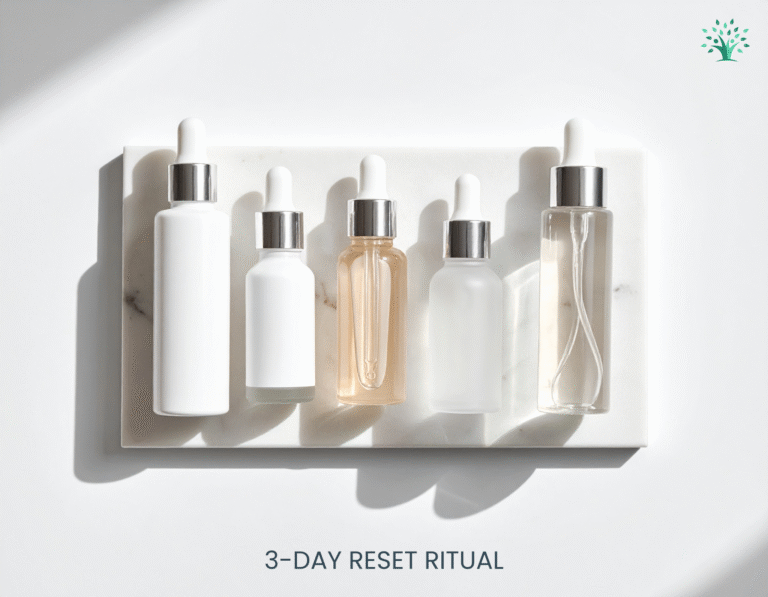
V. The 3-Day Recovery Plan for Puffy Face in the Morning
Instead of reacting emotionally to swelling, I recommend a simple three-day rhythm. This is not dramatic. It is structured and calming.
Day One — Calm Inflammation
The first goal is reducing low-grade inflammation. A soothing formula like Skin1004 Madagascar Centella Ampoule helps quiet visible reactivity without overstimulating the skin. Pair it with lightweight hydration such as Torriden DIVE-IN Toner, which replenishes water levels without adding heaviness that can worsen swelling.
Keep cleansing gentle. Avoid exfoliation. Give the skin space to reset.
Day Two — Reinforce the Barrier
When inflammation begins to settle, barrier repair becomes the focus. A strengthening cream like Dr. Jart Ceramidin Skin Barriers Face Cream helps restore resilience so the skin can hold hydration properly without appearing swollen.
To support overall balance, especially when stress has been ongoing, Ma:nyo Bifida Biome Complex Ampoule helps stabilize the skin’s microbiome. When the barrier is stable, drainage improves more efficiently.
Day Three — Restore Glow Gently
Once calm returns, you can reintroduce light luminosity support. A breathable mist such as d’Alba White Truffle First Spray Serum refreshes hydration throughout the day without layering heaviness.
If under-eye swelling persists, simplifying your routine helps. AHC Eye Cream for Face works as a multitasking moisturizer, reducing excessive layering that can trap fluid.
On evenings when the skin still feels dull, a single session with Mediheal Hyaluronate Watermide Mask replenishes moisture gently without adding stimulation.
The goal is not dramatic change. It is restoring rhythm.
This rhythm allows swelling to soften gradually while clarity returns.
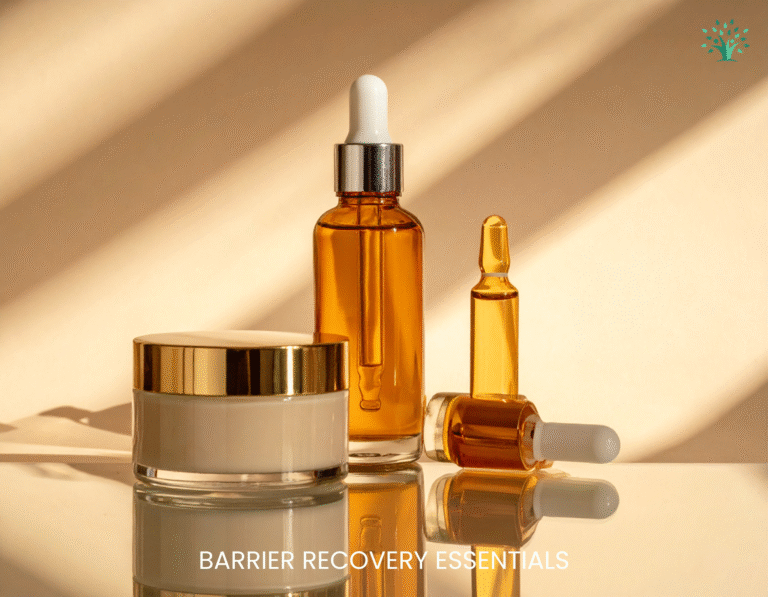
VI. Products That Support Puffy Face in the Morning Recovery
Each of these products supports regulation rather than intensity.
Dr. Jart Ceramidin Skin Barriers Face Cream
Reinforces the barrier so the skin can manage hydration without holding excess fluid.
Torriden DIVE-IN Toner
Provides lightweight hydration that does not weigh down the skin.
Skin1004 Madagascar Centella Ampoule
Calms visible inflammation linked to stress.
Ma:nyo Bifida Biome Complex Ampoule
Supports microbiome balance and texture stability.
d’Alba White Truffle First Spray Serum
Maintains luminosity without heavy layering.
AHC Eye Cream for Face
Simplifies routine steps when the skin feels reactive.
Mediheal Hyaluronate Watermide Mask
Offers gentle hydration support during recovery days.
As an Amazon Associate, I earn from qualifying purchases. These are products I personally use and recommend because they support skin recovery and glow without forcing change.
VII. Glow Reset Planner (Free sampler PDF)
Morning puffiness is rarely only a skincare issue. It reflects internal rhythm.
The Glow Reset | 7-Day Nutrition & Skin Renewal Planner was designed for exactly this pattern. Instead of chasing surface fixes, it guides you through structured tracking of:
• Sodium awareness
• Alcohol intake
• Sleep rhythm
• Hydration timing
• Anti-inflammatory foods
• Stress correlation
Patterns become clear when you observe them. As you begin to connect how your skin responds to what you eat, how you sleep, and how you manage stress, swelling no longer feels unpredictable.
This planner is not about dieting or perfection. It is about clarity. When you understand your rhythms, your skin begins to stabilize naturally.
For this post, I created a free 2-page sampler titled:
How to Reset Your Skin After the Holidays
This printable guide walks you through a simple calming sequence — hydration focus, circulation support, barrier protection, and gentle glow restoration — without overwhelming your routine.
The sampler offers a preview of the full Glow Reset Planner, which expands into a structured multi-day system with tracking pages, reflection prompts, and rhythm-building habits.
Simplicity creates stability. When stress clouds your skin, calm structure works better than intensity.
Download the free 2-page guide and start there.
📥 FREE BONUS DOWNLOAD – How to Reset Your Skin After the Holidays
🛍 Explore the full Glow Reset Planner on Etsy if you want the complete system.

VIII. final thought: Puffy Face in the Morning — What It’s Really Telling You
Frustration is understandable when swelling greets you in the mirror. It feels sudden, even unfair. One night rarely causes it. Accumulated stress, subtle inflammation, hormonal rhythm, digestion, and sleep quality quietly shape what you see at sunrise.
Facial tissue reacts quickly because it is delicate and vascular. Fluid settles where drainage slows. Cortisol influences retention before your feet even touch the floor. When repair was incomplete the night before, dullness joins the swelling.
Nothing about this means something is “wrong” with you.
Morning puffiness is information. It signals that recovery, not correction, is needed. Forcing brightness or tightening the surface does not resolve what built underneath. Regulation does.
Give the body calmer inputs. Support circulation. Simplify the routine. Allow inflammation to settle before demanding glow.
Your face responds to rhythm.
That is the message behind Puffy Face in the Morning — What It’s Really Telling You.
Not failure.
Feedback.
Glow is not forced. It returns when balance does.
With care,
Mijung