

How Stress Causes Bloating, Cravings & Slow Digestion
Functional Health & Wellness on the Go by Samuel
I. INTROduction: Stress Causes Bloating
Stress causes bloating more often than most people realize. You can eat the same foods, follow a familiar routine, and still feel heavy, uncomfortable, or sluggish when life gets overwhelming. That’s because digestion is one of the first systems to slow down when your body is under stress.
When stress is high, your nervous system shifts into survival mode. Blood flow is redirected away from digestion, gut movement slows, and cravings increase—especially for quick comfort foods. The result is bloating, irregular digestion, and that stuck, uncomfortable feeling that seems to come out of nowhere, even when your diet hasn’t changed.
In this article, I’ll explain how stress affects digestion in plain language, why bloating and cravings often show up together, and what actually helps on a daily basis. Instead of jumping straight into food rules or supplements, we’ll start with the real root cause—stress—and walk through simple, practical steps that help digestion work better again.
If bloating feels unpredictable and nothing you eat seems to fully explain it, this may be the missing piece.
📥 BONUS: Download Free 2-page printable“HOLIDAY STRESS RECOVERY ROUTINE“at the end of this post!
Stick it to your mirror and carry them.
II. How Stress Affects Digestion
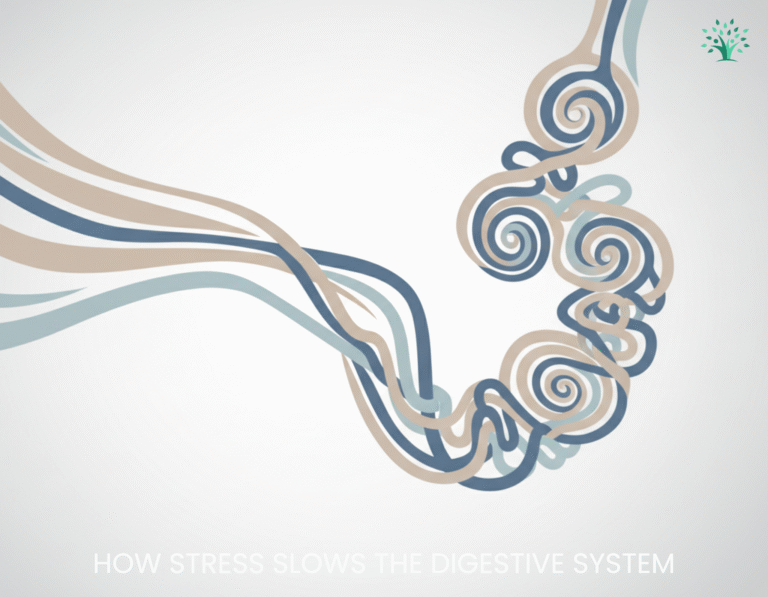
When stress levels rise, digestion slows down by design. Your body prioritizes survival over processing food, shifting energy away from the gut. This is why stress causes bloating even when your meals and timing haven’t changed.
Under stress, the nervous system stays in a fight-or-flight state. Gut muscles contract differently, stomach emptying slows, and intestinal movement becomes irregular. Food sits longer, gas builds, and the abdomen can feel tight or distended. None of this means something is “wrong” with you—it’s a predictable stress response.
Stress also alters how digestive signals are sent between the brain and the gut. That communication breakdown affects enzyme release, bile flow, and how efficiently nutrients move through the system. Over time, this pattern can make digestion feel unreliable, especially during busy weeks, emotional periods, or disrupted sleep.
This is why addressing stress first matters. Until the nervous system shifts out of high alert, digestion rarely improves—no matter how carefully you eat.
Recommend Reading:
III. Why Stress Triggers Bloating
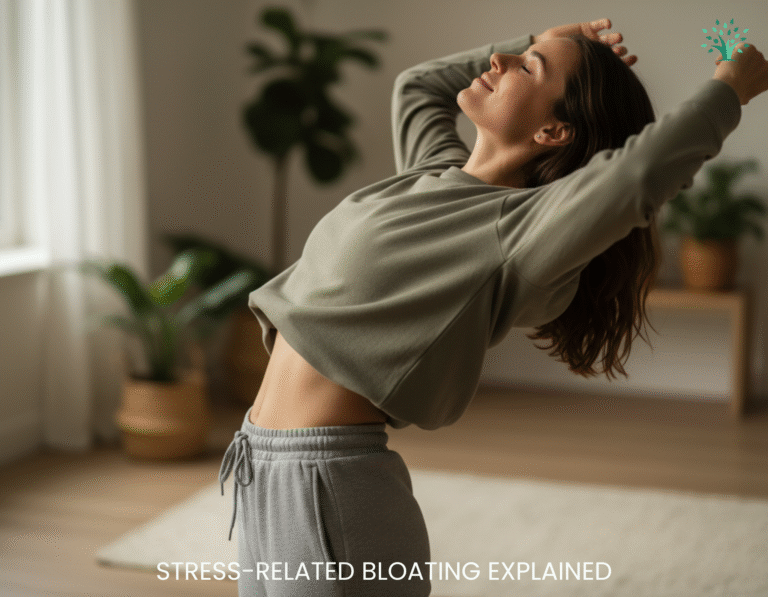
Stress causes bloating because digestion slows and pressure builds in the gut. When food moves more slowly through the digestive tract, gas has more time to accumulate, leading to that tight or swollen feeling many people notice during stressful periods.
Another factor is muscle tension. Stress tightens the diaphragm and abdominal muscles, which reduces natural gut movement and makes bloating feel more uncomfortable. Even breathing patterns change under stress, limiting gentle massage of the digestive organs that normally helps things move along.
Fluid balance also shifts when stress is high. Elevated stress hormones can increase water retention and inflammation, which adds to the sensation of heaviness in the abdomen. This is why bloating often feels worse at the end of a long, demanding day.
Because stress causes bloating through multiple pathways at once, food is often blamed incorrectly. The issue isn’t always what you ate—it’s how your body was functioning when you ate it. Until stress levels come down, digestion rarely feels normal.
Recommend Reading:
IV. Why Stress Increases Cravings
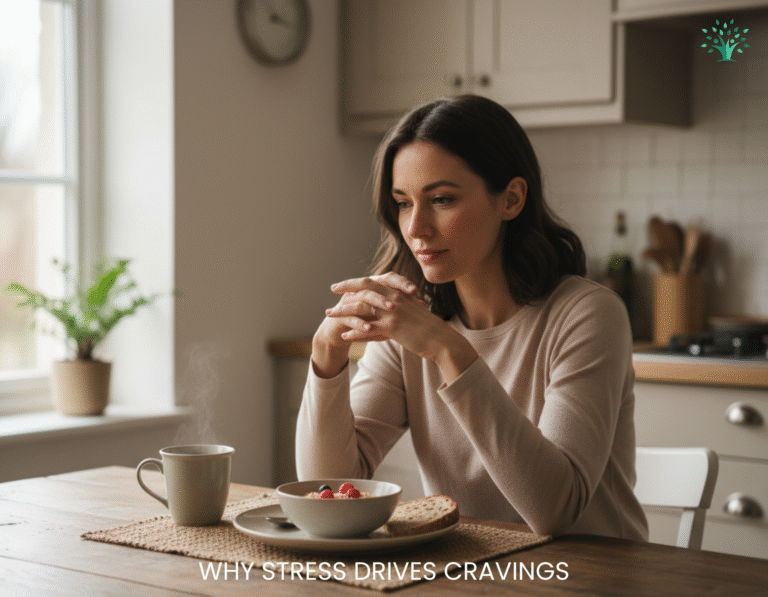
Stress doesn’t just slow digestion—it also changes what your body asks for. When stress hormones rise, the brain looks for fast energy and quick comfort, which is why cravings often show up alongside bloating.
Under stress, blood sugar regulation becomes less stable. As a result, the body signals for simple carbohydrates or sugary foods that provide rapid fuel. This response isn’t about willpower or discipline; it’s a biological shortcut meant to help you cope with perceived danger.
Another layer involves the nervous system seeking relief. Highly palatable foods temporarily dampen stress signals, creating a short-lived sense of calm. Unfortunately, that relief fades quickly, often leading to more cravings and continued digestive discomfort.
Because stress causes bloating and cravings at the same time, many people try to “fix” digestion by tightening food rules. That approach usually backfires. Until stress is addressed directly, cravings tend to persist regardless of how clean or careful the diet looks.
Recommended Reading:
V. Signs Your Digestion Is Stress-Driven (Not Food-Driven)
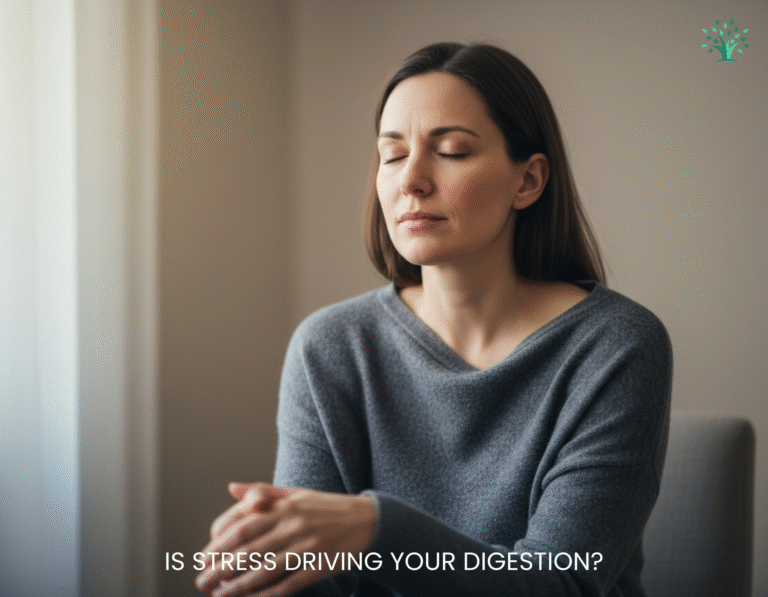
Stress causes bloating in ways that don’t always track with what you eat. One clear sign is inconsistency—digestion feels worse on busy or emotionally heavy days, even when meals stay the same.
Another indicator is timing. Bloating often shows up later in the day after meetings, deadlines, or mental overload rather than immediately after a specific food. That delay points to nervous system strain more than a dietary trigger.
Patterns across environments matter too. Digestion may feel noticeably better on calm weekends, during vacations, or after restful sleep, then regress when pressure returns. Food hasn’t changed, but stress has.
Physical cues also offer clues. Shallow breathing, tight shoulders, jaw clenching, or a constantly tense abdomen often accompany digestive discomfort when stress is the driver. These signs suggest the body hasn’t shifted out of alert mode.
When these patterns repeat, food is usually not the primary problem. Identifying stress as the trigger helps redirect efforts toward calming the system first, which is often what digestion needs most.
📥 FREE PDF: HOLIDAY STRESS RECOVERY ROUTINE
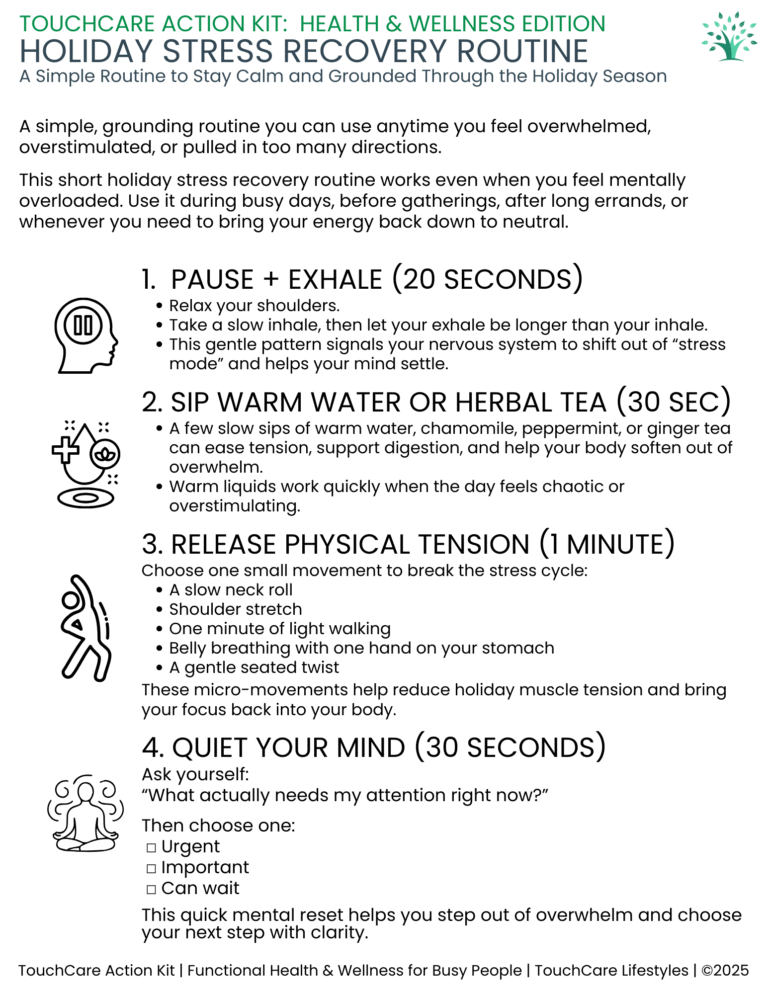
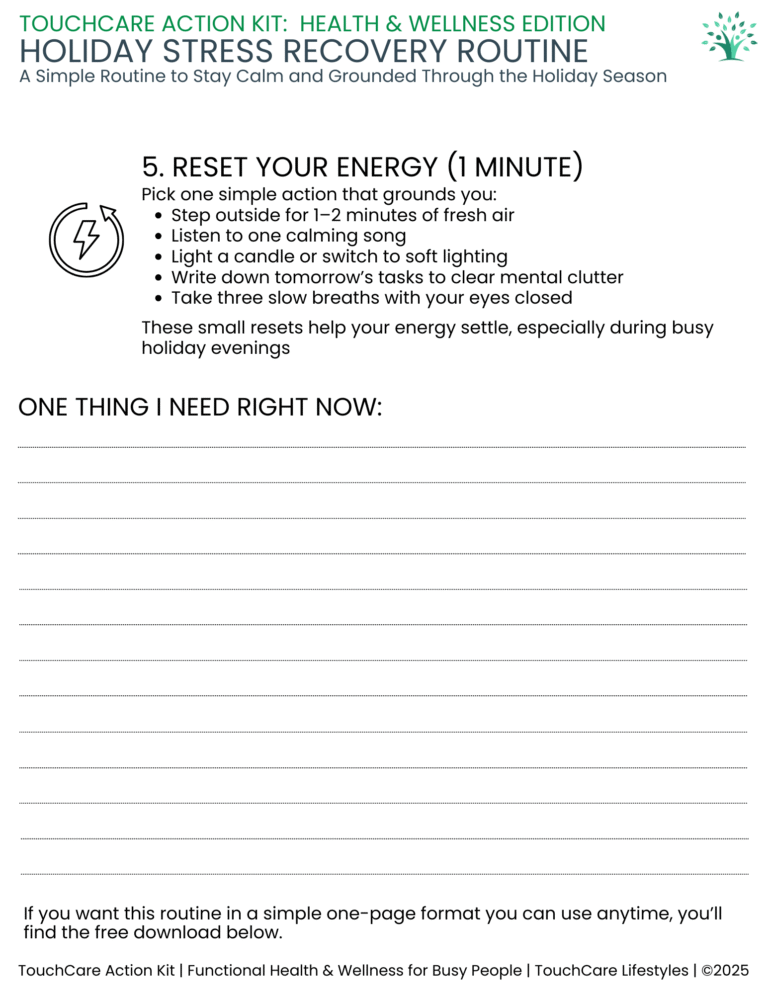
If stress is driving bloating, cravings, or sluggish digestion, the first step isn’t changing food—it’s calming your nervous system. That’s why I created the Holiday Stress Recovery Routine, a short, simple reset designed to help your body shift out of stress mode so digestion can begin working again.
Preview your Holiday Stress Recovery Routine below and download the free printable at the end of this post.
Stick it to your bathroom mirror or keep it in your skincare journal.
📥 Download Your Free Printable (PDF) Below
VI. What to Do Daily When Stress Is the Root Cause
When stress causes bloating, the most effective daily move is calming the nervous system before changing food. Digestion works best when the body feels safe, so simple habits that lower stress often improve gut comfort faster than restrictive diets.
Start by slowing the pace around meals. Sitting down, taking a few deep breaths, and eating without screens helps signal the body that it’s okay to digest. This small reset alone can reduce pressure and discomfort after eating.
Supporting the nervous system can also help digestion move more smoothly. Magnesium Glycinate – Nature’s Bounty is one option many people use to relax muscles and support the stress response, which can make bloating feel less intense during high-pressure days.
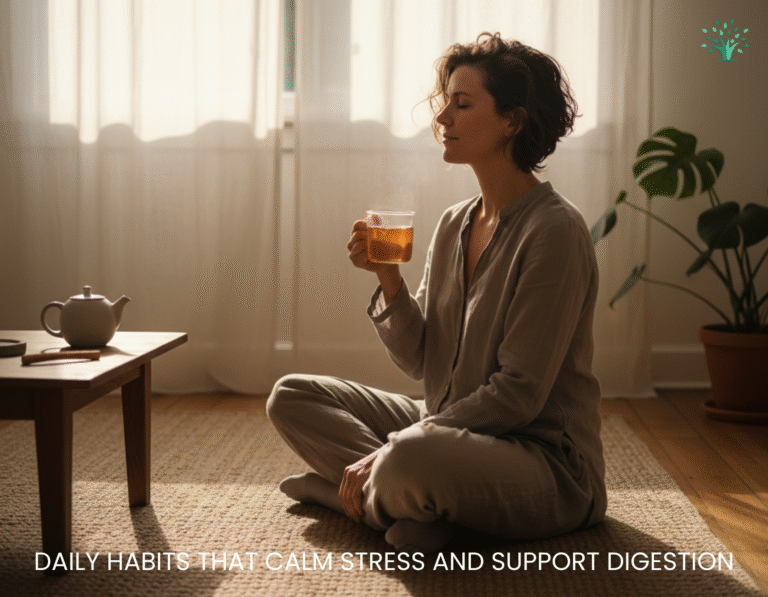
Warmth and simplicity matter as well. Sipping Organic Ginger Tea after meals or in the evening supports gentle digestion and can ease the heavy, sluggish feeling that often follows stressful days.
Consistency is more important than intensity. When these calming habits are practiced daily, the body gradually shifts out of constant alert mode, allowing digestion to function more normally again.
Affiliate Disclaimer
To make your choices easier, I’ve listed the exact items that support my wellness routine. As an Amazon Associate, I earn from qualifying purchases. I only recommend tools I personally use because they genuinely work.

ViI. Final Takeaway on Stress Causes Bloating
Stress causes bloating, cravings, and slow digestion far more often than most people expect. When the nervous system stays in high alert, digestion simply can’t do its job well, no matter how carefully you eat.
Addressing stress first changes the equation. By calming the body daily and supporting digestion gently, bloating becomes more predictable and manageable instead of confusing and frustrating.
Better digestion doesn’t start with restriction. It starts with lowering stress so the gut can work the way it’s designed to.
Calm the stress. Let digestion work again.
With care,
Samuel
⭐ Upgrade Your Wellness Routine
📥 BONUS: Download Free “HOLIDAY STRESS RECOVERY ROUTINE” PDF
If stress is driving bloating, cravings, or slow digestion, the first step isn’t changing food. It’s calming your nervous system.
That’s why I created the full PDF on Holiday Stress Recovery Routine— a short, practical TouchCare Action Kit designed to help you reset when stress feels high. It includes stress trigger awareness, simple emotional check-ins, hydration support, a quick calm reset, and a weekly reflection system you can use anytime things feel off.
It’s the easiest way to bring your body out of stress mode so digestion can begin working again.
👉 Get the Holiday Stress Recovery Routine here.
❄️ For a limited time, you can take 30% OFF any TouchCare planner with the holiday code HOLIDAY30.
🌿 Want Deeper Digestive Support?
Once stress is lower, digestion benefits from structure.
The Holiday Gut Reset & Bloat Relief Planner builds on the stress reset with a clear, step-by-step approach to hydration, meals, and daily gut support. It’s designed for busy, high-stress seasons when digestion needs consistency, not restriction.
Think of this as the next layer — not a replacement for stress management, but a way to help your gut stay steady once your nervous system is calmer.
👉 Get the Holiday Gut Reset & Bloat Relief Planner on Gumroad
📌 Related posts from Our Blogs: