

Holiday Stress Hits Your Body Harder Than You Think
◆Functional Nutrients & Smart Supplements by Mijung
I. Introduction: Holiday Stress Hits Your Body Harder Than You Think
Holiday stress doesn’t just feel overwhelming — holiday stress hits your body before it hits your mind. Tight shoulders, heavy fatigue, digestive issues, headaches, and broken sleep are some of the first signs that your nervous system is overloaded. During the years Samuel and I spent traveling constantly, we noticed something predictable: the holidays triggered more inflammation, more cravings, more tension, and more exhaustion than any other season.
Your holiday stress also sneaks up slowly. At first, you think you’re just busy… until your body says otherwise. You wake up more tired. Your patience drops. Your muscles tighten without warning. Your digestion becomes unpredictable. You feel wired and drained at the same time — all classic signs of how holiday stress hits your body long before burnout appears.
The problem isn’t a lack of discipline. The problem is that holiday stress activates physiological pathways — cortisol spikes, blood sugar swings, inflammatory cytokines, dehydration loops, and tension patterns — that push your body into survival mode. Once that happens, even small tasks feel heavier.
This guide explains why holiday stress hits your body so intensely and shows you how to reset fast using simple, functional habits you can start today.
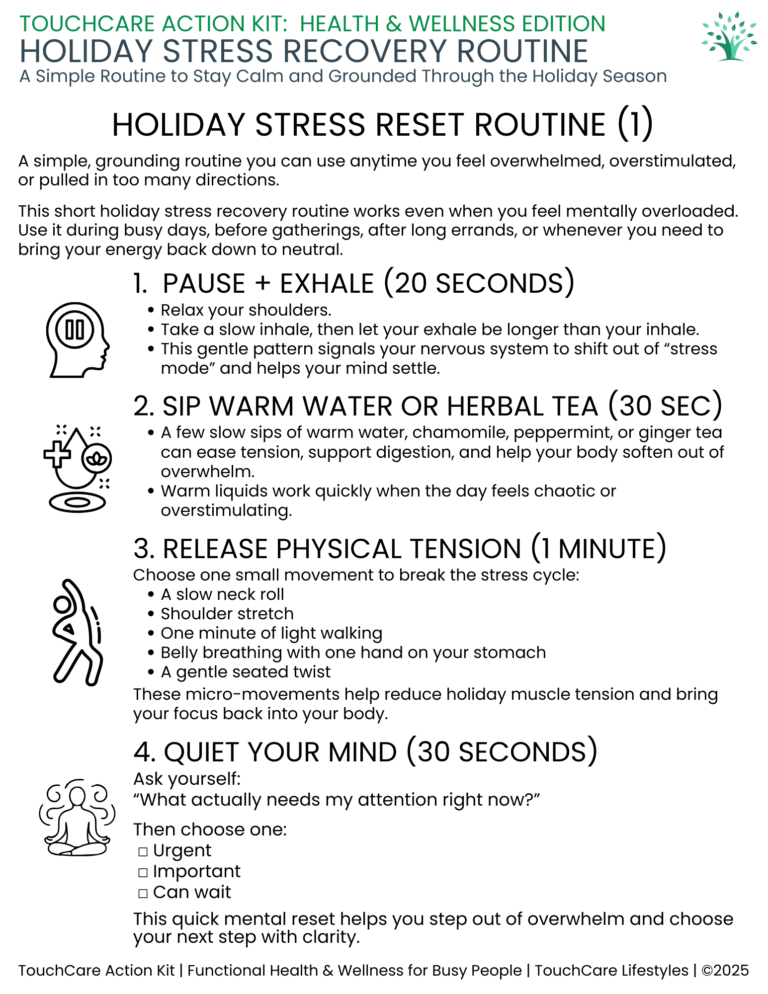
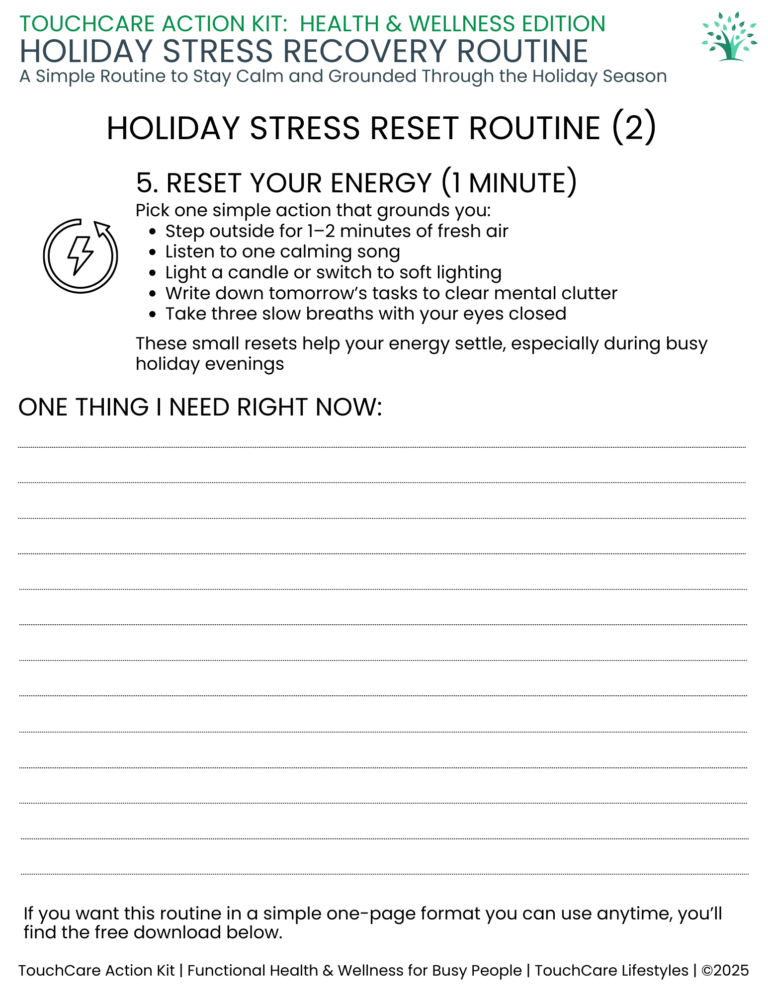
📥 BONUS: “Holiday Stress Reset Planner – Free Download”
Preview your planner below and download the free printable at the end of this post.
Stick it to your mirror or keep it in your bag for quick, calm resets anywhere.

II. Why Holiday Stress Hits Your Body So Much Harder
Holiday stress doesn’t behave like everyday stress. It builds faster, lasts longer, and hits multiple systems of your body at the same time. Your brain stays alert because there is more stimulation than usual — travel, noise, social plans, shopping, family dynamics, and pressure to “hold everything together.” That constant activation keeps your nervous system in a light fight-or-flight mode without you realizing it. It’s one of the many reasons holiday stress hits your body with more intensity than normal daily pressure.
Cortisol rises in response, and once that hormone stays elevated, everything begins to shift. Digestion slows. Sleep becomes lighter. Heart rate climbs. Muscles stay tight even when you’re resting. These physical changes can make you feel wired, puffy, foggy, or unusually emotional, even if your mind insists you’re “fine.”
The body also struggles with rhythm during the holidays. During this season, meal timing varies, sugar intake rises, hydration drops, and late nights stack up. Those small disruptions create inflammation that sits beneath the surface. Many women describe this as feeling swollen, irritated, or overstimulated without a clear reason.
Travel adds another layer. Dry cabin air dehydrates you quickly, while time zone changes confuse your sleep cycle. Even short trips can disrupt your body’s natural cues, making you more reactive to stress once you arrive.
Holiday stress feels stronger because it comes from many directions at once — emotional, physical, environmental, and hormonal. When these layers pile up, your body has to work harder just to feel normal. That’s why the right reset routine matters. It gives your system space to recover instead of spiraling into exhaustion.
Recommended Reading:

III. Early Signs Holiday Stress Hits Your Body Before Burnout
Early Signs Holiday Stress Hits Your Body Before Burnout
Holiday stress rarely announces itself loudly. It shows up through small physical shifts that are easy to dismiss as “just being tired.” These early cues matter because they appear days before burnout hits, and catching them early makes recovery much faster.
You may notice your shoulders creeping upward or staying tense even when you lie down. As stress builds, sleep becomes lighter and you wake up feeling unrefreshed. Meanwhile, digestion slows, leaving you feeling bloated or heavy after normal meals. A short fuse, brain fog, or emotional sensitivity may appear without any obvious trigger. Even your skin can react — dryness, redness, or sudden breakouts are common when stress hormones rise.
Your energy rhythm changes next. In some cases, even simple tasks begin to feel heavier. Afternoons crash harder. Hydration becomes inconsistent. You might crave sugar or salty snacks more often, or feel unusually hungry late at night. None of these symptoms are random; they’re signals that your nervous system is overstimulated and struggling to reset.
The sooner you recognize these patterns, the sooner you can interrupt how holiday stress hits your body before it spirals into exhaustion.
IV. Hidden Triggers That Make Holiday Stress Hit Your Body Faster

Most women assume holiday stress comes from big moments — travel, gatherings, or family pressure. In reality, the body reacts more strongly to small triggers that repeat throughout the season. These quiet stressors stack up, overwhelm your system, and leave you feeling tired, puffy, irritable, or emotionally stretched without understanding why.
Travel is one of the biggest hidden triggers. Dry cabin air pulls moisture from your skin and muscles. Time-zone shifts interrupt sleep. Long hours in tight spaces make circulation sluggish. Even when the travel feels smooth, your nervous system works overtime to stay alert.
Stressful weeks often bring sleep disruption as another strain. With late nights, early mornings, and irregular schedules, your natural rhythm breaks quickly. When sleep fragments, cortisol rises, and your emotional resilience drops quickly.
Food plays a larger role than most people expect. Holiday meals often include more sugar, salt, and alcohol. These create inflammation, increase cravings, and make your gut more reactive. When digestion becomes stressed, your mood and energy follow.
Emotional overload shows up quietly. Many social expectations, hosting responsibilities, and family dynamics require constant emotional output. Hydration also slips as cold weather reduces thirst cues. Coffee increases throughout the day, alcohol dehydrates, and even slight dehydration makes stress feel heavier and fatigue set in faster.
These overlooked triggers create a cycle of stress that feels relentless. Recognizing them is the first step toward breaking the pattern so you can reset before burnout appears.
⭐ Recommended Reading
📥 FREE PDF: Stress Reset Routine — Quick Guide
Download the simplified one-page Stress Reset checklist with early warning signs, hidden triggers, and the exact steps you can use to calm your system quickly.
📥 Download Your Free Printable Below
V. The First Half of Your Stress Reset Routine
A true stress reset starts with rebuilding stability inside your body. Instead of forcing calm or pushing yourself to “power through,” the goal is to shift your system out of overload so your mind and body can settle again. These first steps create the foundation that makes the rest of your reset actually work.
Slow Down Your Internal Pace (60–90 Seconds)
A stressed body moves faster than you notice. Your breathing shortens, shoulders tense, and your mind jumps ahead of your schedule. Bringing your pace down is the quickest way to interrupt the stress loop. A slow exhale, a pause before standing, or even unclenching your jaw signals your nervous system that you’re safe. This small reset moment reduces emotional overflow before it builds into overwhelm.Rehydrate Before You Do Anything Else
Most women underestimate how much dehydration intensifies stress. Even mild fluid loss increases irritability, fatigue, and cravings. Before clearing your calendar or starting self-care, rehydrate. A few sips of water with electrolytes restores fluid balance and makes the next steps feel easier. When hydration improves, your mood follows.Create Circulation and Heat Release
Holiday stress tends to build up in the neck, chest, and lower back. These areas tighten when cortisol rises, which makes breathing feel heavier and emotional pressure spike more quickly. Moving gently — shoulder rolls, slow walking, or loosening the rib cage — releases that trapped tension. Once circulation improves, your entire system becomes more responsive to calming routines.Reconnect Your Mind and Body
Stress pulls you into your thoughts: plans, concerns, unfinished tasks. A simple grounding cue closes that mental loop. Feeling your feet on the floor, placing a hand over your abdomen, or taking one deeper breath resets awareness. Once your mind stops racing ahead, you regain clarity and emotional steadiness.
These first four steps don’t take long, but they change how your body processes stress for the rest of the day. When your system becomes less reactive, the rest of your routine feels smoother, lighter, and more effective.
VI. The Second Half of Your Stress Reset Routine
Calm the Nervous System With Magnesium
Once your body begins to slow down, magnesium helps settle the tension you can’t release manually. Stress depletes magnesium quickly, which makes irritability, jaw tightness, and restlessness worse. A gentle form such as Magnesium Glycinate – Nature’s Bounty supports relaxation without grogginess and helps stabilize your mood as your system resets.Support Recovery With Electrolytes
Holiday stress drains minerals faster than normal, especially if caffeine or alcohol increases. Restoring electrolyte balance gives your body the foundation it needs to recover. A hydration mix like Liquid I.V. Electrolytes Powder replenishes sodium and potassium so fatigue doesn’t spiral into an afternoon crash.Reduce Cortisol Spikes Naturally
Stress cycles become heavier when cortisol rises repeatedly throughout the day. A calming adaptogen such as Horbäach Ashwagandha helps smooth those spikes so you feel more grounded and less reactive. It doesn’t sedate you — it steadies your internal rhythm so emotional pressure doesn’t build as quickly.Warm the Gut to Release Emotional Tension
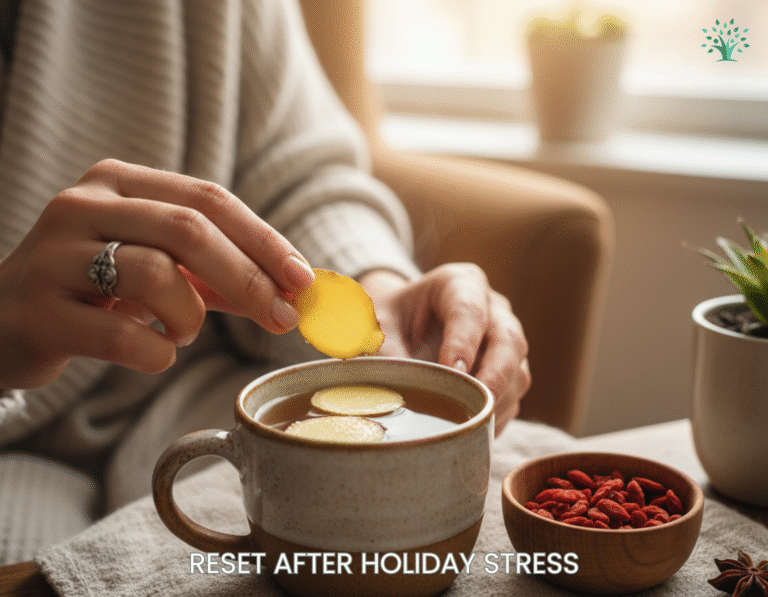
Digestive tension increases when stress accumulates. Warm, soothing ingredients help relax the stomach and settle the nervous system at the same time. A simple cup of Organic Ginger Tea eases bloating, supports digestion, and helps your body transition out of that “tight” stress state.Strengthen the Gut–Stress Connection
The gut reacts strongly to holiday stress, travel, sugar, and irregular meals. When the microbiome becomes imbalanced, anxiety and fatigue hit harder. A daily probiotic like Physician’s Choice Probiotics supports digestion, reduces inflammation, and keeps the gut-brain pathway steadier during stressful weeks.Anchor the Reset With Stillness
The final step is stillness. Not meditation, not breathwork — just five quiet minutes where nothing is required of you. Stress steals clarity, and stillness gives it back. When your body has space to settle, your mind stops trying to manage everything at once. This moment completes the reset.
Together, these steps shift your physiology out of the stress cycle and into recovery mode. When your internal rhythm becomes steady again, you don’t just feel calmer — you feel more capable.
VII. Product Recommendations for Holiday Stress Recovery
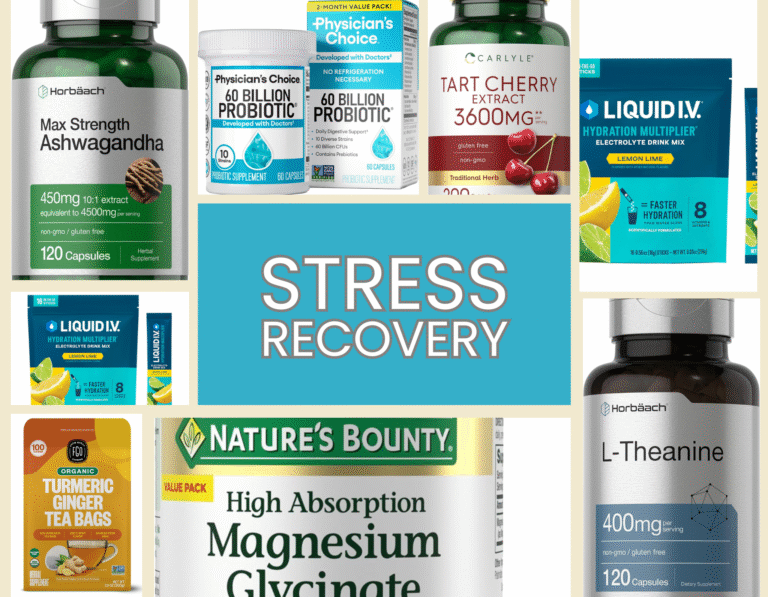
These seven essentials support the stress points that hit hardest during the holidays — mood instability, hydration loss, sleep disruption, and gut stress. Each one plays a specific role in helping your body reset quickly and naturally.
Magnesium Glycinate – Nature’s Bounty
Helps calm the nervous system, reduces muscle tension, and supports deeper relaxation after long, stressful days.
Liquid I.V. Electrolytes Powder
Replenishes minerals lost through caffeine, alcohol, and travel so your energy stabilizes and fatigue doesn’t spiral.
Horbäach Ashwagandha
A steady, grounding adaptogen that smooths cortisol spikes and supports emotional resilience.
Organic Ginger Tea
Warms the gut, eases bloating, and helps the body release digestive tension linked to stress cycles.
Physician’s Choice Probiotics
Supports gut balance, reduces inflammation, and improves the gut–brain connection during stressful weeks.
L-Theanine – Horbäach
Promotes a calmer mental state, reduces overwhelm, and improves focus without creating drowsiness.
Tart Cherry – Carlyle
Supports melatonin production and enhances sleep quality, especially when stress disrupts your rhythm.

VIII. Final Takeaway: Your Body Isn’t Overreacting — It’s Overloaded
Holiday stress builds quietly. As these changes intensify, your body reacts — with fatigue, irritability, bloating, headaches, or emotional heaviness — it’s not a sign of weakness. It’s communication. It’s simply the way holiday stress hits your body when the load becomes too high.
A fast reset works because it supports what your body is already trying to do: calm the nervous system, restore hydration, balance the gut, and lower inflammation. When you follow the steps that bring your internal rhythm back into alignment, your energy stabilizes and everything feels more manageable. Small changes create a surprisingly big shift.
Your body knows how to recover. It just needs space, rhythm, and the right kind of support to return to center.
Reset softly. Recover fully. Live steady again.
With care,
Mijung
✈️ Flight Attendant Tip
During peak travel season, I always carried two things in my bag: electrolytes and ginger tea. Dehydration and digestive tension were the biggest stress triggers for flight attendants. A few sips of electrolytes before landing and a warm ginger tea after crew briefing made a dramatic difference in mood, bloat, and energy for the next day. Tiny rituals keep your system steady when everything else moves too fast.
⭐ Upgrade Your Wellness Routine
📥 BONUS: Download Free “HOLIDAY STRESS RECOVERY ROUTINE” PDF
Want this routine in a simple, guided format?
If you want a clear, calming structure to help you stay grounded through the holidays, you can download the Holiday Stress Recovery Routine — a TouchCare Action Kit with stress triggers, emotional check-ins, hydration support, a 3-minute calm reset, and a full weekly reflection system.
It’s the easiest way to stay centered and emotionally steady during the most demanding weeks of the year.
👉 Get the Holiday Stress Recovery Routine here.