
Gut Health Supplements Are the 2025 Must-Have
Functional Wellness for the Year Ahead
Functional Nutrients & Smart Supplements Curated bySamuel
I. INTRO: Gut Health Supplements Are the 2025 Must-Have
If you’ve followed TouchCare since the beginning, you already know: I’m a big believer in gut health.
In fact, one of our first blog posts was all about fermented superfoods like kimchi and natto—foods that helped me recover and fuel Samuel’s healing journey. Why? Because your gut isn’t just where food is digested—it’s where your whole system is regulated.
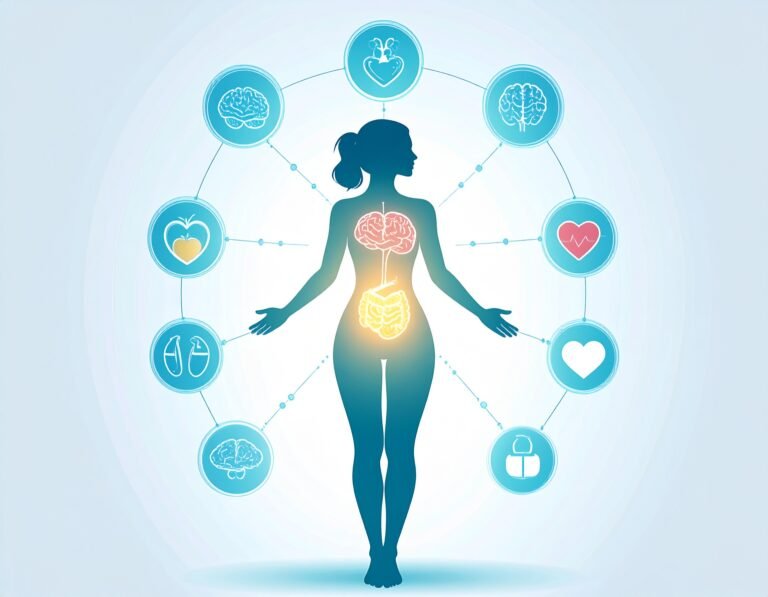
I think of it like a fuel tank. It processes your nutrients, communicates with your brain, manages your mood, supports your immune system, and even impacts inflammation and pain. So when your gut is off? Everything’s off.
That’s why in 2025, gut health supplements are no longer optional—they’re essential. Stress, poor sleep, antibiotics, and processed food can all break down your microbiome. Even if you eat “healthy,” your gut may still need backup.
In this post, I’ll walk you through:
- Why gut health matters more than ever
- How to know if your body needs support
- The top 3 gut supplements I actually use
- And how to build them into your daily rhythm—without overwhelm
Gut health changed my life—and if you’re looking for where to start, this post might be your answer.
II. The Gut-Brain-Immune Axis: Why Everything Starts in the Gut
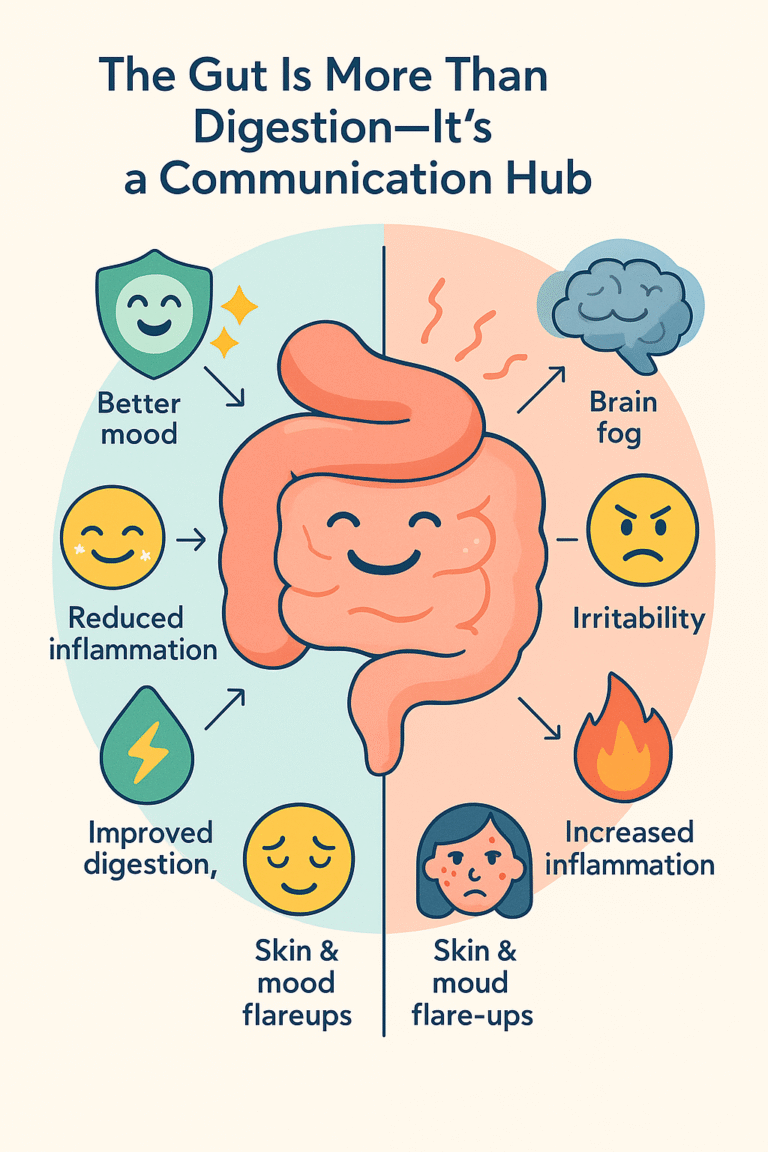
Modern science has made one thing clear: the gut isn’t just for digestion—it’s your body’s communication hub. The gut connects directly to your brain and immune system through a powerful internal network known as the gut-brain-immune axis.
When your gut microbiome is diverse and balanced:
- Your immune system functions better
- Your mood stabilizes (thanks to serotonin production)
- Inflammation stays in check
- Digestion, energy, and skin health all improve
But when your gut is off?
- Brain fog, fatigue, and irritability increase
- You feel bloated or sensitive after eating
- Skin and mood flare-ups become more frequent
- Inflammation builds—and so do long-term health risks
Studies from Harvard Health and Johns Hopkins show that your gut has its own nervous system (the enteric nervous system), produces neurotransmitters like serotonin, and influences inflammation and immune responses.
📖 Harvard Health: The gut-brain connection
📖 Johns Hopkins: The Brain-Gut Connection
If you’re struggling with multiple issues at once, healing your gut might be the first step.
III. How to Tell If You Need a Gut Health Supplement
Most people assume if they’re not doubled over with cramps, their gut is fine. But the truth is, signs of gut imbalance can be subtle—and sneaky.
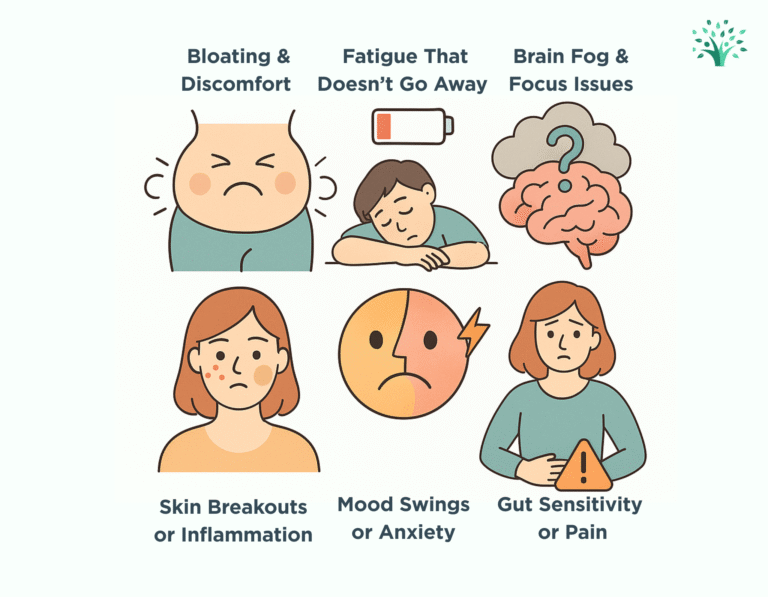
Common signs your gut might need support:
Daily bloating or discomfort
Fatigue that doesn’t improve with rest
Brain fog or trouble focusing
Frequent breakouts or dry, inflamed skin
Mood swings or increased anxiety
Trouble digesting certain foods
Even low-grade inflammation from gut imbalance can contribute to fatigue, depression, and skin flare-ups—especially when stress or medication is involved.
Even if you eat a mostly clean diet, things like travel, stress, medications, or too little fiber can throw off your microbiome. That’s when supplements can step in to fill the gap and speed up repair.
Think of them like a wellness toolbox. You don’t need every tool—but the right one at the right time can change everything.
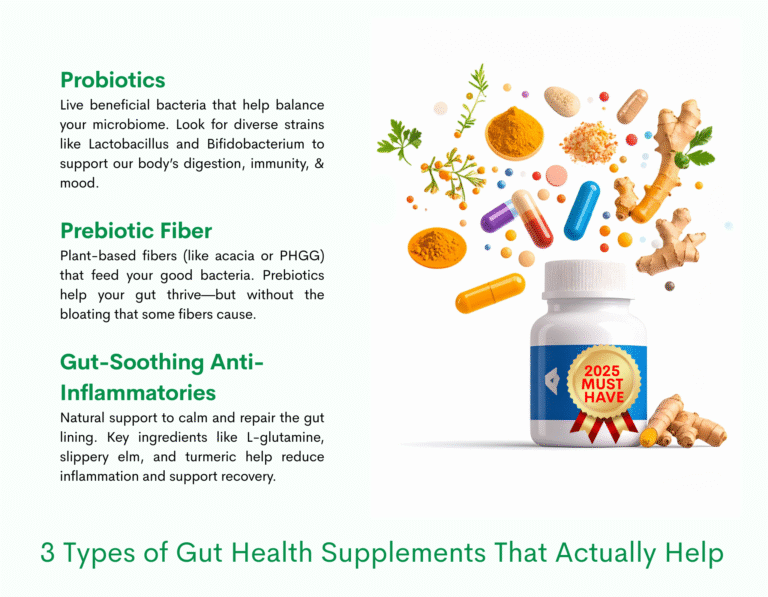
IV. The Top 3 Gut Health Supplements That Actually Help
These are the exact supplements I keep in rotation—not hype, not overwhelm. Just what works.
1. Probiotics with Diverse Strains
Look for a blend with multiple species (lactobacillus, bifidobacterium) and CFU count over 10 billion. These help restore balance and improve digestion, mood, and immunity.
👉 Physician’s Choice Probiotics 60 Billion CFU
2. Prebiotic Fiber (Gentle on the Gut)
Prebiotics feed your good bacteria—but many cause gas or cramping. Choose soluble fiber from acacia or partially hydrolyzed guar gum to support your gut without the bloat.
👉 Nature Made Probiotic + Prebiotic Fiber Gummies
3. Gut-Soothing Anti-Inflammatory
Supplements like L-glutamine, slippery elm, or turmeric can help seal the gut lining and reduce inflammation, especially after stress or antibiotics.
👉 Clean Nutraceuticals Slippery Elm Gut Health Supplement
Extra Bonus Options We Also Use:
👉 VAHDAM Organic Turmeric Ginger Herbal Tea (100 Bags)
👉 BetterBody Foods Organic Chia Seeds – 24 Travel Packs
These work as a daily base—or short-term reset—depending on your needs.
As an Amazon Associate, we may earn a small commission from qualifying purchases—at no extra cost to you. We only recommend products we personally use and trust.
V. How to Add Them to Your Routine Without Overwhelm

You don’t need to overhaul your life. Here’s how I keep it simple:
Morning: Take probiotic 15–30 minutes before breakfast
Midday or with meals: Stir prebiotic fiber into water, smoothie, or tea
Evening: Take L-glutamine or turmeric tea after dinner to support recovery overnight
💼 Samuel’s Insight:
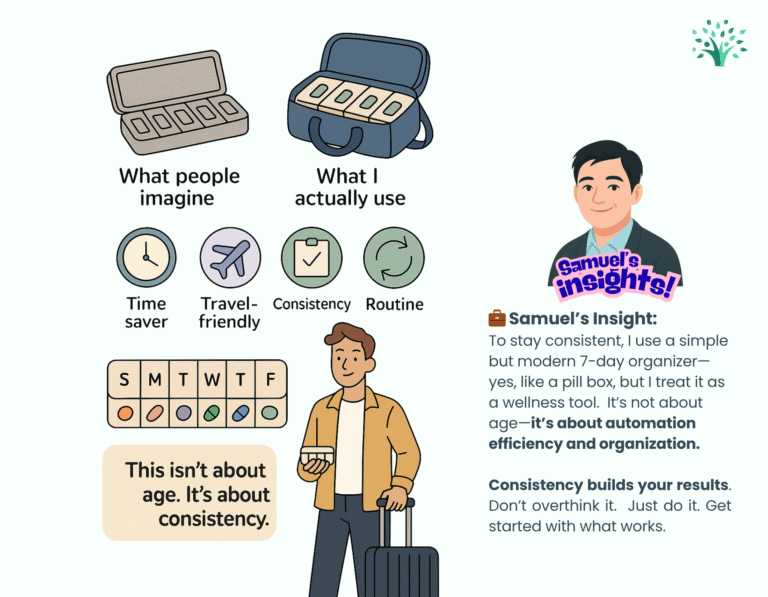
To stay consistent, I use a simple but modern 7-day Organizer—yes, like a pill box, but I treat it like a wellness system. One setup on Sunday, and I’m done thinking about it all week. It’s not about age—it’s about staying on track without the stress.
When I travel, I just drop it in my bag and go. No scrambling, no missed days—just consistency.
Consistency is what matters most. Don’t worry about perfection—just pick one and start.
VI. Final Thoughts – Gut Health Is the Foundation of Functional Wellness
In 2025, we’re done chasing trends. We’re building from the inside out. And that starts with your gut.
You don’t have to take 12 pills a day or go on an elimination diet. But you do need to listen to your gut—and give it the support it deserves.
Start with just one supplement that fits your lifestyle. You’ll know it’s working when your energy, digestion, and clarity start coming back online.
🧠 Want to go deeper?
Read our blog on fermented superfoods: Discover Gut Healthy Superfoods – Kimchi and Natto
Or explore Harvard Health’s take on digestive health
Your gut is your foundation. In 2025, it’s your must-have upgrade.
With care,
Samuel