

Feel Anxious and Bloated During Seasonal Changes?
◆ Functional Health & Wellness by Mi Jung
I. INTRODUCTION — When You Feel Anxious and Bloated for No Clear Reason
There are certain weeks when I look completely fine on the outside, yet inside I feel anxious and bloated at the same time. Thoughts begin to race a little faster. A tight sensation settles in my stomach. Clothes fit slightly differently even though meals haven’t changed.
Seasonal transitions seem to amplify it. As daylight shifts and routines adjust, my nervous system feels more sensitive. Digestion slows. Sleep becomes lighter. Suddenly my body feels tense and swollen, almost like it is bracing for something.
Many women assume this combination is random. In reality, anxiety and bloating often rise together because they share the same biological pathway. Stress chemistry affects the gut. The gut responds with pressure and slowed movement. That physical discomfort then feeds the mind.
Over time, I stopped treating anxiety and bloating as separate problems. Instead, I began looking at rhythm. When light exposure, sleep timing, stress load, and digestion fall out of sync, the body reacts quickly.
Feeling anxious and bloated is not weakness. It is usually a sign your system needs stabilization, not more control.
📥 BONUS: Download the FREE 2-page printable infographic PDF at the end of this post! Stick it to your mirror and carry them. Your Stress Reset Planner.
Quick Jump Guide
• Why you feel anxious and bloated during seasonal shifts
• How cortisol affects digestion
• The gut-brain connection in transitional seasons
• Why bloating increases when stress rises
• How light and sleep changes affect your nervous system
• What a structured Stress Reset changes
This Guide Is for You If…
• You feel tense and bloated at the same time
• Seasonal changes affect your mood or sleep
• Digestion slows when stress increases
• Anxiety feels physical in your stomach
• Your body reacts strongly to light or weather shifts
• You want calm without extreme measures

II. Why You Feel Anxious and Bloated During Seasonal Changes
Seasonal transitions quietly disrupt the nervous system.
As daylight hours shift, your circadian rhythm adjusts. Melatonin production changes. Cortisol timing can become slightly irregular. Even small alterations in light exposure influence how alert or calm you feel throughout the day.
When cortisol rhythm becomes inconsistent, digestion often slows. Blood flow prioritizes survival systems rather than repair. The stomach empties more slowly. Gas accumulates more easily. Pressure builds.
That internal pressure can feel like fullness, swelling, or heaviness. At the same time, stress chemistry increases muscle tension, including in the abdomen. Tight abdominal muscles restrict comfortable digestion and amplify bloating.
Weather transitions also matter. Barometric pressure changes and temperature shifts subtly influence circulation and fluid balance. Some women are more sensitive to those environmental variations than others.
This is why you can eat clean meals yet still feel off. The issue isn’t discipline. The issue is regulation.
When you feel anxious and bloated during seasonal change, your body is often responding to rhythm disruption rather than food alone.
Recommended Reading:

III. The Gut-Brain Axis — Why You Feel Anxious and Bloated Together
The gut and brain communicate constantly.
Nerves, hormones, and inflammatory signals travel in both directions through what is called the gut-brain axis. When stress rises, the brain signals the digestive system to slow down. That response conserves energy for perceived threats.
Slower digestion increases fermentation in the intestines. Gas production rises. Abdominal pressure builds. Discomfort appears.
Physical discomfort then feeds anxiety. Your brain interprets tightness and pressure as distress signals. A loop forms. Stress slows digestion. Bloating increases tension. Tension reinforces stress.
Many women try to solve bloating with food changes alone. Sometimes that helps. Often the missing piece is nervous system support.
When you feel anxious and bloated together, calming the stress response can relieve both symptoms at once. Stabilizing sleep, breathing deeply, and moderating stimulation frequently improve digestion without drastic dietary shifts.
Understanding that connection removes self-blame. Your body is not betraying you. It is reacting to stress chemistry.
Recommended Reading:
IV. Cortisol, Light Shifts & Digestive Slowdown
Cortisol follows a daily rhythm.
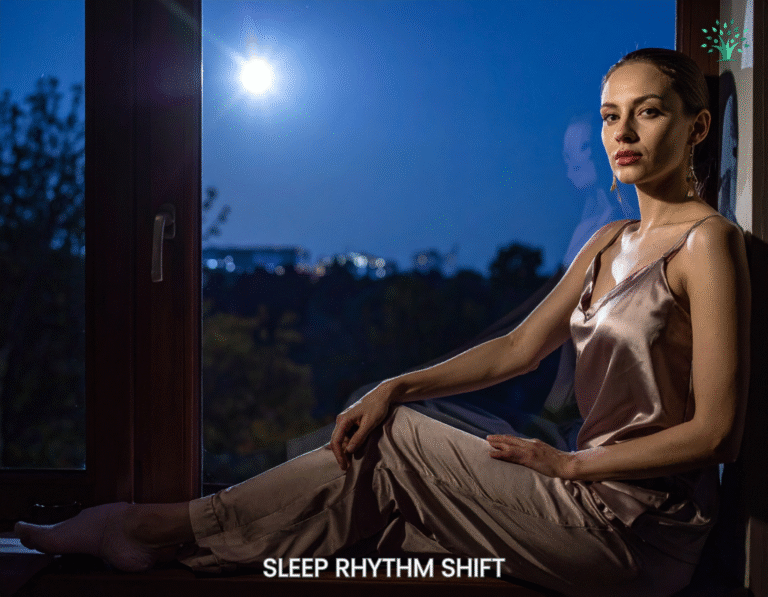
Ideally, it rises in the morning to wake you up and gradually declines by evening so your body can rest. During seasonal transitions, especially in early spring and fall, that rhythm can shift. Darker mornings, brighter evenings, or sudden weather changes subtly confuse the internal clock.
When cortisol timing becomes irregular, digestion reacts.
Elevated evening cortisol makes it harder to wind down. Sleep becomes lighter or more fragmented. Poor sleep the night before increases stress sensitivity the next day. That heightened stress response slows stomach emptying and intestinal movement.
Light exposure plays a role as well. Less morning sunlight can delay your circadian alignment. Later bedtimes follow. Digestive timing drifts.
Bloating often increases during these weeks not because food changed, but because stress rhythm did.
When you feel anxious and bloated in transitional seasons, your body may simply be adjusting to environmental signals faster than your routine is.

V. Why You Feel Anxious and Bloated Before Weather or Hormonal Shifts
Hormones amplify seasonal sensitivity.
In the luteal phase of the menstrual cycle, progesterone rises and digestion naturally slows. Fluid retention increases. Emotional sensitivity can heighten. When seasonal stress overlaps with that hormonal phase, symptoms feel stronger.
Perimenopause adds unpredictability. Hormone fluctuations may intensify anxiety while also affecting fluid balance and bowel rhythm. Even subtle barometric pressure shifts can influence how the body feels.
Temperature changes matter too. Cooler air can decrease peripheral circulation slightly. Warmer days can increase fluid retention temporarily. The body works harder to maintain balance.
During these windows, many women try to tighten control. More restriction. More caffeine. More exercise. That response often increases stress instead of calming it.
Gentle support works better.
Lowering stimulation, stabilizing sleep timing, and reducing late-night screen exposure often improve both anxiety and bloating more effectively than cutting calories.
Seasonal shifts do not mean something is wrong. They simply require rhythm adjustment.

VI. The Stress Reset Approach (7-Day Rhythm Stabilizer)
Instead of attacking symptoms separately, the goal is regulation.
A seven-day stress reset focuses on nervous system stability first. Once cortisol settles, digestion usually follows.
Evening calm becomes the anchor. Magnesium Glycinate – Nature’s Bounty supports nervous system relaxation and may improve sleep depth during seasonal transitions. For added calm during high-stress days, L-Theanine – Horbäach can promote mental steadiness without sedation.
Adaptogenic support can help when stress remains elevated. Ashwagandha – Horbäach is often used to support balanced cortisol response over time.
Digestive rhythm deserves attention as well. Probiotics – Physician’s Choice support microbiome balance, which influences both mood and bloating. After meals, Organic Ginger Tea can encourage comfortable digestion and reduce pressure.
Inflammatory tone also matters. Omega-3 Fish Oil – Nordic Naturals supports anti-inflammatory pathways that influence tissue sensitivity. For sleep recovery during transitional weeks, Tart Cherry – Carlyle may assist natural melatonin support.
Movement during this reset stays moderate. Walking outdoors in morning light helps recalibrate circadian rhythm. Gentle stretching or mobility work encourages circulation without spiking stress hormones.
Consistency across seven days often reduces both anxiety and bloating noticeably.

VII. Products That Support Stress Reset
Each product supports rhythm rather than suppression.
Magnesium Glycinate – Nature’s Bounty
Supports nervous system regulation and sleep stability during seasonal shifts.
Ashwagandha – Horbäach
Helps moderate stress response when cortisol remains elevated.
L-Theanine – Horbäach
Promotes calm focus during busy or overstimulating days.
Probiotics – Physician’s Choice
Encourage digestive balance that supports both gut comfort and mood.
Organic Ginger Tea
Soothes digestion gently after meals and reduces abdominal tension.
Omega-3 Fish Oil – Nordic Naturals
Supports healthy inflammatory response affecting both gut and brain signaling.
Tart Cherry – Carlyle
May support natural sleep rhythm, especially when light cycles shift.
As an Amazon Associate, I earn from qualifying purchases.
VIII. Stress Reset Planner + Free 1-Page Sampler
Feeling anxious and bloated is rarely just about food. It reflects rhythm.
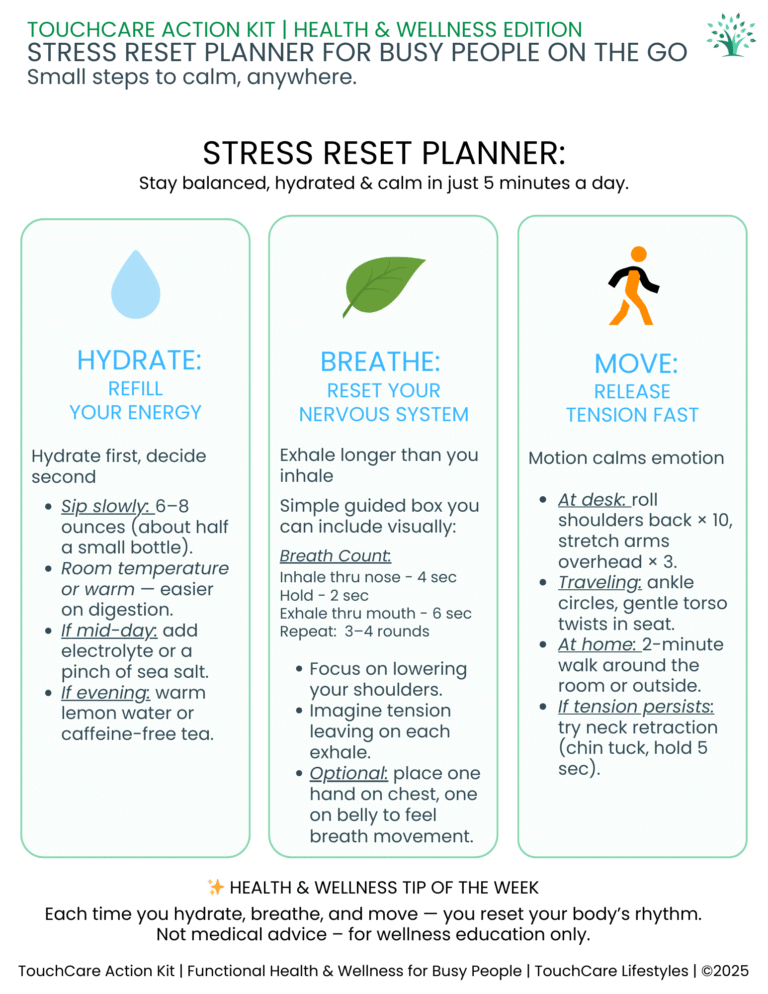
The Stress Reset Planner (for Busy People on the Go) was created for moments when your nervous system feels overstimulated and your digestion feels tight or unsettled. Instead of chasing symptoms separately, it helps you track what actually influences both.
Inside the planner, you monitor:
• Sleep timing
• Stress load
• Stimulation level
• Hydration rhythm
• Digestive response
• Light exposure
Patterns become clear when you observe them consistently. Once you see how seasonal changes affect your body, anxiety and bloating feel predictable rather than confusing.
For this post, I created a free 1-page sampler of the Stress Reset Planner.
This single page gives you a simple daily reset structure you can use immediately. Stress Reset Planner is not overwhelming. It does not require restriction. It focuses on stabilization.
📥 FREE Download – Stress Reset Planner.
If you want the full structured system, the complete Stress Reset Planner is available.
🛍 Explore the full Stress Reset Planner (for Busy People on the Go) on Etsy if you’d like the complete system.

IX. Final Thoughts - Your body is not failing you. It is adapting.
When you feel anxious and bloated, your body is asking for stability.
Seasonal transitions amplify sensitivity. Light shifts, hormone changes, and stress chemistry converge at the same time. That combination can make your system feel unsettled even if your habits are steady.
Restriction rarely fixes that discomfort. Regulation does.
Calm sleep timing, gentle movement, balanced stress support, and consistent hydration steady both mind and digestion. Those practices steady both mind and digestion.
Anxiety softens. Bloating reduces. Rhythm returns.
Your body is not failing you. It is adapting.
With care,
Mijung