

Daily Energy Rhythm | Live Well
Look Good. Travel Far. Live Well ◆ Functional Health & Wellness by Samuel
I. INTRODUCTION — Daily Energy Rhythm
Daily energy rhythm is something most of us experience without giving it much thought. We wake up, gradually get moving, reach a point when we feel sharp and productive, slow down sometime later, perhaps get another burst of energy, and eventually begin winding down for the night.
Yet we often expect ourselves to operate at the same level all day.
When energy drops in the afternoon, we reach for another coffee. When we’re tired in the evening, we push through one more task. And when we wake up exhausted the next morning, we sometimes assume we simply need more motivation.
Our bodies don’t really work that way.
Energy naturally changes throughout the day, influenced by our internal body clock, sleep, light exposure, movement, meals, hydration, stress, and recovery. Some people feel their best early in the morning. Others take longer to get going and become more productive later. What’s useful is recognizing the pattern rather than constantly fighting it.
I’ve become more aware of this as I’ve gotten older. I don’t necessarily need to squeeze more energy out of every hour. I need to use the energy I have more intelligently.
That can mean getting outside in the morning, moving before I’ve been sitting too long, eating in a way that doesn’t leave me sluggish, recognizing when I genuinely need a break, and protecting the evening habits that help set up the following day.
The goal isn’t to feel energetic every minute.
It’s to understand when your body naturally wants to move, focus, recover, and rest—and build more of your day around that rhythm.
Quick Guide
In this guide, we’ll look at:
- Why energy naturally changes throughout the day
- How our internal body clock influences alertness and sleep
- Simple habits that support morning energy
- Using stronger hours for more demanding work
- Why the afternoon energy dip happens
- How movement, hydration, meals, and breaks can help
- Managing late-day energy without disrupting sleep
- Why tomorrow’s energy often begins the night before
- Practical products that support everyday wellness
- The Live Well Planner for building healthier daily routines
This Guide Is For…
This guide is for anyone who starts the day reasonably well but wonders why their energy seems to disappear somewhere along the way.
Maybe mornings are difficult. Perhaps two or three in the afternoon is when concentration falls apart. Or you get a surprising second wind at night and then wonder why falling asleep becomes harder.
Not every period of low energy needs to be eliminated. Sometimes the body is simply moving through its normal daily pattern.
Instead of trying to force every hour to feel the same, we’ll focus on something more practical: recognizing your own daily energy rhythm, supporting it with better everyday habits, and using your stronger hours where they matter most.
Better energy doesn’t always mean having more. Sometimes it means using it at the right time.

II. Your Body Has an Energy Clock
Our bodies run on an internal timing system that helps regulate when we feel awake, when we become hungry, and when we naturally begin preparing for sleep.
This circadian rhythm operates across roughly 24 hours and responds strongly to light and darkness. Morning light helps signal that it’s time to become alert, while darkness in the evening supports the biological changes that prepare us for sleep.
That rhythm helps explain why energy doesn’t stay flat throughout the day.
Sleep matters enormously, of course, but getting enough hours isn’t the entire story. Going to bed and waking at dramatically different times can make it harder for the body to maintain a predictable pattern. Regular sleep and wake times, morning daylight, physical activity, meals, and evening habits all provide signals that help keep our internal clock on track.
I find it useful to think about energy as a rhythm rather than a battery.
We’re not simply waking up with a full charge and gradually draining it until bedtime. Alertness rises and falls as different biological systems interact throughout the day.
Once we recognize that, a lower-energy hour doesn’t automatically mean something has gone wrong.
Sometimes it’s simply part of the clock.
⭐ Recommended Reading
III. Build Your Morning Energy
A better morning doesn’t necessarily begin with a stronger cup of coffee.
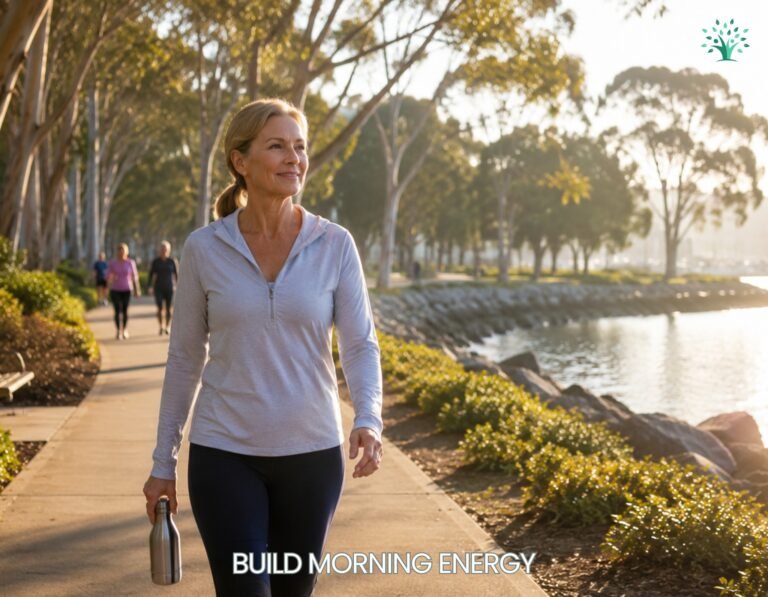
One of the simplest things we can do after waking is get some daylight. Opening the curtains helps, but stepping outside for a short walk gives us light and movement at the same time. Even ten or fifteen minutes can become a useful way to tell the body that the day has started.
Hydration belongs in the morning too. We’ve gone several hours without drinking while asleep, so having water after waking is an easy habit before the day becomes busy.
Then comes movement.
It doesn’t need to be a workout. Stretching, walking the dog, taking a few stairs, or moving around the house can help us transition from sleep into activity. If mornings are when you prefer exercising, that’s fine too. The important part is finding something sustainable enough to become normal.
Food is more individual. Some people feel better eating breakfast early, while others prefer waiting. When we do eat, a balanced meal with protein, fiber, and other nutrient-dense foods can help provide steadier fuel than relying mainly on something sugary and hoping it carries us until lunch.
Coffee can certainly stay.
I enjoy it too.
But coffee works better as part of a morning routine than as the morning routine itself.

IV. Work With Your Daily Energy Rhythm
Once we start paying attention, most of us can identify certain hours when thinking feels easier.
That’s the part of your daily energy rhythm worth protecting.
If mornings are your strongest period, use some of that time for work that requires concentration, decision-making, writing, problem-solving, or whatever matters most in your day. Routine emails, errands, and less demanding tasks can often wait until energy naturally begins to soften.
For someone else, the strongest period may arrive later. There isn’t one ideal schedule that fits everyone.
What matters is recognizing your own pattern.
For a week, notice when you feel most alert, when concentration comes easily, and when you repeatedly begin losing momentum. You may discover that you’ve been scheduling difficult work during your weakest hours while spending your best energy on things that could have been done anytime.
We can’t organize every day around our biology. Jobs, appointments, family, and responsibilities have schedules of their own.
But even moving one or two important activities into stronger hours can make the day feel less like we’re constantly pushing uphill.
Work with the rhythm when you can. Save the fight for when you actually need it.
⭐ Recommended Reading

V. The Afternoon Dip Is Normal
For many of us, there comes a point in the afternoon when the morning momentum starts disappearing.
Concentration gets harder, the chair feels more comfortable, and another cup of coffee suddenly sounds like a very good idea. It’s easy to blame lunch or assume we didn’t sleep well enough, but some decline in afternoon alertness can be part of our normal daily rhythm.
That doesn’t mean we have to surrender the rest of the day.
I usually start with the simple things. Have I had enough water? Have I been sitting for several hours? Would ten minutes outside or a short walk help more than another coffee? Sometimes changing environments and moving the body is enough to feel noticeably more alert.
Lunch can make a difference too. Very large or heavy meals may leave some people feeling more sluggish, while balanced portions with protein, vegetables, whole grains, and other nutrient-dense foods can make the afternoon easier to manage.
If your schedule allows it, the afternoon dip can also be a useful time for less demanding work. Return calls, handle routine tasks, take a walk, or do something that doesn’t require your highest level of concentration.
Instead of treating every energy drop as a problem, sometimes the better response is simply to adjust what we’re asking ourselves to do.
⭐ Recommended Reading

VI. Protect Your Second Wind
Then something interesting can happen.
The afternoon slump passes, and we feel better again.
That second wind can be useful. It’s a good time for an evening walk, preparing dinner, spending time with family, working on something enjoyable, or finishing a few things we didn’t get to earlier.
The problem is when we mistake that renewed energy for permission to restart the entire day.
Another coffee at five. A hard workout close to bedtime. A heavy late dinner. Work continuing well into the evening because we suddenly feel productive again. Before long, the energy we enjoyed for a few hours begins interfering with the sleep we need for tomorrow.
I’ve learned that evening energy is something to use without chasing.
Enjoy the walk. Have dinner. Finish what reasonably needs finishing. Then allow the pace of the day to begin coming down.
There will always be one more thing we could do.
Good energy management also means knowing when enough is enough.

VII. Your Daily Energy Rhythm Starts the Night Before
We tend to think about energy as something we create after waking, but much of tomorrow’s daily energy rhythm is influenced by what happens the night before.
Sleep is the obvious part. Most adults need regular, adequate sleep, and consistency matters. Going to bed around the same time, keeping the bedroom comfortable and dark, and giving ourselves enough opportunity to sleep can make mornings considerably easier.
The hours leading up to bedtime matter too.
Bright light, stimulating activities, alcohol, heavy late meals, and caffeine too close to bedtime can all affect sleep differently from person to person. Rather than creating a complicated nighttime routine, I prefer a few predictable signals that tell the body the day is ending.
Lower the lights. Put work away. Take a shower. Read. Stretch. Talk with someone you love. Let the house become quieter.
None of this guarantees that every night will be perfect or that we’ll wake up full of energy every morning. Stress happens. Travel happens. Life interrupts routines.
The goal is consistency, not perfection.
Because when we protect recovery tonight, we’re doing more than preparing for sleep.
We’re giving tomorrow a better place to start.
VIII. Products We Use & Recommend for Daily Energy Rhythm
Supporting better energy throughout the day isn’t about trying to change everything overnight.
Over the years, I’ve learned that lasting wellness comes from simple habits practiced consistently. The products below are ones I personally use because they support nutrition, everyday wellness, recovery, and rest—the same foundations that help me maintain a healthier daily rhythm.
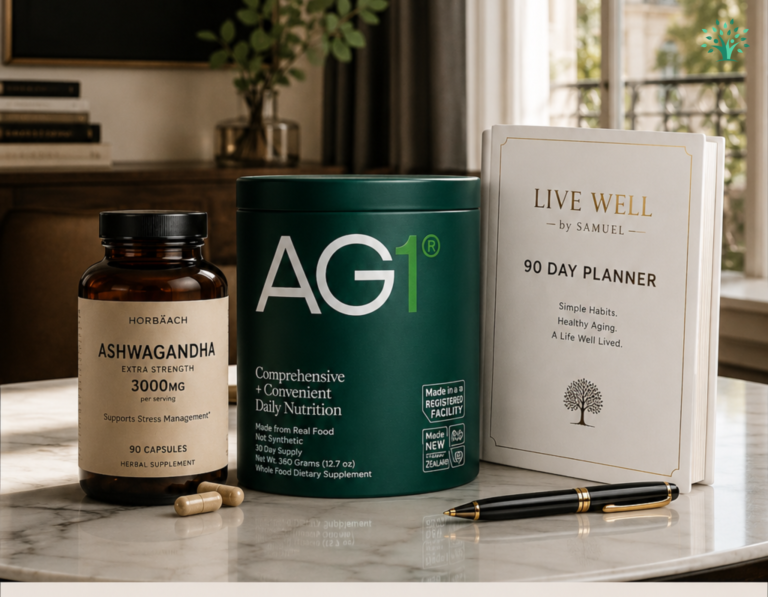
AG1 Greens Powder Supplement
A convenient way to support daily nutrition and maintain a consistent morning wellness routine.
Omega-3 Fish Oil
Supports heart, brain, and overall wellness as part of a healthy daily routine.
Vitamin D3 + K2 – Nordic Naturals
Helps support bone health and an active lifestyle through every stage of life.
Garden of Life Collagen Peptides
An easy addition to my daily routine that supports healthy skin, hair, nails, and joints.
Magnesium Glycinate
Part of my evening routine to support relaxation, recovery, and restful sleep.
L-Theanine – Horbäach
Helps support a calm, relaxed mindset during busy or demanding days.
Ashwagandha – Horbäach
Supports everyday stress management and overall well-being as part of a balanced lifestyle.
As an Amazon Associate, I earn from qualifying purchases. These are products I personally use and recommend because they support healthy aging without making my daily routine more complicated.

iX. Live Well Planner
Sometimes looking back isn’t about living in the past. It’s about recognizing how much has changed, what we’ve learned along the way, and how far we’ve already come.
Life rarely follows the exact path we imagined. Priorities change, plans get interrupted, difficult seasons test us, and occasionally we find ourselves starting over in ways we never expected. Yet those experiences also shape how we think about the years still ahead.
That’s one of the reasons we created the Live Well Planner.
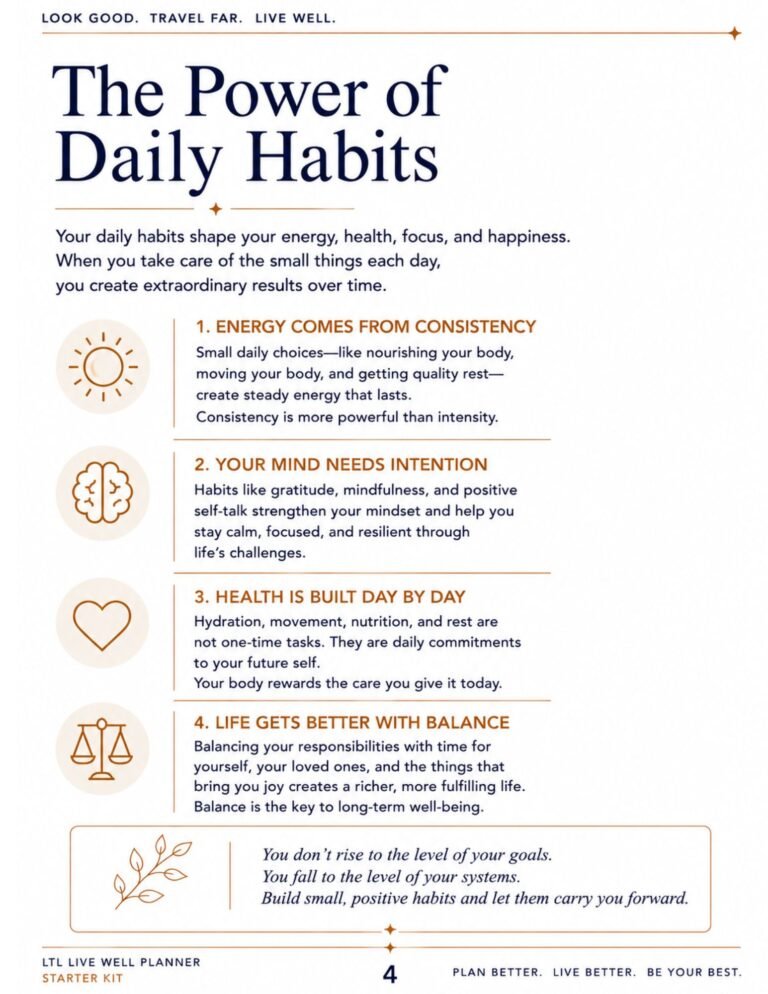
It isn’t designed around becoming a completely different person or setting another list of ambitious goals. Instead, the planner helps you take stock of where you are today, pay attention to the everyday habits that support your well-being, and think more intentionally about how you want to live moving forward.
Inside, you’ll find practical guidance and planning pages focused on daily habits, movement, hydration, nutrition, sleep, recovery, reflection, personal goals, consistency, and creating routines that fit the life you’re living now.
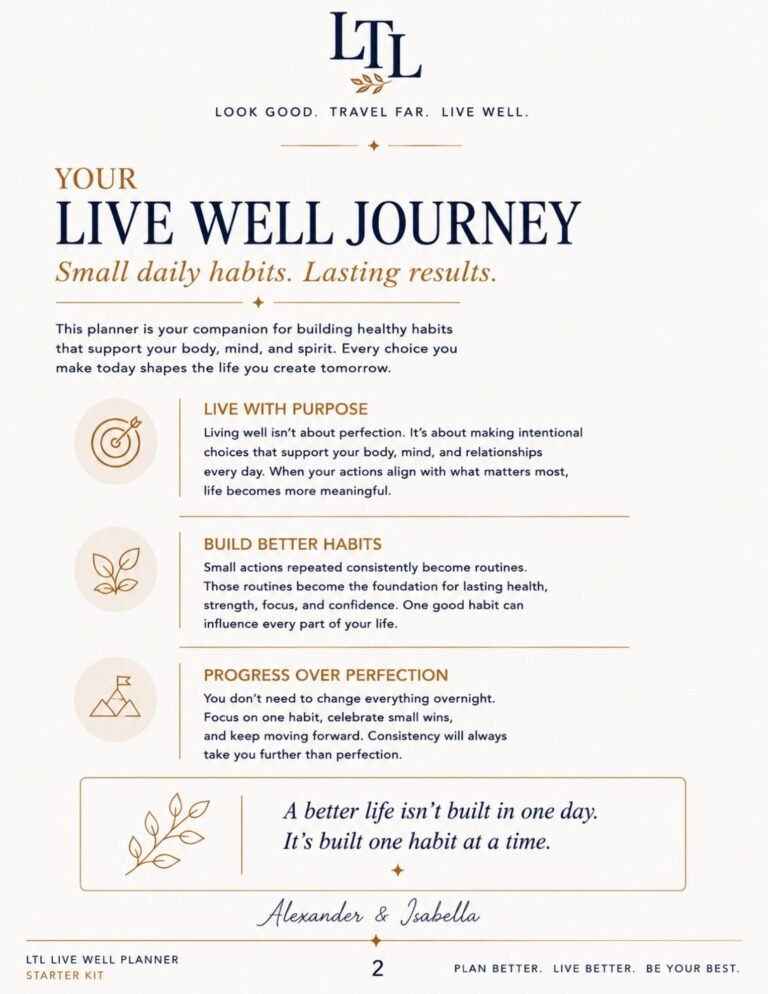
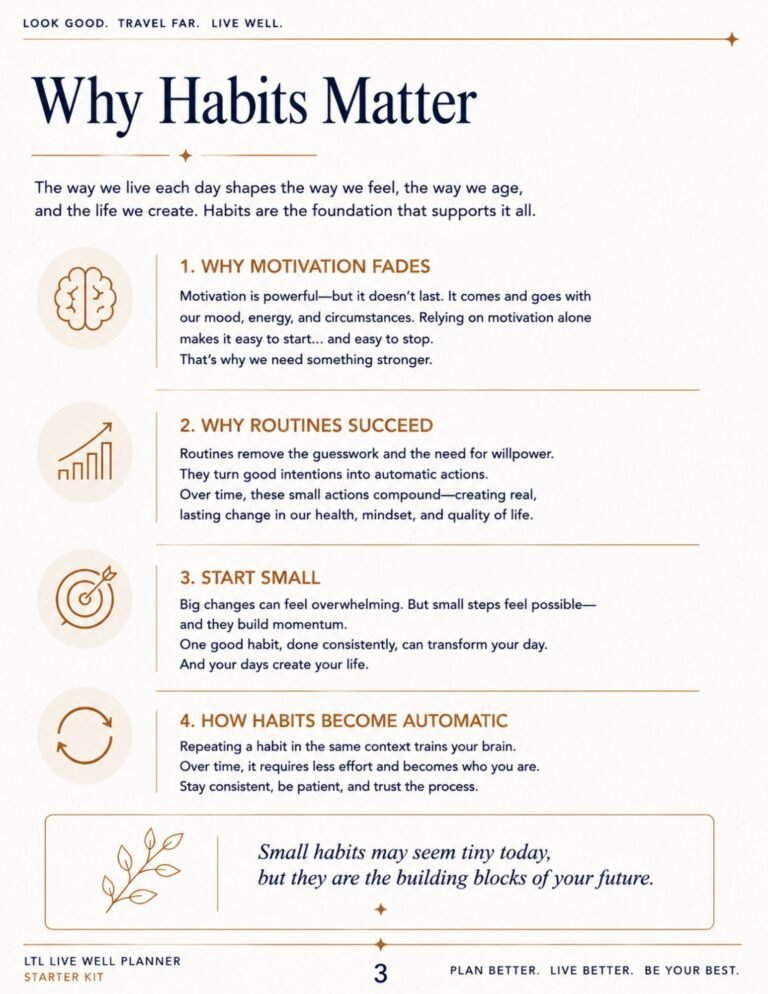
👉 Get your complimentary “Live Well Planner” 4-Page Sampler. Click here to download.
A selected preview from the complete planner to help you reflect on where you are today and begin thinking about the small changes that could make the next chapter even better.
🛍 If you’d like to continue, the complete Live Well Planner is a 24-page premium LTL Living Guide designed to help you build healthier routines, create greater balance, and become more intentional about how you spend the years ahead.
You’ve already traveled a long road to get here.
Take a moment to appreciate how far you’ve come. Then decide where you’d like to go next.

X. Better Energy. live well | Final Thoughts
For a long time, I thought having more energy meant finding another way to push through tiredness.
Now I look at it differently.
Our bodies give us signals throughout the day. There are hours when concentration comes easily, times when movement feels good, periods when energy naturally softens, and eventually a point when the body needs us to stop asking for more.
Learning your daily energy rhythm doesn’t mean arranging your entire life around a biological clock. Most of us couldn’t do that even if we wanted to. Work, family, appointments, travel, and unexpected responsibilities have their own schedules.
But we can pay attention.
We can use our stronger hours for things that require more from us. We can get outside and move instead of automatically reaching for another coffee. We can recognize an afternoon slowdown without treating it as failure, and we can stop borrowing energy from tomorrow by pushing too hard tonight.
The habits aren’t particularly complicated: daylight, movement, hydration, nutritious food, recovery, and enough sleep.
What makes them powerful is repetition.
As I’ve gotten older, that feels much more useful than trying to operate at full speed from morning until night. I don’t need every hour to be my best hour.
I want enough energy for the things that matter, enough awareness to know when to use it, and enough discipline to let myself recover so I can do it again tomorrow.
BETTER ENERGY. LIVE WELL.
With care,
Samuel